MINNIE EVANS RETURNS TO THE WHITNEY 50 YEARS LATER
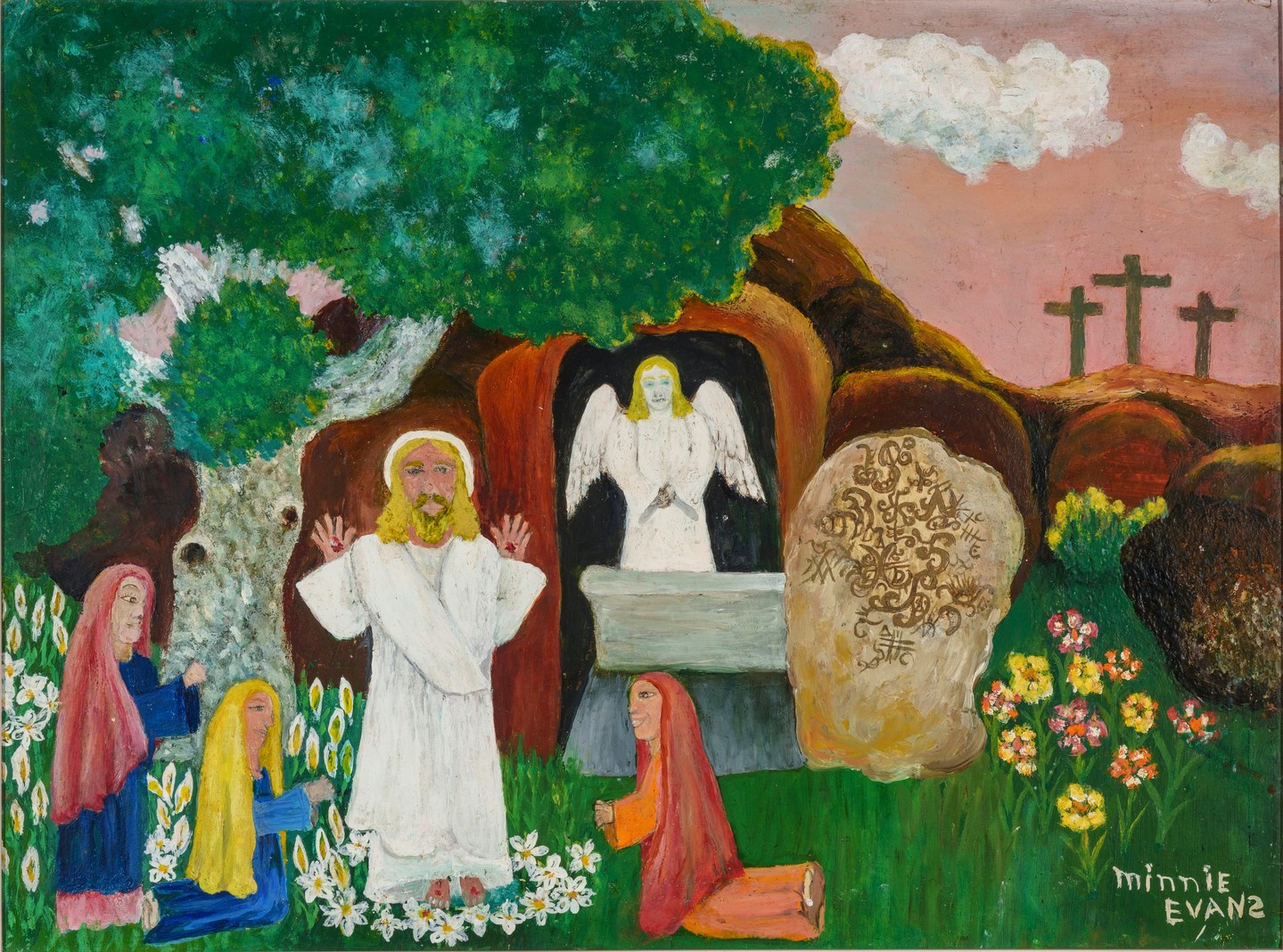
Minnie Evans, a self taught visionary artist from Wilmington, North Carolina, is the subject of a retrospective now at the Whitney Museum, 50 years after the museum gave her a groundbreaking first solo exhibition in 1975. The Lost World: The Art of Minnie Evans, organized by the High Museum of Art, features more than 100 works including her 1960 painting Resurrection, and runs through January 10, 2027.
Key Points
- Minnie Evans made her first drawing in 1935 after a dream told her to draw or die
- The Whitney is showing her work 50 years after her groundbreaking 1975 solo show there
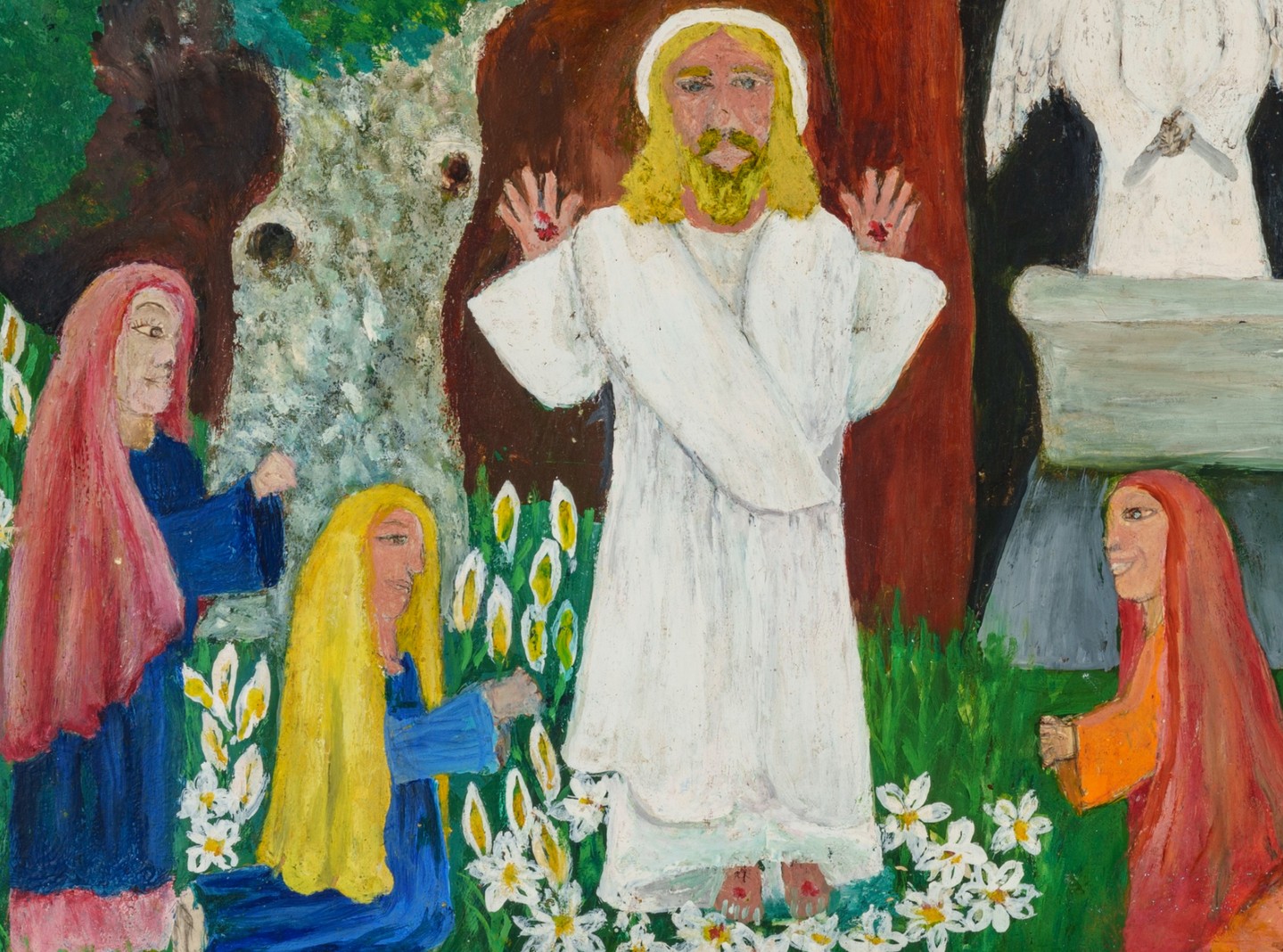
- Her 1960 painting Resurrection shows the Marys around Christ smiling, not mourning
On Good Friday in 1935, Minnie Evans heard a voice in a dream ask her a single question: why don't you draw or die. She picked up a pencil that day and made a small pen and ink drawing, five inches by seven, built from concentric circles she said had been waiting inside her. She did not have a name for what she made yet. She would spend the next fifty two years finding one.
Ninety one years later, the Whitney Museum is showing that work again, in the same building that gave Evans her groundbreaking first solo museum exhibition in 1975. The retrospective is not a rediscovery. It is a museum finishing a sentence it started fifty years ago.
1935. A Voice, Not a Teacher.
Evans never studied art. The dream on Good Friday is the origin story she told for the rest of her life, and it holds up against everything she made after it. She worked as the gatekeeper at Airlie Gardens in Wilmington, North Carolina starting in 1948, taking admission from visitors for the next twenty six years while she kept drawing at the gatehouse between shifts. The azaleas and trees she checked every day worked their way into paper after paper, the same plants reappearing as the natural world she called her lost world, her own term for what she described as the nations destroyed before the Flood. She kept the gatehouse job until 1974, one year before the Whitney came calling, which means the woman collecting admission tickets from tourists and the artist about to headline a Manhattan museum were the same person on the same afternoon for most of two decades.
Minnie Evans Read the Bible as a Springboard, Not a Script
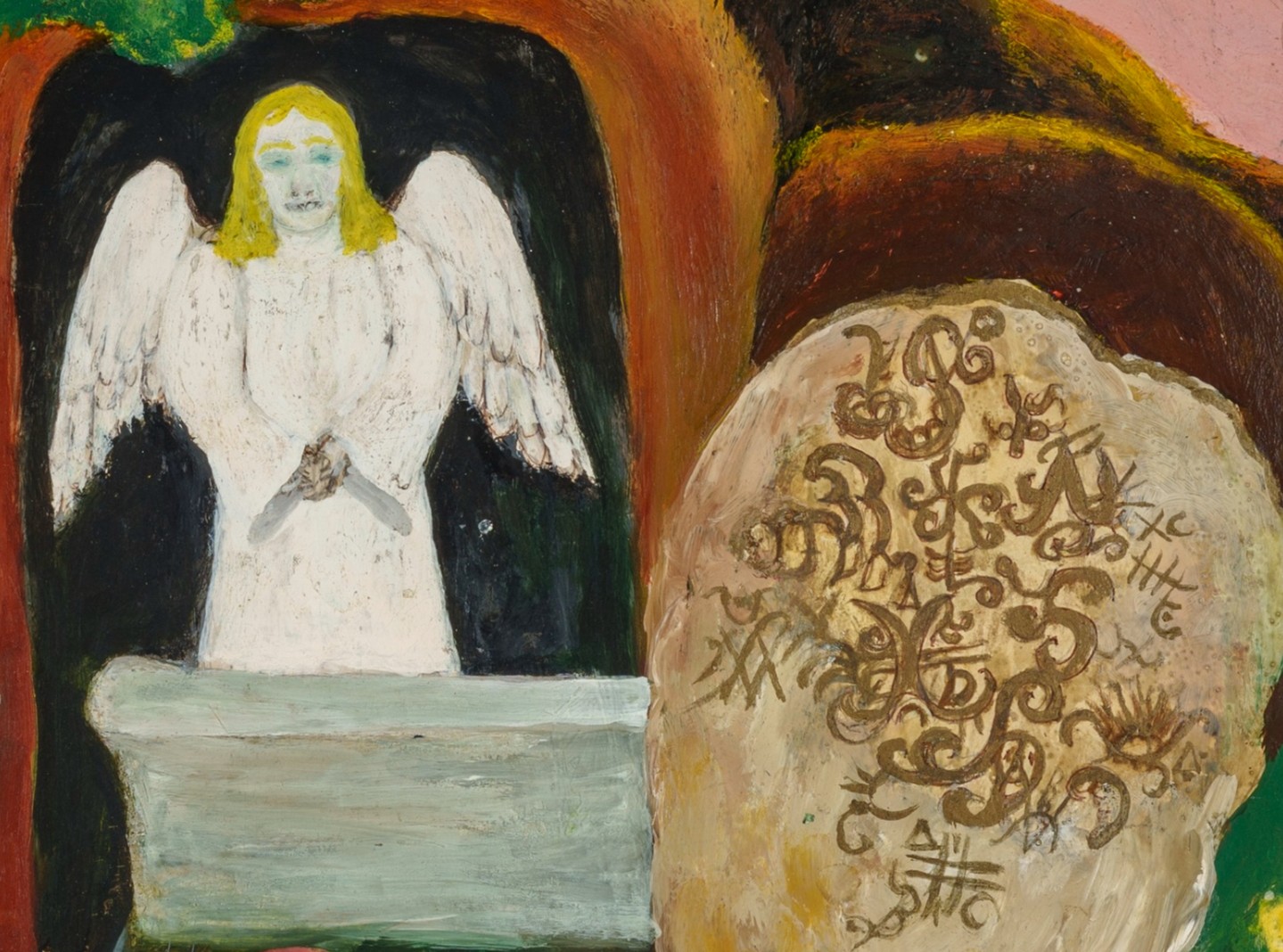
Evans read the Bible constantly, and her paintings are not illustrations of it. Resurrection, a 1960 oil on board now in the collection of John Jerit, uses scripture as a starting point for her own vision of what comes after judgment, not a retelling of a single verse. The painting imagines the resurrection of humanity itself, God's eventual triumph over evil rendered as a lived, physical outcome rather than a promise.
The Marys Around Her Christ Are Not Mourning
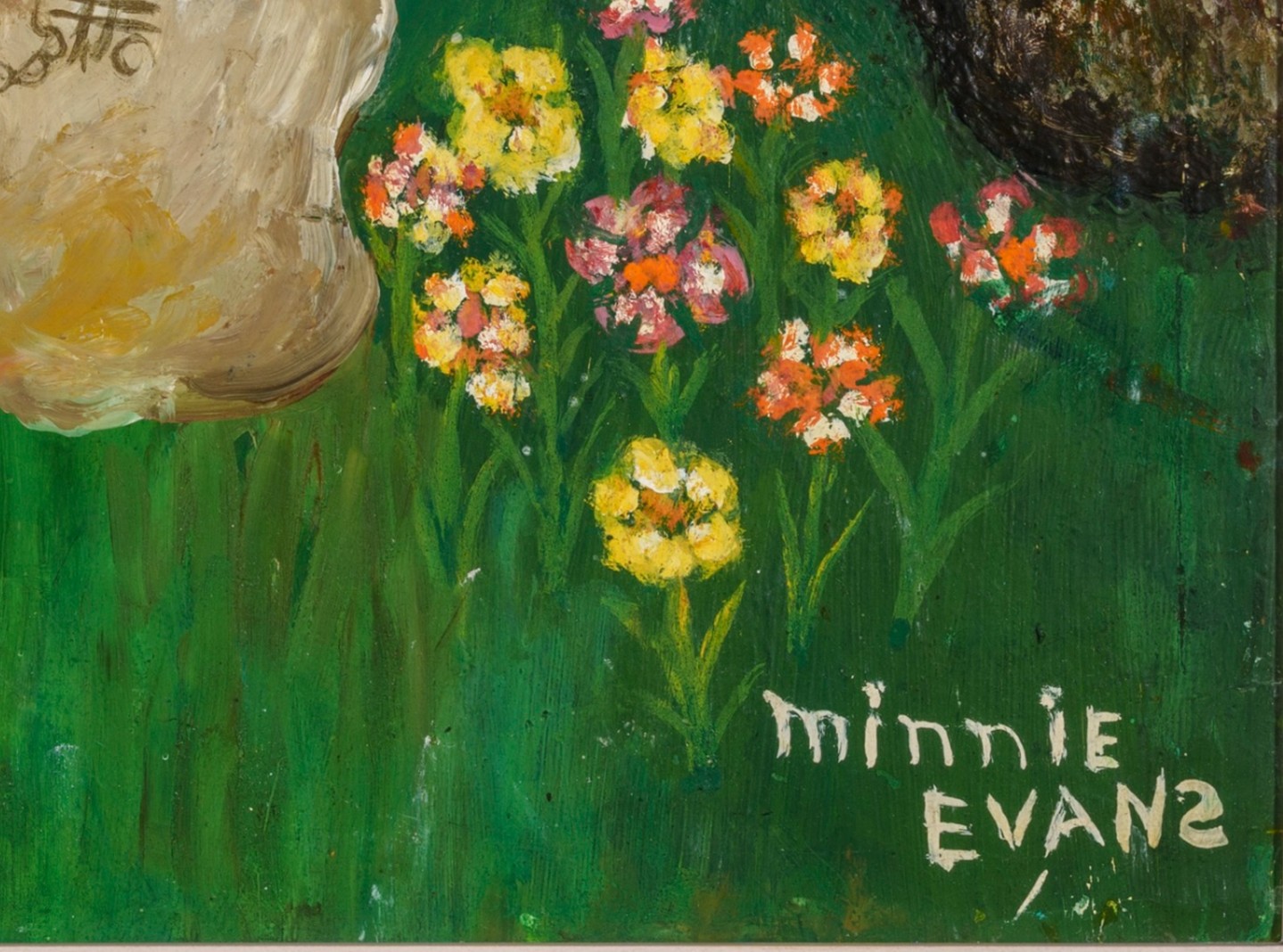
The women surrounding Christ in Resurrection are smiling, a choice that breaks from centuries of religious painting where the same scene is staged as grief. In Evans's version, the earthly world she observed daily at Airlie becomes the paradise she believed was coming, and the natural imagery she painted around every figure functions as proof that paradise was already arriving, not a backdrop waiting for it. Most religious painters treat the resurrection as a mystery to be witnessed. Evans treats it as a place she could already point to from her gatehouse window.
The Whitney Already Did This in 1975
The Lost World: The Art of Minnie Evans is organized by the High Museum of Art, which calls it the first major Evans exhibition in three decades. It opened in Atlanta in November 2025, moved to the Whitney in New York on August 22, 2026, and runs through January 10, 2027, exactly fifty years after the Whitney gave Evans her groundbreaking first solo museum show. That kind of return, a major institution revisiting an artist decades after its own original bet on them, is the same pattern the New Museum is running with Arthur Jafa this fall, another New York institution putting full floor space behind an artist it helped build a reputation around years earlier.
Underrated, Then Overdue
Evans spent decades filed under folk art and outsider art, categories that kept her out of the market conversation happening around her contemporaries in contemporary painting. This retrospective is the correction. More than one hundred works are traveling with the show, evidence Evans was never short on output, only short on institutions willing to hang it. The same recalibration is happening across the art market for artists who built reputations outside the traditional gallery pipeline, the same institutional legitimizing move behind KAWS' museum placements in Seoul. It is the identical mechanic that turned resale sneakers and vintage streetwear finds into a formal secondary market over the last decade. Evans's paper is now getting the same institutional push denim and vinyl already got, and gatekeeper's badge and all, she is a clean test of whether a museum's attention actually moves an artist's number or just borrows her name for a season.
Related: STEPHEN ANTHONY DAVIDS REWORKS EVERY SCREEN PRINT BY HAND.
Frequently Asked Questions
Who was Minnie Evans?
Minnie Evans (1892 to 1987) was a self taught visionary artist from Wilmington, North Carolina, who worked as the gatekeeper at Airlie Gardens and made her first drawing in 1935.
What is The Lost World: The Art of Minnie Evans?
It is a retrospective organized by the High Museum of Art featuring more than 100 of Evans's drawings, paintings, and collages, now showing at the Whitney Museum in New York.
When did Minnie Evans make her first drawing?
She made her first drawing on Good Friday in 1935, after a voice in a dream asked her why she did not draw or die.
When did the Whitney first show Minnie Evans's work?
The Whitney gave Evans her groundbreaking first solo museum exhibition in 1975, exactly 50 years before this retrospective opened there in August 2026.
What does the painting Resurrection depict?
Resurrection is a 1960 oil on board in the collection of John Jerit, showing Evans's vision of humanity's resurrection with the Marys around Christ smiling rather than mourning.
How long did Minnie Evans work at Airlie Gardens?
Evans worked as the gatekeeper at Airlie Gardens in Wilmington from 1948 to 1974, drawing and painting at the gatehouse between shifts.
When does the Whitney's Minnie Evans exhibition close?
The exhibition runs through January 10, 2027, after premiering at the High Museum of Art in Atlanta from November 2025 to April 2026.
Topics: minnie-evans, wilmington-north-carolina, folk-art, art-market, high-museum-of-art, whitney-museum, whitney museum, new-museum, art, contemporary-art, outsider-art, new museum, museum-exhibition