CAGUIAT'S SERPENTINE SOUTH SHOW RINGS BRONZE BELLS
Justin Caguiat's Change Ringing opened at Serpentine South in London on October 8, 2026 and runs to January 10, 2027, free to enter. Lily Pickett's score fires the bronze bells in a continuous mechanical loop, and each chime triggers heating pads on thermochromic copper panels titled Hysteresis Loop. Hans Ulrich Obrist and Natalia Grabowska curated the show, which evolved from Zodiac Machine, shown in Madrid from March 4 to April 1, 2026.
Key Points
- Each bell chime in Change Ringing triggers heating pads on the thermochromic copper panels of Hysteresis Loop, so colours and forms appear and then cool toward the room's temperature.
- Lily Pickett's score plays in a continuous mechanical loop as pistons fire in sequential code, replacing the one ringer per bell that tower change ringing normally needs.
- Change Ringing evolved from Zodiac Machine, curated by Hans Ulrich Obrist in Madrid from March 4 to April 1, 2026, and strips sections of Serpentine South's plasterboard back to the original brickwork.
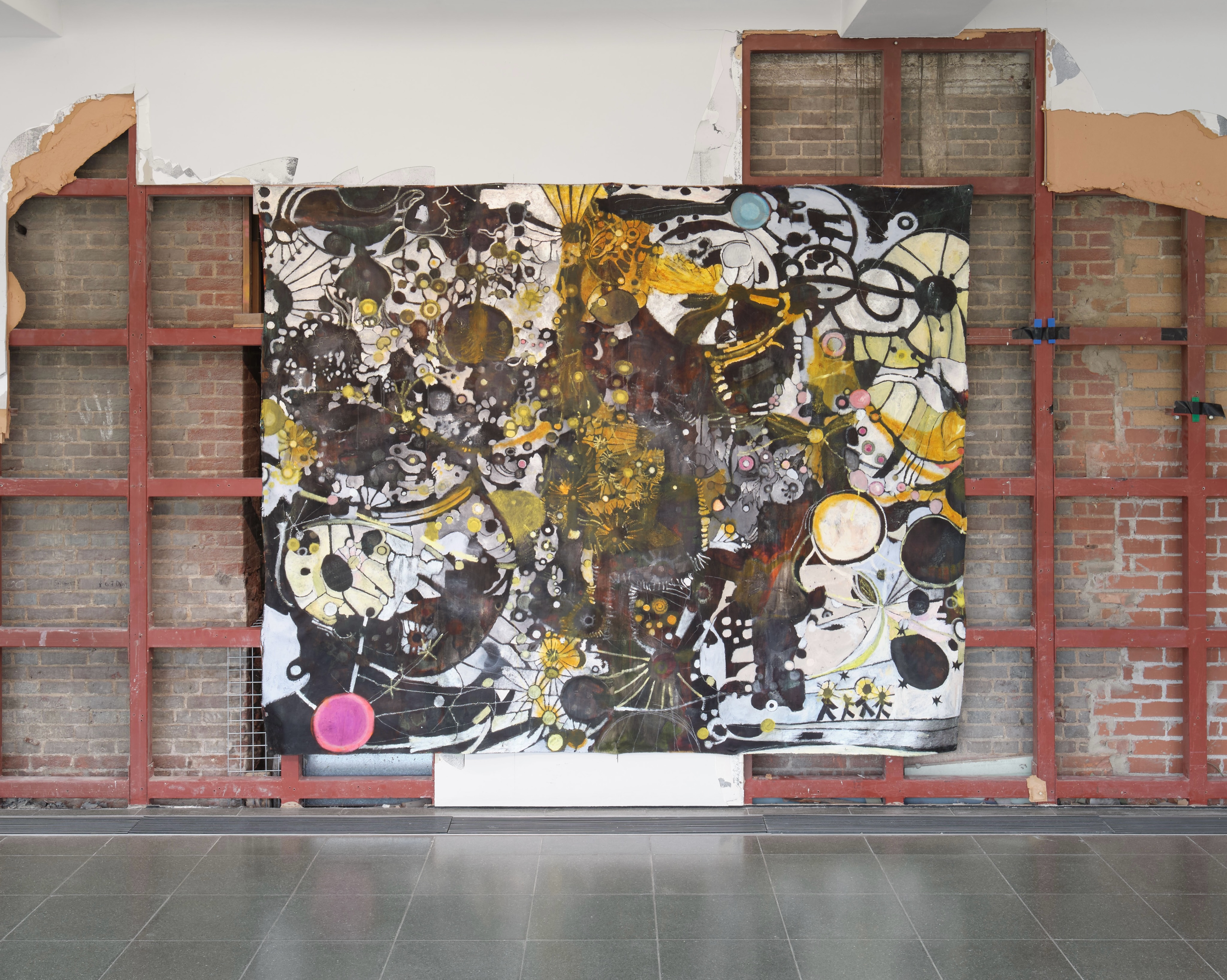
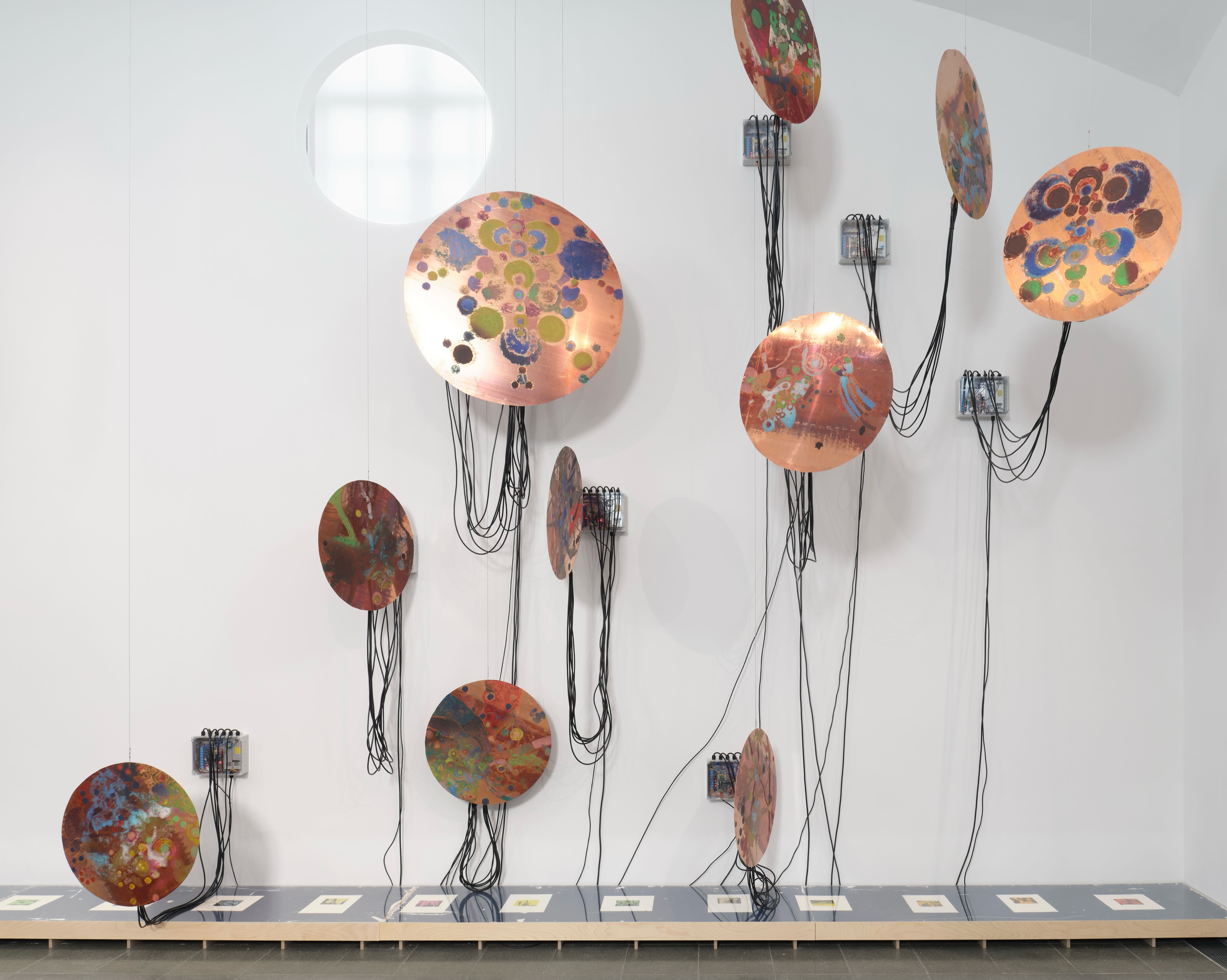
Justin Caguiat's Change Ringing opened at Serpentine South in London on October 8, 2026 and runs to January 10, 2027 with free admission, and its central device is that the bells operate the paintings. Each chime triggers heating pads attached to his thermochromic works on copper, so colours and forms appear and then cool back toward the temperature of the room, according to Mark Westall's October 9, 2026 review in FAD Magazine. Serpentine calls it the first UK institutional exhibition of his new and recent work, which makes the copper panels a residue of the last chime rather than a fixed image.
Another 2026 commission treats the host site as material from the other end. Precious Okoyomon's 25 foot concrete bear opened July 31, 2026 in a MoMA PS1 courtyard that had never held a garden and stays through 2028. Caguiat takes a gallery established in 1970 in a Kensington Gardens tea pavilion and wires its infrastructure into the work.
Hysteresis Loop Wires Copper Panels to Microcontrollers
The thermochromic work is titled Hysteresis Loop, and its copper panels are painted with heat responsive pigments. Heating pads and microcontrollers placed in various areas of the exhibition space are triggered by the bells' chimes, and Serpentine says the room's ambient temperature decides whether a panel moves from reactive to stable.
Westall writes that the paintings never fully settle, because they are affected by temperature, sound, chemistry and time. He reports that Caguiat has said his ideal painting is one that looks different every time you see it.
Pistons Replace the Ringers in Lily Pickett's Score
Change ringing emerged in England in the early seventeenth century, and in a tower it normally takes one ringer per bell to manage the rope work, with a full peal requiring at least 5,000 changes. Fabian Stedman and Richard Duckworth published Tintinnalogia, a book of rules for ringing plain changes, in 1668.
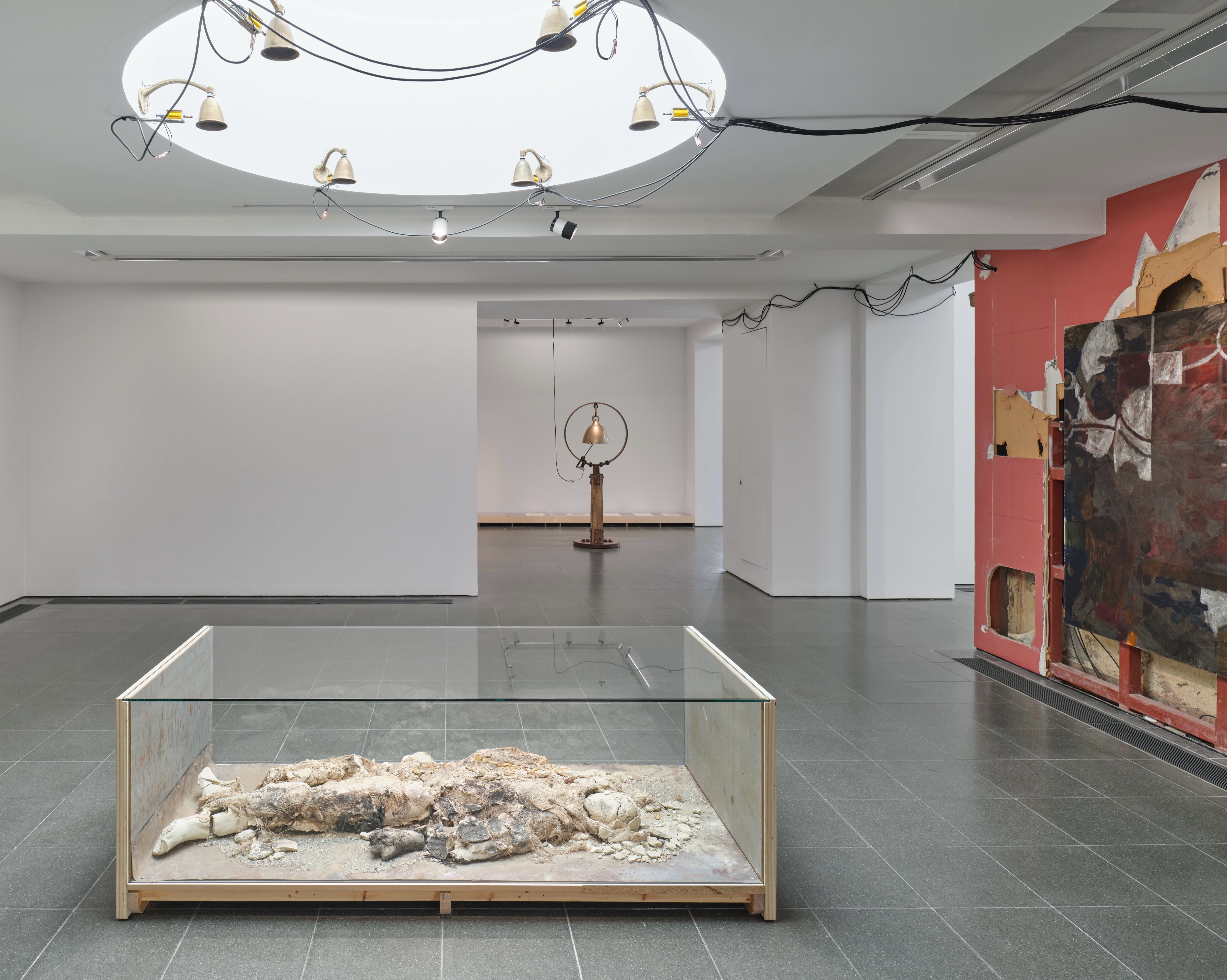
Lily Pickett's score keeps the permutation logic and removes the ringers. It plays mechanically in a continuous loop as pistons fire in sequential code, moving the bells through continually shifting sequences rather than repeating a melody.
The bells themselves are bronze, cast in the shapes of poppies, buttercups, foxgloves, acorns, chestnuts and angel's trumpets, in varying sizes. They were made by lost wax casting and draw on Russian Orthodox bell making traditions, which means their exact tones were not known until each was finished.
Plasterboard Comes Off the Walls of a Former Tea Pavilion
Serpentine South is housed in a Grade II listed former tea pavilion built in 1933 and 1934. For Change Ringing, sections of plasterboard were stripped back to the original brickwork, paintings are mounted directly onto the building's metal supports, and materials from previous exhibitions were reused for benches and vitrines.
Serpentine says the walls gather and amplify the chimes, and compares the effect to the concrete acoustic mirrors built along Britain's coastline to detect warships and to Le Corbusier's idea of a building as an acoustic receiver. Westall writes that sound moves through brick, metal and circular openings in the architecture, changing as it travels.
London galleries have read their own infrastructure before. White Cube's Mason's Yard opened in September 2006 on the site of a former electricity substation and turned twenty in September 2026, with Gabriel Orozco's inaugural presentation as the first exhibition in its anniversary sequence. At Serpentine South the infrastructure is stripped to brick and put to work as the amplifier for the chimes that trigger the panels.
Obrist Curated Madrid and London, Then Wrote Stone Island's Questions
Change Ringing is curated by Hans Ulrich Obrist, Serpentine's Artistic Director, and Natalia Grabowska, Curator at Large for Architecture and Site specific Projects, with Alexa Chow as Assistant Exhibitions Curator. Obrist also curated its predecessor, Zodiac Machine, which ran from March 4 to April 1, 2026 across the Santa Ana y la Esperanza Church and the Moratalaz Market in Madrid, organised by Fundación Sandretto Re Rebaudengo Madrid and produced by Isabela Mora.
Bettina Korek, Serpentine's CEO, and Obrist said in the announcement: "We're honoured to present Justin Caguiat's first institutional exhibition in the UK, following its presentation by Fundación Sandretto Re Rebaudengo Madrid earlier this year."
Obrist's questions also run through a very different lane. Stone Island's Autumn Winter 2026 chapter of Community as a Form of Research pairs each David Sims portrait with questions curated by Obrist and a film of the subject answering, and 3House's parka portrait is one of them.
The Madrid project drew on Justo Gallego Martínez and his Catedral de Justo, which he built single handedly from recycled and found materials. Caguiat's large unstretched paintings in London reference that cathedral and Goya's Disasters of War, and a small cinema at the back of the gallery screens his film Border Jump of the Circle.
Change Ringing is the second half of a two part project that began in a Madrid church and market and continues in a former tea pavilion in Kensington Gardens. It is also the version where the sound has a job, because every chime is a command to a heating pad.
Frequently Asked Questions
When does Justin Caguiat's Change Ringing run at Serpentine South?
It opened on October 8, 2026 and runs to January 10, 2027 at Serpentine South in London, with free admission.
How do the bells change the paintings in Change Ringing?
Each bell chime triggers heating pads and microcontrollers attached to thermochromic paintings on copper, so colours and forms shift and then slowly cool toward the gallery's ambient temperature. The work is titled Hysteresis Loop.
Who composed the score for Change Ringing?
Lily Pickett composed it. The score takes its logic from English change ringing and plays mechanically in a continuous loop as pistons fire in sequential code.
What are the bells in Change Ringing made of?
They are bronze, cast in the shapes of flowers and seeds including poppies, buttercups, foxgloves, acorns, chestnuts and angel's trumpets. They were made by lost wax casting and draw on Russian Orthodox bell making traditions.
Is Change Ringing Justin Caguiat's first show in the UK?
It is his first UK institutional exhibition, according to Serpentine, and it evolved from Zodiac Machine, which was presented in Madrid from March 4 to April 1, 2026.
Who curated Justin Caguiat's Change Ringing?
Hans Ulrich Obrist, Serpentine's Artistic Director, and Natalia Grabowska, Curator at Large for Architecture and Site specific Projects, with Alexa Chow as Assistant Exhibitions Curator.
Topics: thermochromic-paintings, change-ringing, lily-pickett, serpentine, justin-caguiat, serpentine-south, moma, stone island, moma-ps1, art, white cube, london, white-cube, stone-island, moma ps1, exhibition, installation