WHITE CUBE MASON’S YARD AT TWENTY, ROOM BY ROOM
White Cube marks 20 years of Mason’s Yard with installation images spanning Orozco, Gormley, Emin, Mehretu and other artists. Emma Reyes is the current exhibition through October 3; Orozco’s Chronotopic is at the separate Bermondsey gallery.
Key Points
- Mason’s Yard opened in September 2006 with Gabriel Orozco.
- The building includes a naturally lit, double height basement gallery.
- Emma Reyes remains on view at Mason’s Yard through October 3, 2026.
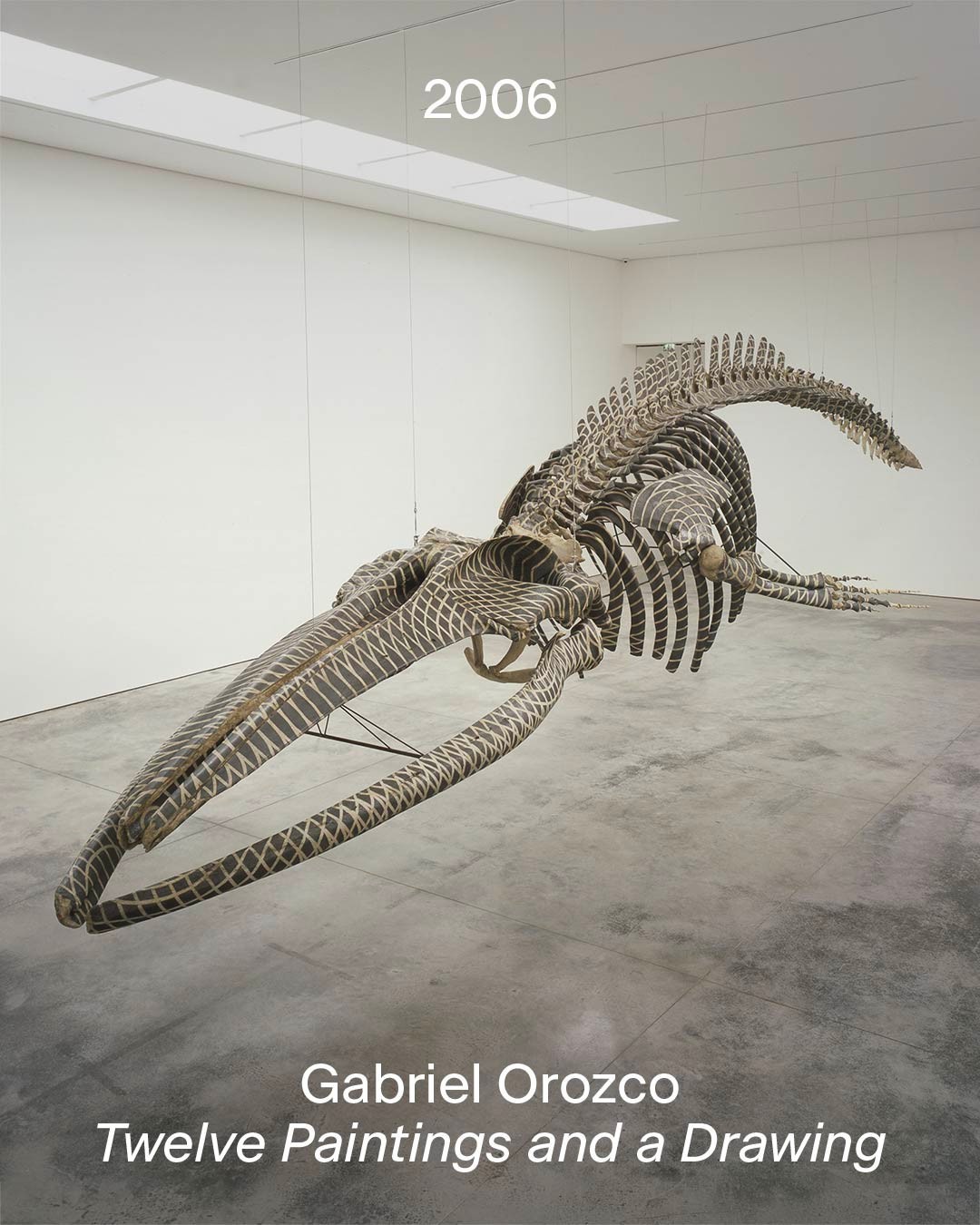
White Cube Mason’s Yard opened with Gabriel Orozco in September 2006. Twenty years later, its anniversary images move from a suspended skeleton to coloured light, painted walls and a darkened screening room. The building's achievement is how much it can change while its concrete floor keeps reappearing underneath.
The current exhibition is Emma Reyes, running through October 3, 2026. Orozco is also showing with White Cube, but his exhibition Chronotopic is at Bermondsey. Those two addresses matter more to a visitor this week than the anniversary number.
A basement gives the courtyard another scale
Mason’s Yard stands on the site of a former electricity substation near the gallery's original Duke Street location. White Cube describes it as the first freestanding structure built in St James's for more than 30 years, with a street level gallery and a naturally lit, double height basement.
That lower room gives the modest courtyard setting a second register. It can accommodate work whose scale would be difficult to understand from the approach outside. Architecture becomes part of the exhibition's pacing: arrive through a compact urban space, then encounter a larger interior volume.
The New Museum's Bowery extension offered another example of cultural space gaining capacity through building. Mason’s Yard makes a longer running case for what that capacity is for. Over two decades, a flexible room has repeatedly been asked to behave differently.
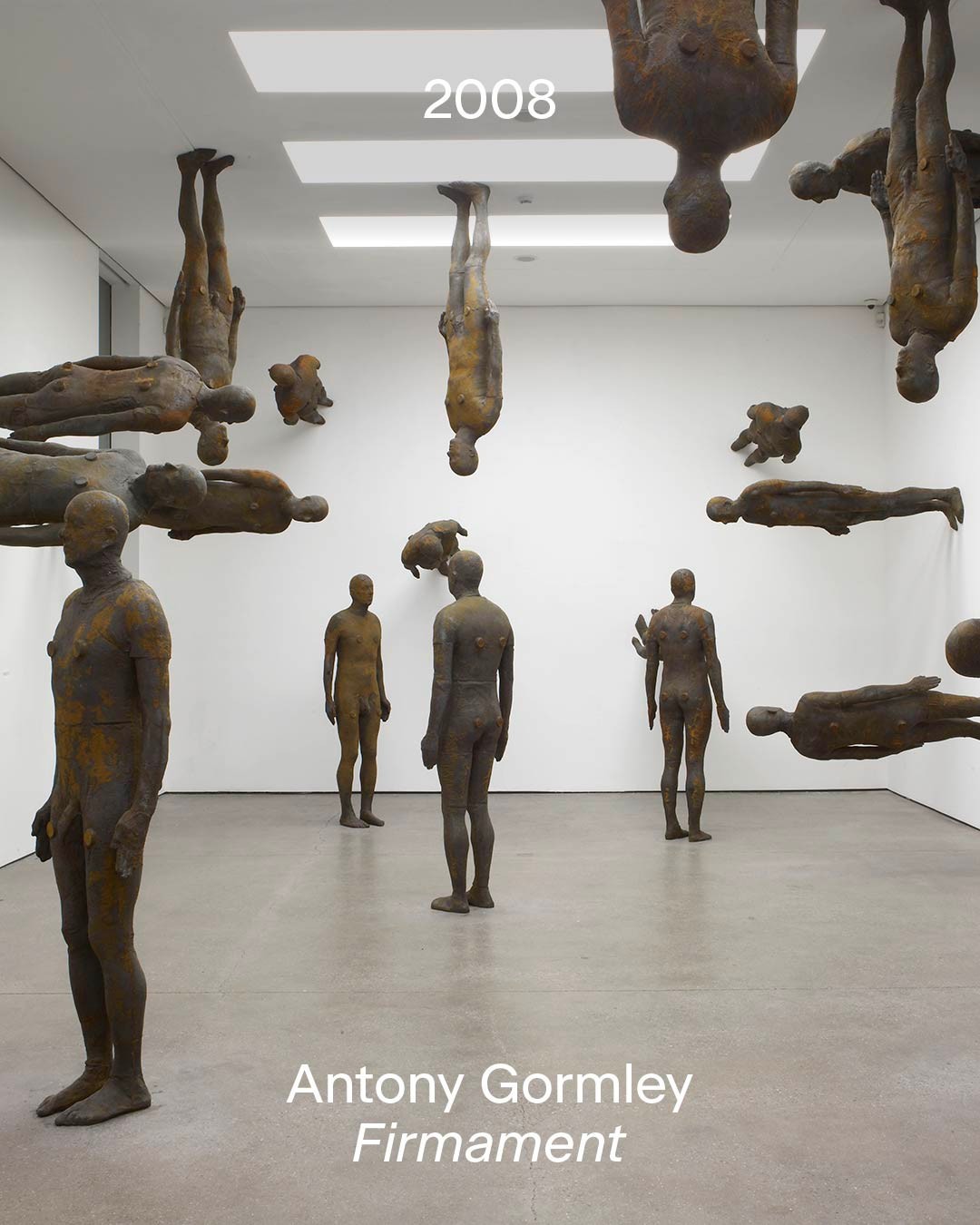
In the anniversary sequence, Orozco's inaugural presentation is followed by Antony Gormley's 2008 Firmament. Bodies occupy the room at several orientations, changing the visitor's sense of where to stand. The concrete floor supplies a stable reference beneath a much less stable arrangement overhead.
Neon, benches and a darkened room rewrite the visit
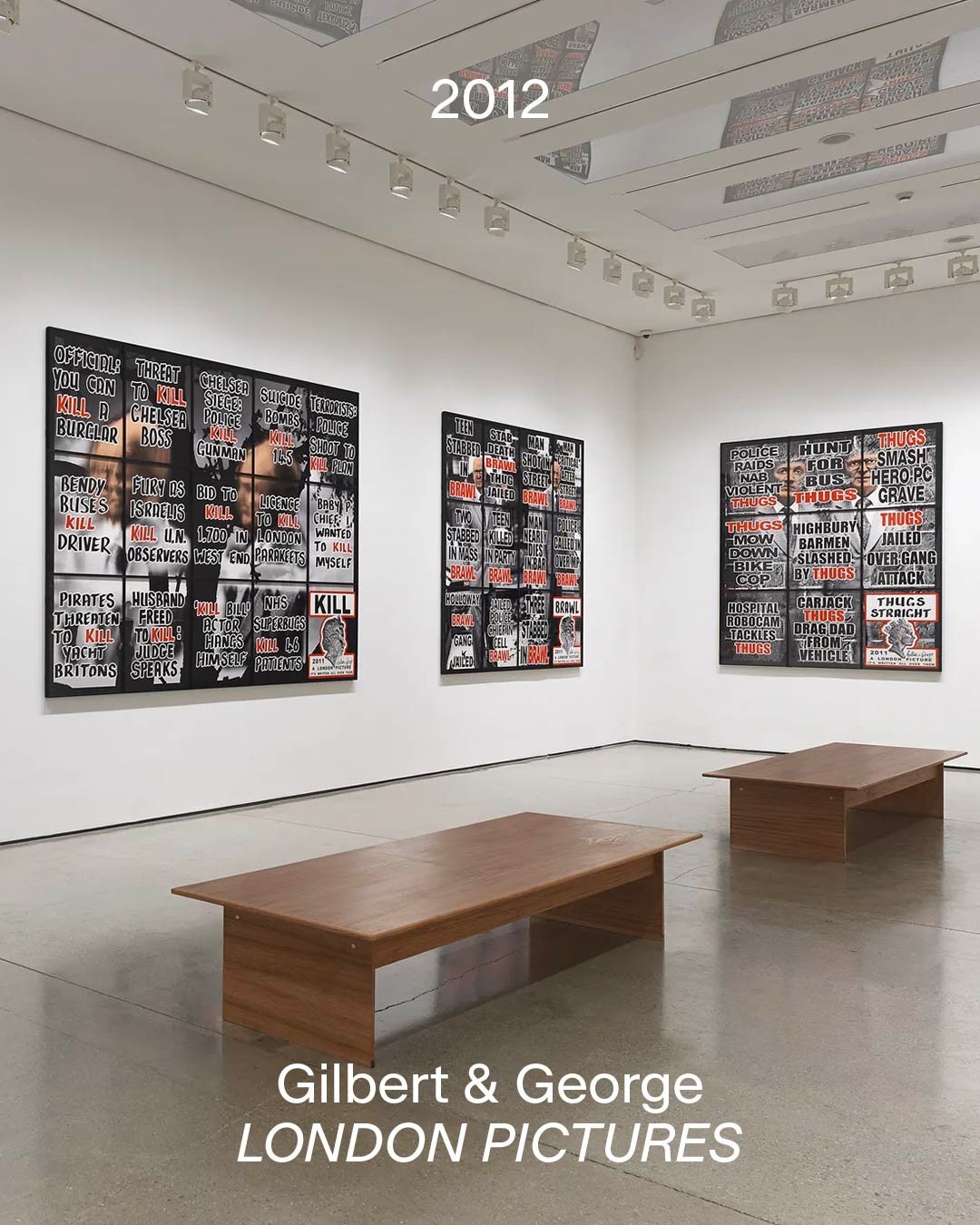
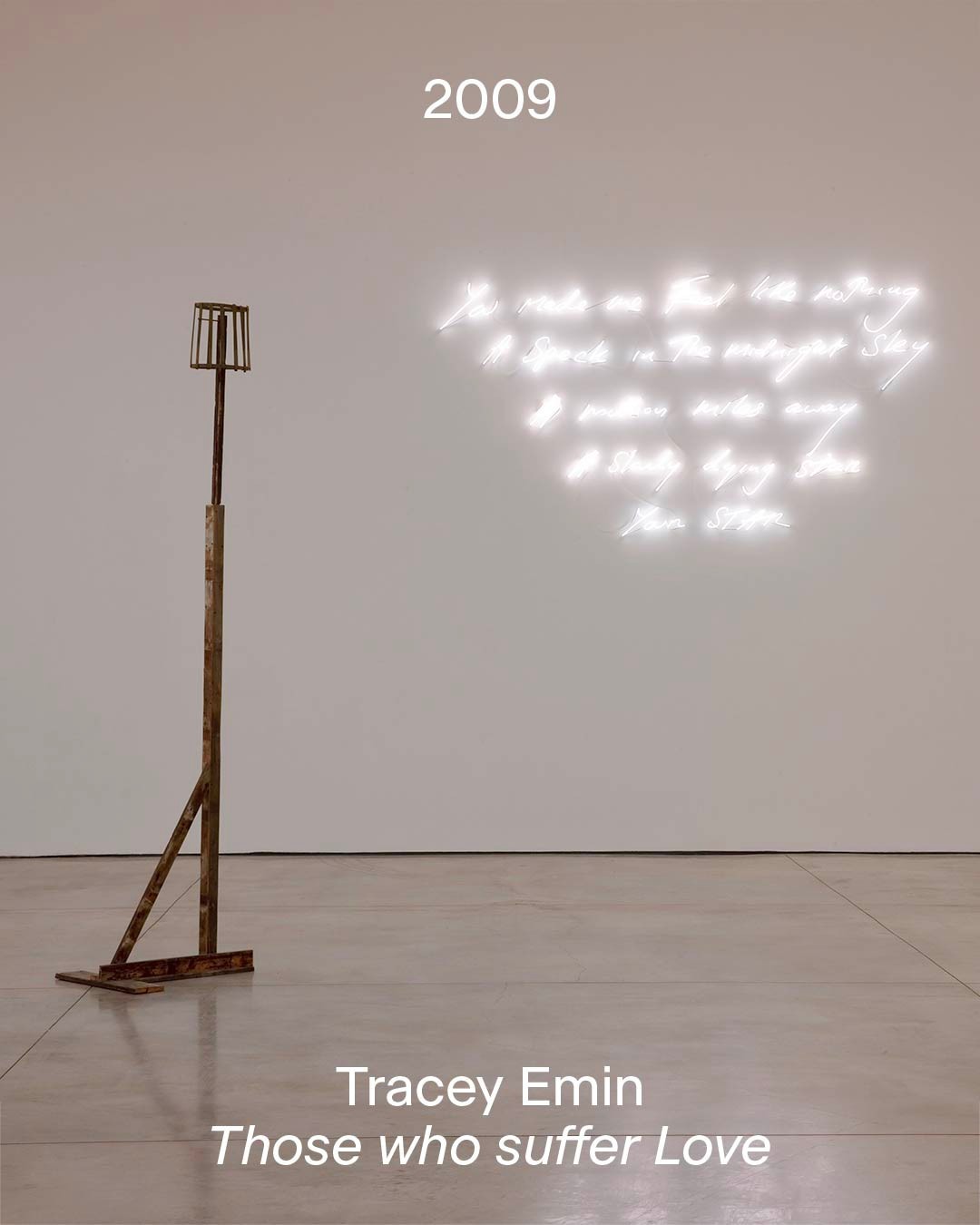
Tracey Emin's 2009 installation introduces glowing text beside a tall wooden object. Gilbert & George's 2012 LONDON PICTURES puts dense framed images along white walls, with benches offering a place to stay. The photographs register different demands on the body: move around, read, sit, look again.
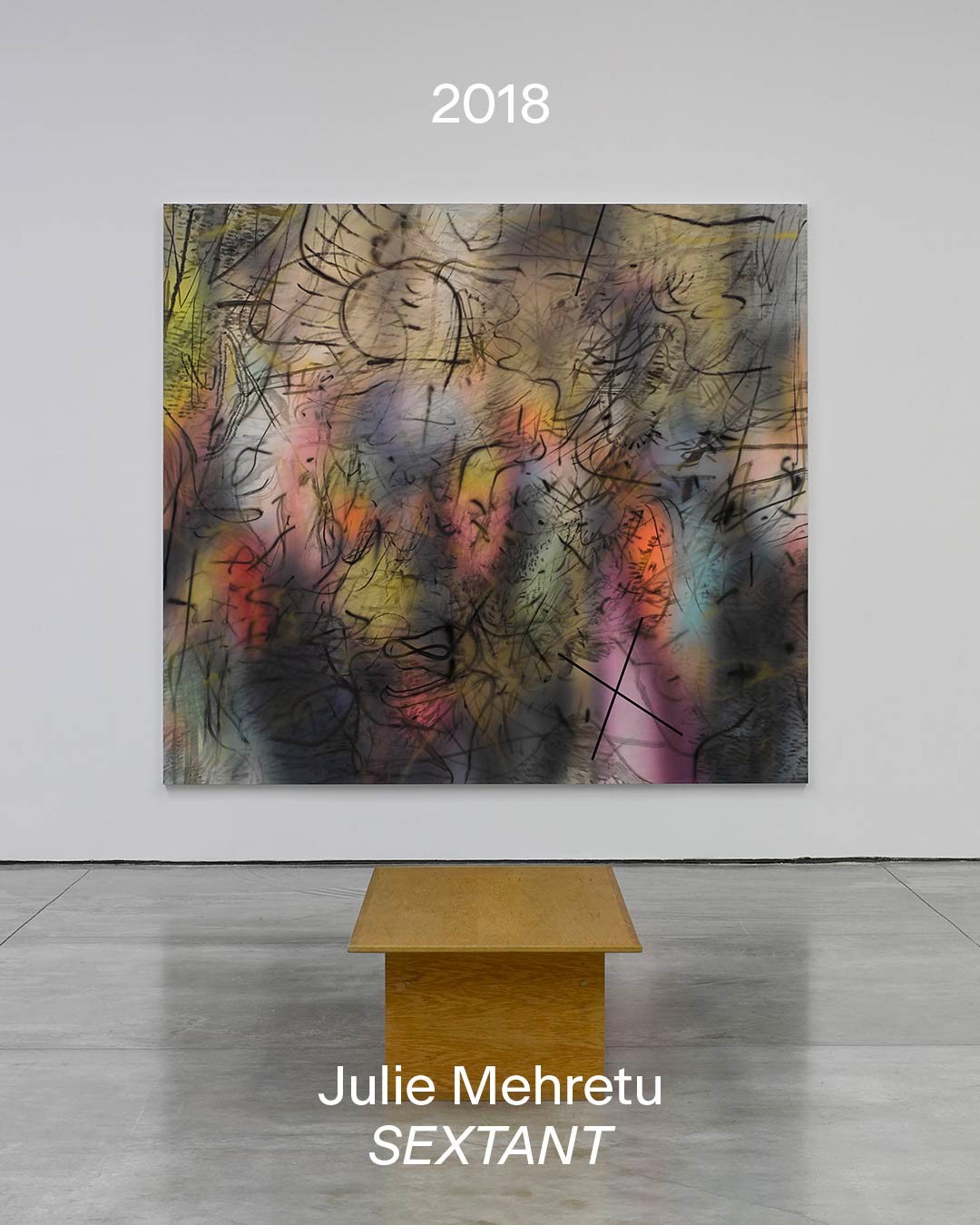
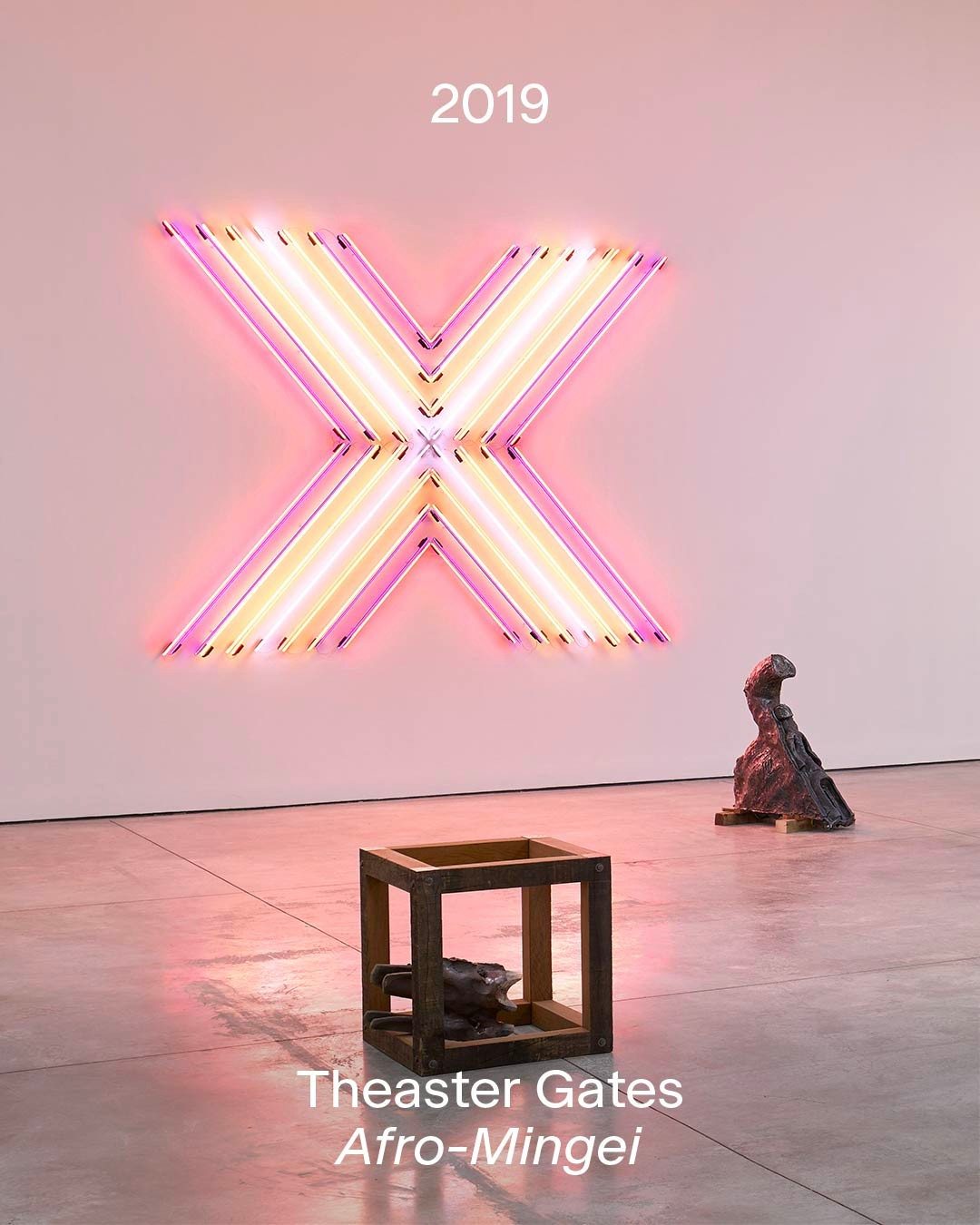
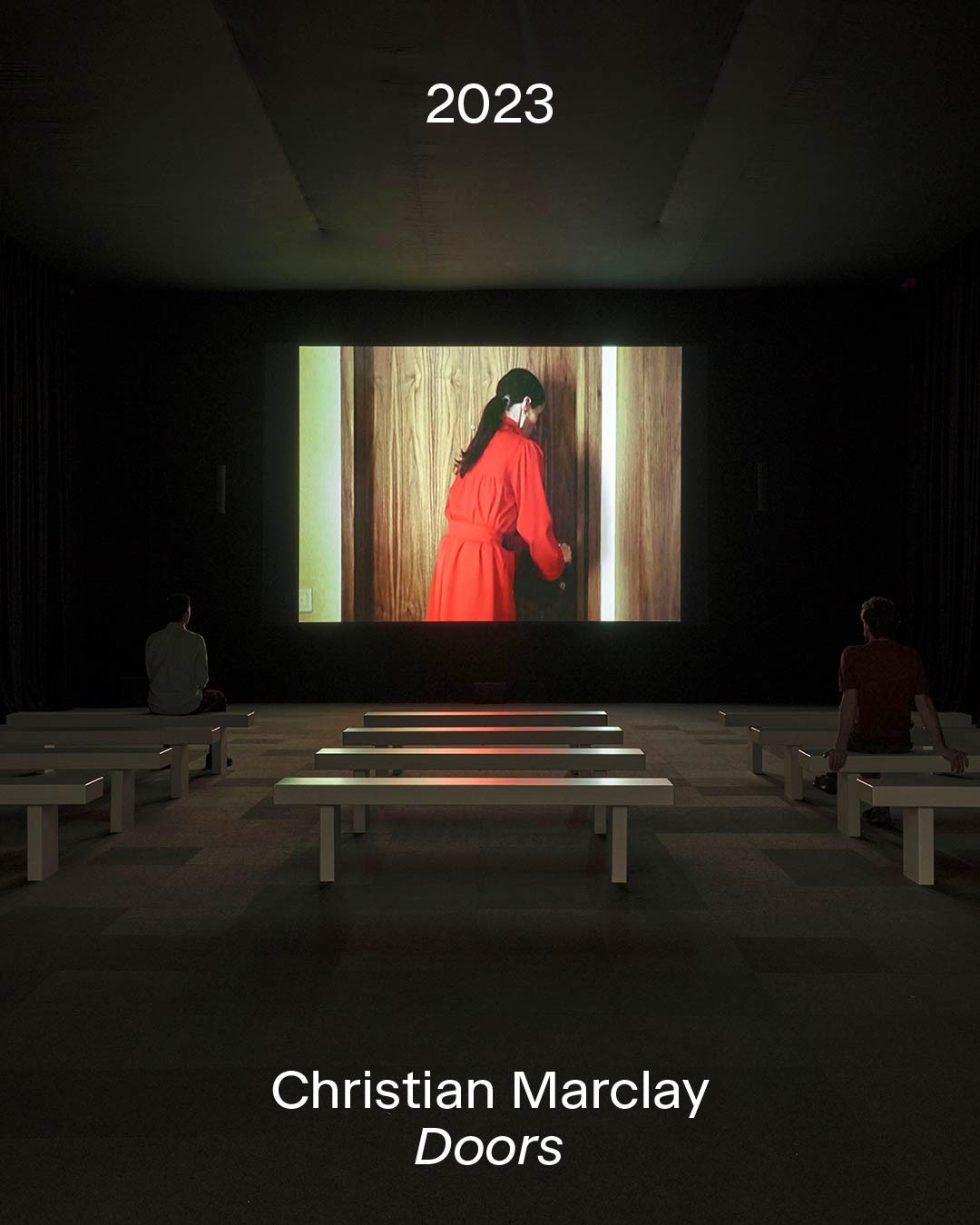
Julie Mehretu's 2018 SEXTANT concentrates activity inside a large painted surface. Theaster Gates' 2019 Afro Mingei brings an illuminated X and furniture into the room. Christian Marclay's 2023 Doors darkens the space around a screen and rows of seating, shifting the gallery toward cinema.
Marclay's frame is especially telling. The architecture recedes so the moving image can establish its own light and duration. White walls are no longer the dominant visual fact. A room designed to show objects has become a place where viewers agree to spend time together.
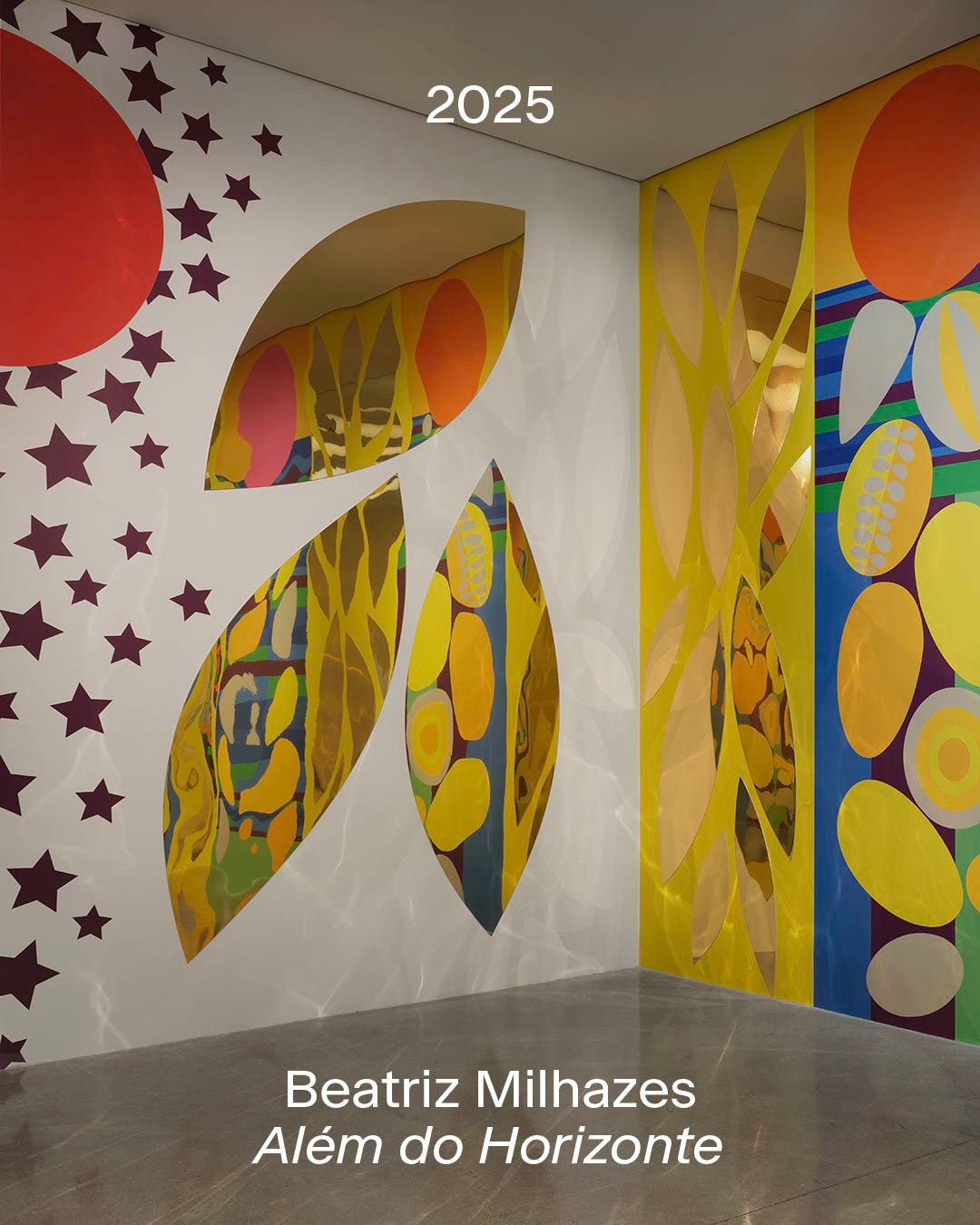
Beatriz Milhazes' 2025 Além do Horizonte takes another route, with large coloured shapes extending the visual field across the wall. The range is the argument. Mason’s Yard is most useful when its apparent neutrality can be interrupted by a particular artist's requirements.
Mehretu's work at The Broad's collection also made exhibition timing consequential when a canvas was removed from view. Installation photographs preserve a record, but they cannot replace the scale and duration of a visit while a work is available.
Emma Reyes gives the anniversary a present tense
White Cube's exhibition page identifies the Reyes show as her first solo presentation in the UK. It brings together paintings and works on paper from three series made between 1973 and 1998, foregrounding patterned surfaces and the relationships between living forms.That makes a better destination than an abstract celebration of the gallery's longevity. Visitors can examine a specific artist whose work has not previously had this kind of solo presentation in Britain, inside a room carrying two decades of other installations.
The address is 25 to 26 Mason’s Yard, London SW1Y 6BU. Check the gallery's visiting information before travelling, and keep Orozco's Bermondsey exhibition separate when planning a second stop.
Go for Reyes before October 3, then look at the room around the paintings. The naturally lit basement and the 1973 to 1998 works give this anniversary something more useful than nostalgia: a present encounter with an artist, and enough space to let it happen.
Frequently Asked Questions
When did White Cube Mason’s Yard open?
September 2006, with an inaugural presentation by Gabriel Orozco.
What occupied the site before the gallery?
An electricity substation.
What spaces does the building contain?
A street level gallery and a naturally lit, double height basement gallery.
What is currently showing at Mason’s Yard?
Emma Reyes, through October 3, 2026.
Is Orozco’s Chronotopic at Mason’s Yard?
No. It is at White Cube Bermondsey.
What is the Mason’s Yard address?
25 to 26 Mason’s Yard, London SW1Y 6BU.
Topics: gallery-architecture, focus-58-46, the-broad, emma-reyes, emma-bip, new-museum, emma, white cube, gabriel-orozco, masons-yard, london, white-cube, new museum, the broad, julie-mehretu