STEPHEN ANTHONY DAVIDS REWORKS EVERY SCREEN PRINT BY HAND
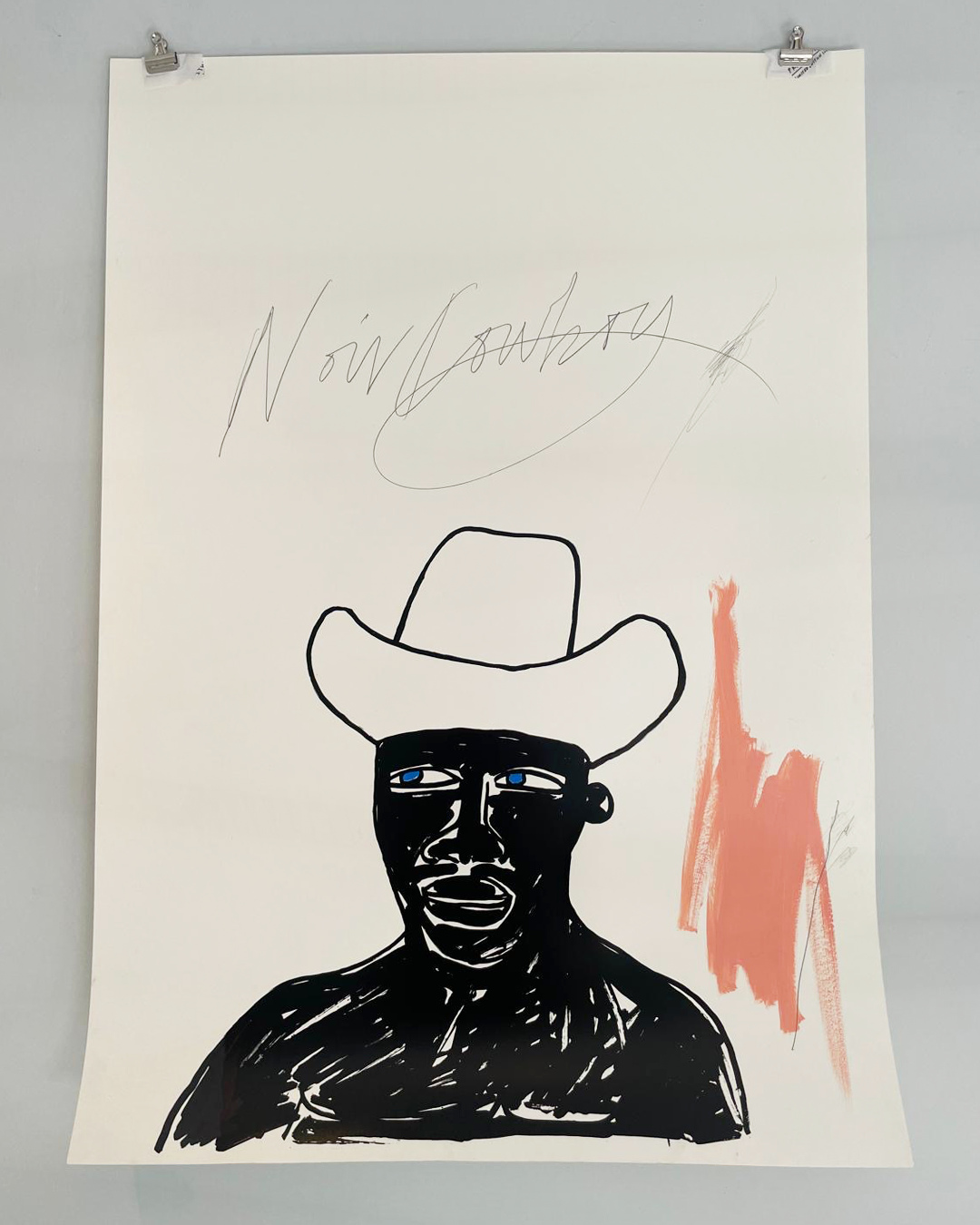
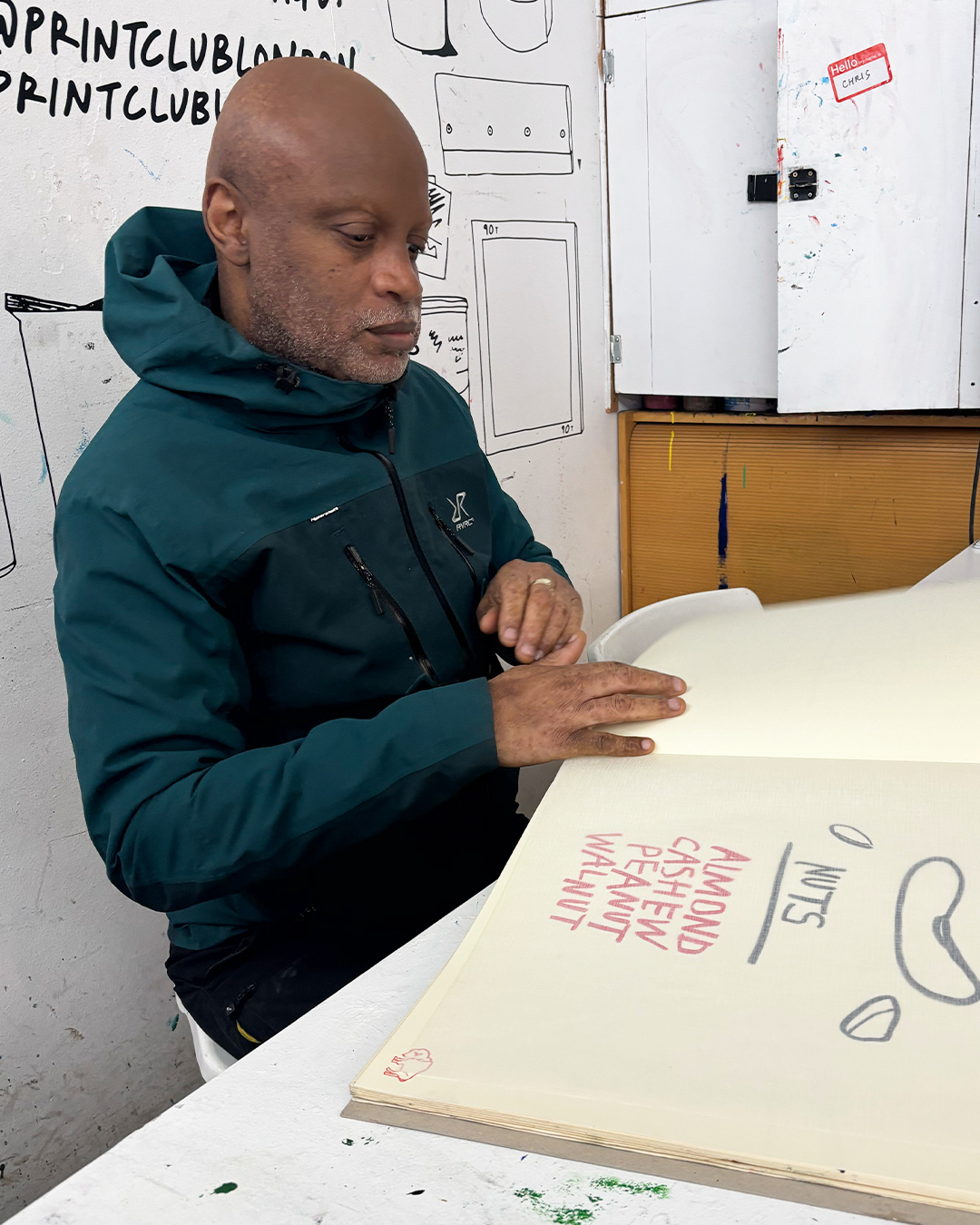
Stephen Anthony Davids is a London based fine artist and Print Club London's 2025 Artist in Residence, producing screen prints he hand finishes so no two impressions match. He works primarily on found wood, Victorian ledger sheets and found objects, painting solitary figures that center the face and eyes, and previously ran his own gallery, Artspace, off Brick Lane from 2005 to 2009.
Key Points
- Davids hand finishes every 2025 Print Club London print so no two impressions match.
- He paints on found wood, primed panels and a personal collection of Victorian ledger sheets.
- He ran his own London gallery, Artspace, off Brick Lane from 2005 to 2009.
A Screen Print That Refuses to Repeat Itself
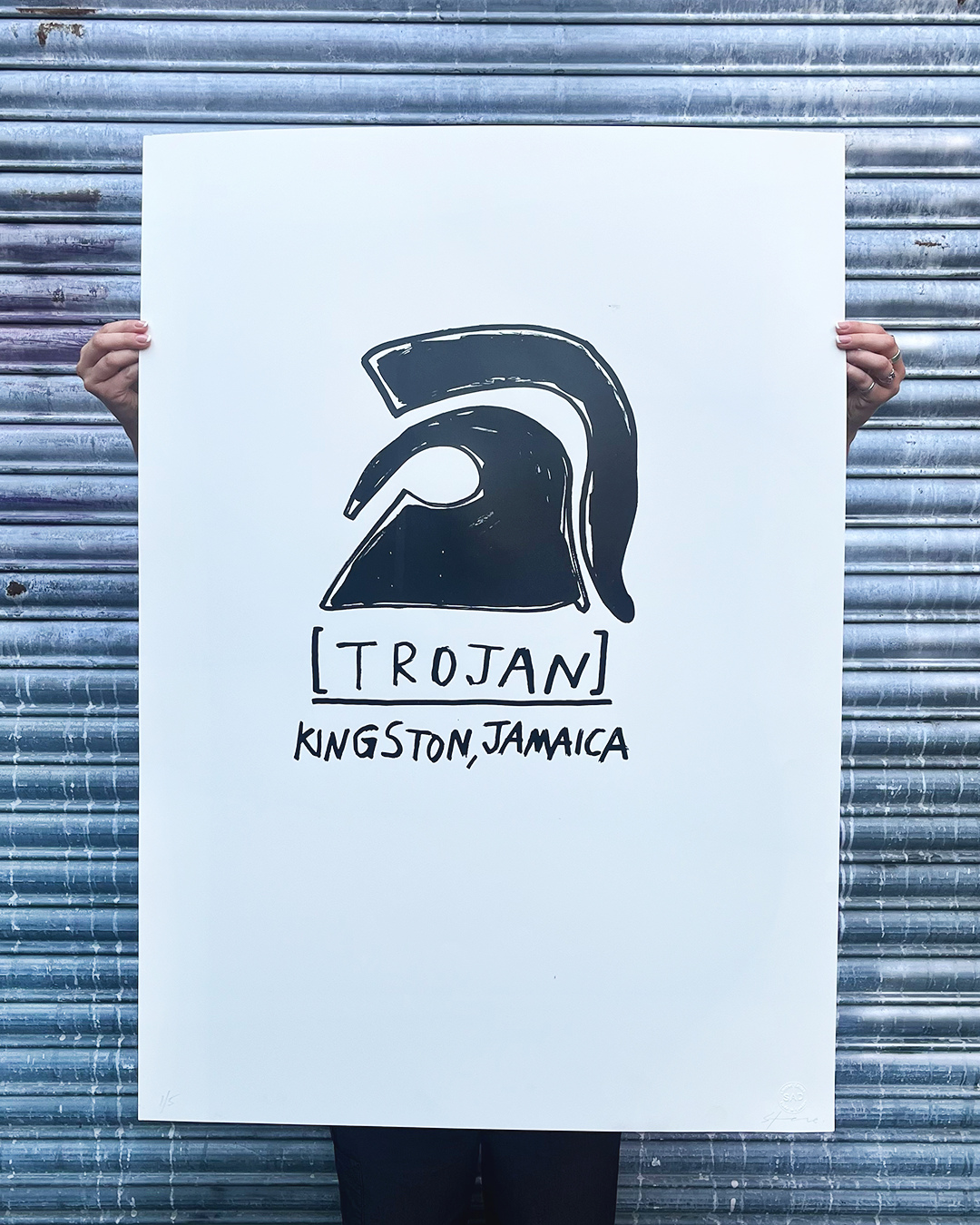
Screen printing exists to make the same image many times over, the same mesh, the same squeegee pass, the same ink laid down sheet after identical sheet. Stephen Anthony Davids spent his 2025 stint as Artist in Residence at Print Club London working against that premise, pulling each impression off the press and reworking it by hand until the studio can call every sheet a one of a kind original rather than a numbered edition.
That reversal is the whole story. A technique built for repetition becomes, in Davids' hands, a way of guaranteeing that nothing repeats.
Stephen Anthony Davids Paints on Wood Before He Paints on Anyone
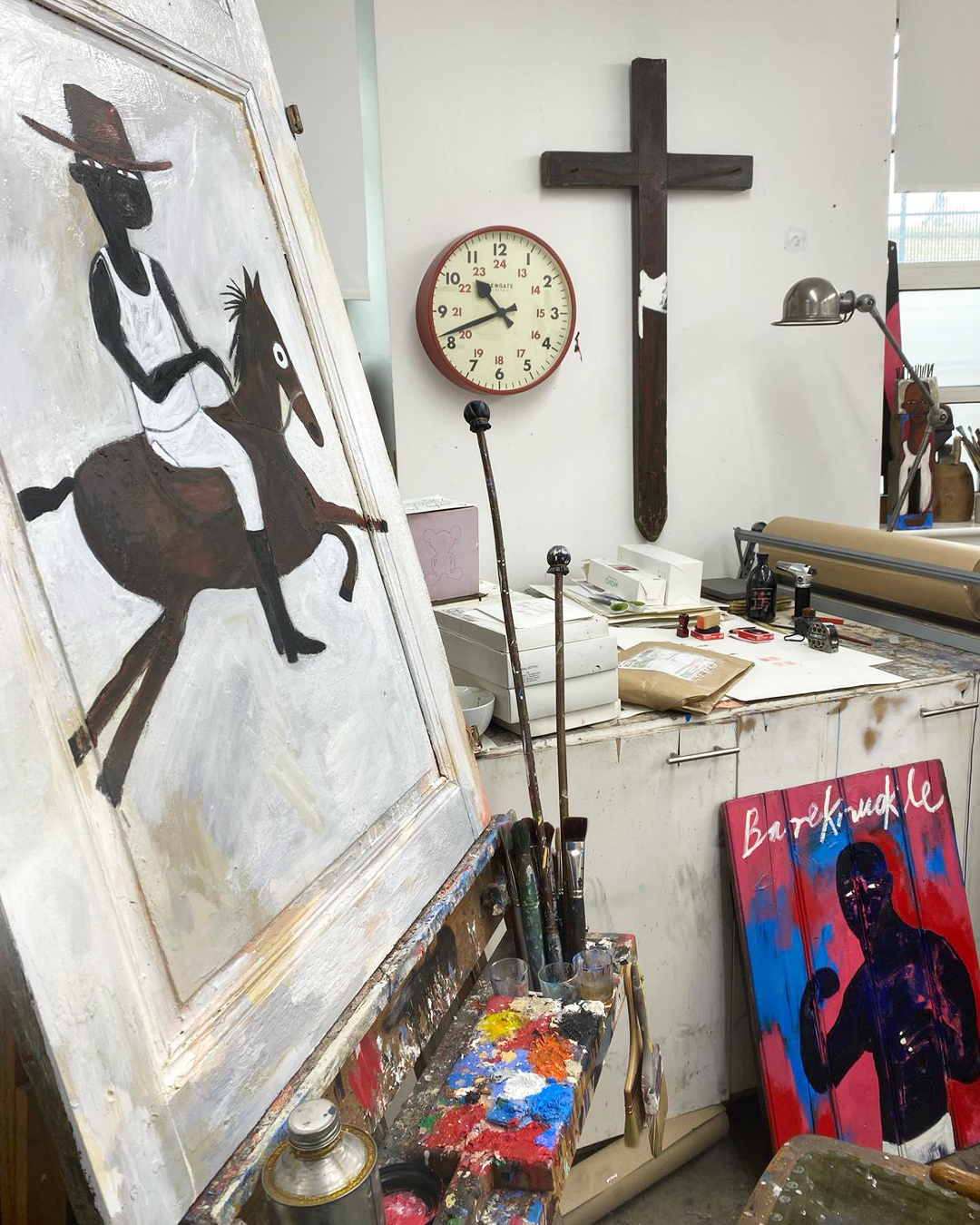
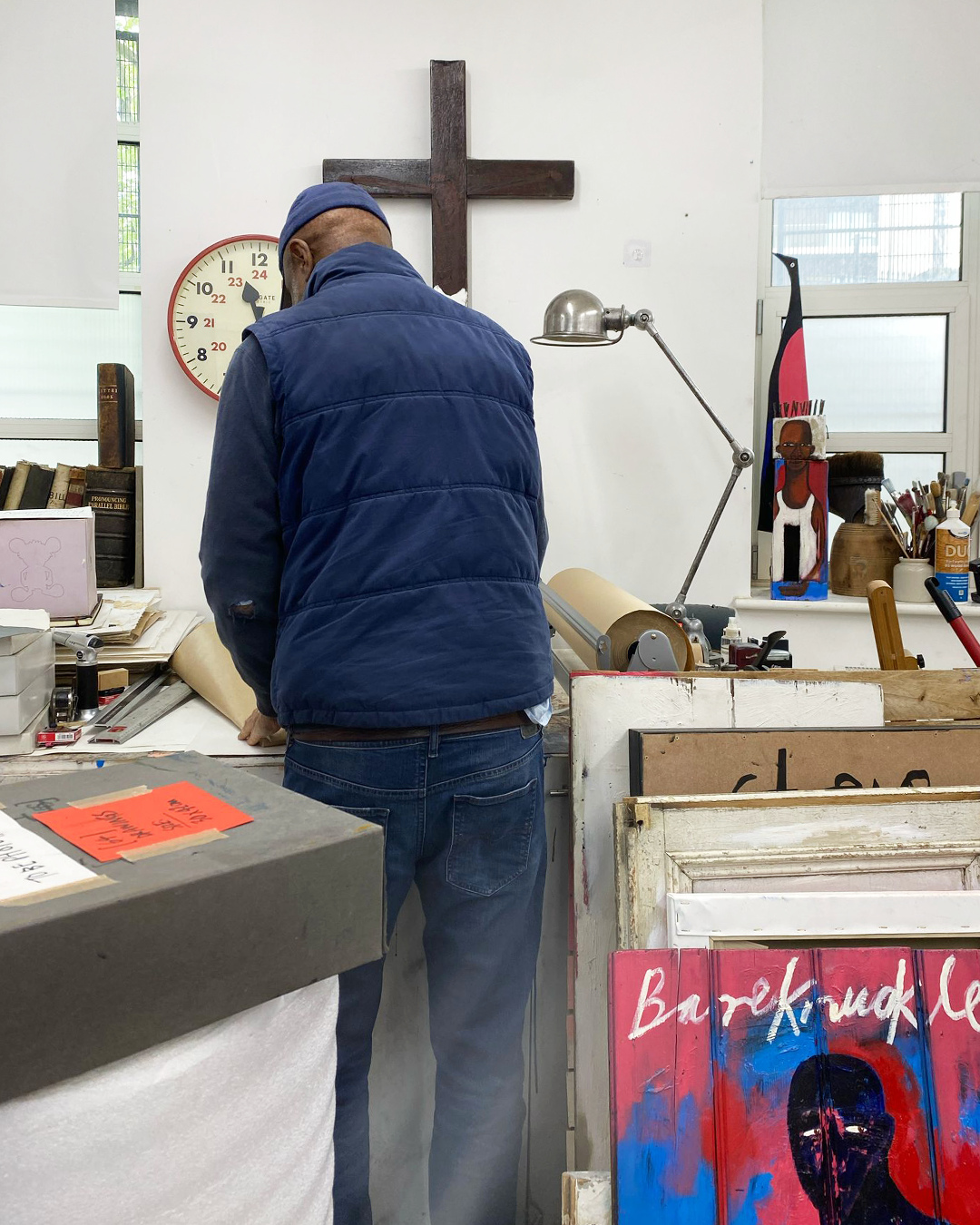
Davids' favourite surface is not paper at all. It is wood, whether that means a found plank pulled off a skip or a panel he has had primed to order, and it sits at the centre of a practice built almost entirely from things that already existed before he touched them.
His studio keeps a running supply of found objects and wooden artefacts, plus a personal collection of Victorian ledger sheets he paints and inks directly onto, the same accounting paper a London clerk once used to log real transactions now carrying a portrait instead of a column of figures. Ink bottles from the old Stephens Ink Company, the London firm that supplied offices across the city for more than a century, sit in the studio as working material rather than decoration. Andy Warhol built a whole decade out of the silkscreen's repetition; the Print Club London residency runs the opposite instinct, working from someone else's material and adding to it by hand, onto a screen printing press instead of a scavenged ledger.
The Faces Are Never Named, on Purpose
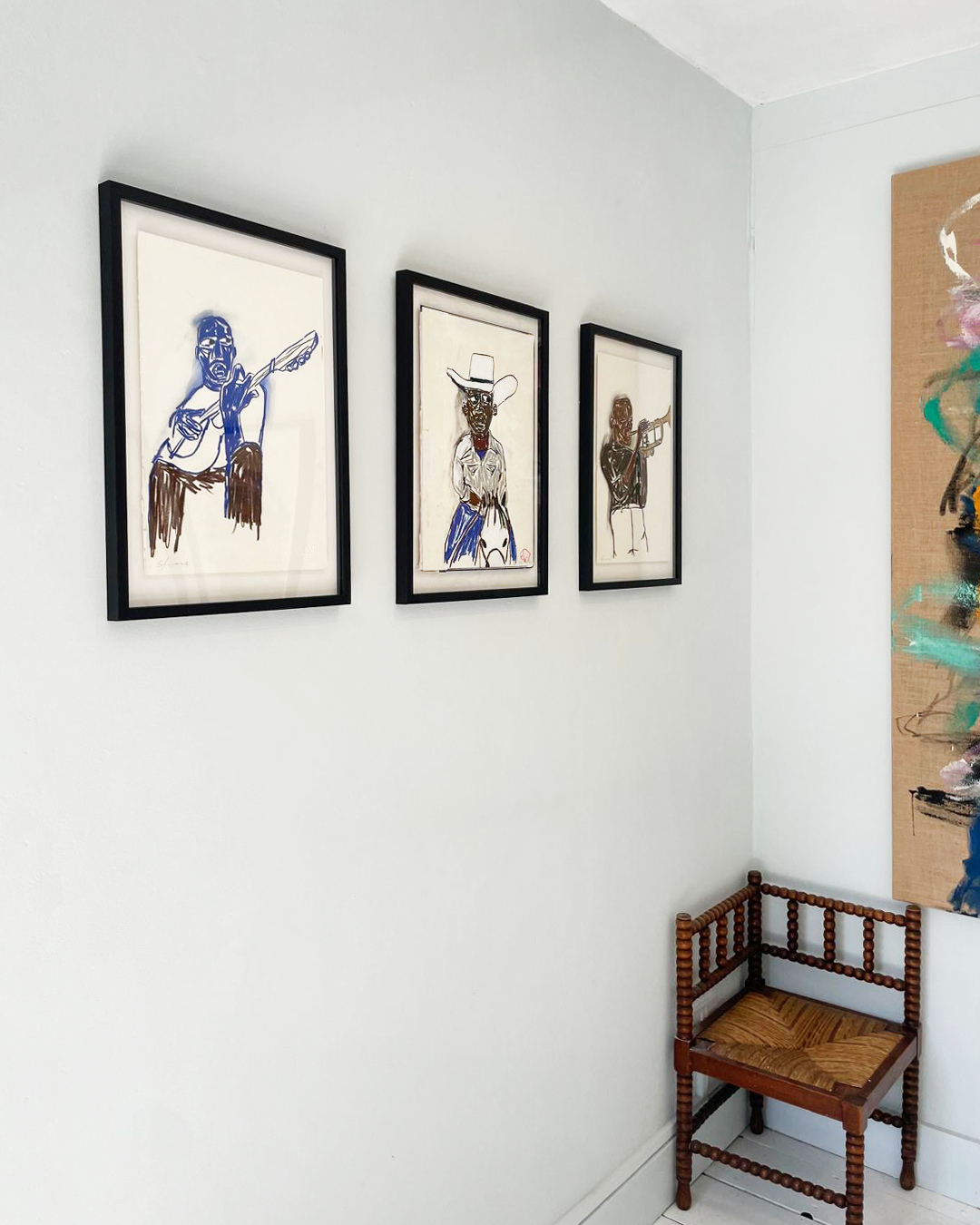
Every one of Davids' subjects is a solitary figure, and the face, specifically the eyes, carries the entire portrait rather than a caption or a title. He has said the work sits inside inclusion and equality as subjects in their own right, using race, gender and social and economic status as the material he is actually working with when he paints a face.
That focus traces back to a career that started outside fine art altogether. Davids came up through advertising and illustration, and he currently works as a Behaviour Consultant alongside children, a job that sits inside communication and play rather than a studio. Both feed the same eye. An advertising background trained him to make a single image carry a full message fast, and years spent reading how children communicate without full sentences sharpened his focus on the face as the place meaning actually lives.
Brick Lane Taught Him the Gallery Side First
Before Print Club London gave him a press, Davids ran his own space. He opened Artspace, a gallery just off Brick Lane in London E2, in 2005 and kept it running until 2009, selling and promoting original graphic art alongside work by illustrators and photographers rather than showing only his own pieces.
That four year run explains why the residency reads less like a debut and more like a return. Davids has sold work through the London print scene for two decades, including a recurring cowboy motif that has resurfaced across multiple originals sold through the East London gallery Nelly Duff, proof the residency sits on top of an existing practice rather than launching a new one.
Folk Art Without the Souvenir Version
A folk art sensibility runs through everything Davids makes, and he points to artists who blur the line between contemporary gallery work and daily life as his reference point rather than any single painter or movement. That puts the Victorian ledger paper and the found wood panels in context. They are not props, they are the same impulse that makes folk art folk art, using what is already on hand and already carries a history before the artist arrives.
Carpet Company scanning its own studio test print rags into a run of tees works from the same logic in streetwear, treating the byproduct of production as the actual product. Davids gets there through a residency and a stack of ledger paper instead of a screen printing floor, but the argument is the same. The most honest material is the one that already had a history attached to it.Hand Work Beats a Numbered Edition, Print Club Is Betting
A screen print residency built around making every sheet unique is a harder sell than a numbered edition, and Print Club London is betting that collectors will pay for the hand finishing rather than a scarcity count on a certificate. Davids has the receipts for that bet, two decades of gallery work, a Brick Lane space he ran himself, and a Victorian ledger collection that makes every portrait arrive with paper that already had a life before his ink touched it.
The residency is not a departure from that practice. It is the same folk art logic run through a different press.
Related: MINNIE EVANS RETURNS TO THE WHITNEY 50 YEARS LATER.
Related: CARPET COMPANY'S MISPRINT TEE RETURNS IN PLAID SEPT 12.
Related: CARPET COMPANY MAKES ITS SEASON 22 BOXER BRIEFS GLOW.
Frequently Asked Questions
What Is Stephen Anthony Davids' Artist in Residence Program at Print Club London?
Print Club London named Stephen Anthony Davids its Artist in Residence for 2025, where he made screen prints that he hand finishes so each is described as a one of a kind original rather than a numbered edition.
What Materials Does Stephen Anthony Davids Use in His Portraits?
He paints and inks onto found wood, bespoke primed panels and a personal collection of Victorian ledger sheets, alongside found objects and wooden artefacts kept in his studio.
What Subjects Does Stephen Anthony Davids Paint?
He paints solitary figures with a focus on the face and eyes, using portraiture to explore inclusion, equality, race, gender and social and economic status.
Is Every Print Club London Edition by Stephen Anthony Davids Unique?
Print Club London describes each screen print in the residency as a one of a kind original because Davids hand finishes every impression after it comes off the press.
What Gallery Did Stephen Anthony Davids Run in London?
He opened Artspace, a gallery just off Brick Lane in London E2, in 2005 and ran it until 2009, selling and promoting graphic art alongside other illustrators and photographers.
How Did Stephen Anthony Davids Start Working in Art?
He came up through advertising and illustration before moving into fine art, and he currently also works as a Behaviour Consultant with children alongside his painting practice.
Where Can You Buy Stephen Anthony Davids' Original Work?
His originals and prints have sold through London galleries including Nelly Duff and Print Club London, alongside his own studio site.
Topics: brick-lane, print-club-london, screen-print, stephen-anthony-davids, folk-art, london-art, artist-residency, limited-edition, print club london