ANDY WARHOL TURNS 98, FOUR IMAGES TRACE THE FACTORY YEARS
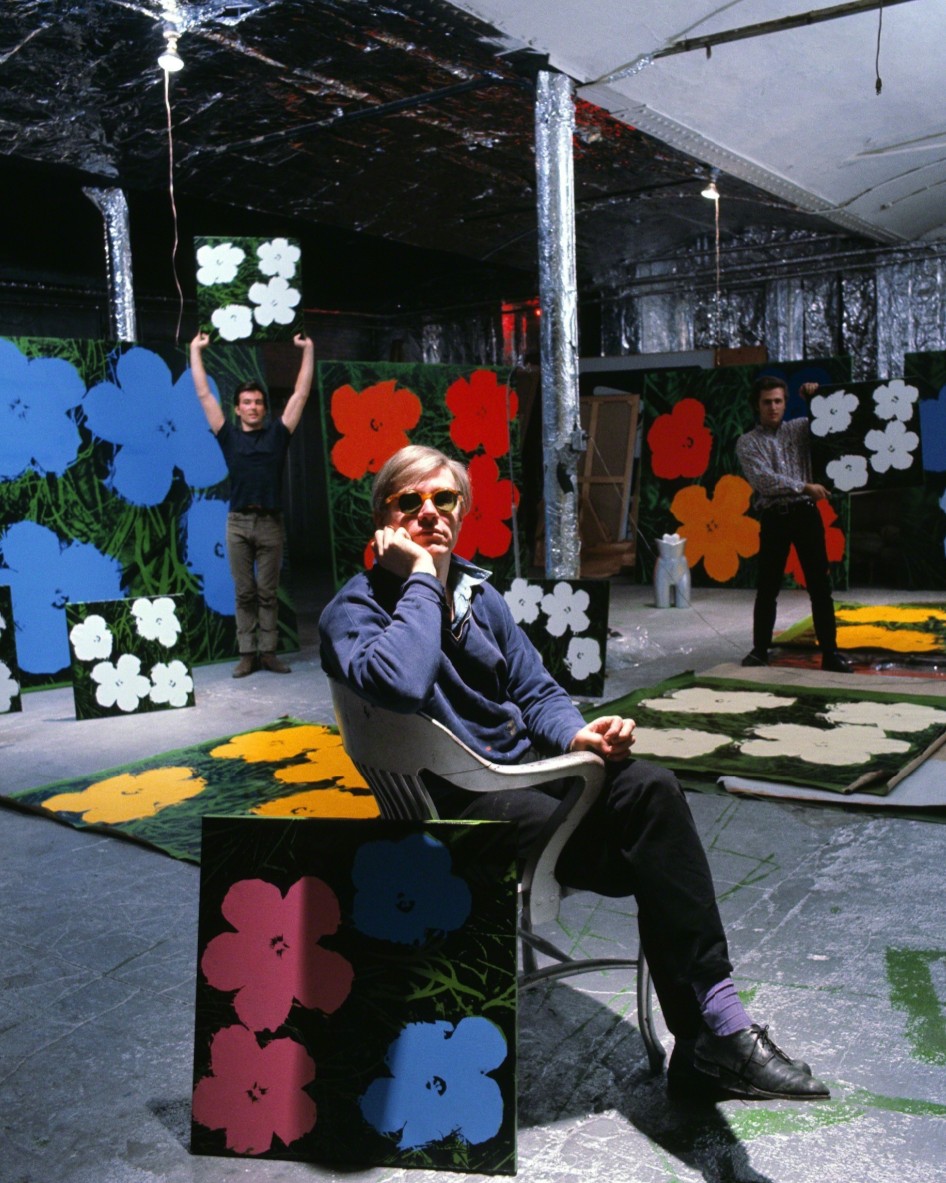
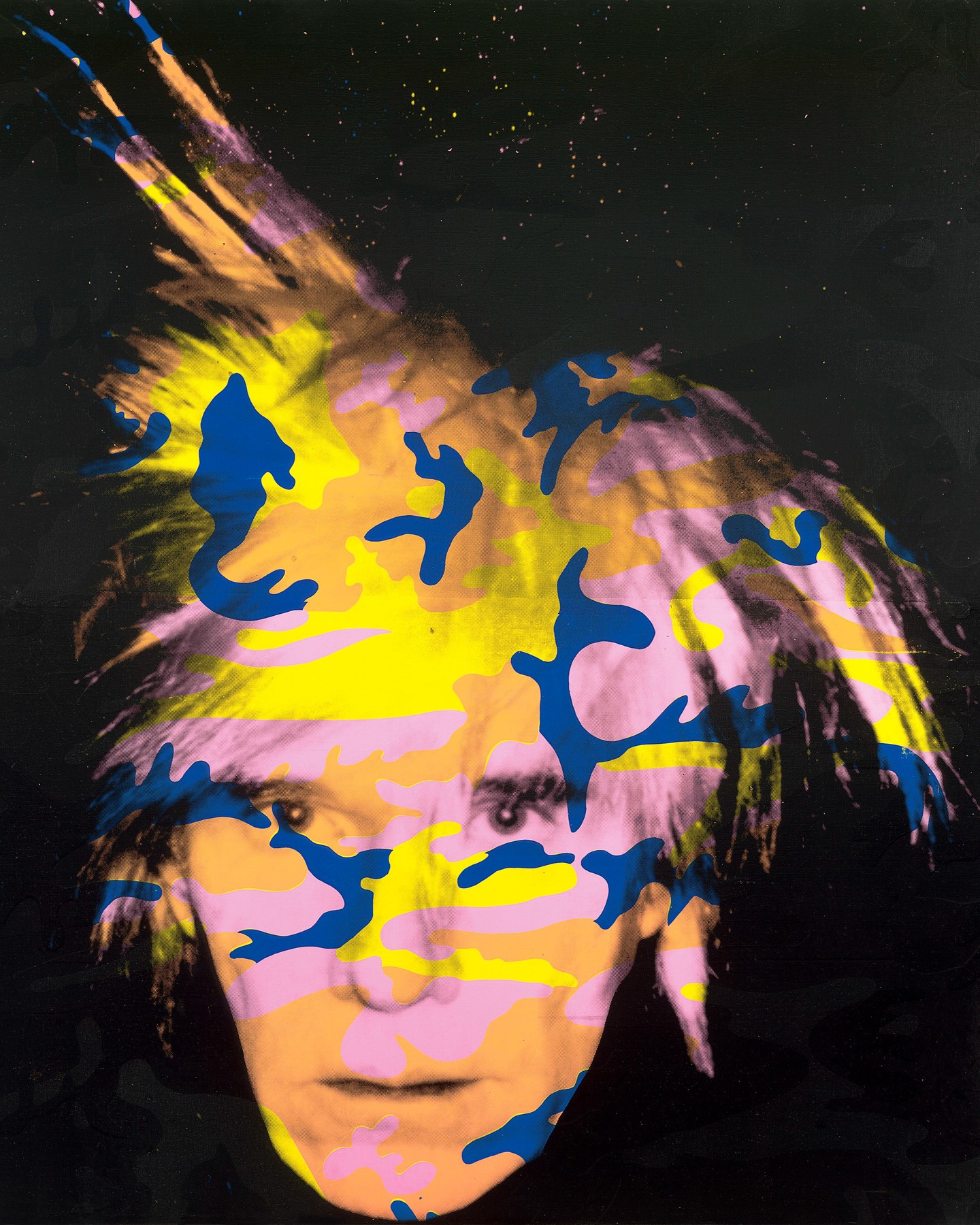
Andy Warhol turned 98 on August 6, 2026. Four archival images now circulating trace his career from Ugo Mulas's 1964 Factory photograph with assistants Gerard Malanga and Philip Fagan, through Andrew Unangst's 1985 Park Avenue portrait, to Self Portrait No. 9, a 1986 self portrait now held by the National Gallery of Victoria.
Key Points
- Andy Warhol was born August 6, 1928, and turns 98 today.
- Self Portrait No. 9, made in 1986, sits in the National Gallery of Victoria.
- An early colored Liz silkscreen recently sold for $31.5 million at auction.
Gerard Malanga holds one of Warhol's Flowers paintings over his head, elbows locked in a contrapposto so severe it plays as parody. Philip Fagan is mid step beside him, caught in what looks like an impromptu dance. Andy Warhol stands off to the side, not performing, just watching the work move through the room. The photograph is Ugo Mulas's, shot inside the Factory in 1964, and it has outlasted every gallery wall it has hung on since.
Warhol turns 98 today. He was born August 6, 1928, and the four images marking the date are not a highlights reel of Marilyn Monroe or Campbell's soup cans, though both are part of what made him unavoidable. They are documentation: a Factory contact sheet moment from Mulas, a formal 1985 studio sitting, and a self portrait made five months before he died. Read together, they trace a career that ran from being photographed to photographing himself to disappearing behind the camouflage of his own face.
Gerard Malanga Learned to Print Flowers by Hand
Gerard Malanga worked as Warhol's studio assistant from 1963 to 1970, pulling the squeegee across the silkscreen mesh while Warhol directed color and registration. The New York Times later called him Warhol's most important associate. The Flowers series he is holding in Mulas's photograph came off that same hand printed line, hard edged blooms in acid colors, run in batches the way a newspaper runs off a print. Ugo Mulas was Italian, a photographer who had covered the Venice Biennale since 1954 and met the Pop Art wave there in 1964. He crossed to New York that year and spent three years documenting the scene for what became his book "New York: The New Art Scene." The Factory picture is one frame from that project, the closest thing Warhol left to a behind the scenes look at how the icons actually got made: not a genius alone with a brush, but a small crew running a print shop.
A Camouflage Screen Covers Warhol's Own Face in 1986
Self Portrait No. 9 is synthetic polymer paint and screenprint on canvas, 203.5 by 203.7 centimeters, now held by the National Gallery of Victoria in Melbourne. Warhol built the series from a single photograph of himself in his fright wig, then screened a fluorescent camouflage pattern over his own face until it reads as a mask, disembodied against a black void. He made it in 1986, five months before he died in February 1987 from complications after gallbladder surgery. The same silkscreen technique that turned soup cans into repeatable icons here turns the artist's own face into one, hiding him inside the exact process that made him famous.
Finally Offline has tracked what that process is worth now. An early colored Liz Taylor silkscreen, close in scale and technique to the piece the Broad already owns, sold for $31.5 million at auction the same week this Factory photograph started circulating again, proof the market for Warhol's screened portraits has not cooled since the 1960s.
1985. One Studio Sitting on Park Avenue.
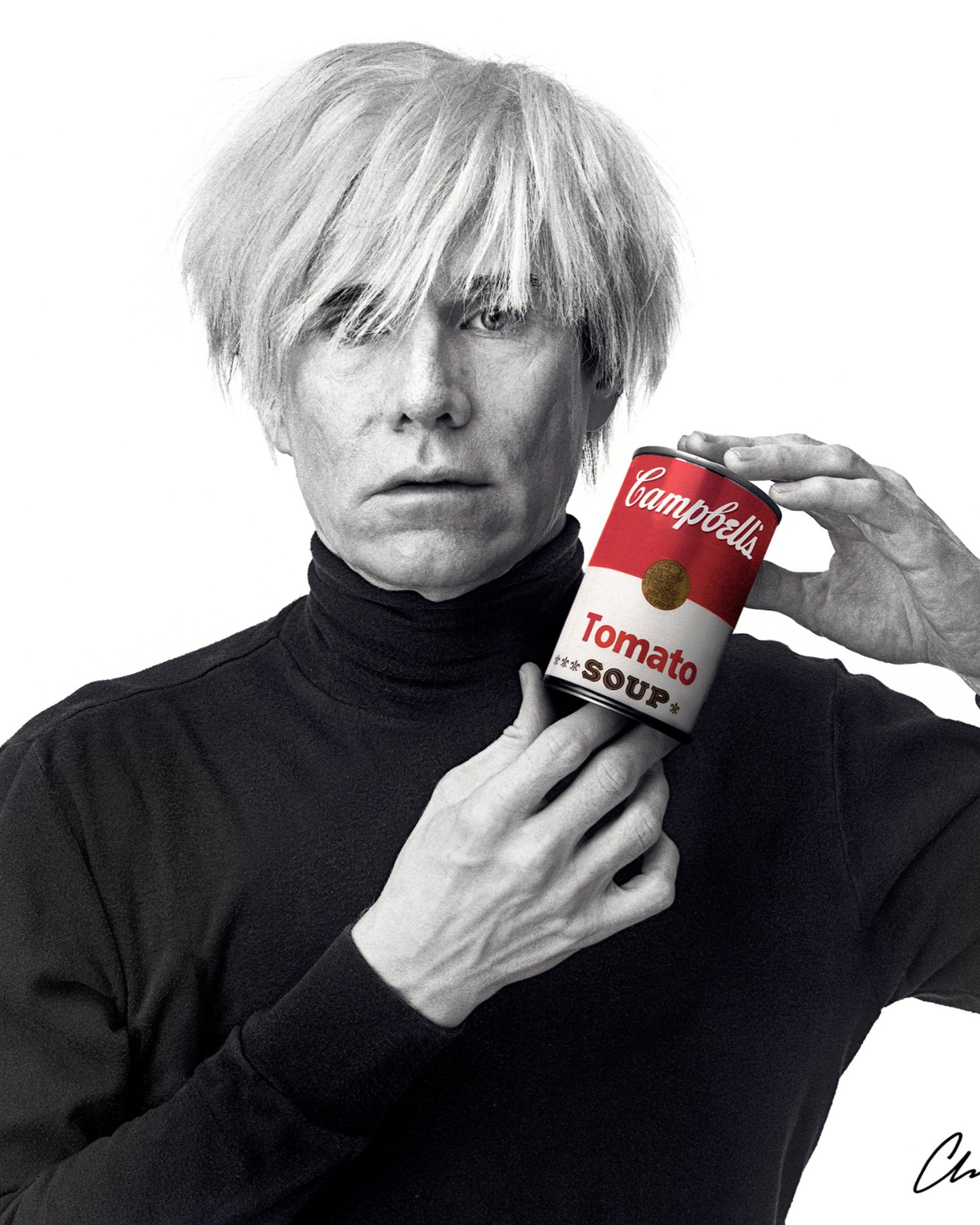
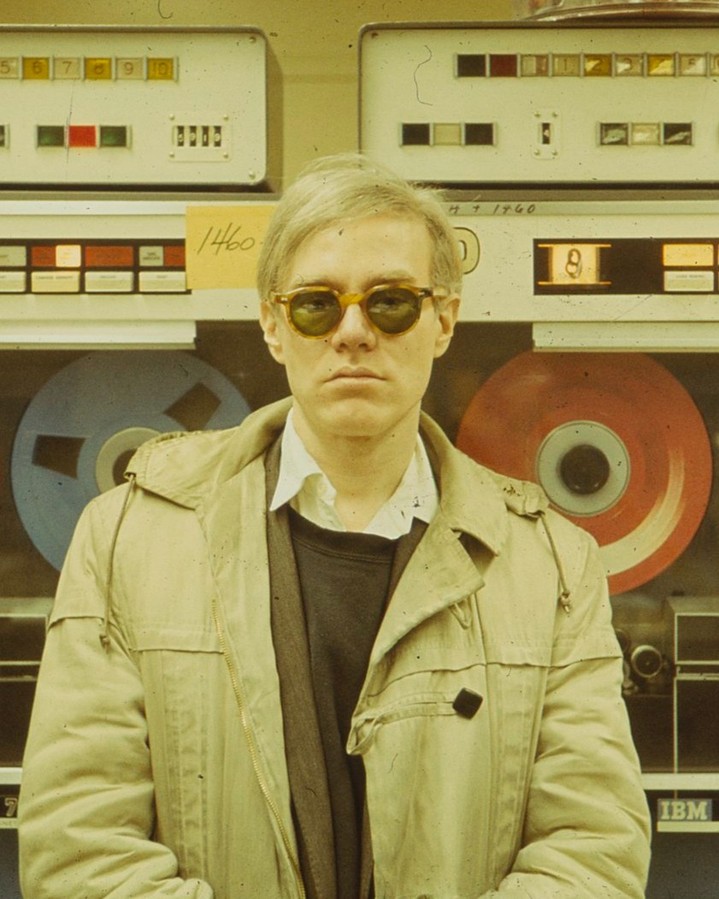
Andrew Unangst shot Warhol in his own Park Avenue studio in 1985, two years before Self Portrait No. 9. The resulting print, "Andy Warhol with Red Campbell's Soup," puts Warhol beside the imagery that made him a household name rather than inside it, a portrait of the man standing next to the product rather than another silkscreen of the product itself. That image now sits in the permanent collections of both the Andy Warhol Museum in Pittsburgh and the International Center of Photography, and it has run on the covers of Time and Interview. A fourth image from the same year as the Factory shot, Lawrence Fried's 1964 portrait of Warhol, rounds out the set marking the birthday, one more photographer's turn at a subject who spent his career turning the camera back on everyone else.
The Screen Outlived the Soup Can
Warhol's silkscreen method is the reason his work still moves through markets built for entirely different objects. Off White ran four Virgil Abloh screen prints through Sotheby's this summer for a University of Wisconsin scholarship fund, the same printmaking process Warhol standardized in the 1960s now funding tuition instead of art history footnotes. Warhol did not invent screen printing, but he is the reason a fashion label reaches for it when it wants a print to read as both art and product at once.
Ninety eight years on, Warhol is still the artist other artists borrow shorthand from without saying his name. The 1964 Factory photograph, the 1986 fright wig self portrait, and the 1985 Park Avenue sitting are three different eras of the same experiment: turning a face, a flower, or a soup can into something that can be run off the press and still sell as singular. A $31.5 million Liz Taylor silkscreen this summer says the market still agrees. The screen keeps outliving the subject it was built to multiply.
Related: WARHOL AND BASQUIAT PAINTED FOR TWO HOURS AND IGNITED ART'S WILDEST COLLAB.
Frequently Asked Questions
When was Andy Warhol born?
Andy Warhol was born on August 6, 1928, in Pittsburgh, making him 98 years old on this date in 2026.
Who photographed Andy Warhol at the Factory in 1964?
Italian photographer Ugo Mulas photographed Warhol with studio assistants Gerard Malanga and Philip Fagan at the Factory in New York in 1964.
What is Andy Warhol's Self Portrait No. 9?
Self Portrait No. 9 is a 1986 synthetic polymer paint and screenprint self portrait, 203.5 by 203.7 centimeters, held by the National Gallery of Victoria in Melbourne.
When did Andy Warhol die?
Andy Warhol died in February 1987 from complications following gallbladder surgery, five months after completing his final self portrait series.
Who took the 1985 Andy Warhol Campbell's Soup portrait?
Photographer Andrew Unangst shot the portrait at his Park Avenue studio in 1985; it is now held by the Andy Warhol Museum and the International Center of Photography.
How much did a Warhol Liz Taylor silkscreen recently sell for?
An early colored Liz Taylor silkscreen close in scale to the version at the Broad sold for $31.5 million at auction.
Did Andy Warhol invent screen printing?
No, but he standardized silkscreen printing as a fine art production method in the 1960s, and the technique still appears in fashion drops like Off White's Sotheby's prints today.
Topics: virgil abloh, contemporary-art, silkscreen, art-market, the-factory, pop-art, andy-warhol, andrew-unangst, virgil-abloh, ugo-mulas