A WARHOL LIZ LIKE THE BROAD'S SOLD FOR $31.5 MILLION
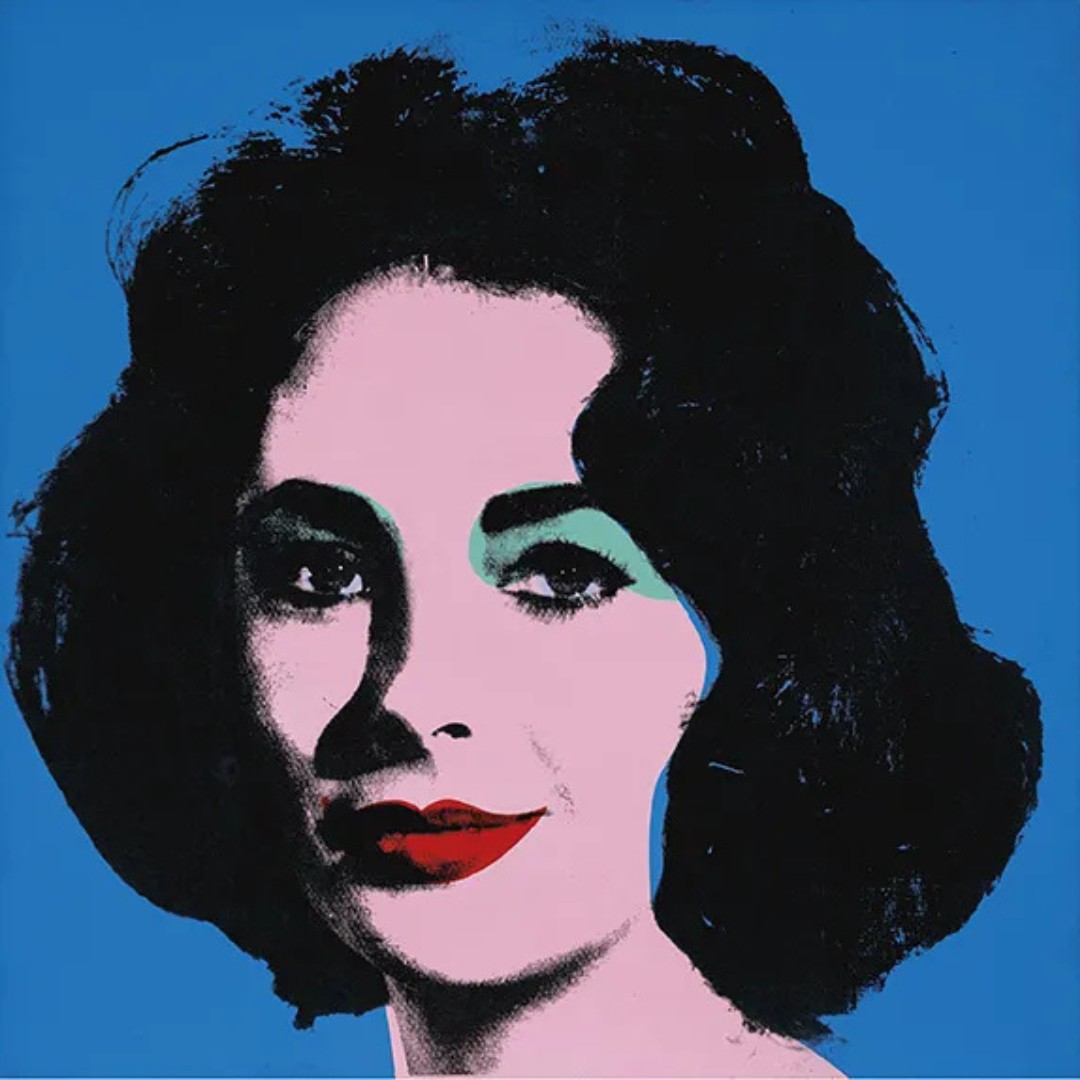
The Broad's cerulean blue Liz [Early Colored Liz] is one of 13 silkscreen paintings Andy Warhol made in 1963 from a single 1962 publicity photo of Elizabeth Taylor taken during her recovery from near fatal pneumonia on the set of Cleopatra. Auction prices for the series range from $20.3 million to $31.5 million, though The Broad's version remains in the permanent Eli and Edythe L. Broad Collection alongside Warhol's Two Marilyns.
Key Points
- The Broad's cerulean Liz is one of 13 Early Colored Liz paintings Warhol made in 1963.
- Auction prices for the Early Colored Liz series run from $20.3 million to $31.5 million.
- The source photo dates to Taylor's near fatal pneumonia during the filming of Cleopatra.
$31.5 million for a silkscreen of a woman who nearly died of pneumonia three years earlier. That is what a Warhol Liz [Early Colored Liz] painting brought at Sotheby's in 2014. The Broad in Los Angeles owns a cerulean blue version of the same image, and it does not carry a price tag because the museum is not selling. Before either painting existed, the source was a wire photo of Elizabeth Taylor, made to sell a star whose personal life would not stay off the front page.
One Publicity Photo Became Thirteen Paintings
The Broad's Liz [Early Colored Liz] is one of thirteen silkscreen paintings Andy Warhol made in 1963 from a single publicity photograph of Elizabeth Taylor. Every canvas measures 40 by 40 inches, and every one starts from the same cropped image. What changes painting to painting is the background. Warhol laid down flat color block sections first, then silkscreened black ink over them, so The Broad's version reads cerulean blue where Sotheby's 2014 sale reads a different tone entirely. Auction results for the series now run from $20.3 million for Liz number 1 to $31.5 million for Liz number 3. The Broad's Liz has never sold at all. Eli and Edythe Broad bought it directly for the collection, which is why a museum wall in downtown Los Angeles can hold a picture worth more than most gallery inventories combined.
Taylor Nearly Died Making Cleopatra
The photo behind every Liz painting dates to Taylor's near fatal bout of pneumonia during the production of Cleopatra, when a tracheotomy kept her alive and the press ran the recovery as a running story. Life magazine's April 13, 1962 issue carried the photo spread Warhol worked from, timed to a comeback narrative rather than a tragedy. Warhol was not interested in the illness. He was interested in the machine that turned a woman's brush with death into a magazine cover built to sell copies, then flattened that cover into thirteen identical crops distinguished only by paint color. The Broad shares a zip code with LACMA, where Alexander Calder's Three Quintains fountain returns to a rebuilt campus in 2026, and both museums are built around the same Los Angeles instinct to treat a single object as worth an entire wing.
The Broad Owns the Comparison Points Too
The caption on The Broad's own Liz post draws the line to Marilyn Monroe and Jacqueline Kennedy, and the museum's collection makes that comparison easy to check. Marilyn Monroe died August 5, 1962, and Warhol began silkscreening her face within weeks, eventually producing Two Marilyns, which sits in the same Eli and Edythe Broad Collection as Liz. Two years later, Warhol appropriated newspaper photographs of Jacqueline Kennedy for a series built around the moments just before and after her husband's assassination. All three subjects share one condition Warhol kept returning to: a woman whose worst moment became public property before it became private grief. The Broad hangs Liz next to that history, not apart from it.
Silkscreen Repetition Predicted the Feed
Warhol's real subject was never Taylor. It was the machine that could take one photograph and multiply it thirteen times with nothing but color changing between copies, and that machine looks a lot like an Instagram grid six decades early. Every account that reposts the same paparazzi frame in a dozen slightly different crops is running Warhol's 1963 process without knowing it, minus the artist's decision to leave the black ink visibly imperfect over each color block. The difference is that Warhol charged for the imperfection. A modern repost charges nothing and gets forgotten by the next scroll, while Liz [Early Colored Liz] has appreciated from a publicity throwaway into an eight figure auction category. MoMA's Duchamp retrospective makes the same case a generation earlier: once an artist decides repetition and appropriation count as the work, the market eventually agrees.
A Painting the Broad Will Never Have to Sell
The number that matters is not $31.5 million, since The Broad's Liz has no sale price and never will as long as it stays in the collection. What matters is that thirteen near identical crops of one 1962 publicity photo now anchor a market category, a museum wing, and a comparison to Marilyn Monroe and Jacqueline Kennedy that the artist built on purpose. Cerulean blue is the only thing that makes this specific canvas different from the version that sold for eight figures, and that is exactly the point Warhol was making about fame in the first place.
Related: MCA CHICAGO'S FREE TUESDAY NIGHT PAIRS BLUES WITH REGGAETÓN.
Related: LAUREN HALSEY BUILT A SCULPTURE PARK IN SOUTH CENTRAL AND THE SPHINXES FACE WEST.
Related: HYPEBEAST LINKED WITH GEORGE CONDO AND THE CAPSULE ACTUALLY WORKS.
Frequently Asked Questions
What is Andy Warhol's Liz Early Colored Liz painting?
It is a 1963 silkscreen painting of Elizabeth Taylor, one of 13 versions Warhol made from a single publicity photo, each with a different colored background.
How much has a Warhol Liz Early Colored Liz painting sold for?
Auction results for the series range from $20.3 million for Liz number 1 to $31.5 million for Liz number 3, both sold at Sotheby's.
Is The Broad's Warhol Liz painting for sale?
No, The Broad's cerulean blue Liz Early Colored Liz is part of the permanent Eli and Edythe L. Broad Collection and is not for sale.
Where does the photo for Warhol's Liz paintings come from?
The source photo is a publicity image of Elizabeth Taylor from Life magazine's April 13, 1962 issue, taken during her recovery from near fatal pneumonia on the set of Cleopatra.
Why did Elizabeth Taylor nearly die during Cleopatra?
Taylor contracted a severe bout of pneumonia in 1961 during the production of Cleopatra and required an emergency tracheotomy to survive.
Does The Broad own other Warhol celebrity portraits?
Yes, The Broad also holds Warhol's Two Marilyns from 1962, part of the same Eli and Edythe Broad Collection as Liz Early Colored Liz.
How many Early Colored Liz paintings did Warhol make?
Warhol made 13 Early Colored Liz paintings in 1963, each measuring 40 by 40 inches with a different colored background.
Topics: lacma, the-broad, art-market, moma, pop-art, los-angeles-art, silkscreen-painting, auction-prices, contemporary-art, andy-warhol, the broad, elizabeth-taylor, celebrity-portraiture