CALDER FOUNTAIN RETURNS TO A REBUILT LACMA IN 2026
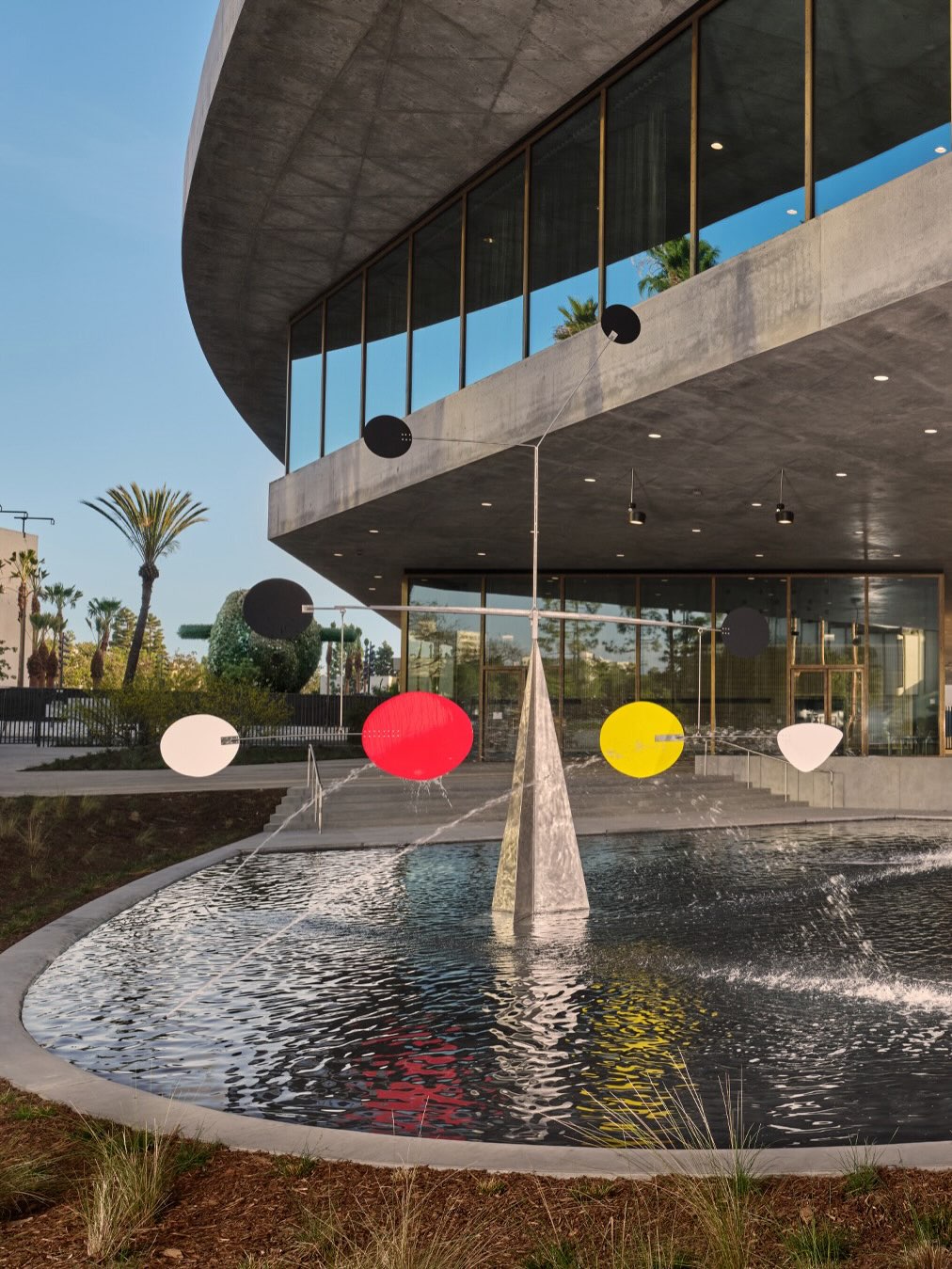
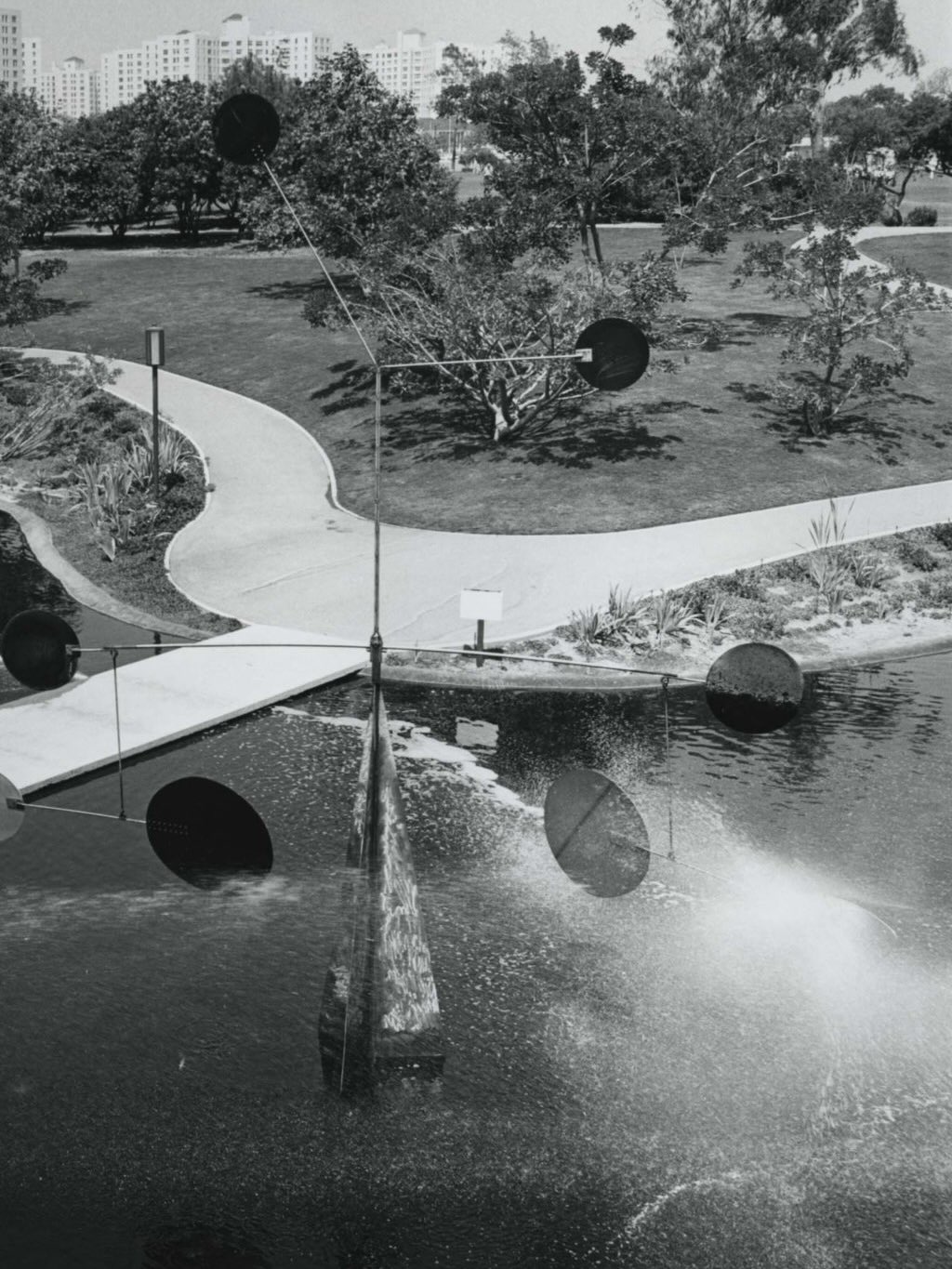
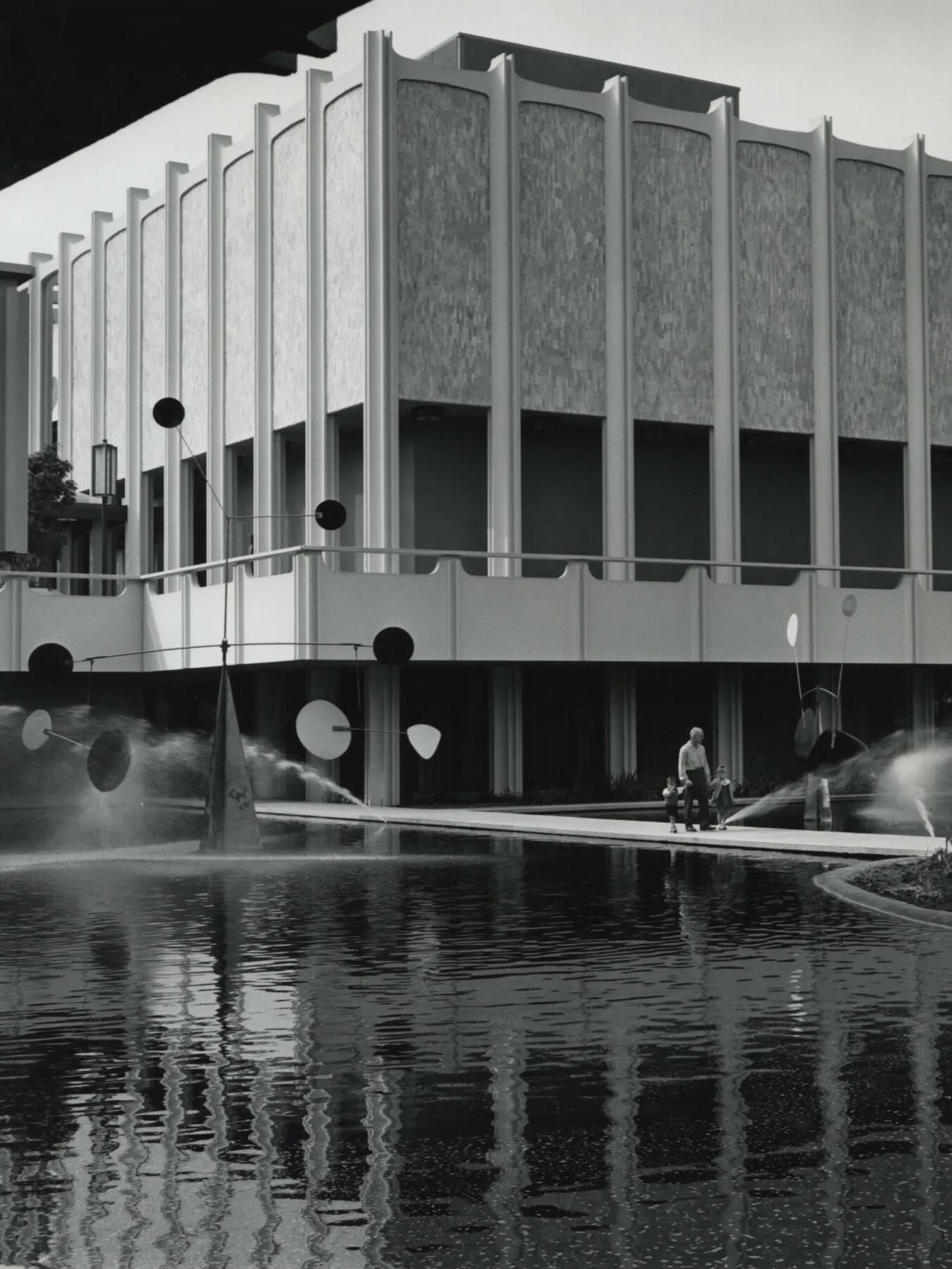
Alexander Calder's Three Quintains, a 1964 fountain sculpture of three standing mobiles, was installed at LACMA in 1965 as part of William Pereira's original Wilshire Boulevard campus. It has been reinstalled in a newly built pool in front of Peter Zumthor's David Geffen Galleries, which opened at LACMA in April 2026, with its four water jets reactivated after months of conservation.

Key Points
- Calder agreed to LACMA's fountain commission in June 1964, before the museum on Wilshire Boulevard had even opened.
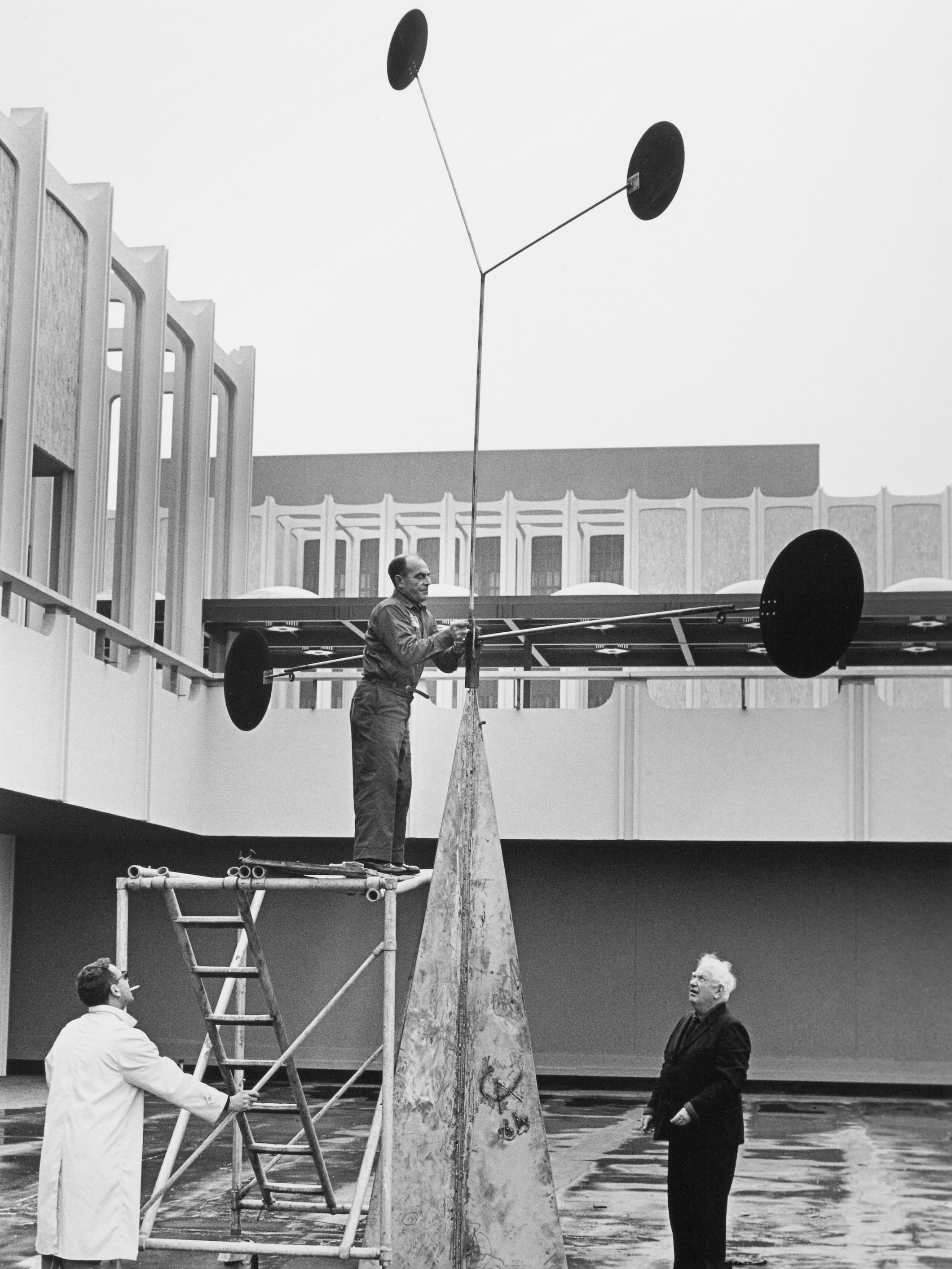
- Ironworker Chippy Ieronimo helped install Three Quintains onsite after Calder set its placements in December 1964.
- The sculpture returned in April 2026 inside a new pool built for Zumthor's David Geffen Galleries.
Three Standing Mobiles Above a Reflecting Pool
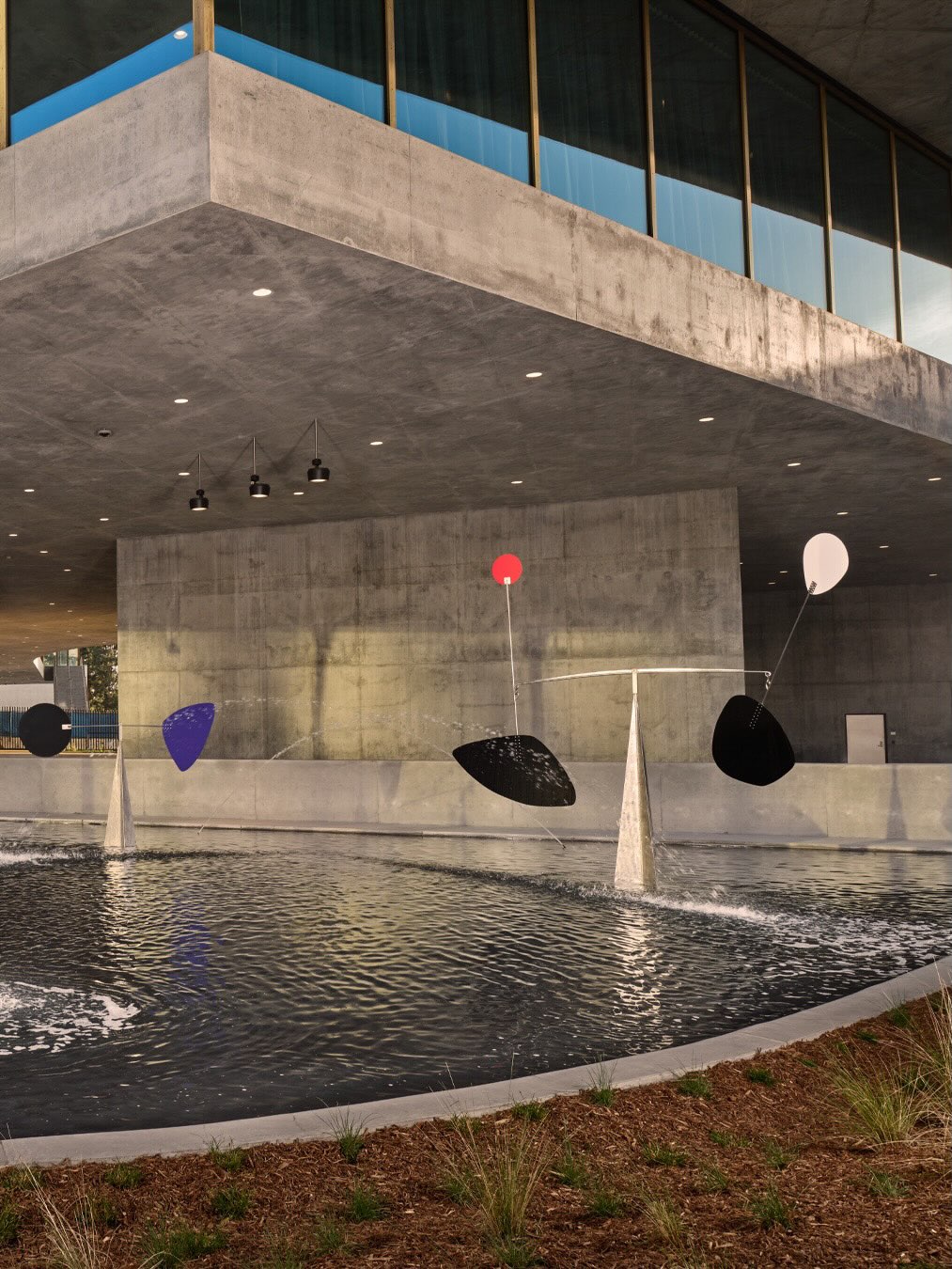
Three Quintains, also known as Hello Girls, is three individual standing mobiles rising out of a reflecting pool at the Los Angeles County Museum of Art. Each one carries paddle shaped blades balanced on thin steel arms above a stone base. Four jets push water up against the blades from below while open air pushes from every other direction, so the top sections rock, spin and dip without ever repeating the same motion twice. The effect reads as slow choreography, not decoration. Calder built kinetic sculpture for most of his career, but this piece asks water to do half the work that wind usually does alone, which is rare in his catalogue and rarer still in public sculpture generally. A quintain, historically, is a jousting target built to spin when struck, and Calder borrowed the word on purpose. These forms are meant to take a hit from the elements and answer back with motion instead of resistance.
A Fountain Committee's Long Shot in 1964
In 1962, LACMA's Art Museum Council formed what it called a fountain committee, tasked with finding a major artist willing to make outdoor work for a museum that did not exist yet. Calder agreed to the commission in June 1964, telling committee president Laurelle Burton he was, in his own words, very much interested in designing a fountain. The mobiles were fabricated at Waterbury Iron Works in Connecticut. Calder returned to Los Angeles in December 1964 to set the placements himself, working with ironworker Chippy Ieronimo, who oversaw the onsite installation once the pieces arrived. That level of hands on involvement from Calder himself is worth flagging. He did not ship a maquette and let a fabricator finish the thinking. He stood at the pool edge and told the crew where each standing mobile should sit relative to the others, which is why the three pieces still read as one composed group rather than three separate objects that happen to share a pool. That same insistence on staging the work himself echoes Guillermo Kuitca's own hand in arranging his Buenos Aires survey, where placement was never left to someone else to decide.
William Pereira Built the Pool It Was Born Into
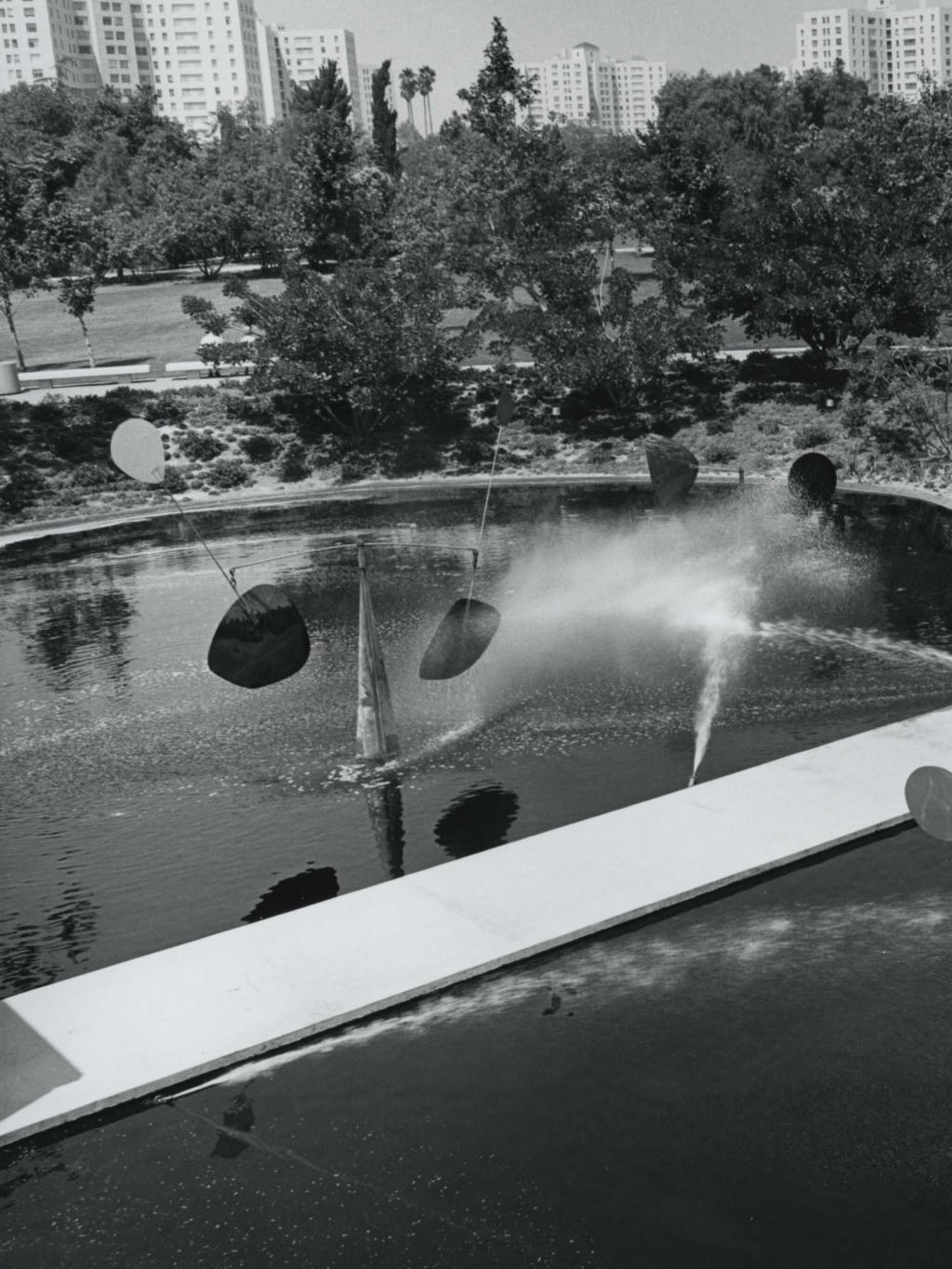
The museum Calder's fountain opened into was brand new construction, a three building complex on Wilshire Boulevard designed by William Pereira, who the board chose over Ludwig Mies van der Rohe. Pereira wanted water everywhere on that campus, on record calling it a way to let the restful splashing of fountains block out traffic noise from Wilshire. Three Quintains was installed as that vision opened in 1965, centerpiece of the pool nearest the museum entrance. The sculpture ties two very different building eras together, since it has now outlived the first campus by decades and is still standing on the same ground today. Calder's approach to motion holds up as a throughline across a study of kinetic movement in current practice, where paddles and panels still answer to wind the same way his mobiles always have.
Peter Zumthor Gives It a New Pool to Sit In
Decades of calcium buildup and general wear forced the sculpture on and off view, and it spent long stretches with no working water at all. When Pereira's original buildings came down to make way for Peter Zumthor's David Geffen Galleries, a project that took roughly two decades from commission to completion, Three Quintains went into storage and conservation. It came back in April 2026, when Zumthor's new galleries opened to the public, reset into a pool built specifically to hold it. Technicians reactivated all four jets in March 2026 after months of work that included a new filtration system meant to keep pollutants off the metal. The kinetic mechanism did not change. The container it sits in did.
That distinction matters for how the piece reads now. Zumthor's galleries sit on a single level, raised above a ground floor that stays open to the public, and the new pool for Three Quintains was built into that plan rather than added after the fact. Visitors approach the fountain the way they would have in 1965, from ground level, water first, building second.
Placement Over Provenance
This is not a rediscovered Calder. It never left. What changed is the address, and addresses matter more than most collectors want to admit. A fountain built for a Pereira campus that no longer exists is now the connective tissue between two eras of the same institution, doing the one thing outdoor sculpture is supposed to do, which is survive its architecture. Anyone pricing Calder mobiles by auction comparables should note that fixed, site commissioned, water powered works like this one do not enter that market and never will. Their value sits entirely in placement. Compare it to how a light based installation activates its own architecture in a different city this year, and the read holds steady. The site is the asset. The sculpture only has to survive long enough to keep proving it, and this one just did, for the second time.
Related: LAUREN HALSEY BUILT A SCULPTURE PARK IN SOUTH CENTRAL AND THE SPHINXES FACE WEST.
Frequently Asked Questions
What is Alexander Calder's Three Quintains?
Three Quintains, also called Hello Girls, is a 1964 fountain sculpture made of three standing mobiles set in a reflecting pool at LACMA, with water jets and wind driving their paddle shaped blades.
When was Three Quintains first installed at LACMA?
It was installed in 1965, when LACMA opened its original William Pereira designed complex on Wilshire Boulevard.
Who commissioned the Calder fountain and why?
LACMA's Art Museum Council formed a fountain committee in 1962 to secure a major artist for the new museum, and Calder accepted the commission in June 1964.
Is Three Quintains also called Hello Girls?
Yes, the sculpture is known by both names, Three Quintains and Hello Girls, in museum and press references.
How does the sculpture move without a motor?
Four water jets push against the mobiles' blades from below while open air pushes from other directions, so the pieces rock and spin from wind and water alone.
Who was Chippy Ieronimo?
Chippy Ieronimo was the ironworker who assisted with the onsite installation of Three Quintains at LACMA in 1964, after Calder set the placements himself.
Why was the fountain reinstalled in 2026?
Peter Zumthor's David Geffen Galleries replaced Pereira's original LACMA buildings, and Three Quintains was reinstalled in a new pool as part of that reopening in April 2026.
Does the sculpture still use its original mobiles?
Yes, the same standing mobiles fabricated at Waterbury Iron Works in 1964 were conserved and reinstalled rather than replaced.
Topics: david-geffen-galleries, lacma, william-pereira, public-art, museum-architecture, peter-zumthor, three-quintains, los-angeles-art, alexander-calder, kinetic-sculpture