BAPE'S BAPESTA REWORKED THE AIR FORCE 1 IN 2000
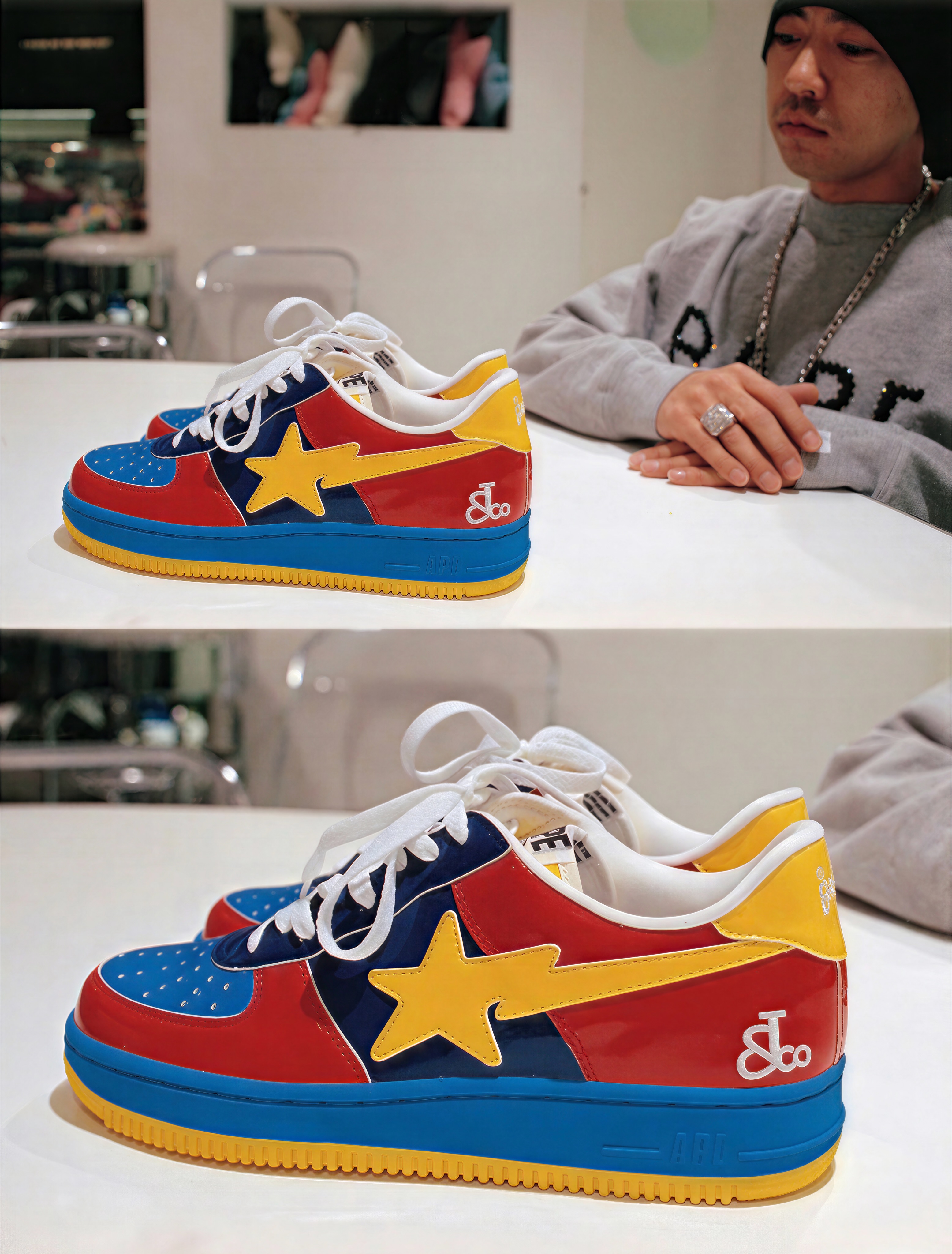
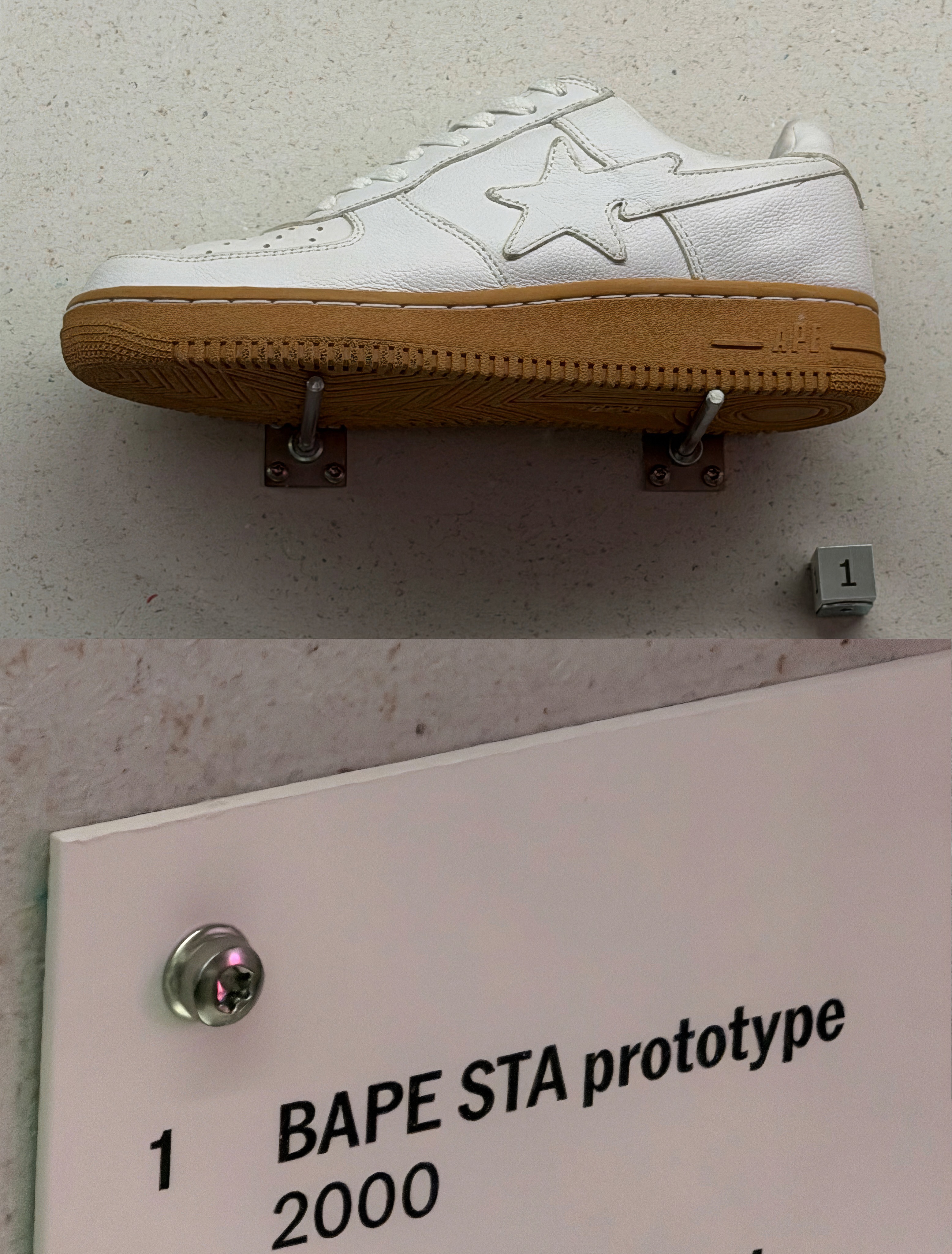
A Bathing Ape released the Bapesta in 2000, a reinterpretation of the Nike Air Force 1 built with patent leather, a proprietary ABC camo print and colors the original never used. Nigo designed it out of Tokyo's Ura Harajuku scene and Pharrell Williams later carried it into American music culture through Billionaire Boys Club and Ice Cream.
Key Points
- BAPE released the Bapesta in 2000, reworking the Nike Air Force 1 in patent leather and camo.
- Nigo sold BAPE in 2011 for 2.8 million dollars; Supreme, a brand it shaped, hit a billion dollar valuation in 2017.
- BAPE revived its 2003 Medicom camo on August 8, 2026, the same year Nigo's archive opened at London's Design Museum.
Patent leather does not belong on a basketball silhouette. Neither does lime green, or a camo print built from a proprietary shape instead of a military stencil. In 2000, Nigo's A Bathing Ape put both onto the Nike Air Force 1's exact tooling and called it the Bapesta, and the shoe that resulted looked less like a sneaker than a cartoon of one.
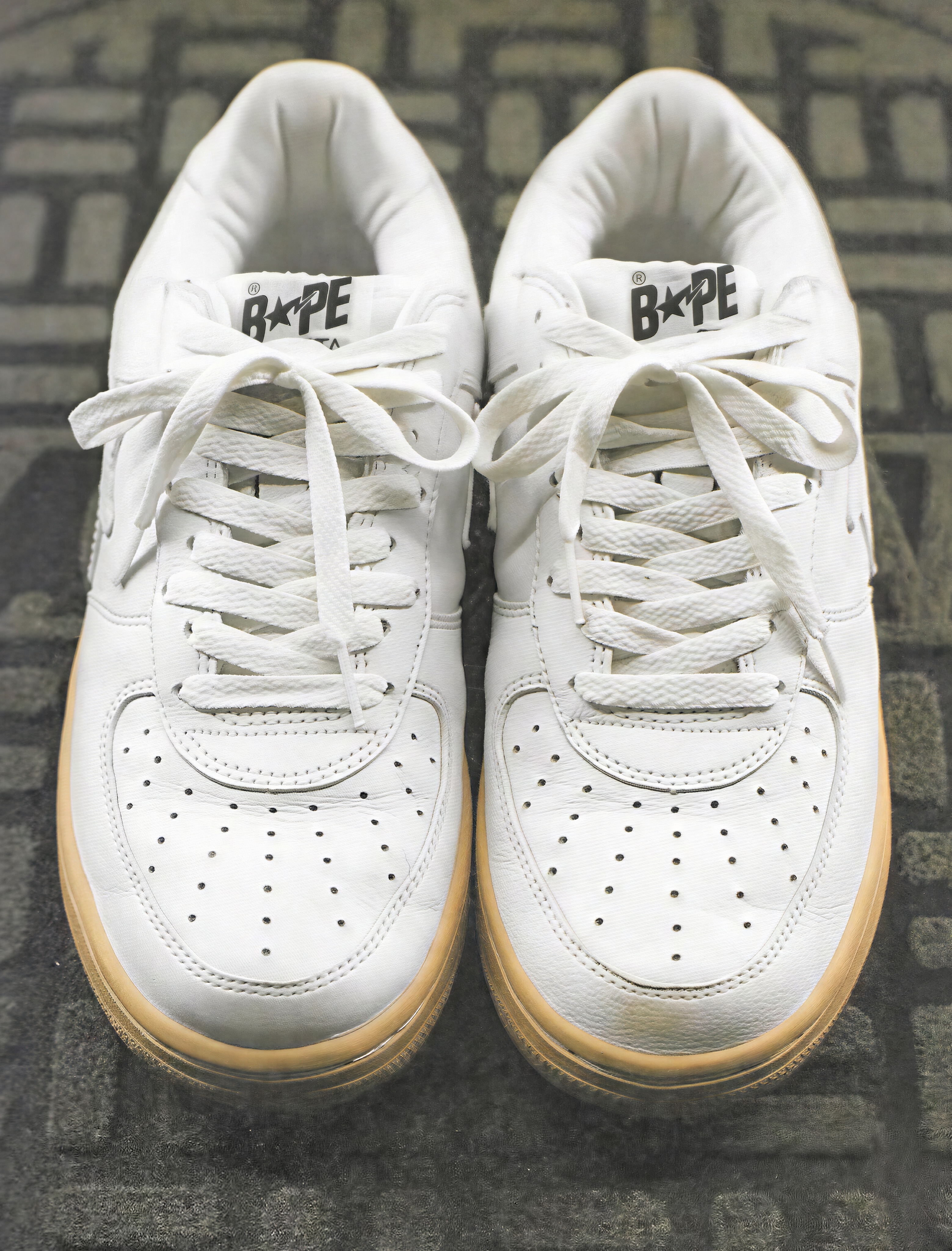
That contradiction is the entire thesis. The Air Force 1 had become the plainest, whitest, most repeated shoe in American hip hop by the late 1990s. BAPE took its silhouette apart and rebuilt it in colors no basketball brand would authorize, and the gap between the two versions is what made Tokyo streetwear legible to an outside audience for the first time.
2000. A Basketball Shoe Gets a Harajuku Rewrite.
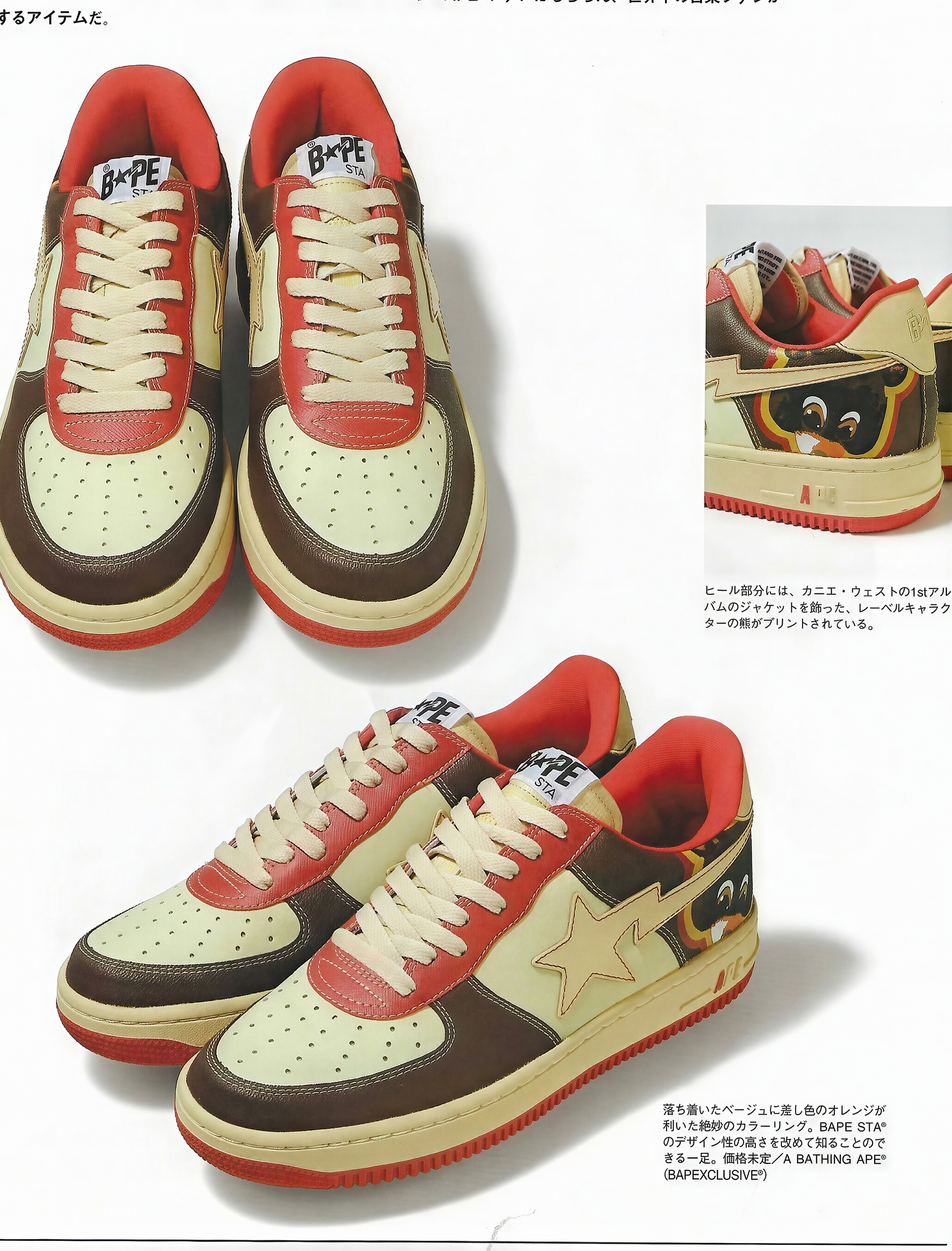
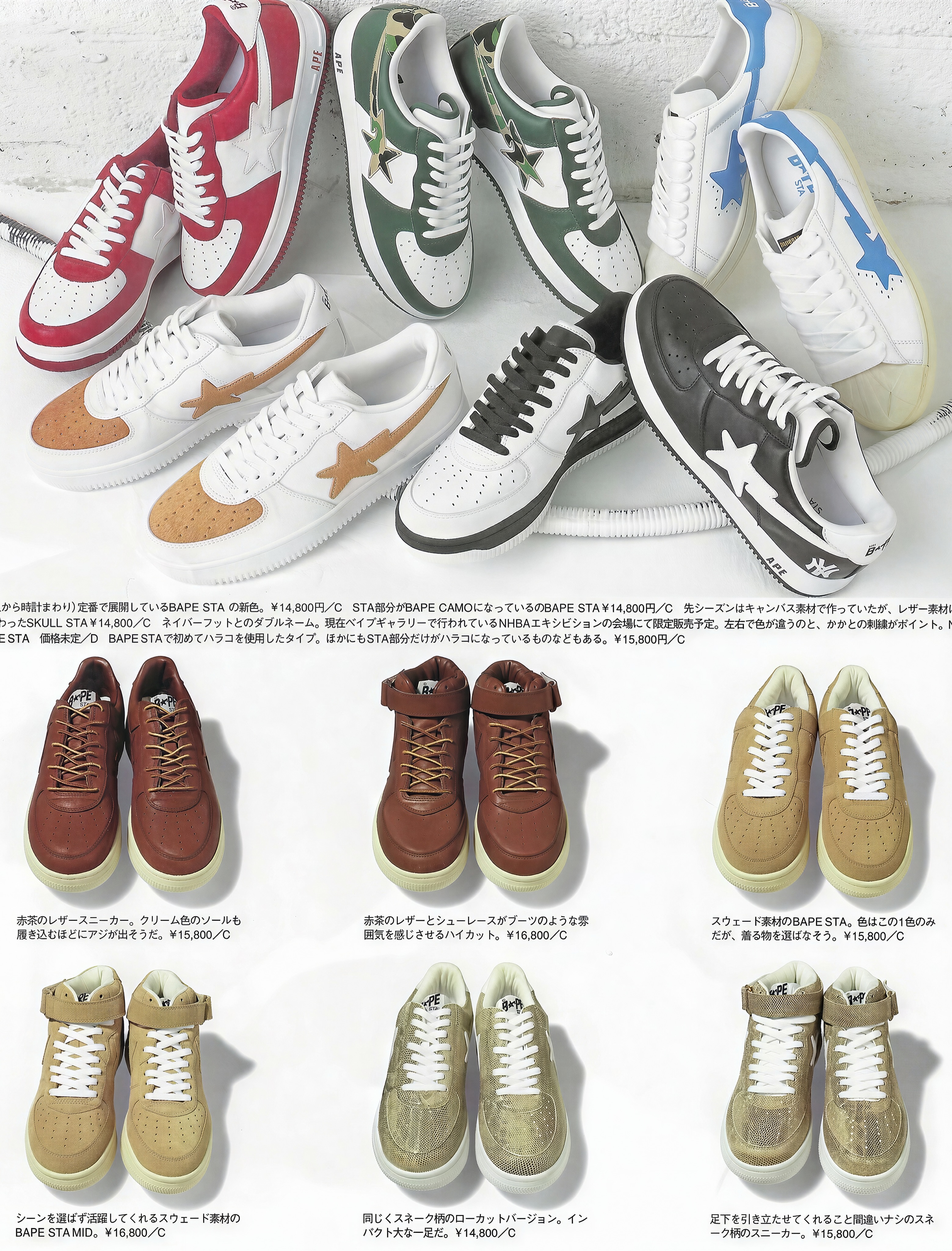
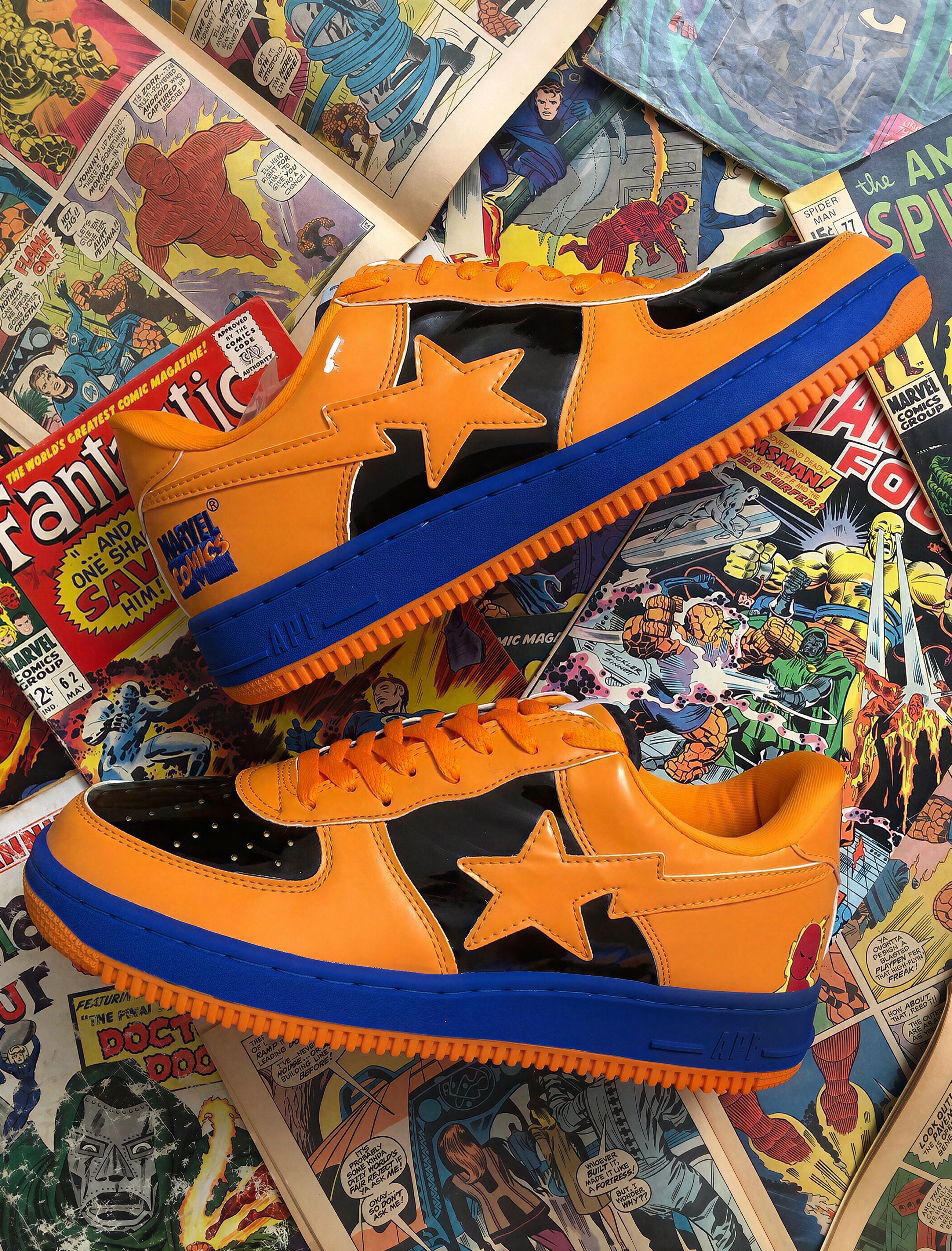
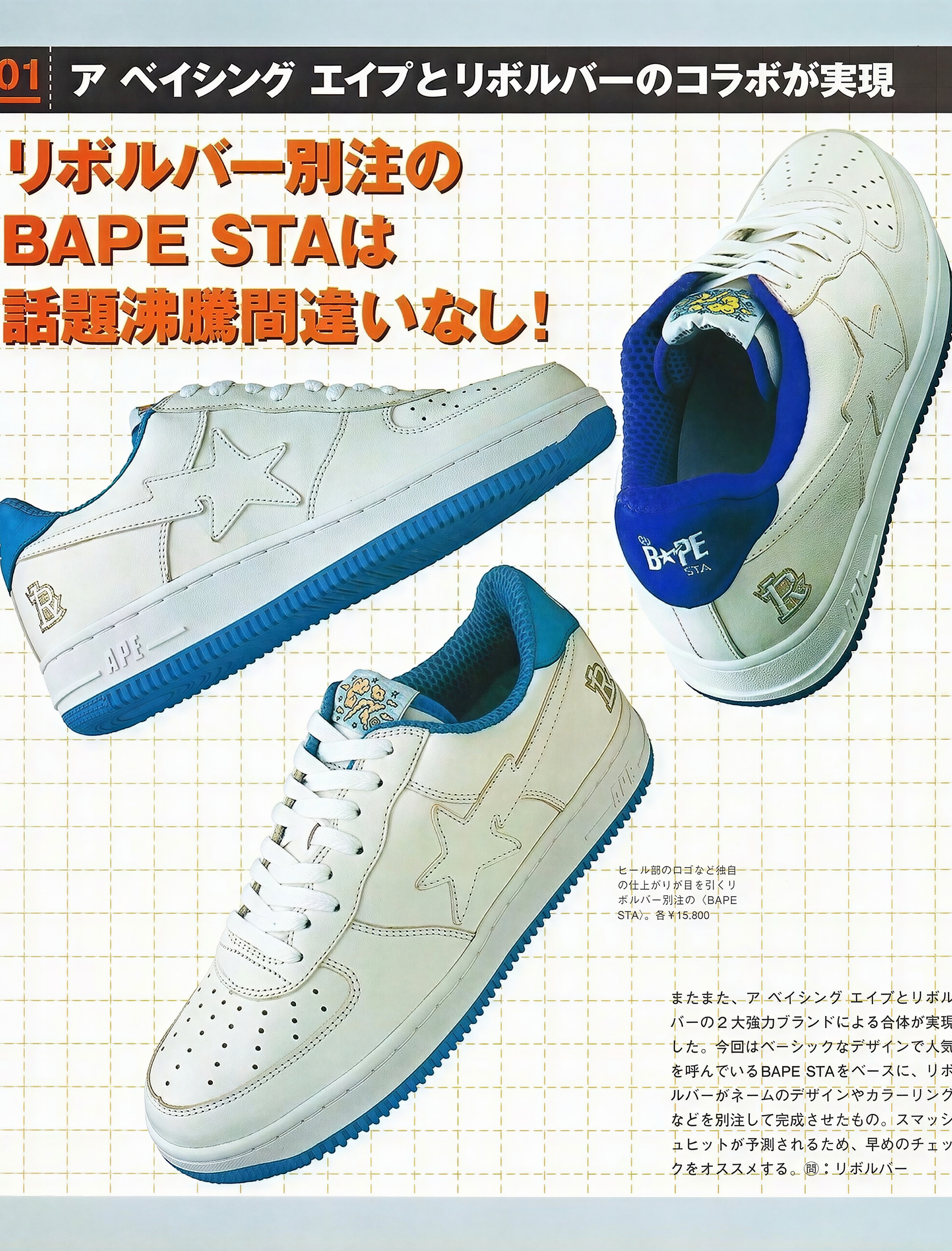
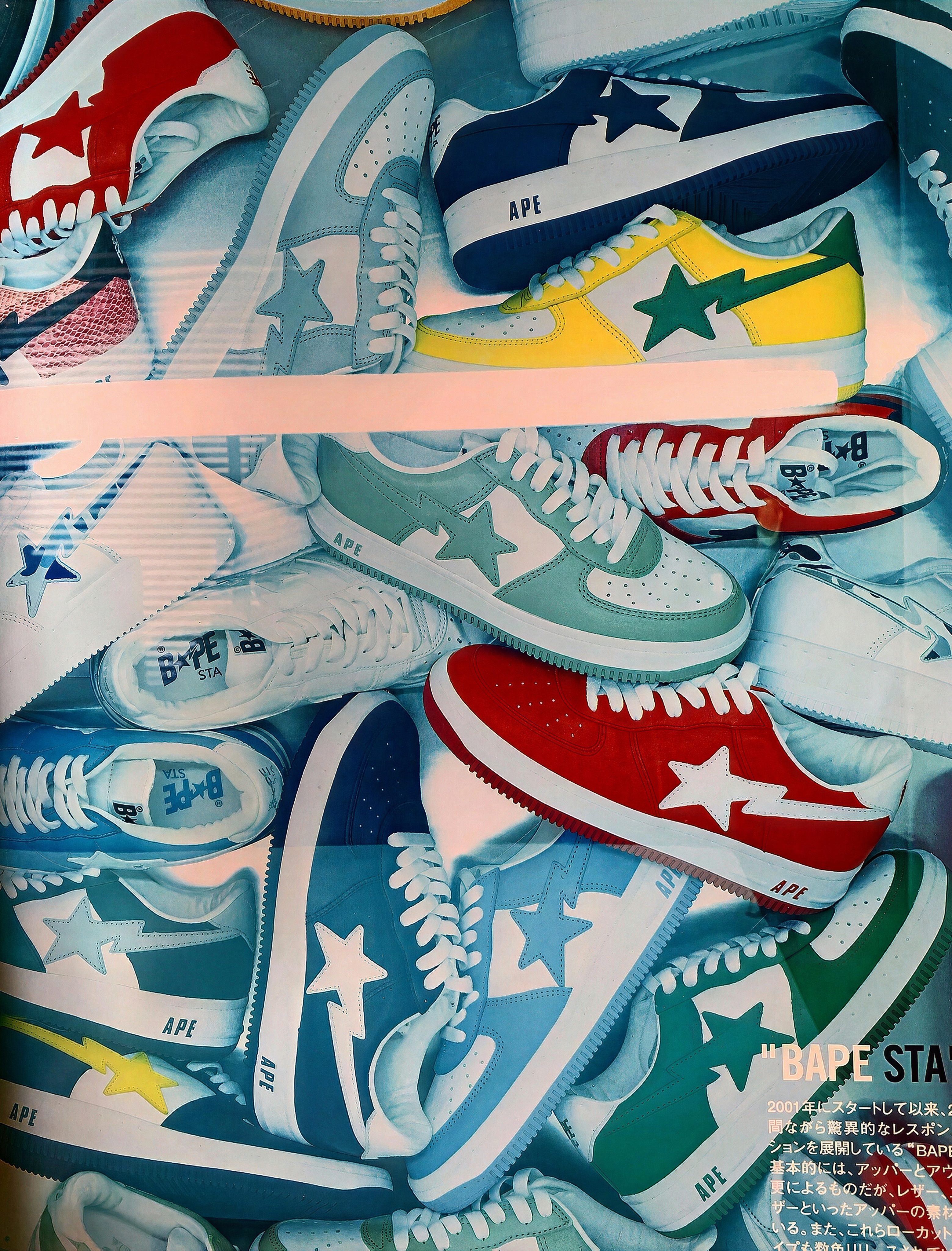
The Bapesta traced the Air Force 1's panels almost line for line, then swapped the leather and the palette. Where Nike shipped white and navy, BAPE shipped patent finishes, ABC camo panels, and colorways in pink, purple, lime green and chrome. The star on the side, standing in for Nike's swoosh, was the giveaway that this was commentary as much as footwear. Nothing about the shoe hid that it was arguing with its source.
Jun Takahashi and Nigo Ran One Store First
Before BAPE had its own shelves, Nigo ran NOWHERE with Jun Takahashi, the Ura Harajuku shop that housed BAPE alongside Takahashi's UNDERCOVER starting in 1993. NEIGHBORHOOD, WTAPS and Hiroshi Fujiwara's own projects worked the same handful of back streets, building separate worlds around music, art and clothing within a few blocks of each other. BAPE was the one that scaled that world past the neighborhood. Finally Offline has traced how far that scaling went: Nigo sold fifty items a day to fifty customers when he opened BAPE in Ura Harajuku in 1993, then built the label into hype culture's first template before selling BAPE outright in 2011 for 2.8 million dollars, four years before Supreme, a brand it had directly shaped, was valued at a billion.
Camo and Patent Leather Replace Anything Subtle
Every material choice on the Bapesta was a rejection of the Air Force 1's restraint. Patent leather panels caught light the suede original never did. The ABC camo pattern, built from BAPE's own repeating shape rather than a borrowed woodland print, meant no two colorways read as camouflage in the traditional sense at all. Metallics showed up where Nike used mesh. The shoe was engineered to be seen from across a room, and by the middle of the decade seeing a pair in person was rarer than seeing almost anything else on a sneaker wall, since BAPE kept runs small enough that scarcity did the marketing.
Blame Frontin for Making the Shoe Famous
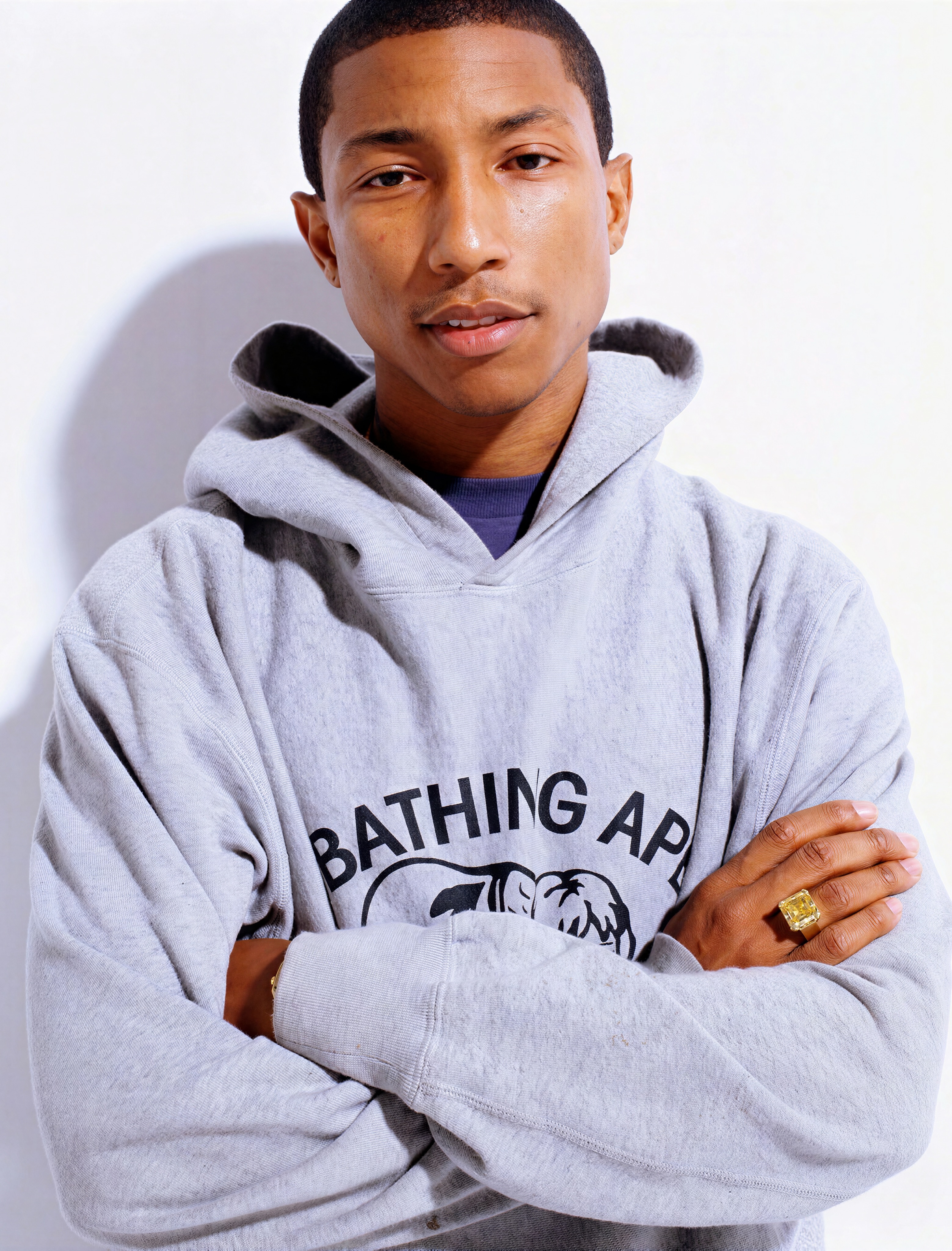
Nigo met Pharrell through the jeweler Jacob Arabo, and Pharrell returned from an early trip to Tokyo wearing BAPE everywhere a camera pointed, including the 2003 video for Frontin, which doubled as the introduction for his own label, Billionaire Boys Club. Pharrell and Nigo built Ice Cream together in 2004 as a skate focused offshoot of that same project, and the Bapesta rode alongside both. Collaborations that followed with N.E.R.D., KAWS and Kanye West took the shoe out of Tokyo entirely, and the price of admission followed the demand. What started as a shoe two designers wore to their own store became a shoe an entire genre of music referenced by name.
The Rewrite Is Still Getting Revisited
BAPE has spent 2026 mining the same archive that produced the Bapesta in the first place. The brand reissued its original 2003 Medicom CAMO print for a thirtieth anniversary capsule on August 8, and Nigo's own definitive collection, more than seven hundred objects deep, is sitting in London's Design Museum as part of a retrospective running through October 4. A shoe that once existed to argue with a bigger brand's restraint is now the exhibit piece explaining why that argument worked. The Bapesta did not need a reboot to stay relevant. It needed the rest of sneaker culture to catch up to how loud it was willing to be in 2000, and that catch up is still happening twenty six years later.
Related: UNDERCOVER PUTS CINDY SHERMAN ON JACQUARD PATCHES FOR AW26.
Related: MURAKAMI MONONOKE MADE 2ND DELIVERY WITH SILVER 925 JERSEY.
Related: Brain Dead Spring 2026 Drop Features Ziggy Knuiman and New Graphics.
Frequently Asked Questions
What is the Bapesta sneaker?
The Bapesta is A Bathing Ape's 2000 reinterpretation of the Nike Air Force 1, built with patent leather panels, a proprietary ABC camo print and colorways in pink, purple, lime green and chrome instead of Nike's original palette.
When was the Bapesta first released?
A Bathing Ape released the Bapesta in 2000, tracing the Air Force 1's panel shapes while replacing the materials and colors entirely.
Who designed the Bapesta?
Nigo designed the Bapesta for his label A Bathing Ape, the same Tokyo brand he built out of the Ura Harajuku store NOWHERE, which he ran alongside Jun Takahashi's UNDERCOVER starting in 1993.
Is the Bapesta based on the Nike Air Force 1?
Yes, the Bapesta uses the Air Force 1's exact panel construction and tooling, with BAPE replacing the leather, colors and the swoosh with its own star logo.
How did Pharrell Williams help popularize the Bapesta?
Pharrell met Nigo through jeweler Jacob Arabo, wore BAPE heavily after an early trip to Tokyo, and featured it in his 2003 video for Frontin before he and Nigo built Ice Cream together in 2004.
What happened to A Bathing Ape after Nigo sold it?
Nigo sold BAPE in 2011 for 2.8 million dollars; the brand he had shaped continued on, and Supreme, a label BAPE directly influenced, was valued at a billion dollars by 2017.
Where can you see Nigo's design archive in 2026?
Nigo's personal archive is on display in the retrospective From Japan with Love at London's Design Museum, running through October 4, 2026, alongside more than 700 objects spanning his career.
Topics: bapesta, streetwear, billionaire boys club, brain-dead, archive-fashion, bape, billionaire-boys-club, a bathing ape, harajuku, undercover, pharrell-williams, neighborhood, brain dead, sneaker-history, air-force-1, supreme, a-bathing-ape, nigo, nike, wtaps