BAPE INVENTED HYPE CULTURE BEFORE IT HAD A NAME
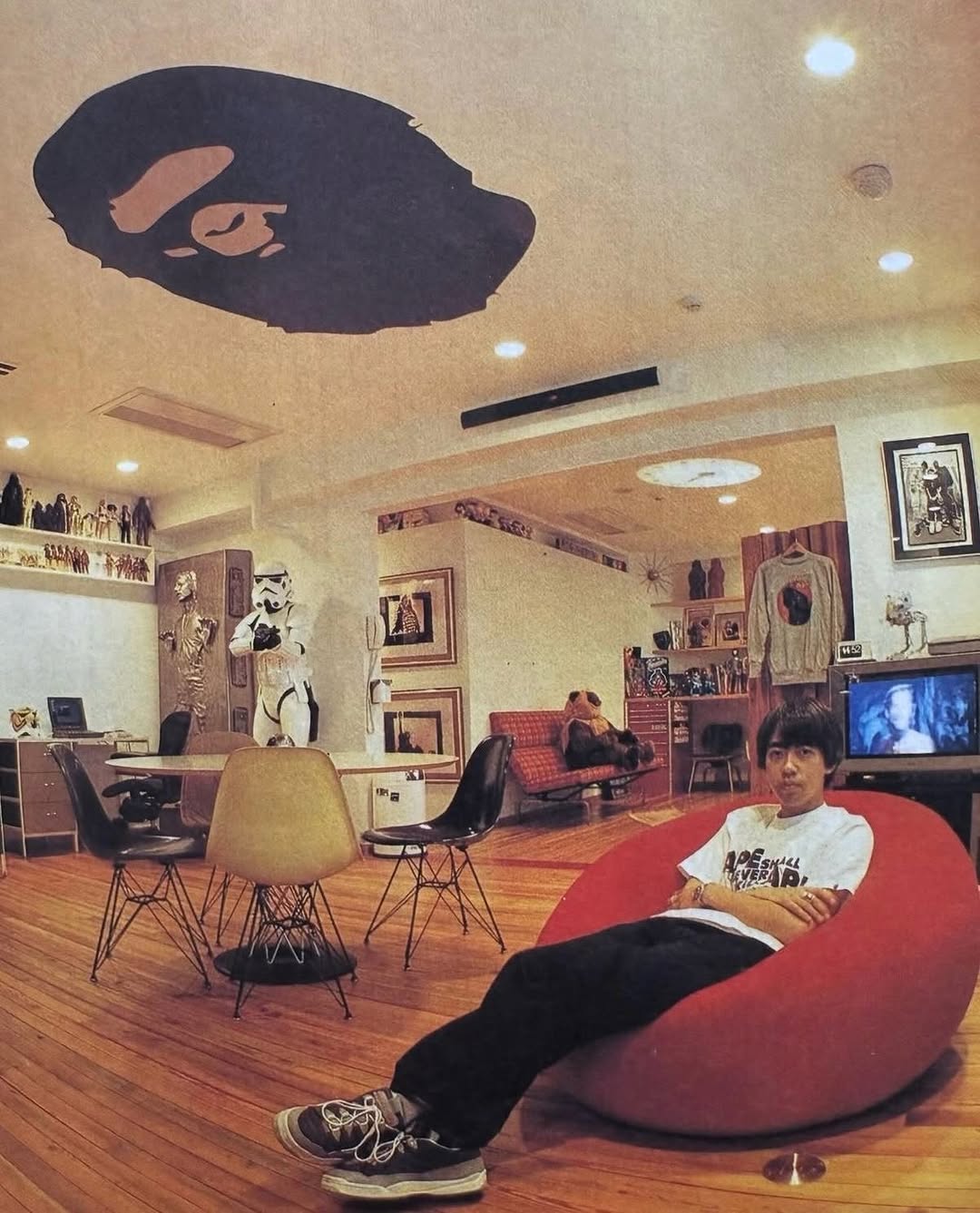
BAPE (A Bathing Ape) was founded by Nigo in Ura-Harajuku, Tokyo in 1993, selling 50 items per day to 50 customers. The brand invented limited quantity scarcity mechanics, the ABC Camo proprietary pattern, and the Bapesta silhouette before hype culture had a name. Nigo sold BAPE in 2011 for $2.8 million; Supreme, a brand BAPE directly influenced, was valued at $1 billion in 2017.
Key Points
- Nigo founded BAPE in 1993 in Ura-Harajuku selling 50 items per day to 50 customers, a scarcity mechanic that predated the word hypebeast by a decade
- The ABC Camo is a proprietary pattern with A, B, and C letters embedded; the Bapesta debuted in 2000 directly referencing the Nike Air Force 1 silhouette
- Nigo sold BAPE in 2011 for $2.8 million; Supreme, a brand BAPE directly influenced, was valued at $1 billion in 2017
1993. Ura-Harajuku, Tokyo. Nigo opened a store that sold 50 items a day to 50 customers.
That rule was not supply constraint. It was curriculum. BAPE (A Bathing Ape) was teaching its early customers something that the streetwear industry would spend the next thirty years trying to copy: you do not sell a garment. You sell the experience of being one of the fifty.
That lesson is now the entire operating model of Supreme, Off-White, Fear of God, and dozens of smaller labels that rebuilt their businesses around scarcity. BAPE wrote it in Harajuku in 1993, before ecommerce, before StockX, before anyone used the word "hypebeast" without irony.
1993. Ura-Harajuku. Fifty Pieces a Day.
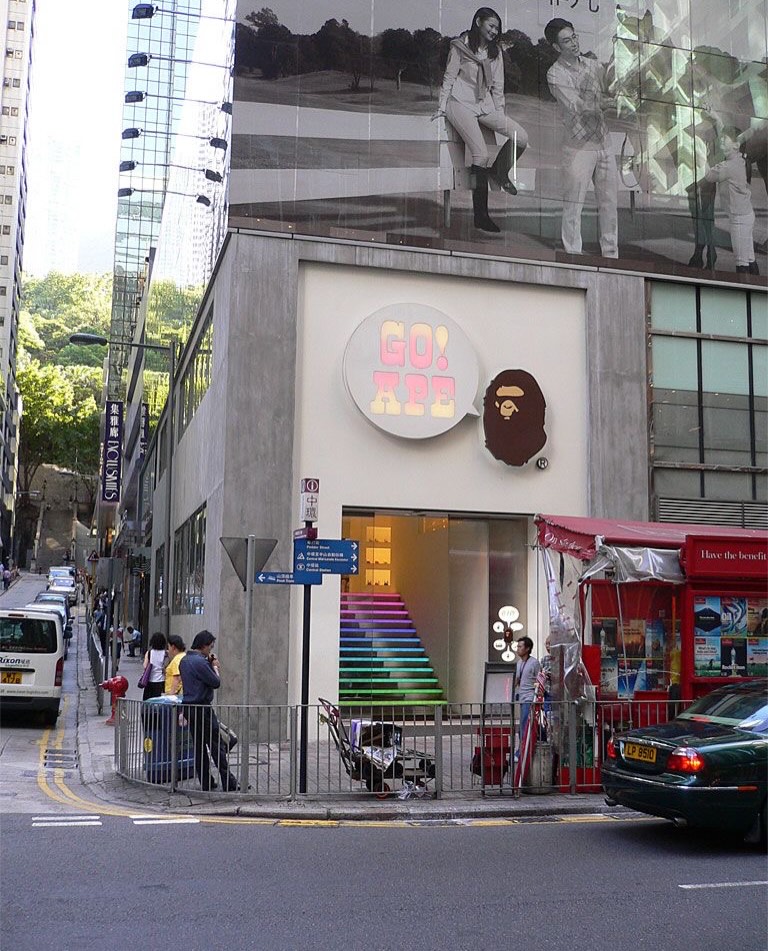
Nigo (Tomoaki Nagao) founded BAPE in 1993 with a precise philosophy: keep inventory intentionally scarce, sell only to the right fifty customers, and let the rest of the market feel the absence. The first store was in Ura-Harajuku, the maze of narrow streets behind the main Harajuku shopping strip that catered to Japan's most style obsessed young consumers. The location was a statement. You had to know where to go. The door was not for everyone.
This is before social media turned every clothing drop into a global event. Information about BAPE moved through actual social networks: people who knew people, who had been to Tokyo, who had a connection that could get pieces shipped. The scarcity was geographic before it was inventory driven. If you were not in Harajuku, you were not getting it.
The Camo Was Never Military
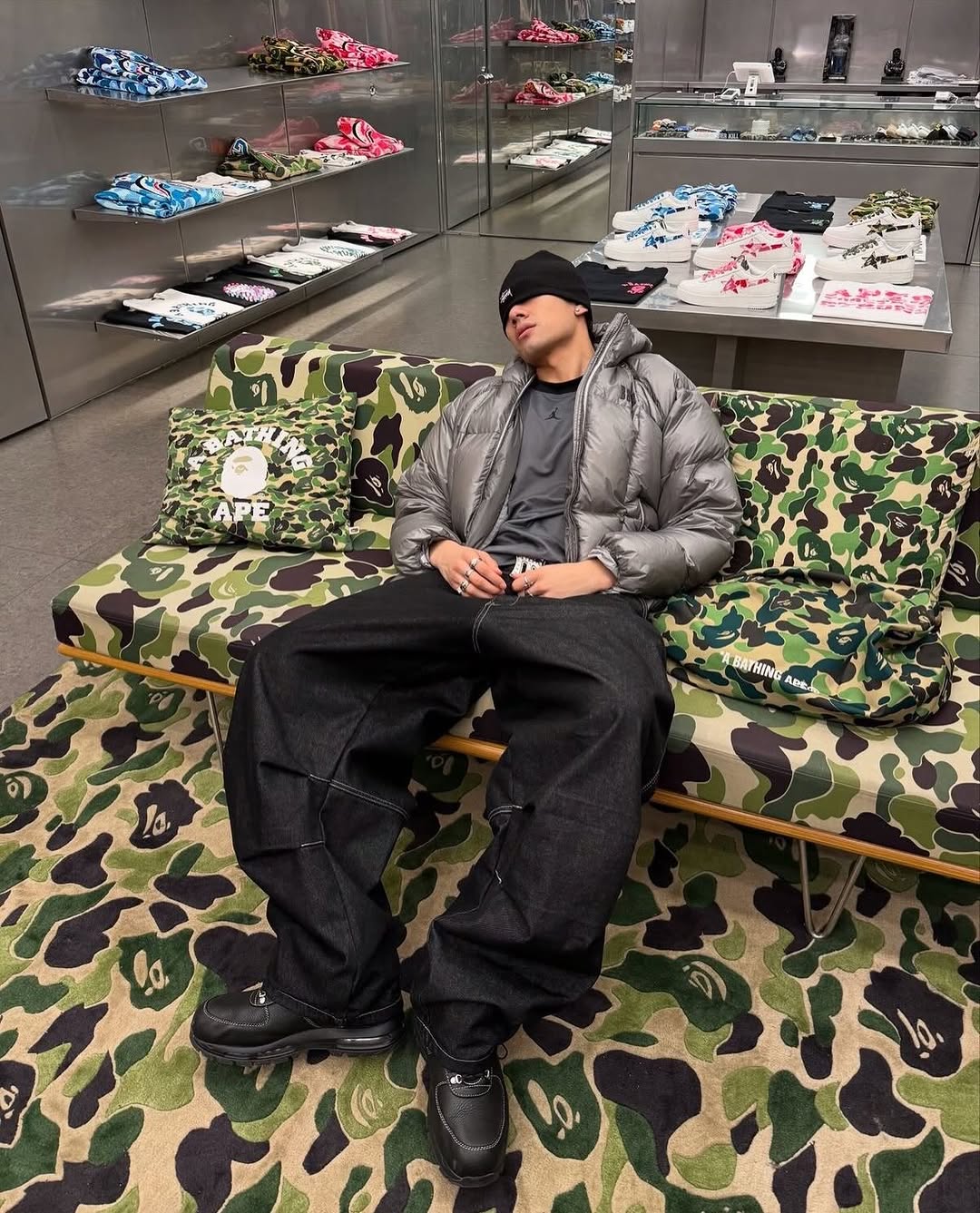
The ABC Camo, BAPE's signature camouflage pattern, is a proprietary design. The letters A, B, and C are embedded into the repeating motif. It is not a lifted military surplus pattern; Nigo developed a custom print that works as both camouflage (it does visually obscure) and as brand identification (anyone who knows the letters knows the brand). That dual function is what separates the ABC Camo from every other brand that has put camo on product and called it streetwear.
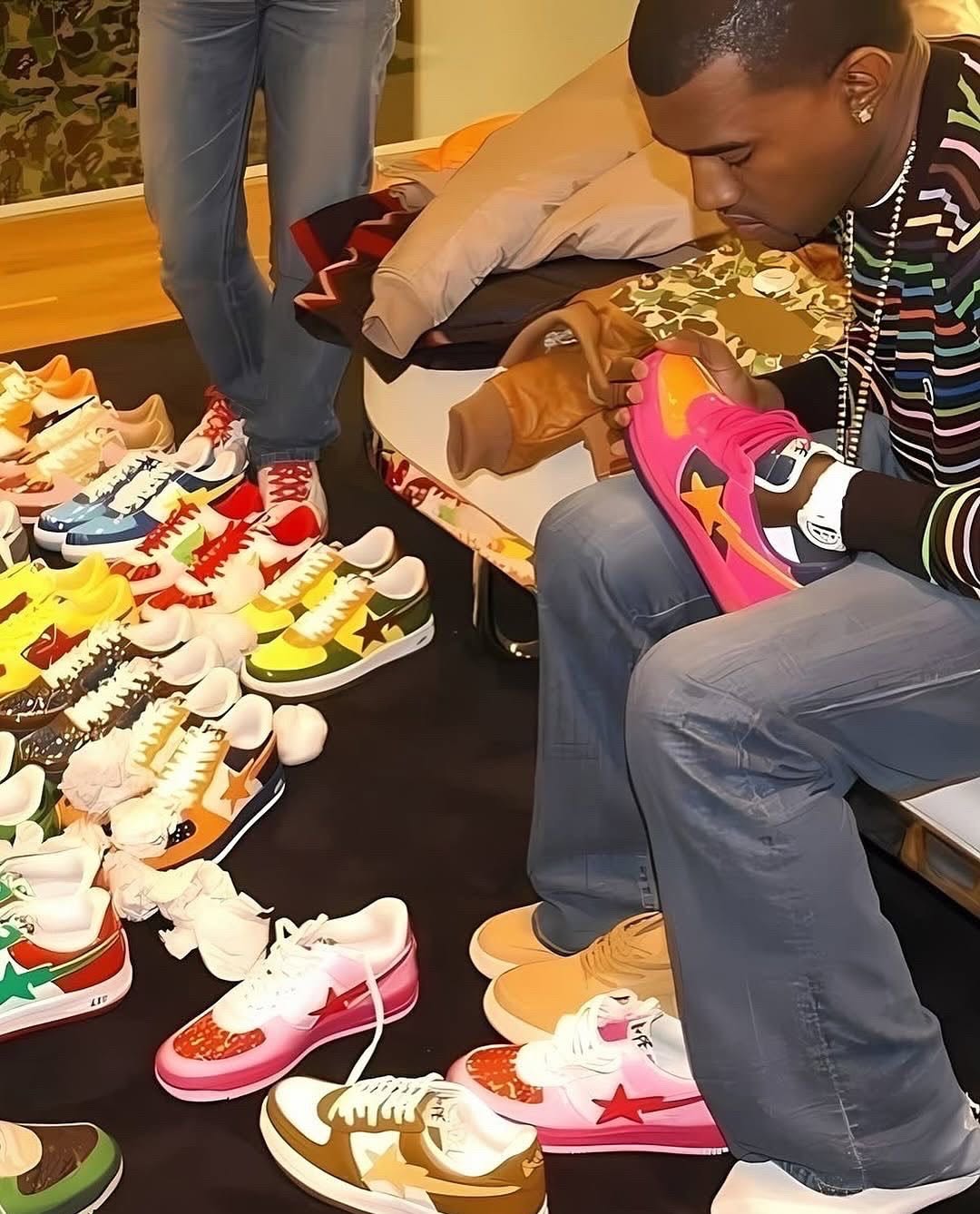
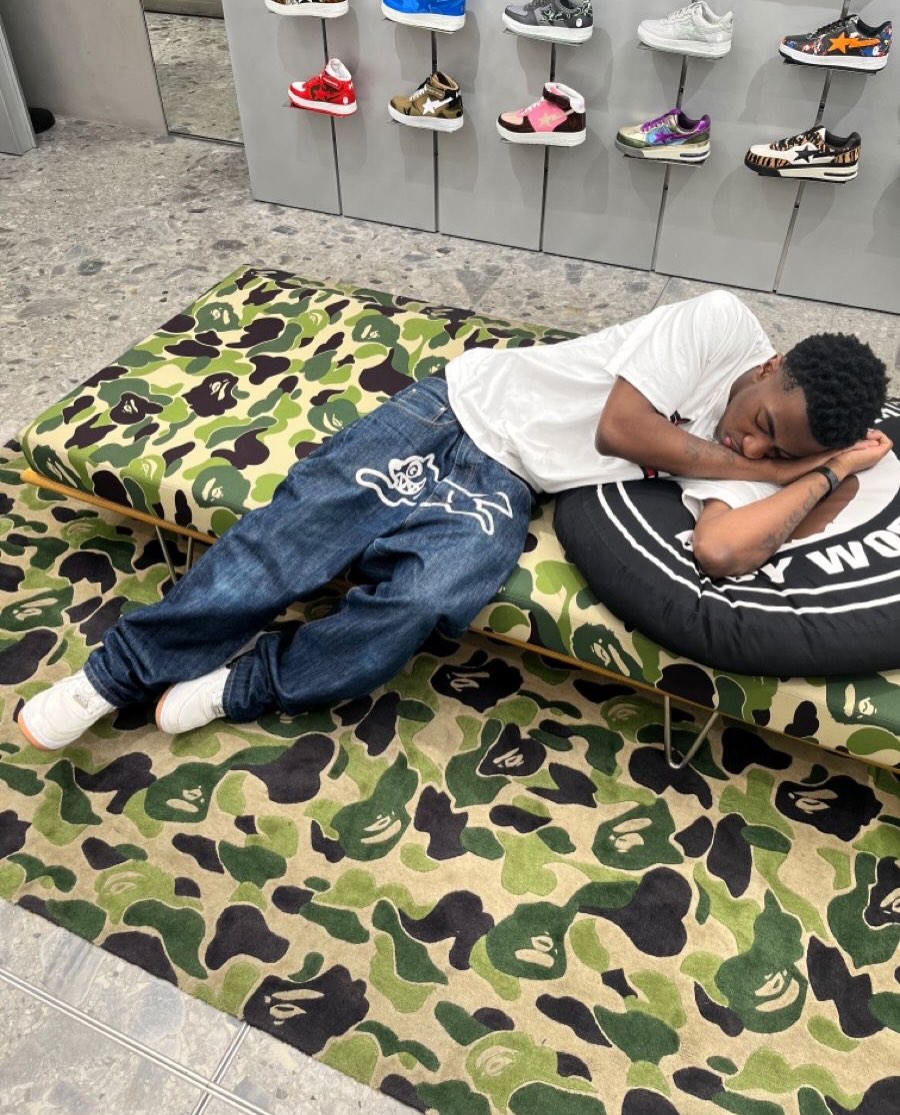
The Bapesta, introduced in 2000, did the same thing with silhouette. The shoe directly referenced the Nike Air Force 1 construction and profile but replaced the Nike Swoosh with BAPE's star logo. This was not subtle. Nigo was not hiding the reference. The Bapesta was a statement about who had the cultural authority to riff on the most recognizable sneaker silhouette in the world. When BAPE brought the Bapesta back to clean basics in 2026, the shoe was on its third generation of revival, which tells you something about how durable the original idea was.
Pharrell Was Wearing This in 2003. America Had Not Figured It Out Yet.
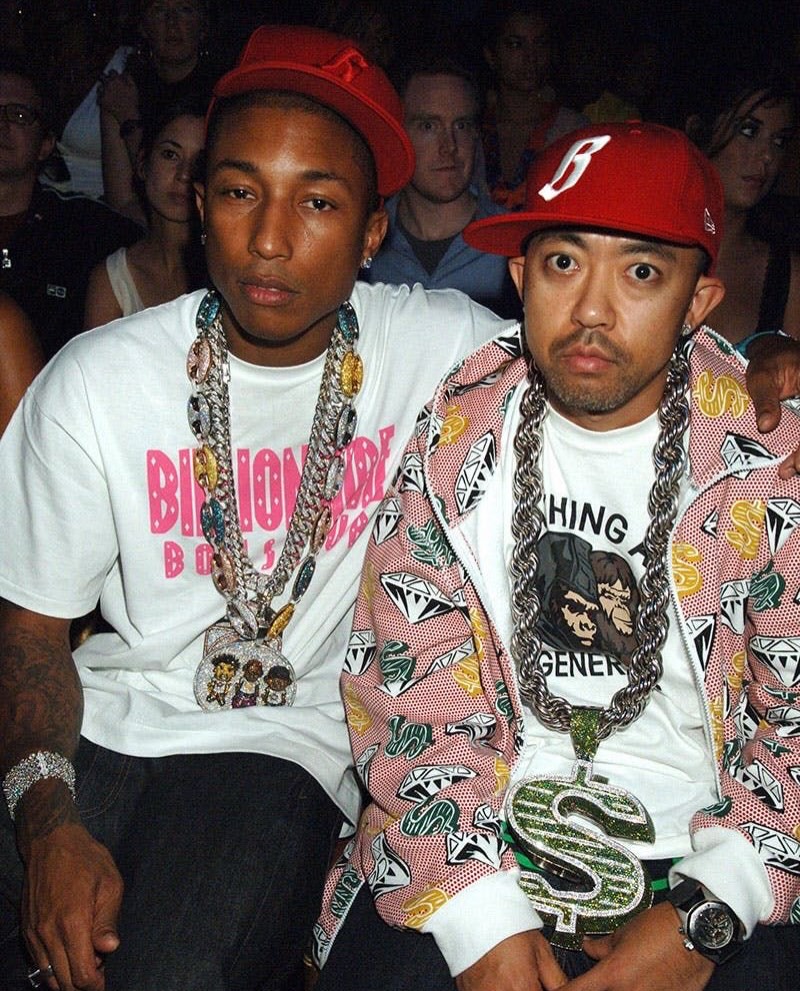
By 2003, Pharrell Williams was wearing BAPE so consistently that the brand effectively had an American ambassador before it had an American store. The brand's US distribution did not launch formally until around 2003 to 2005; before that, pieces were shipped from Japan by people who knew where to go. Pharrell's collaboration with Nigo predated Billionaire Boys Club, which the two launched together in 2003 as a separate brand. The relationship between Pharrell and Nigo was creative before it was commercial, and that order of operations is visible in the work.
Kanye West wore BAPE during the "College Dropout" era, referencing the brand within the aspirational vocabulary of early 2000s hip hop. Jay-Z wore it. The wave of American artists in Japanese streetwear during that period was not a coincidence; it was a specific group of people with the taste and the logistics to get pieces before the brand came to them.
This cross vertical absorption from music into fashion is the pattern BAPE cracked first. You can draw a direct line from BAPE's hip hop entrenchment in 2003 to the way every sneaker brand now signs musicians as primary ambassadors in 2026. BAPE was not a case study anyone wrote at the time. It became one after the fact.
$2.8 Million and a Decade of Cultural Equity
In 2011, Nigo sold BAPE to Hong Kong retail group I.T Limited for a reported $2.8 million. For context: Supreme, a brand that BAPE directly influenced, sold a minority stake to Carlyle Group in 2017 at a $1 billion valuation. The gap between what BAPE sold for and what its model proved to be worth is the single most analyzed business anomaly in streetwear history.
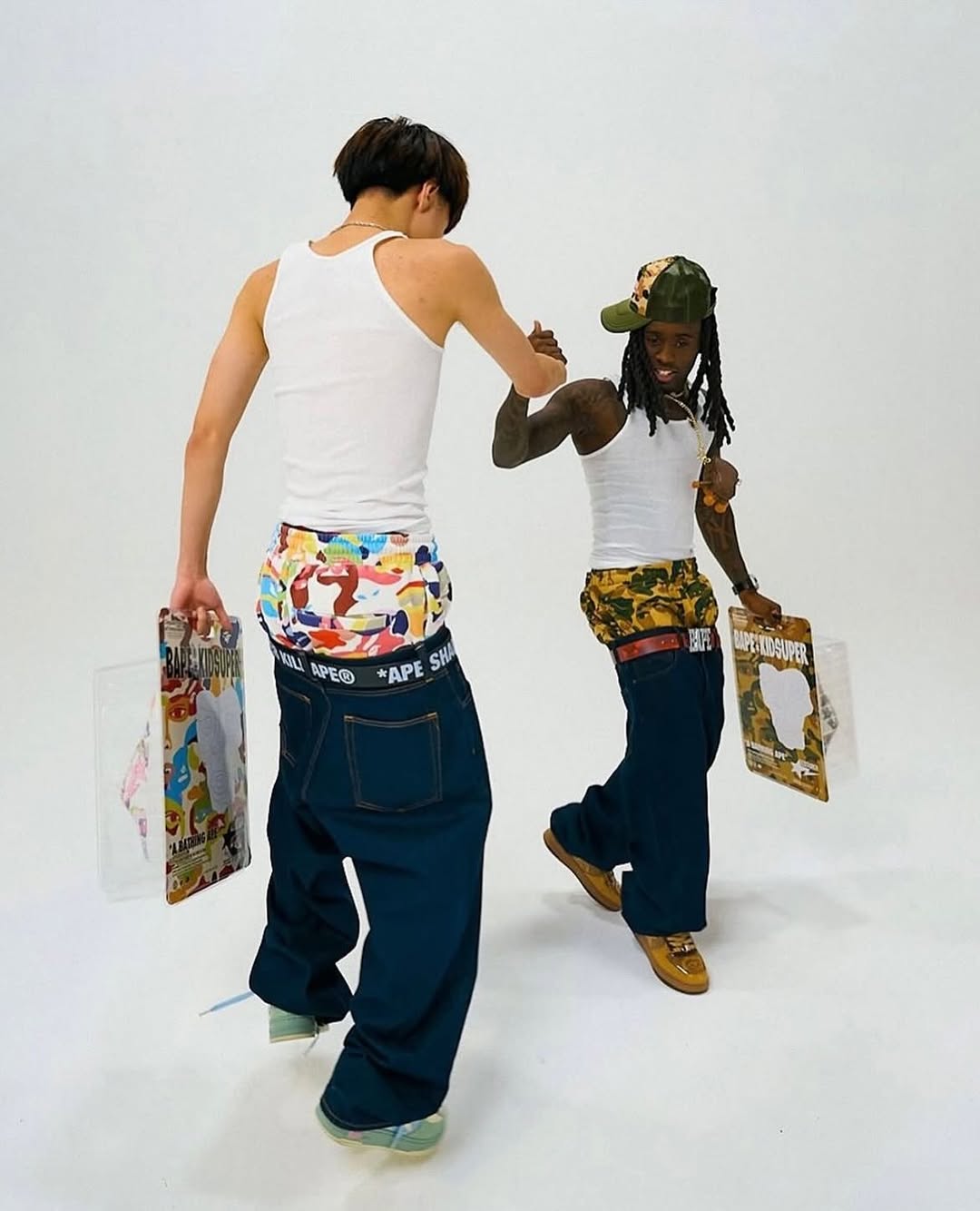
BAPE under I.T Group has expanded aggressively: the first Canadian store opened in Vancouver in March 2026 at 1028 Alberni Street, on the luxury corridor alongside Hermes, Gucci, and Louis Vuitton. The current collaboration program includes the 2026 World Cup partnership with KidSuper, which uses neutral World Cup attention to put two very different visual languages into collision. Both moves are consistent with the original Nigo logic: the most interesting BAPE decisions happen when the brand creates friction rather than consensus.
The verdict: BAPE's 1993 model did not need the internet. It was building the scarcity mechanics that the internet eventually amplified for every brand that followed. Thirty-three years later, the ABC Camo is on every continent, the Bapesta is in its third revival, and the brand that sold for $2.8 million in 2011 is opening stores on luxury retail corridors. The fifty per day rule was not a limitation. It was the business plan.
Related: Pharrell Adidas Virginia Vario Flat Earther Sells for $140.
Frequently Asked Questions
When was BAPE founded?
BAPE (A Bathing Ape) was founded in 1993 by Nigo (Tomoaki Nagao) in Ura-Harajuku, Tokyo.
Who founded BAPE?
BAPE was founded by Nigo, whose real name is Tomoaki Nagao, in Ura-Harajuku, Tokyo in 1993.
What is the BAPE camo called?
BAPE's signature camouflage is called the ABC Camo. It is a proprietary pattern designed by Nigo with the letters A, B, and C embedded into the repeating motif.
How much did Nigo sell BAPE for?
Nigo sold BAPE to Hong Kong retail group I.T Limited in 2011 for a reported $2.8 million.
Did Pharrell wear BAPE?
Yes. Pharrell Williams wore BAPE extensively starting around 2003 before the brand had US retail, and collaborated with Nigo on Billionaire Boys Club the same year.
Is BAPE still owned by Nigo?
No. Nigo sold BAPE to Hong Kong retail group I.T Limited in 2011. The brand continues to operate under I.T Group with ongoing collaborations and store expansion.
What is the Bapesta?
The Bapesta is BAPE's signature sneaker, first released in 2000. It directly references the Nike Air Force 1 silhouette and replaces the Nike Swoosh with BAPE's star logo.
Why is BAPE important to streetwear history?
BAPE invented the limited quantity drop mechanic in 1993, selling 50 items per day to 50 customers. The scarcity model BAPE pioneered is now the operating framework for Supreme, Off-White, and most major streetwear brands.
Topics: bapesta, tokyo, fear-of-god, camo, supreme-suprsupreme, streetwear, hype-culture, billionaire boys club, pharrell, world cup, herms, louis vuitton, fear of god, hermès, history, stockx, kidsuper, bape, adidas, gucci, world-cup, a bathing ape, billionaire-boys-club, pharrell williams, louis-vuitton, pharrell-williams, supreme, off-white, a-bathing-ape, nigo, nike