STONE ISLAND'S Q100019 IS THE LIGHTWEIGHT HALF OF AW26
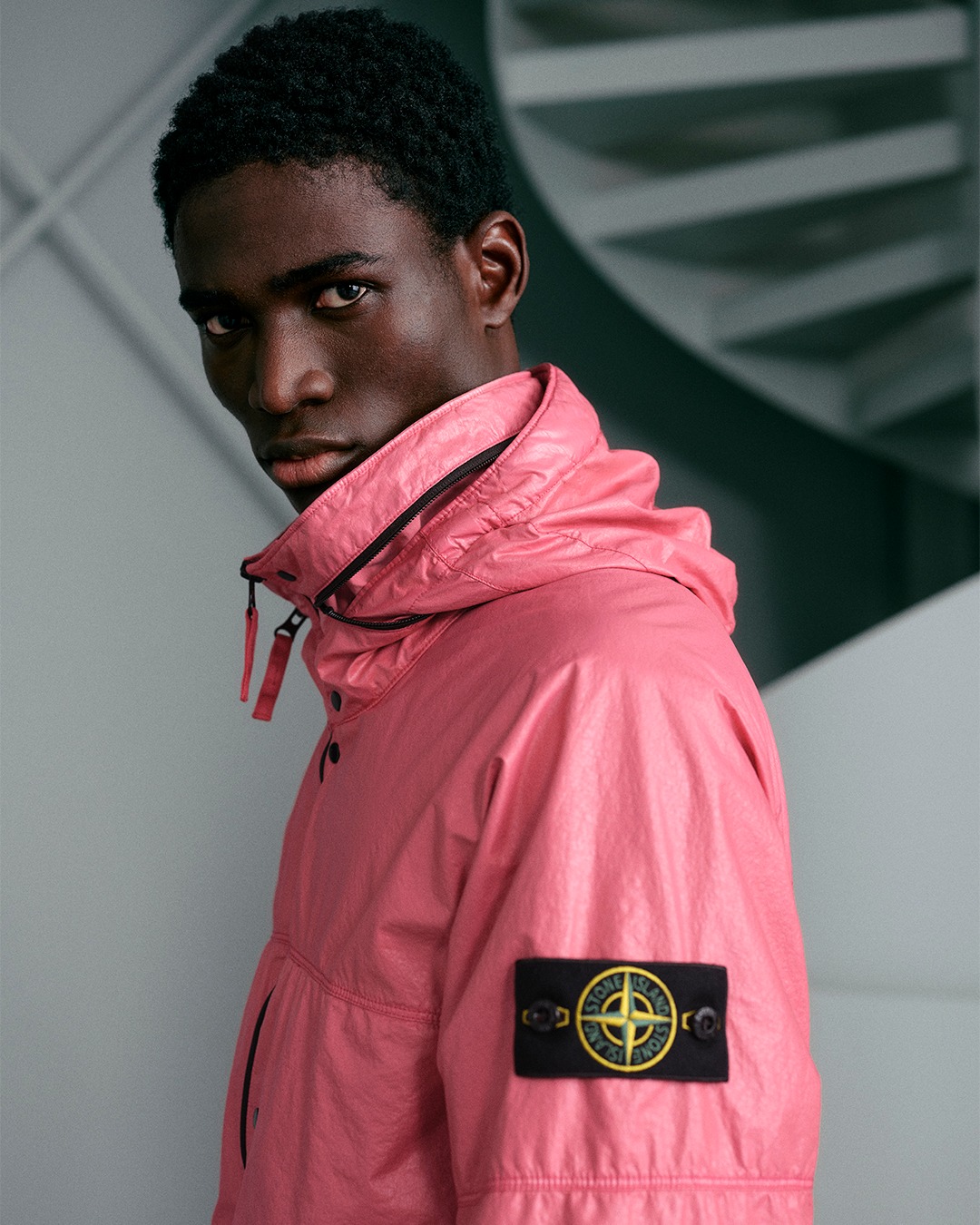
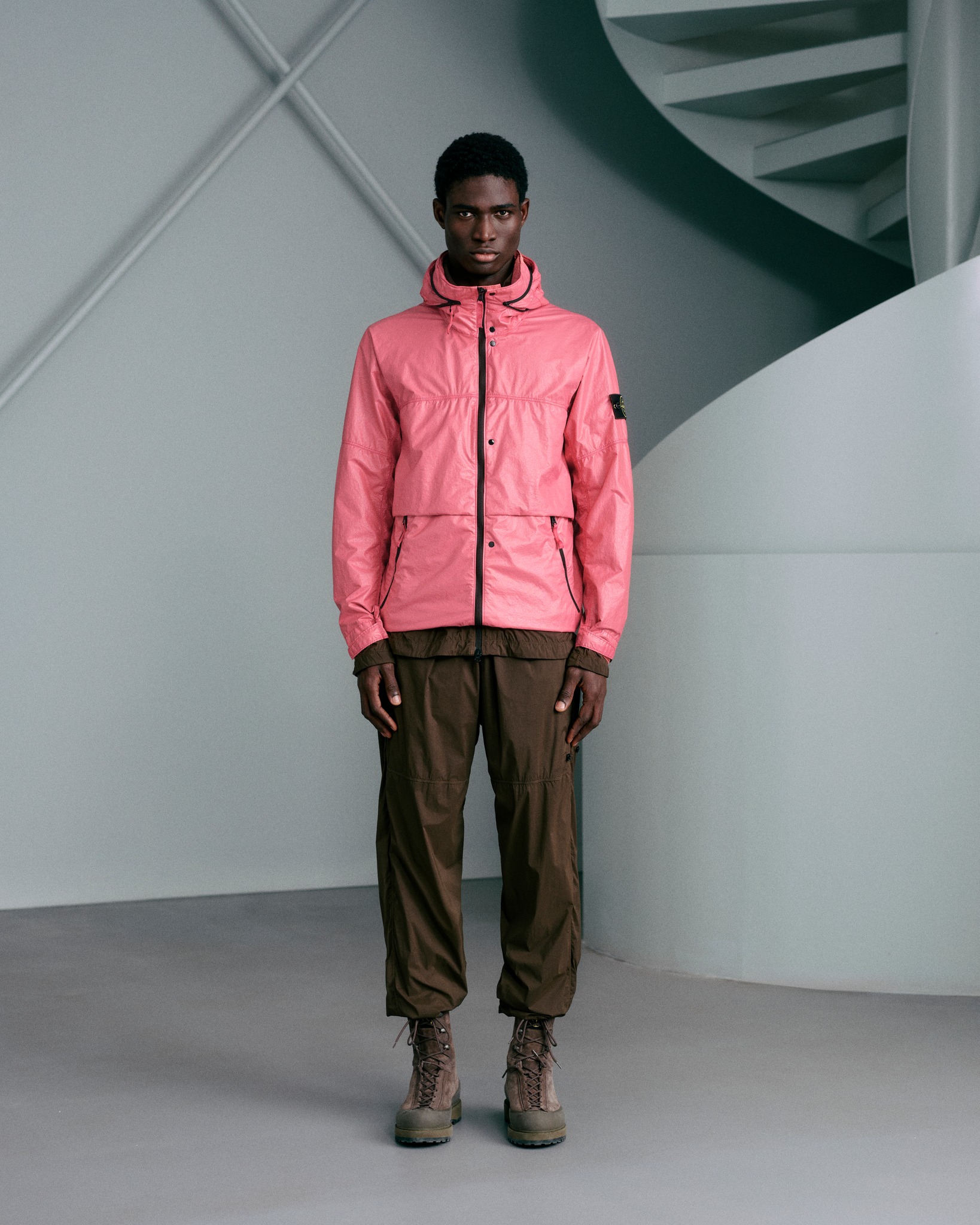
Stone Island's Q100019 Light Nylon 3L TC is a three layer hooded jacket with a glossy nylon face over a waterproof membrane, backed by a mesh built to take on colour. It is garment dyed whole after construction under the brand's Research Department method, part of the Autumn Winter 2026/27 Compass Inside collection, and sits as the lighter half of a season otherwise anchored by the heavier Q100035 resin coated anorak.
Key Points
- Q100019 is a three layer nylon shell: glossy face, membrane, dyeable mesh backing
- The garment is dyed whole after construction, per the Research Department method
- Part of Stone Island AW26 Compass Inside season, alongside the heavier Q100035 anorak
A glossy nylon face laminated to a waterproof membrane, backed by a mesh built to soak up colour after the jacket is already sewn. That is the three layer stack inside Stone Island's Q100019, the Light Nylon 3L TC hooded jacket anchoring one lane of the brand's Autumn Winter 2026/27 collection. Most technical shells get dyed before they are cut and stitched. This one gets dyed whole, seams included, which is why Stone Island keeps building its identity around a process instead of a print.
The interesting story here is not the chemistry alone. What matters today is where Q100019 sits inside this season's lineup: the lightweight half of a two piece technical statement, built to move rather than to armor a body against January.
Three Layers, Not the Season's Heaviest Build
Finally Offline already broke down the dye bath chemistry behind this exact jacket, so the short version is enough here: a glossy nylon outer, a taped waterproof membrane, and a mesh backing that grabs colour unevenly at the seams once the whole garment goes into the bath. Q100019 sits at three layers, which puts it in the lightweight category of Stone Island's outerwear, not the reinforced one. The brand's AW26 lineup also carries the Q100035 Uneven Pigment Dyed Nylon Smerigliato anorak, a heavier resin coated piece built for a different job: standing up to abrasion and holding warmth. Q100019 is not trying to be that jacket. It is built to pack down, layer under a coat, and move through a shoulder season without the bulk.Massimo Osti Built the Lab This Jacket Came Out Of
The garment dyeing method itself traces back to 1982, when Massimo Osti launched Stone Island and built its Research Department around fabric treatments nobody else in menswear was doing at the time. Dyeing a finished, sewn garment instead of raw yardage means the colour settles unevenly across seams and stitching, giving every piece a slightly different surface even within the same production run. That inconsistency is the point. It is also why Stone Island has spent four decades resisting a house palette in favor of a house process.
A Lighter Hood Sits Closer to the Collar
Every layer of this jacket is engineered for weather resistance, but the hood is engineered for movement instead of coverage. A lightweight 3L shell built to be worn under a coat or over a base layer does not need the deep, insulated hood construction of a parka. Q100019's hood sits close to the collar, built for wind cutoff rather than snow coverage, which tracks with a jacket meant to travel light rather than sit still.
Geranium Red Joins a Palette Built From Uneven Dye
Stockists have started listing Q100019 in Geranium, a red colourway that shows exactly what garment dyeing after assembly produces: colour that reads slightly different at the seams than across the panel. Stone Island's own description leans into this, calling out the colour nuances the process lends to both the fabric and the garment's components. A dyed to order red is a different flex than a printed one, and it is the reason resale listings for Stone Island's Research Department pieces tend to specify the exact dye lot language rather than just the colour name.
The Badge Was Sewn Onto Football Terraces First
Stone Island's compass badge did not start on a runway. English football's casual subculture adopted the brand through the 1980s and 1990s, wearing Research Department pieces on the terraces years before luxury retail caught up, and that lineage is still why a technical nylon shell from an Italian house reads as streetwear in London and Manchester as much as it reads as outerwear anywhere else. A three layer jacket like Q100019 is inheriting that dual identity whether the marketing mentions it or not.
Buy the Layering Piece, Skip the Anorak Money
Q100019 is the jacket to buy if the goal is a technical shell that layers, not one that anchors a whole winter kit. At three layers versus the Q100035 anorak's heavier resin coated build, this is the piece built for range: spring into fall, under a coat in deep winter. Pair the read on this drop with how the Compass Inside season's central campaign frames the brand's culture, a conversation Finally Offline traced through Adrian Douzmanian's run of answers for Stone Island. Geranium red is the colourway to watch first. The anorak is the one to save for actual cold.
Related: PALACE REUSES ITS EMOJI A SECOND TIME FOR GORE-TEX.
Related: Stone Island Dense Oxford Nylon TC Jacket.
Related: STONE ISLAND'S BADGE AND ART NUMBER PROVE A REAL JACKET.
Frequently Asked Questions
What is the Stone Island Q100019 jacket made of?
A three layer nylon build: a glossy nylon face laminated to a waterproof membrane, backed by a dyeable mesh.
Is the Q100019 jacket garment dyed after it is sewn?
Yes, Stone Island dyes the finished garment rather than the raw fabric, a Research Department method that lets colour settle unevenly across the seams.
What season is the Q100019 jacket from?
It belongs to Stone Island's Autumn Winter 2026 27 collection, released under the Compass Inside theme.
How does the Q100019 compare to the Q100035 anorak?
The Q100019 is a lighter three layer nylon jacket built for movement, while the Q100035 is a heavier resin coated piece built for reinforcement.
Does the Q100019 jacket have a hood?
Yes, it is built as a hooded jacket, with a hood cut close to the collar rather than a deep parka style hood.
Who developed Stone Island's garment dyeing process?
Massimo Osti developed the technique inside Stone Island's Research Department starting in 1982.
Where can I buy the Stone Island Q100019 jacket?
It is listed through Stone Island stockists including Slam Jam, in colorways such as Geranium red.
Topics: hooded-jacket, garment-dyeing, fashion, technical-outerwear, aw26, research-department, nylon, stone island, massimo-osti, stone-island, the-compass-inside