STONE ISLAND DYES A 3 LAYER NYLON JACKET AFTER IT'S SEWN
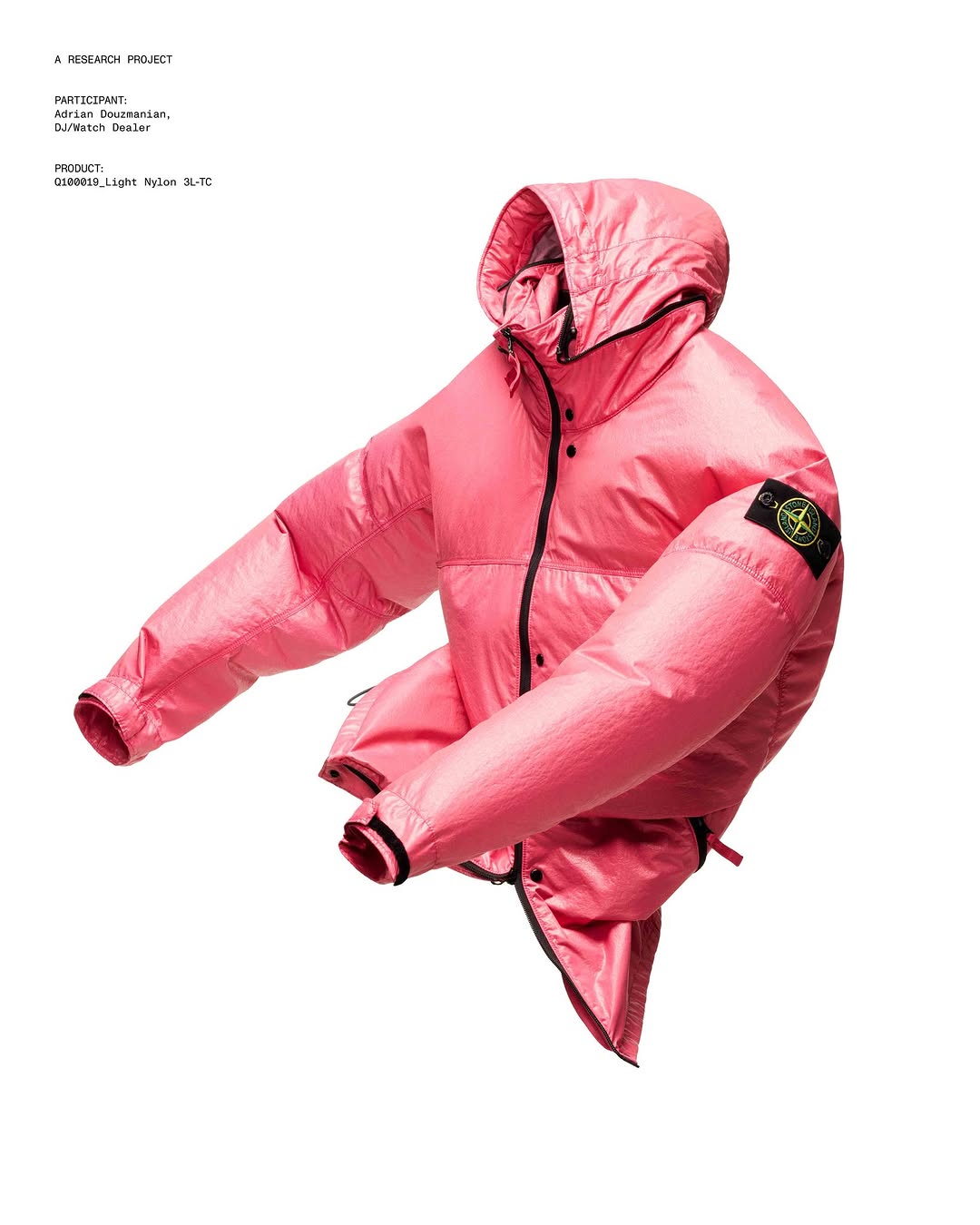
Stone Island's Q100019 Light Nylon 3L TC jacket laminates a glossy nylon face to a waterproof membrane backed by a mesh built to absorb dye, letting the brand garment dye a finished technical shell without losing wind and water protection, a method rooted in Massimo Osti's 1982 research lab and framed this season under The Compass Inside.
Key Points
- Q100019 laminates a glossy nylon face to a membrane, backed by a mesh built only to absorb dye
- Garment dyeing happens after full construction, a method Massimo Osti started at the 1982 Ravarino lab
- Stone Island states the dye process preserves the membrane's wind and water protection after treatment
Nylon that gets dyed after the jacket is already sewn together is the whole story behind Q100019, Stone Island's Light Nylon 3L TC hooded jacket for AW26. The shell is built from three layers: a glossy nylon face laminated to a waterproof membrane, backed by a mesh engineered specifically to take on color once the finished garment goes into the dye bath. Most technical outerwear dyes the fabric before cutting. Stone Island builds the whole jacket first, then colors it, which is a harder problem than it sounds.
A Mesh Layer Exists Purely to Take the Dye
The membrane at the center of a three layer nylon construction cannot be dyed directly without degrading its waterproofing, so Stone Island laminates a separate mesh onto the membrane's inner face and lets that mesh absorb the color instead. The outer nylon face stays glossy and largely undyed in the traditional sense, the membrane stays chemically untouched, and the mesh backing does the work of carrying whatever color the season calls for. Black, pink, geranium, and green versions of Q100019 all start from the same three layer stack. Only the mesh's uptake of dye changes between them.
That is a more complicated build than a single face fabric dyed before construction. It requires the lamination to survive a wash cycle strong enough to saturate a mesh backing evenly, without the bond between the three layers failing or the membrane's pores clogging with dye chemistry.
Garment Dyeing Runs on Osti's Original Bet
Stone Island's garment dyeing method dates back to founder Massimo Osti, who opened the brand's research lab in Ravarino in 1982 on the premise that a finished garment, not raw fabric, should go into the dye bath. Dyeing a completed piece produces the tonal variation and slightly uneven finish that fabric dyed before cutting cannot replicate, since seams, pocket bags, and layered panels all take color a little differently once they are already sewn together.
Stone Island's Research Department proved the same logic works across very different fabric families on this season's vest and anorak pairing, where a bare monofilament shell and a resin backed canvas both came out of the same in house dye lab. Q100019 pushes that lab into a technical membrane construction, a harder substrate to dye evenly than a plain woven canvas or cotton jersey.The Membrane Still Has to Do Its Job After the Dye Bath
None of the color work matters if the jacket stops keeping out water and wind, and that is the actual engineering claim behind Q100019. Stone Island states its garment dyeing expertise lends color nuance to the fabric and the garment's components while preserving the membrane's technical performance, guaranteeing protection from water and wind on the finished piece rather than only in an undyed prototype. The jacket carries a foldable hood, zipped pockets, an adjustable cuff, and a drawstring hem, functional details that only matter if the membrane underneath still blocks weather the way it did before dyeing.
The same garment dyeing language shows up on this season's flocked logo tee, but a cotton jersey tee and a technical nylon shell do not carry the same risk. A tee that dyes unevenly is a cosmetic issue. A jacket membrane that degrades in the dye bath is a functional failure, which is exactly why the mesh backing exists as a buffer in the first place.Compass Inside Frames the Nylon as a System, Not a Colorway
Stone Island tags this season under The Compass Inside, the brand manifesto built around research as an ongoing practice rather than a finished product. The caption's own hashtag, Research Form Function, states the same idea directly. The jacket is a research exercise in lamination and dye chemistry before it is a hooded jacket in a specific color. That framing matters commercially too, since a brand selling a dyeable membrane construction is selling the lab work behind the color, not the color alone.
Buy Q100019 if the three layer lamination and dyeable mesh backing are the actual draw, since that is genuine fabric engineering rather than a marketing label, and the membrane's wind and water protection is stated to hold after dyeing rather than only before it. Skip it if a classic single layer nylon shell covers what you need, since the layered construction adds weight and a price premium the simpler jackets in Stone Island's range do not carry. No retail price for Q100019 has surfaced yet, so wait on a confirmed number before deciding between colorways if budget, not construction, is what is driving the decision.
Frequently Asked Questions
What is Stone Island Q100019?
Q100019 is Stone Island's Light Nylon 3L TC hooded jacket for AW26, built from a three layer nylon laminate with a dyeable mesh backing.
What does 3L TC mean on a Stone Island jacket?
It denotes a three layer construction: a glossy nylon outer face, a waterproof membrane, and a mesh backing designed to absorb color during garment dyeing.
Does dyeing the jacket after construction affect its waterproofing?
Stone Island states the garment dyeing process preserves the membrane's technical performance, so the finished jacket still blocks water and wind after dyeing.
Why does Q100019 need a separate dyeable mesh layer?
The waterproof membrane cannot absorb dye directly without risking damage, so a mesh is laminated to it specifically to take on color while the membrane stays untouched.
Who started Stone Island's garment dyeing technique?
Founder Massimo Osti opened the brand's research lab in Ravarino in 1982 and built garment dyeing, coloring finished pieces rather than raw fabric, into the brand's core method.
What colorways does Q100019 come in?
Retailer listings show the Light Nylon 3L TC jacket in black, pink, geranium, and green for the AW26 season.
What is The Compass Inside?
It is Stone Island's brand manifesto, framing research and material experimentation as an ongoing practice rather than a single finished product each season.
Does Q100019 have a confirmed retail price?
No confirmed retail price has surfaced yet across current listings for the jacket.
Topics: technical outerwear, garment dyeing, the compass inside, layer, aw26, nylon, stone island, massimo osti, stone-island, q100019, research department, light nylon 3l tc, nylon lamination