KIKO KOSTADINOV REWORKED STUSSY TO PAY FOR HIS MASTERS
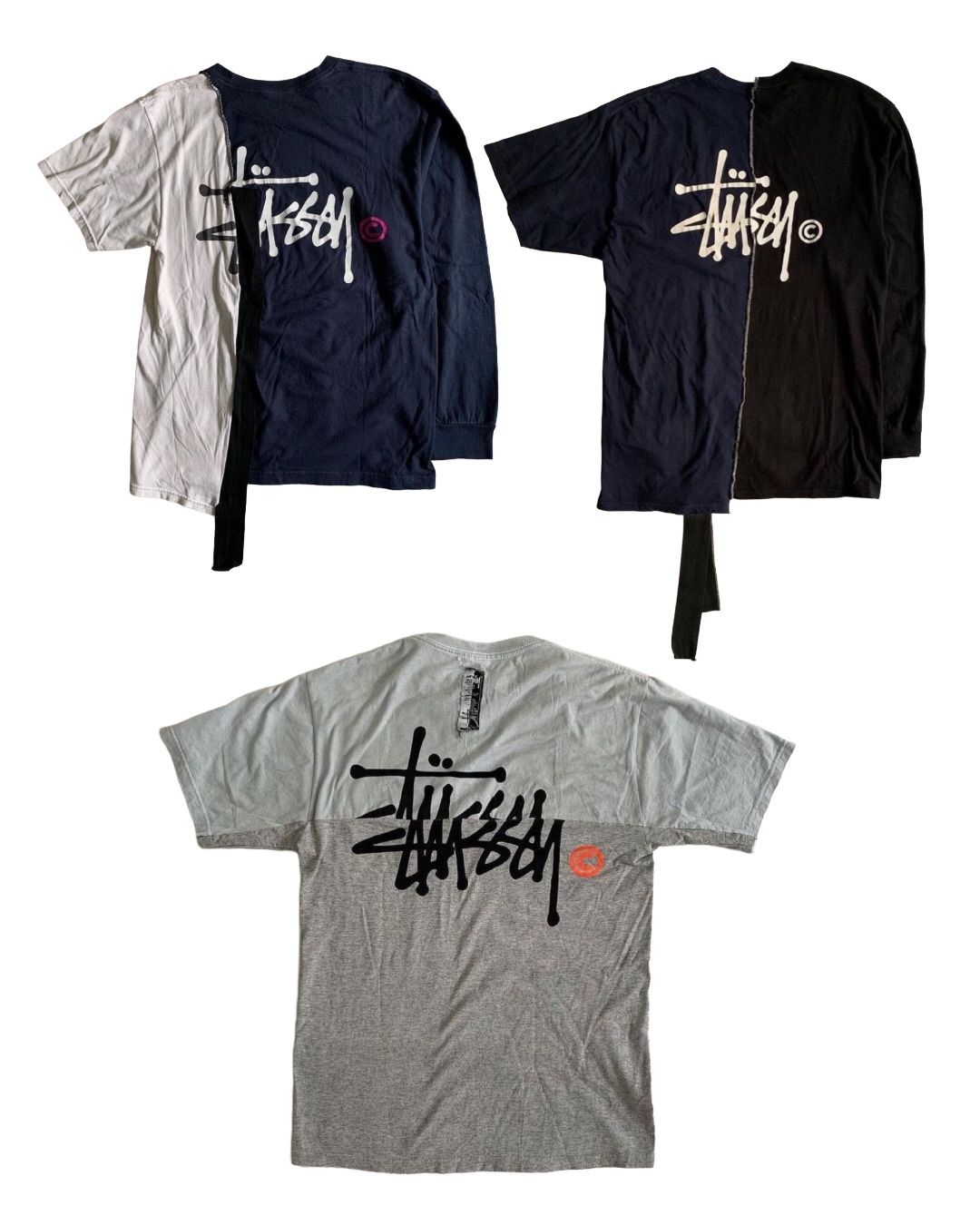
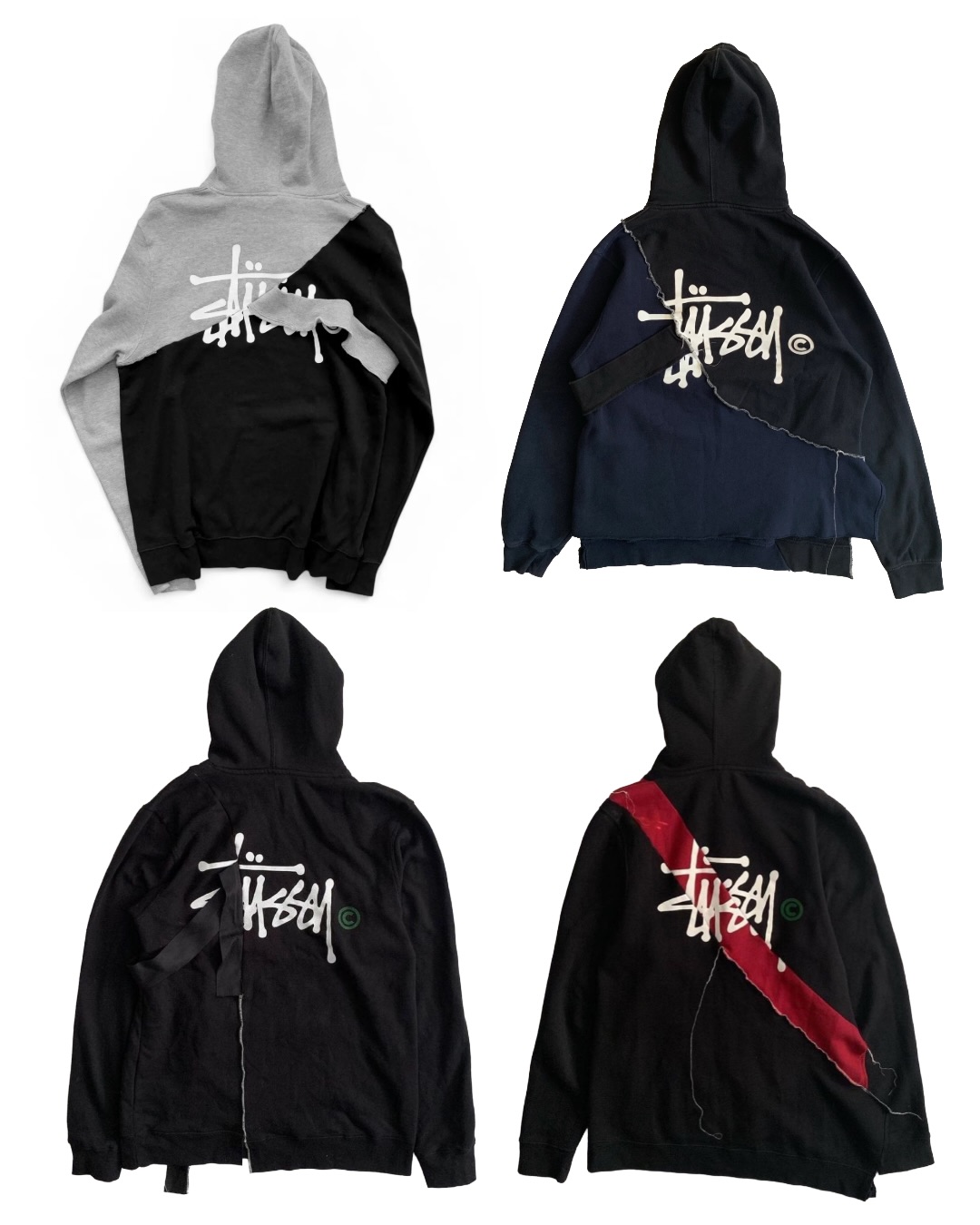
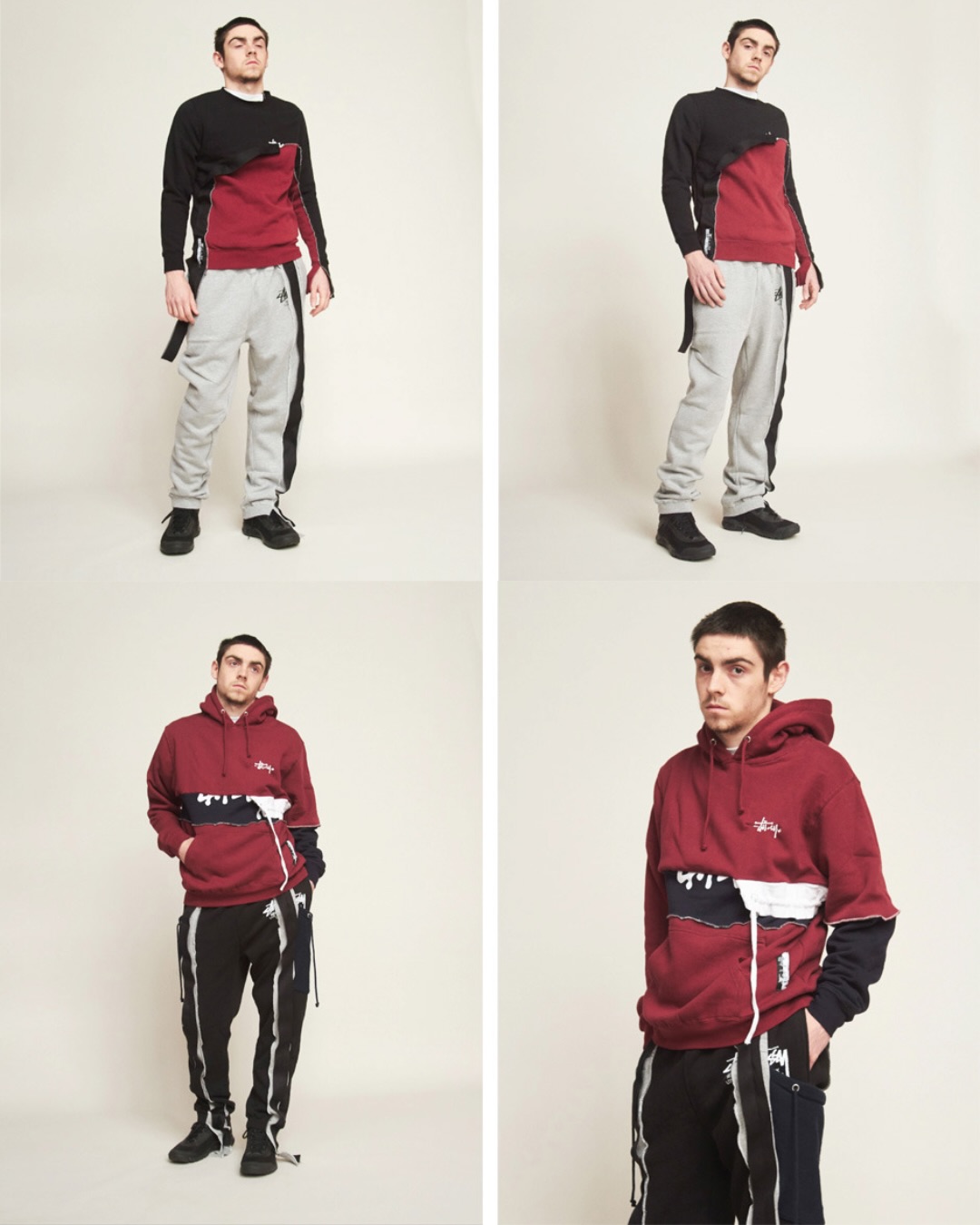
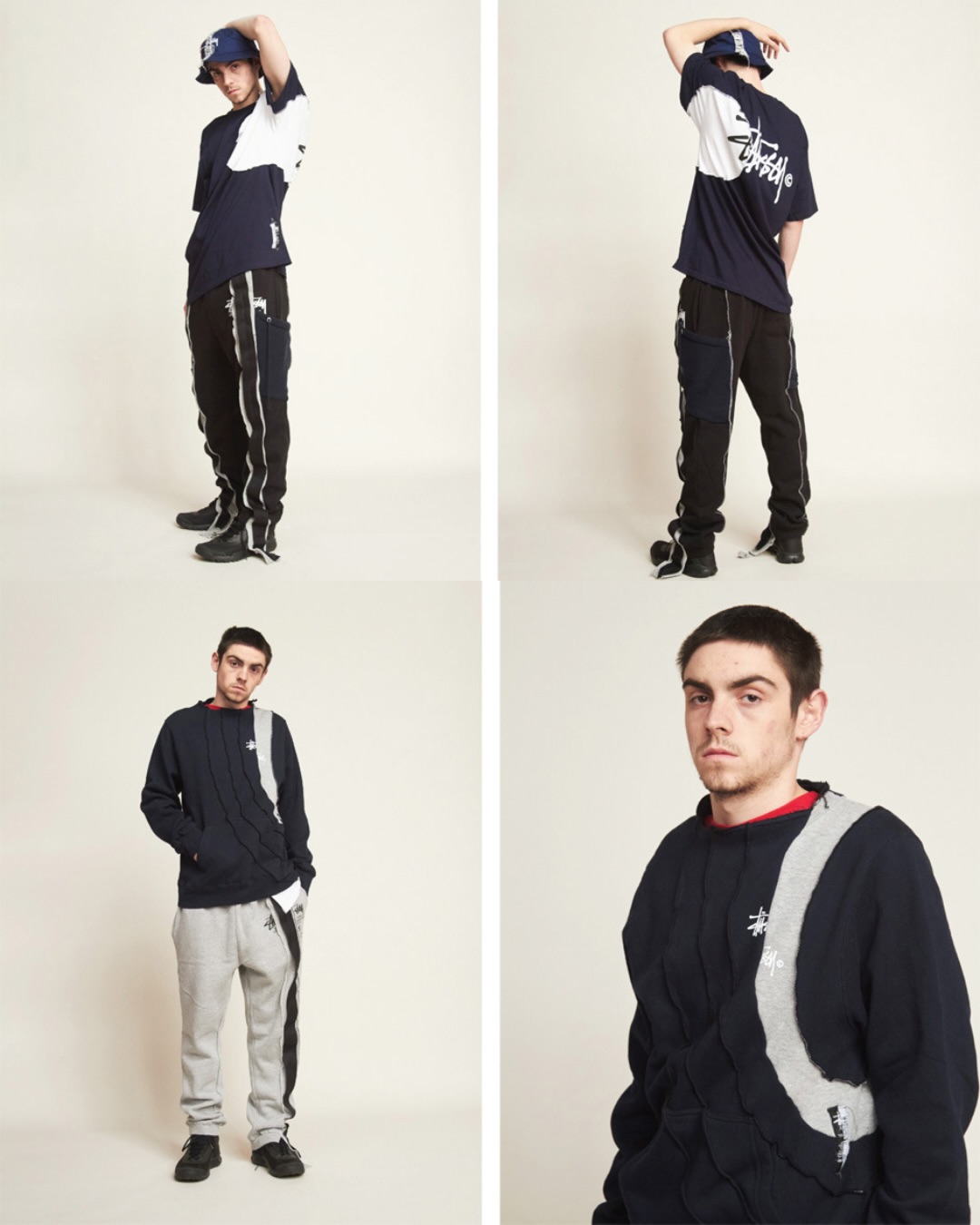
Kiko Kostadinov reworked eight discontinued Stussy garments into his 2013 Displacement collection for a SHOWstudio editorial commissioned by stylist Stephen Mann. The work led to a 2015 Dover Street Market capsule and a Ginza installation, and helped fund the Central Saint Martins tuition that preceded his own label's 2016 launch.
Key Points
- Eight destroyed Stussy hoodies became Kiko Kostadinov's first paid fashion commission in 2013.
- His 2015 Dover Street Market capsule funded his Central Saint Martins master's tuition.
- Kostadinov's own label launched with 0001 in 2016, three years after the Stussy editorial.
Central Saint Martins tuition ran past five figures by 2015, and Kiko Kostadinov covered part of it with a stack of secondhand Stussy hoodies he had already cut to pieces. Two years earlier, stylist Stephen Mann had handed him eight garments to repurpose for a SHOWstudio editorial, the kind of student commission that usually disappears after one shoot and one tear sheet. This one did not. Stussy noticed the results first. Dover Street Market noticed next. The label that now shares a runway credit with ASICS and cuts patterns for Levi's began with fleece the brand itself had already written off, reworked in a London studio with nothing more than scissors and a sewing machine.
2013 Was the Year Stussy Gave Away Its Dead Stock
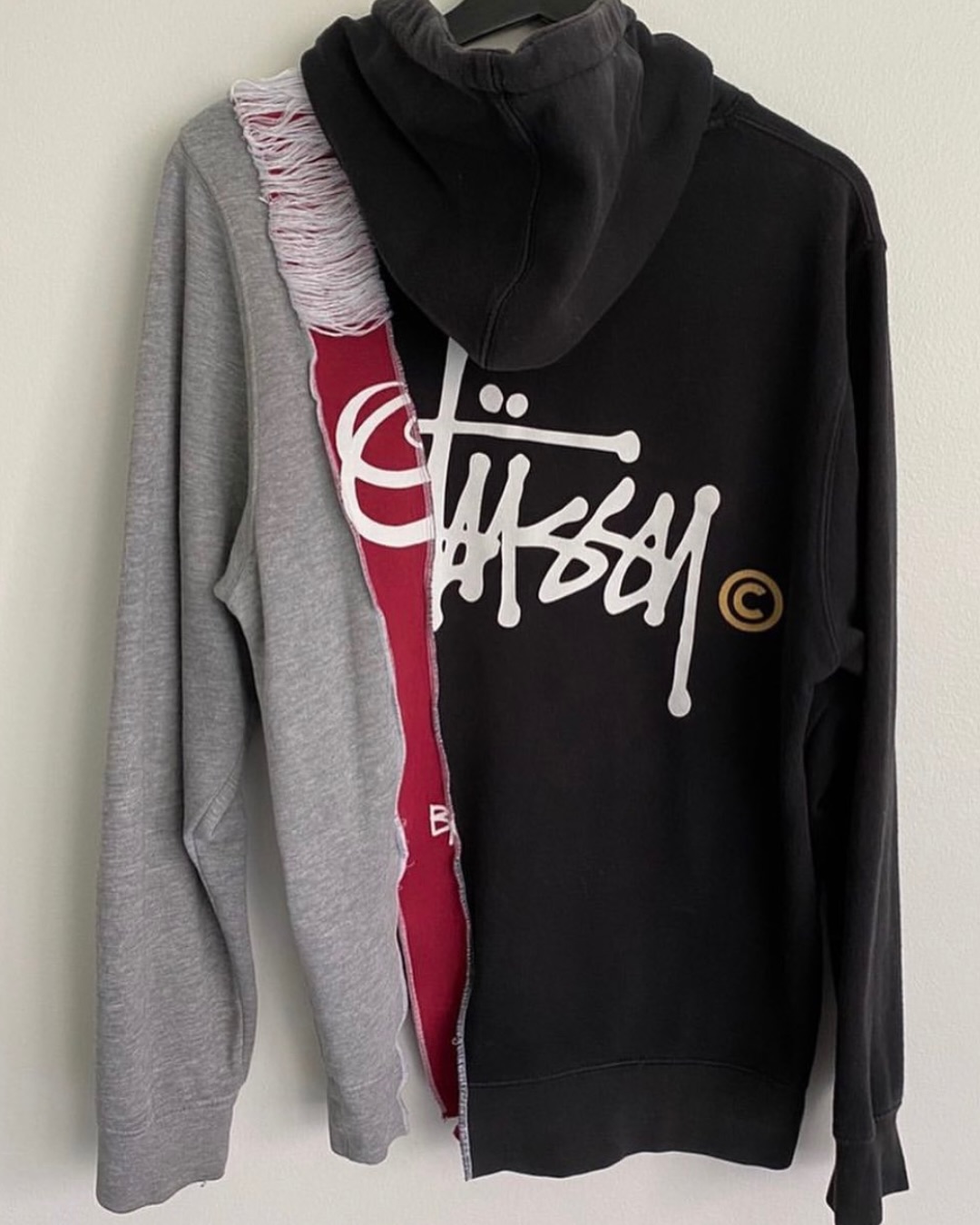
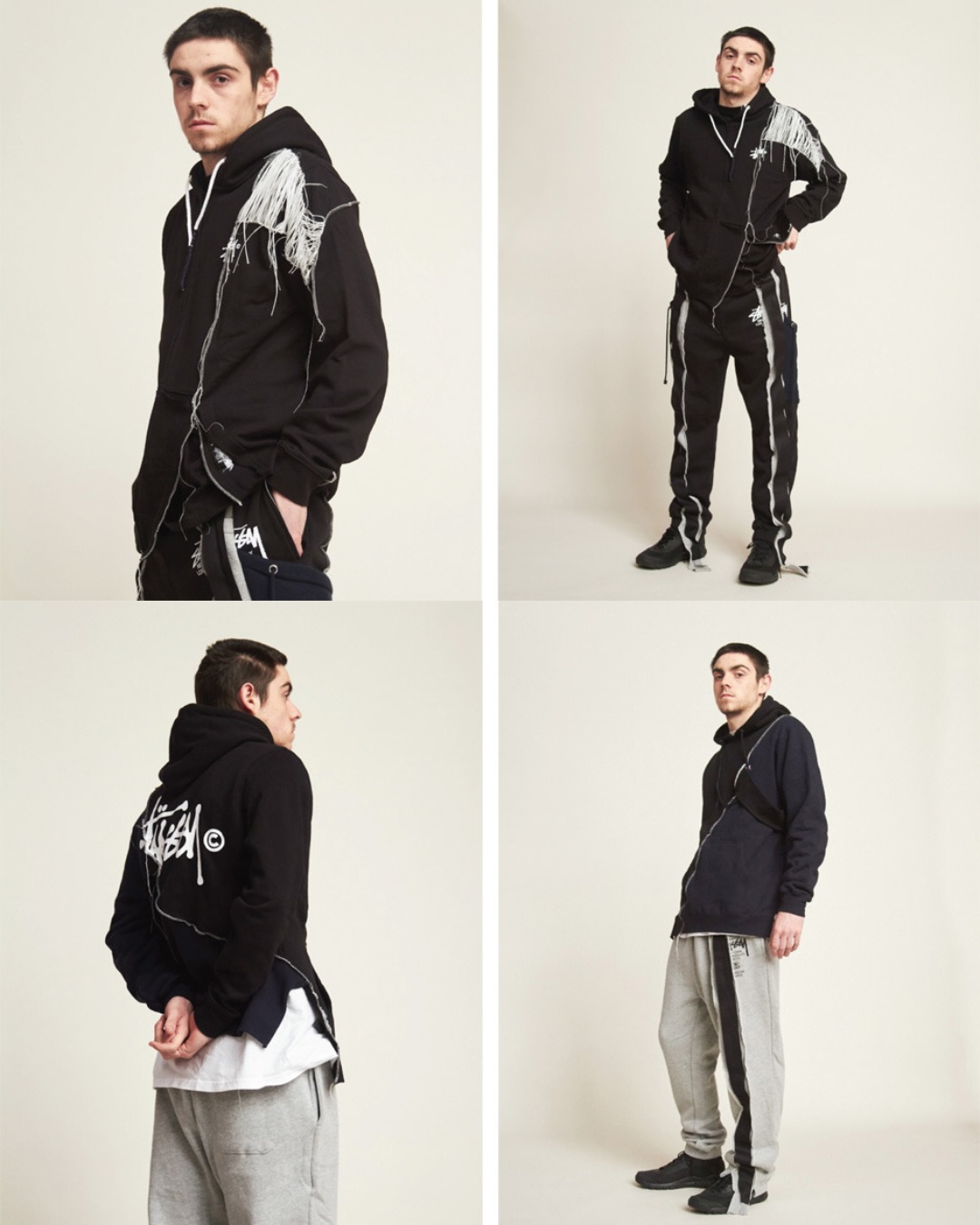
Kostadinov left Bulgaria for London at sixteen and was still a student at Central Saint Martins when Mann commissioned him to repurpose Stussy garments for a 2013 SHOWstudio editorial. The commission grew out of pieces Kostadinov had already cut for one of Mann's Clash magazine shoots. Once SHOWstudio saw the results, the site contacted Stussy directly and asked to stock a run of the pieces in its own shop instead of letting the editorial disappear into an archive of tear sheets. Kostadinov delivered eight reconstructed garments, hoodies, sweatshirts and hats, under the title Displacement, each one taken apart and rebuilt with a panel shifted off its original seam. Nothing about the source material was new. Stussy had already discontinued most of it.
Richard Serra and Lawrence Weiner Framed the Reconstruction
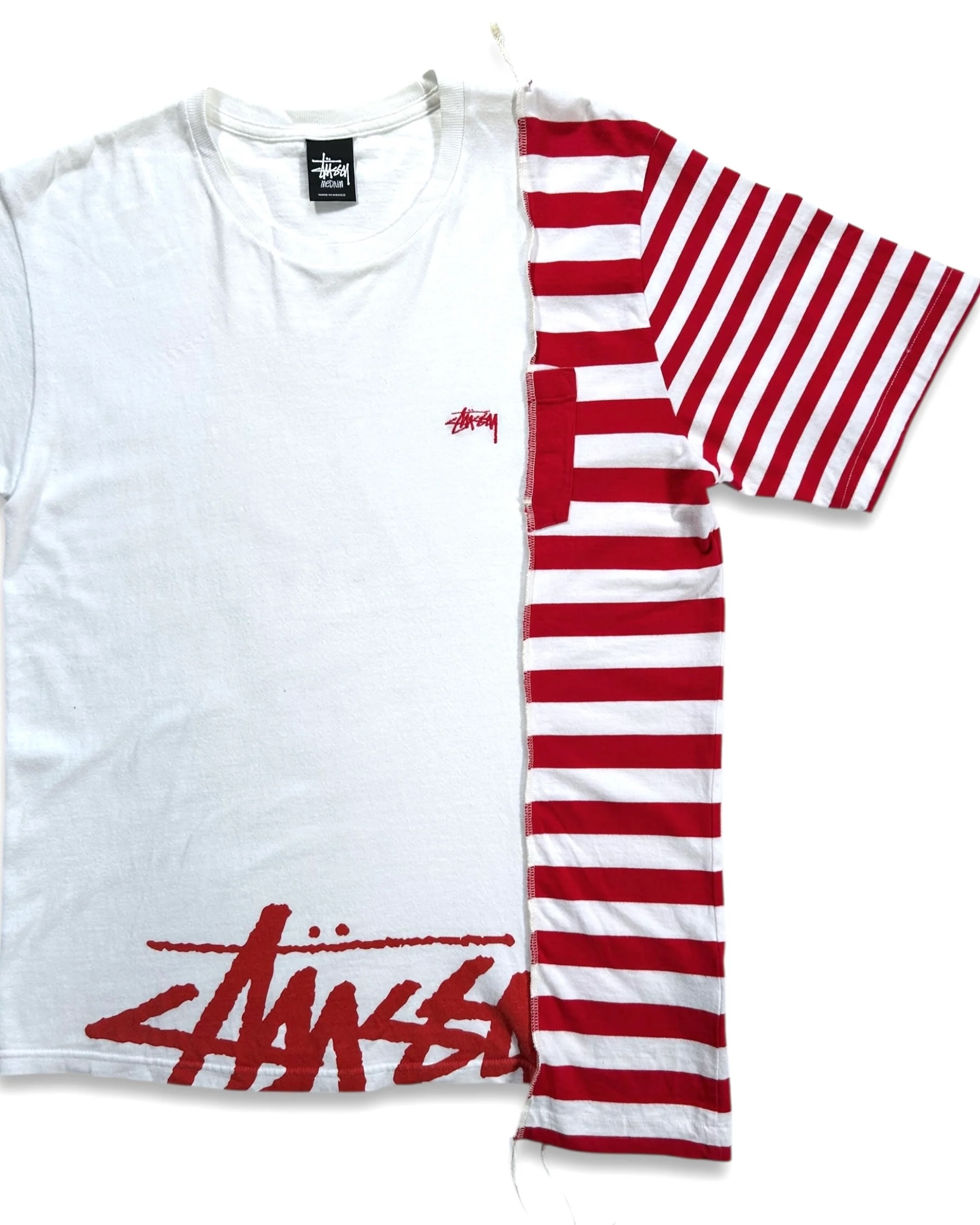
Displacement borrowed its name from the catalog documenting Lawrence Weiner's 1992 show at the Dia Center for the Arts in New York, and the cutting technique leaned on the minimalist sculpture of Richard Serra, whose steel plates hold their shape through displaced weight instead of ornament. Kostadinov applied that logic to cotton. A hoodie panel moved six inches off its seam reads as sculpture the moment the garment stops functioning as clothing, and that is the read Kostadinov was chasing. The seams were cut clean, not frayed, so each displacement read as intentional rather than damaged, the difference between a rework and a mistake. It is the kind of reference a student makes to signal where he intends to end up, not where he currently stands, and eight one of a kind Stussy pieces carried it into a retail shop window instead of a graduate crit.
Eight Hoodies Became Twenty Pieces at Dover Street Market
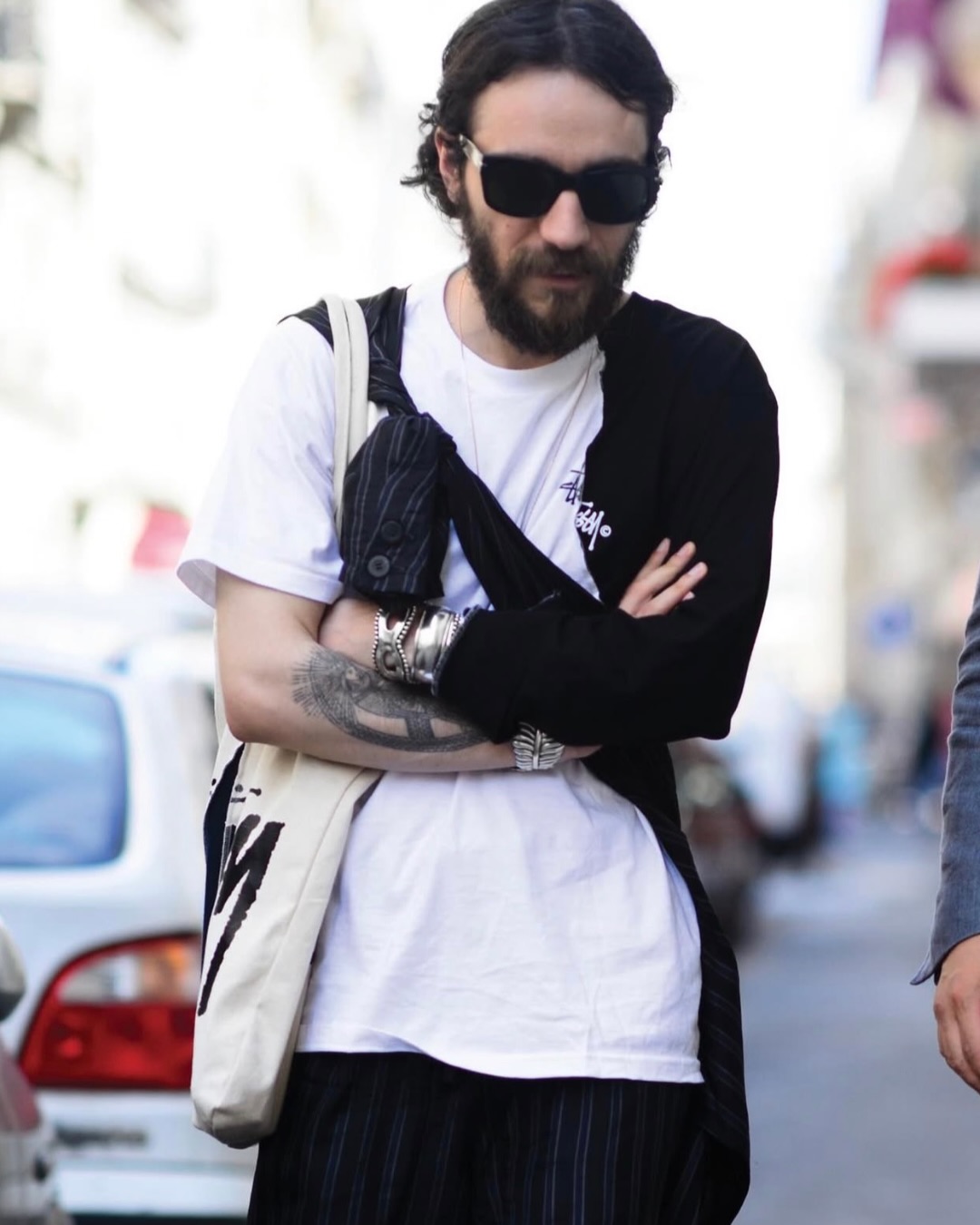
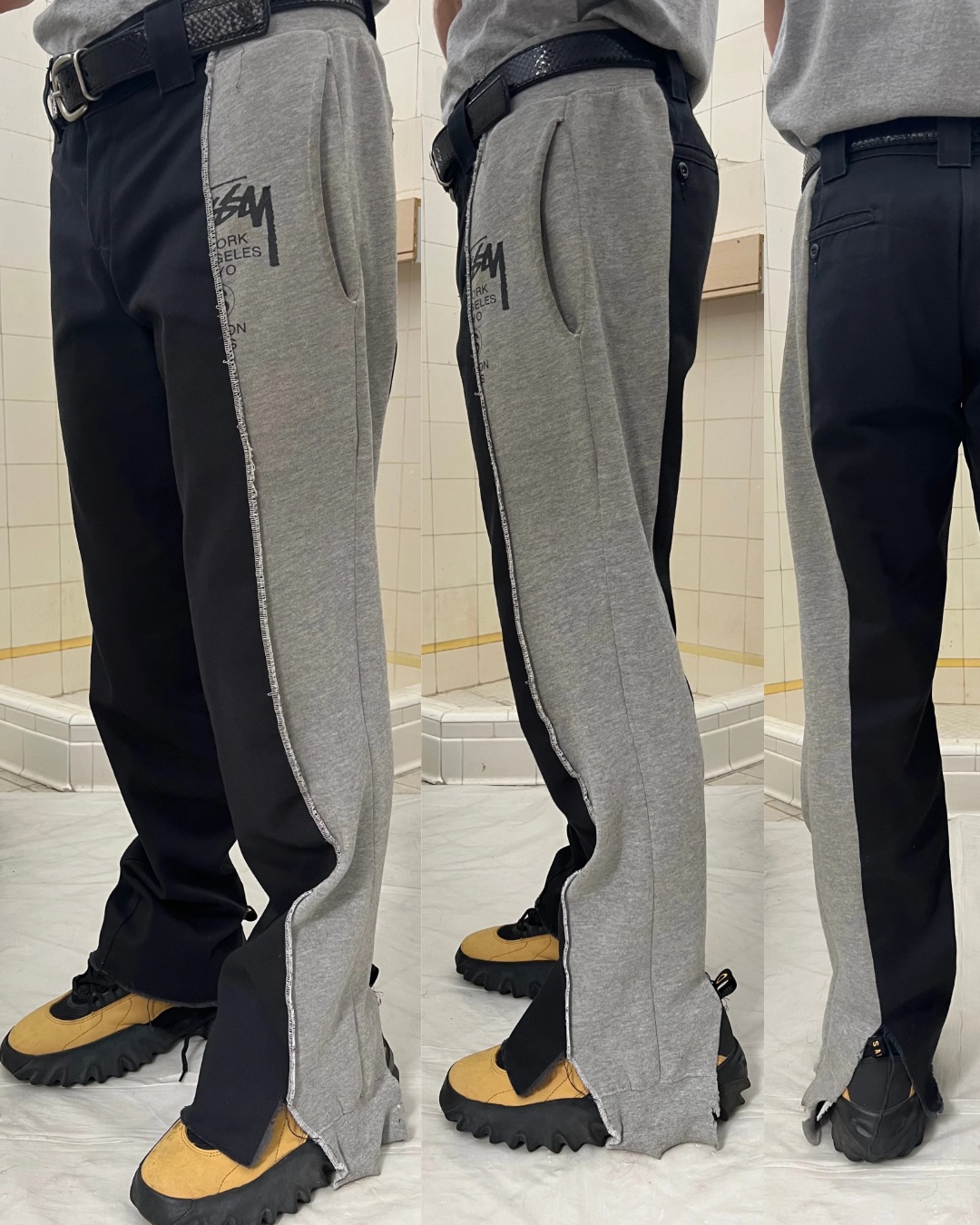
Dover Street Market picked up the SHOWstudio editorial and offered Kostadinov a capsule for Stussy's 35th anniversary, this time built from reworked vintage staples instead of new stock. Stussy itself was already family run by then; who owns Stussy traces to a January 1996 buyout, when the Sinatra family took founder Shawn Stussy's stake off his hands. The 2015 collection landed as ten sets of twin looks, twenty pieces total, each pair shredded and layered from one source garment so no two halves matched exactly. It was Kostadinov's first collection sold in North America, and Dover Street Market New York was the only place to buy it. The proceeds went straight to the master's tuition the original SHOWstudio commission had interrupted two years earlier.
Ginza's Windows Held Designs That Existed Nowhere Else
Dover Street Market brought Kostadinov back that November for an installation inside its Ginza store, one of six locations Rei Kawakubo and Adrian Joffe have built out from London to Beijing under the Comme des Garcons umbrella. The pieces on display were one of a kind, sold exclusively at that single address instead of reissued across the New York or London stores, placed on shelves inside Kawakubo's own store. A brand built on scarcity had, by the end of 2015, run three separate scarcity experiments through one unproven designer without ever putting him on contract.
Stussy's Scarcity Playbook Started With Its Own Student
Stussy has since built its entire modern retail model on the principle Kostadinov applied by hand in 2013. The brand now runs its own Chapter Stores and a short list of independent stockists instead of mall distribution, engineering with policy what Stussy's supply chain once left to a single designer with scissors. That shift compounds. Stussy's revenue has never been confirmed since chief executive David Sinatra cited fifty million dollars to Business of Fashion in 2015, the same year Kostadinov's twenty piece capsule sold out at Dover Street Market. A company that once let a student cut up its dead stock for an editorial now treats every one of its own drops as a dead stock event.
Kostadinov Now Answers to Mackintosh, Not Stussy
Kostadinov's own label debuted in 2016 with the runway collection 0001, presented at Dover Street Market three years after Displacement first showed there. He has since built Novalis, his running focused project with ASICS, cut denim with Levi's, and taken over as creative director of Mackintosh's premium line, also stamped 0001, a full decade into a career that started by wrecking someone else's inventory. The eight Stussy hoodies from 2013 never came back into circulation. Dover Street Market has not run a comparable experiment with an unproven student designer since.
Frequently Asked Questions
What was Kiko Kostadinov's Displacement collection?
Displacement was a 2013 capsule of eight reconstructed Stussy garments, hoodies, sweatshirts and hats, that Kiko Kostadinov made for a SHOWstudio editorial commissioned by stylist Stephen Mann.
When did Kiko Kostadinov first work with Stussy?
Kostadinov's first Stussy work was the 2013 Displacement editorial for SHOWstudio, which led Dover Street Market to offer him a 2015 capsule for the brand's 35th anniversary.
Who commissioned Kiko Kostadinov's 2013 Stussy editorial?
Stylist Stephen Mann commissioned the 2013 SHOWstudio editorial that first paired Kostadinov with reworked Stussy garments.
How many pieces were in Kiko Kostadinov's Dover Street Market Stussy capsule?
The 2015 Dover Street Market capsule totaled twenty pieces, ten sets of twin looks cut from the same source garments.
What inspired the name Displacement?
The name came from the catalog for Lawrence Weiner's 1992 exhibition at New York's Dia Center for the Arts, and the cutting technique referenced Richard Serra's displaced weight sculptures.
When did Kiko Kostadinov launch his own label?
Kostadinov launched his self titled label in 2016 with the runway collection 0001, shown at Dover Street Market.
Does Kiko Kostadinov still work with Stussy?
Kostadinov has not released a follow up Stussy capsule since the 2015 Dover Street Market anniversary collection and the Ginza installation that followed it that November.
Where was Kiko Kostadinov's Stussy capsule sold?
The 2015 capsule sold exclusively at Dover Street Market New York, and the Ginza installation pieces were sold only at that Tokyo store.
Topics: dover-street-market-new-york, dover street market new york, fashion-archive, dover-street-market, streetwear-archive, focus-44-5, central-saint-martins, showstudio, stssy, asics, comme-des-garons, comme des garçons, stussy, kiko-kostadinov, stüssy