STÜSSY TURNED SCARCITY INTO A SUPPLY CHAIN
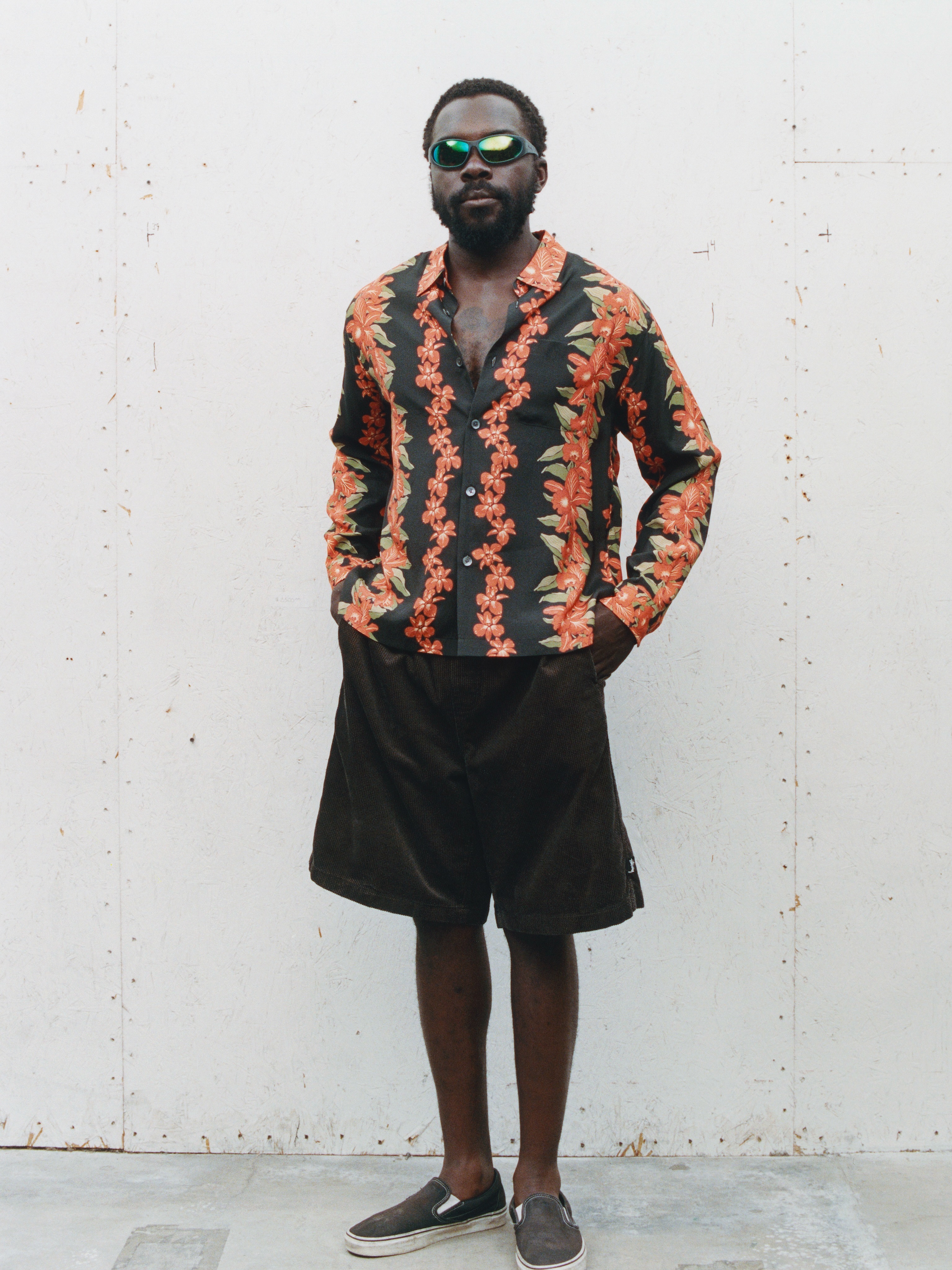
Stüssy limits its own distribution on purpose, having pulled back from mall retailers like Zumiez in the mid 2010s to sell mainly through its own Chapter Stores and select independent shops. The brand now ships product as small numbered deliveries within a season and periodically as a fully synchronized global drop timed to the same local clock across five regions, a rhythm the Sinatra family, which has owned Stussy Inc since 1996, has run four times between May and August 2026 alone.
Key Points
- Zumiez said in 2016 Stussy limited distribution to keep demand high.
- Stussy has run four synchronized global drop clocks since May 2026 alone.
- Frank Sinatra Jr bought Shawn Stussy's stake in 1996; his son David is CEO now.
Stüssy is hard to find because the company built it that way. After a mid-2010s retreat from mall chains including Zumiez, it now sells almost entirely through its own Chapter Stores and a short list of independent shops, releasing new product in numbered seasonal deliveries and, several times a year, a fully synchronized global drop that lands at the same local clock time across five regions at once. The scarcity is not an accident of demand. It is the distribution plan.
1980. A $5,000 Investment And A Signature.
Shawn Stussy started by scrawling his own surname across surfboards he shaped in Laguna Beach, California, then screen printed the same signature onto T-shirts he sold out of his car. In 1980, Frank Sinatra Jr, no relation to the singer, offered $5,000 to help grow the operation, and the two formalized Stussy Inc in 1984. How Stüssy Built Hip-Hop Fashion From California Sand to NYC Streets traces how that surf shop signature crossed into East Coast hip-hop within a few years, but the retail instinct that defines the brand today was already there at the start. Shawn Stussy was never selling volume. He was selling a signature people had to go find, worn first by the International Stussy Tribe, the loose 1980s network of DJs, artists and skaters he gave free product to before there was a store to walk into.
"They Wanted Their Brand To Stay In Demand"
In 2016, a customer publicly asked Zumiez's official account why the mall chain had stopped carrying Stüssy. Zumiez answered plainly, in a post that is still up: "stussy wanted their brand to stay in demand, and they thought the best way to do that was to limit distribution and access." That is a former wholesale partner explaining, in its own words, why it lost the account. It matches the wider account of Stüssy's mid-2010s pullback from mall and big box retail toward its own Chapter Stores and a short list of independent boutiques. The brand was not chasing every register it could reach. It was choosing which registers got to sell it at all, and Zumiez was not one of them anymore.
Stüssy Ships Small Batches On Two Different Clocks
Stüssy runs two release rhythms at once. Inside a season, product ships as numbered deliveries, three to four per season, each a small capsule rather than a full collection drop. Spring 2026 Delivery 3 dropped April 3 with a single Instagram caption listing only the date and time, no campaign images, no prices. Summer 26 Delivery 2 landed June 12 with a Camo Gear capsule pulled from the brand's 1990s catalog. Layered on top of that cadence is a second, bigger mechanic: the synchronized global drop, where a full collection releases at 10am local time simultaneously across North America, the UK, Europe, Japan and Korea through Chapter Stores and Stussy.com. The Spring 26 World Tour landed May 1, a Mountain Hardwear collaboration followed June 5, the Fall Drop hit July 31, and an Always Do What You Should Do collaboration synced worldwide on August 7. That is four coordinated global launches in roughly three months, and FO's own coverage lost count of which one was actually fourth: one article called the August 7 Adwysd release Stüssy's fourth synchronized clock since May, another gave that same ordinal to the August 21 Fall Collection three weeks later. Whichever one earns the number, the pace is the real story. A brand once known for one signature and a T-shirt now runs a retail calendar tight enough that even its own chroniclers lose count.
David Sinatra Runs What His Father Bought
David Sinatra, son of Frank Sinatra Jr, has run Stussy Inc as CEO for roughly a decade. His father put up the $5,000 that got the company started in 1980, formalized it as Stussy Inc with Shawn Stussy in 1984, then bought out Shawn's stake entirely in 1996 after a well documented split over creativity versus scale. Shawn Stüssy is now 71 and runs S/Double, an independent project built with Globe, an Australian board sports company, that has nothing to do with the brand carrying his name. David Sinatra's tenure as CEO lines up with the same window Zumiez cites for the distribution pullback. The company has stayed privately held under one family for close to thirty years, unusual for a brand this size, and it is a plausible reason the scarcity strategy has held. Nobody outside the family has ever had a shareholder's reason to chase volume over control.
Fewer Doors Now Than Three Decades Ago
Stüssy's own site currently lists Chapter Stores in around eighteen cities: Los Angeles, New York, Toronto, Vancouver, Amsterdam, London, Madrid, Milan, Tel Aviv, Guam, Kuala Lumpur, Seoul, Singapore, Sydney, Taipei, Taichung, an Osaka storefront and the original Santa Ana archive shop. Older company profiles, from when Stüssy licensed its name to independent operators rather than running doors itself, put that number as high as fifty. The gap between those two counts is not really a contradiction. It is a strategy playing out over three decades: fewer doors, each one more curated, more of the brand's own retail control and less of a licensee's. The International Stüssy Tribe was the brand's original distribution channel, a mailing list of people Shawn Stussy trusted before there was a Chapter Store to walk into. The instinct has not moved in forty five years. Stüssy still decides who gets to sell it and who gets to wear it first. It just does the deciding through a storefront lease now instead of a jacket with someone's name embroidered on it.
Frequently Asked Questions
Why Is Stüssy Hard to Find in Stores?
Stüssy deliberately narrowed its own distribution starting in the mid 2010s, pulling back from mall chains and refocusing on its own Chapter Stores and a short list of independent boutiques, which keeps the product scarce by design rather than by accident.
Does Stüssy Still Sell at Zumiez?
No. Zumiez's own account confirmed in 2016 that Stüssy pulled its distribution to protect demand, and the brand has not returned to mall chain retail since.
How Many Stüssy Chapter Stores Are There?
Stüssy's website currently lists Chapter Stores in around eighteen cities worldwide, though earlier company profiles describe a much larger licensed network of up to fifty doors in prior decades.
Who Owns Stüssy Today?
The Sinatra family owns Stüssy. Frank Sinatra Jr bought out founder Shawn Stussy's stake in 1996, and his son David Sinatra now runs the company as CEO.
What Is a Stüssy Delivery?
A Stüssy delivery is a small numbered capsule release inside a season, typically three to four per season, distinct from the brand's larger synchronized global collection drops.
What Is Stüssy's Synchronized Global Drop?
It is a full collection release timed to 10am local time simultaneously across North America, the UK, Europe, Japan and Korea through Chapter Stores and Stussy.com, a model the brand has run several times in 2026 alone.
Is Shawn Stüssy Still Involved With the Brand?
No. Shawn Stussy sold his stake in 1996 and now runs an unrelated project called S/Double with the Australian company Globe.
When Was Stüssy Founded?
Shawn Stussy started the brand in the early 1980s in Laguna Beach, California, before formalizing it as Stussy Inc in 1984 with investor Frank Sinatra Jr.
Topics: stssy, shawn-stussy, distribution, streetwear, brand-strategy, zumiez, chapter-stores, drop-culture, stüssy