Manual Puts Down Roots With a Photo Lab on Allen Street
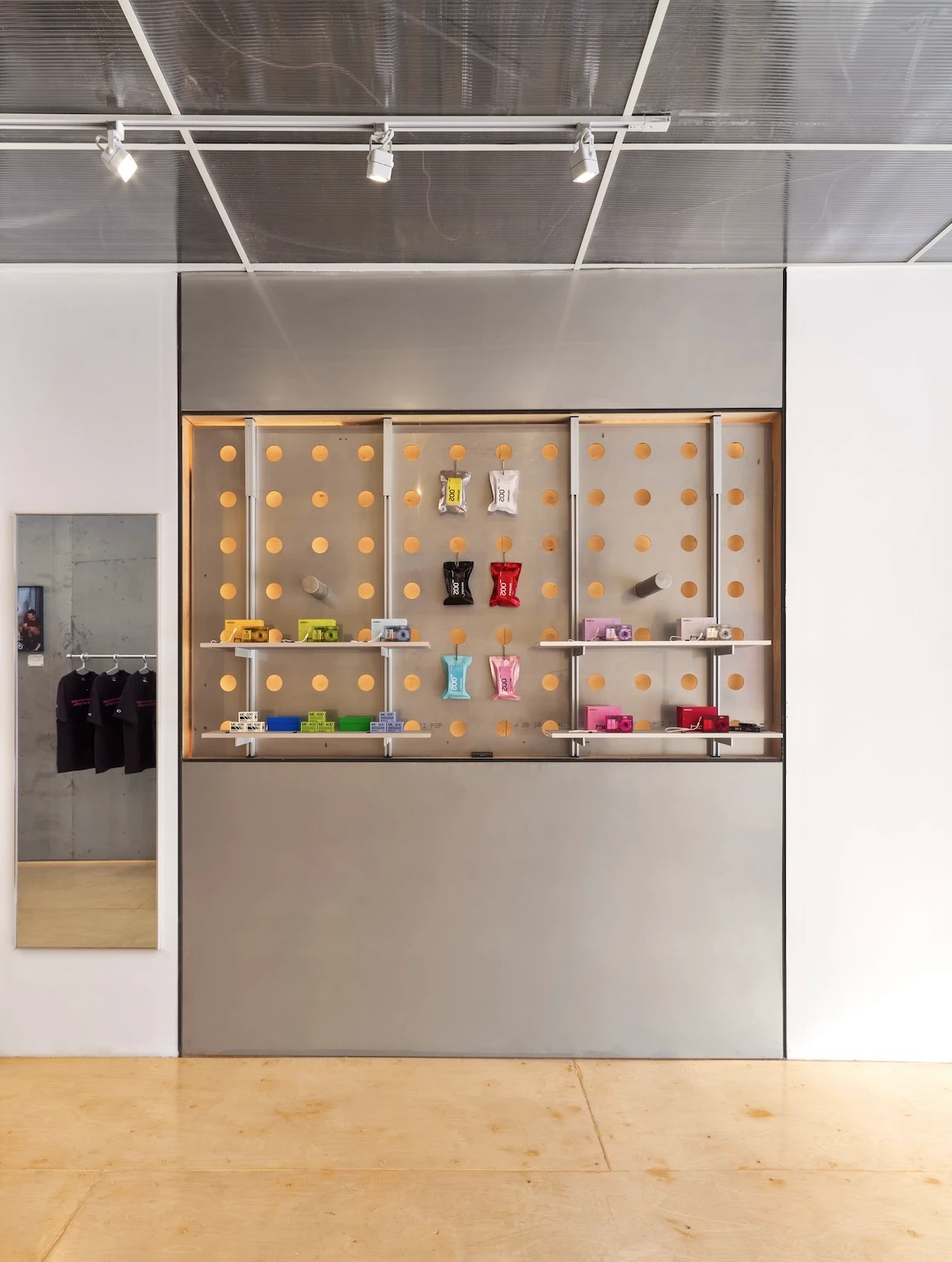
Manual Photo Lab is the first permanent store from Manual, the New York camera label founder Malcolm Dia started in 2017. The 400 square foot shop at 85A Allen Street in Chinatown combines a camera store, a film lab and a gathering space modeled on the neighborhood camera shops Dia grew up around. Finally Offline has followed Manual since its summer 2019 pop up on Delancey Street in the Lower East Side.
Key Points
- Manual Photo Lab is Manual's first permanent store, 400 square feet at 85A Allen Street in Chinatown.
- It sells Manual's cameras, Kodak film, books and zines, and develops 35mm color film in two to three days.
- Founder Malcolm Dia modeled it on the neighborhood camera shops where photographers used to meet.
Manual has a permanent home. Manual Photo Lab opened at 85A Allen Street in Chinatown, a 400 square foot room that works as a camera shop, a film lab and a place to stay a while, and it belongs to founder Malcolm Dia, who has been building the label around New York since 2017. We have followed Manual since the summer of 2019, when its pop up on Delancey Street in the Lower East Side ran a coffee counter and a film drop off window all season and drew lines around the block. The idea from that summer finally has a lease, a few minutes on foot from where it started.
Modeled on the Old Camera Counters
Dia modeled the room on the neighborhood camera stores he grew up around, the kind of counter that sold film, developed it and quietly became a meeting place. "They were where people met, traded tips, and got their film back. We think there's a real appetite for that kind of place, especially among younger people picking up cameras again," he told Hypebeast.
The habit goes back to his childhood. His grandfather kept film cameras and the two of them built a darkroom in the family garage, a story Dia has told for years. When he moved to New York to work in media, starting at GQ, he spent his days around photo shoots and noticed how many of the photographers he met still shot film on their own time. His friends dropped their rolls wherever was closest, in Chinatown or in Greenpoint, and nobody seemed to care much about the place itself. Manual began as the answer to that, a lab and a set of cameras for people who wanted their film to matter.
From a Mailer to a Storefront
The first version of Manual lived in the mail. You ordered a disposable camera online, shot the roll, sent it back in a prepaid return mailer and received your scans a few days later, with the film processed at a private lab in Crown Heights. The output was digital, prints came on request, and the community grew from the people passing those cameras around.
The 2019 pop up turned that service into a place. There was a coffee counter, a neon light and a front desk for film, and when the room flipped for an exhibition or a shirt launch it took little more than two speakers, a cooler and some vinyl on the wall to fill the block outside. Since then the label has kept moving through pop ups, parties, shows and collaborations, including a campaign with On in which two young New York photographers, Ysa Perez and Michael Kusumadjaja, photographed the people who inspire them. Dia has said the photographers he works with skew between 18 and 24, and that mentoring them is part of the job.
Interest in film has followed a similar arc across the culture. Small cameras like the CLOT Kodak Charmera now arrive as blind box collectibles, while the camera makers keep finding ways to sell intention back to people who shoot on their phones.
Cameras That Do One Thing
That is the pitch on Manual's shelves. A phone does everything, and so it is always pulling at you. Manual's cameras do one thing, which is the point. You load a roll or switch on a small digital body, you shoot with some purpose and you go back to whatever was happening in front of you. Dia put the appeal plainly in a 2020 interview with Cult Classic, saying this generation, through the revival of DIY culture, "craves tactility, materiality and timelessness."
The store stocks the label's own digital and disposable cameras in a long run of colors next to Kodak film stocks. The book and zine wall carries publishers from New York and abroad, among them Loose Joints, Super Labo, Pomegranate Press, Monolith Editions and Dobedo UK. And the room holds the reason it exists, a working film lab.
Design That Shows Its Brick
The architecture firm Protean Practice designed the space to echo those clear HOLO cameras. Transparent panels at the front leave the building's original facade and 19th century brickwork in view, and a semi sheer curtain lets daylight through to the lab. Raw steel and roughened plywood carry the rest of the room, with a custom speaker system and a reading bench along one side, so the store reads as a place to sit as much as a place to buy.
The pegboard wall that holds the cameras does a lot of the work. Rows of round cutouts glow from behind, and the cameras and pouches hang and sit in color blocks across the shelves, small enough that the wall reads like a contact sheet of the whole line.
Good Neighbors on Allen Street
Chinatown was a choice. The neighborhood has a long history of family run businesses, photo studios and print shops, and Dia framed the move as joining it. "We're new here, so our job is to be a good neighbor," he told Hypebeast. "That means being open to everyone, pricing the lab so people can actually use it, and making space for local photographers and artists."
The lab pricing follows that line. Color development for 35mm film starts at $15 with a two to three business day turnaround. The room opened with an exhibition presented with Silvertooth Agency, built around an original painting by Leon Xu alongside work by emerging artists, and Manual says exhibitions, zine launches, DJ sets and workshops come next.
It is the same instinct that runs through the Porsche 992 Sport Classic and the new grips and add ons around Leica's phone camera work, such as the Lux Grip in silver. People keep paying for the version of a thing that asks something of them. Manual's difference is that it built a room for it, at street level, where the asking happens in person.
Offline, on Purpose
For a publication called Finally Offline, Manual reads like a sister idea. The label spent most of a decade proving that a camera company could be a community first, and its first permanent store says that community wants somewhere to stand. Malcolm Dia's shop opens Tuesday through Sunday, from 11 AM to 7 PM, at 85A Allen Street.
*Photograph by Olympia Shannon, courtesy of Manual.*
Frequently Asked Questions
Where is Manual Photo Lab?
Manual Photo Lab is at 85A Allen Street in Chinatown, New York. It is open Tuesday through Sunday from 11 AM to 7 PM.
What does Manual Photo Lab sell?
Manual's own digital and disposable cameras in many colors, Kodak film stocks, and books and zines from publishers including Loose Joints, Super Labo, Pomegranate Press, Monolith Editions and Dobedo UK.
Does Manual Photo Lab develop film?
Yes. The store runs a film lab, with 35mm color development starting at 15 dollars and a turnaround of two to three business days.
Who founded Manual?
Malcolm Dia founded Manual in 2017. He grew up around his grandfather's film cameras and a darkroom in the family garage, and started Manual as a camera and developing service for friends in New York.
Who designed Manual Photo Lab?
The architecture firm Protean Practice. Clear panels at the front echo Manual's see through HOLO cameras and keep the building's 19th century brickwork in view, with raw steel, roughened plywood, a custom speaker system and a reading bench inside.
What is on view at Manual Photo Lab?
The store opened with an exhibition presented with Silvertooth Agency, built around an original painting by Leon Xu alongside work by emerging artists. Manual plans more exhibitions, zine launches, DJ sets and workshops.
Topics: cameras, new-york, hypebeast, chinatown, photo-lab, manual, film-photography, malcolm-dia, porsche, manual-photo-lab