YOHJI YAMAMOTO HID EVERY SEAM IN THE AW2627 WOMENSWEAR
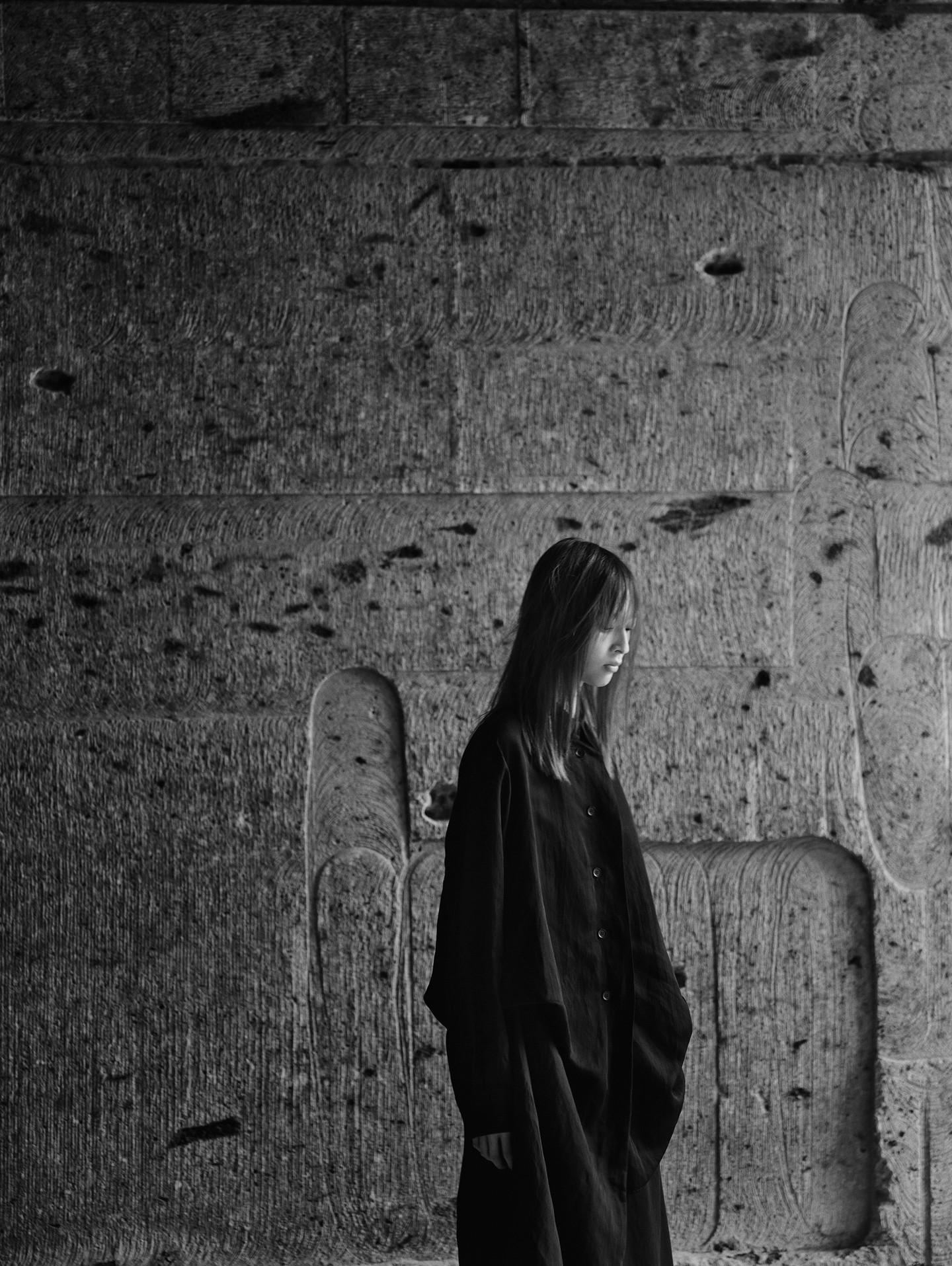
Yohji Yamamoto's AW2627 womenswear collection, shown March 6 in Paris, hid nearly every seam across fabrics ranging from indigo cotton and flannel to velvet and jacquard, letting cloth follow the body rather than binding it with the tying that defined the previous season. A martingale strap on one look remained the only visible trace of conventional tailoring in an otherwise seamless silhouette.
Key Points
- The AW2627 womenswear ran indigo cotton and flannel against velvet and jacquard, with almost no visible seams.
- Where the prior season centered tying, this collection let fabric follow the body without binding it.
- A martingale strap on one look was the only visible trace of tailoring left in an otherwise seamless silhouette.
Two boxing speed balls hung on the runway. Forty five kimono derived silhouettes walked past them. Both details made headlines when Yohji Yamamoto showed AW2627 in Paris. Neither is where the collection actually argued its case. That happened in the fabric, where almost no seam was left visible and the whole idea of tailoring got quietly dissolved into something closer to drapery.
That is a specific shift worth naming on its own, separate from the theatrics. Last season, tying was the collection's structural idea, fabric bound and knotted around the body. This season, the fabric follows the body instead of restraining it, which is a different argument about what clothing is allowed to do.
Indigo Cotton Sits Against Velvet And Jacquard
Yamamoto ran a wide fabric register across the AW2627 womenswear, mixing humble textiles like indigo cotton and flannel against richer velvet and intricately woven jacquard, with lace and knit filling out the range. That spread, plain workwear cloth next to formal weight fabric, is not a contrast for its own sake. It lets the same fluid silhouette read differently depending on which fabric carries it, heavier and more grounded in flannel, lighter and more liquid in velvet, without changing the underlying cut.
That range also supports the season's central claim, that fabric itself can carry the collection's emotional register instead of construction doing that work. A seamless flannel coat and a seamless velvet coat tell two different stories built from one silhouette, which is a more efficient use of a single pattern than most collections attempt.
The kimono reference running through the collection is the other half of that fabric argument. Yamamoto pulled from the kimono's fluid shape while deliberately abandoning its fixed, structured form, which is the opposite of a costume reference. A literal kimono holds its shape through rigid construction. Yamamoto's version keeps the silhouette's spirit while letting the cloth move independently of any fixed frame, which is only possible once the seams that would normally hold that frame in place are removed or hidden.
The Martingale Is What Tailoring Left Behind
Across the collection, seams all but disappeared, a detail reviewers flagged as the show's quietest achievement. The one visible exception was a martingale strap on a single look, the last trace of a tailored piece that had otherwise been reworked into languid, unstructured layers. That detail is worth isolating because it functions as a kind of fossil record. A martingale is a tailoring device, a back strap traditionally used to cinch a coat's fit. Leaving exactly one on an otherwise seamless garment reads as a deliberate marker of where construction used to live before Yamamoto edited it out.
That editing instinct is the throughline connecting AW2627 to Yohji Yamamoto's own menswear from the same Paris outing, which took the opposite approach, building literal armor from quilted padding and flattened aluminum cans. Menswear added visible structure. Womenswear removed it almost entirely. Showing both instincts in the same season is Yamamoto demonstrating a full range rather than repeating one idea across genders.
The Runway Spectacle Was Never The Real Story
FO's own coverage of the AW2627 runway show centered the two hanging speed balls models could kiss, tap, or punch, a detail that generated most of the show's immediate attention. That framing device was real and worth covering, but it sat outside the clothes themselves. The construction story, invisible seams and a single surviving martingale, is the version of this collection that will still matter once the speed balls are forgotten and the pieces are actually being worn.That construction story now has a retail timeline attached. The collection began shipping to stores July 29, meaning the seamless silhouettes reviewers described from the runway are now something a buyer can put hands on directly rather than read about secondhand.
The Verdict Is A Season About Subtraction
Yamamoto's strongest seasons are usually the ones where he removes something rather than adds it, and AW2627 fits that pattern precisely. Tying dominated last season. This season nearly erased the seam altogether, leaving one martingale strap as the only evidence tailoring was ever there. That is a harder trick to pull off than another spectacle centerpiece, and it is the detail worth remembering once the collection is actually on shelves.
Frequently Asked Questions
What defined the construction of Yohji Yamamoto's AW2627 womenswear?
The collection hid nearly every seam, using fabric that followed the body without binding it, a shift from the tying focused construction of the prior season.
What fabrics did Yohji Yamamoto use for AW2627?
The collection ran indigo cotton and flannel against velvet and intricately woven jacquard, alongside lace and knit.
What was the martingale detail in the AW2627 collection?
A martingale strap on one look was the only visible remnant of conventional tailoring, the last trace of a piece otherwise dissolved into seamless, languid layers.
How does AW2627 differ from Yohji Yamamoto's previous season?
The previous season centered tying as its structural idea, while AW2627 moved toward fabric that follows the body's movement without constraint.
When and where did Yohji Yamamoto show the AW2627 collection?
The collection showed March 6, 2026 in Paris at the Salon de l'Hotel de Ville, sending 45 kimono derived silhouettes down the runway.
Is Yohji Yamamoto's AW2627 collection available to buy?
Yes, the collection began shipping to stores July 29, 2026, with the brand's own web store following August 5.
What is the difference between Yohji Yamamoto's kimono silhouettes and an actual kimono?
The AW2627 silhouettes draw on the kimono's fluid shape while abandoning its structured, fixed forms in favor of draping that moves independently with the body.
Topics: construction, kimono, womenswear, runway-show, japanese-fashion, aw26-27, yohji yamamoto, paris-fashion-week, yohji-yamamoto