YOHJI YAMAMOTO HANGS TWO SPEED BALLS ON THE AW26-27 RUNWAY
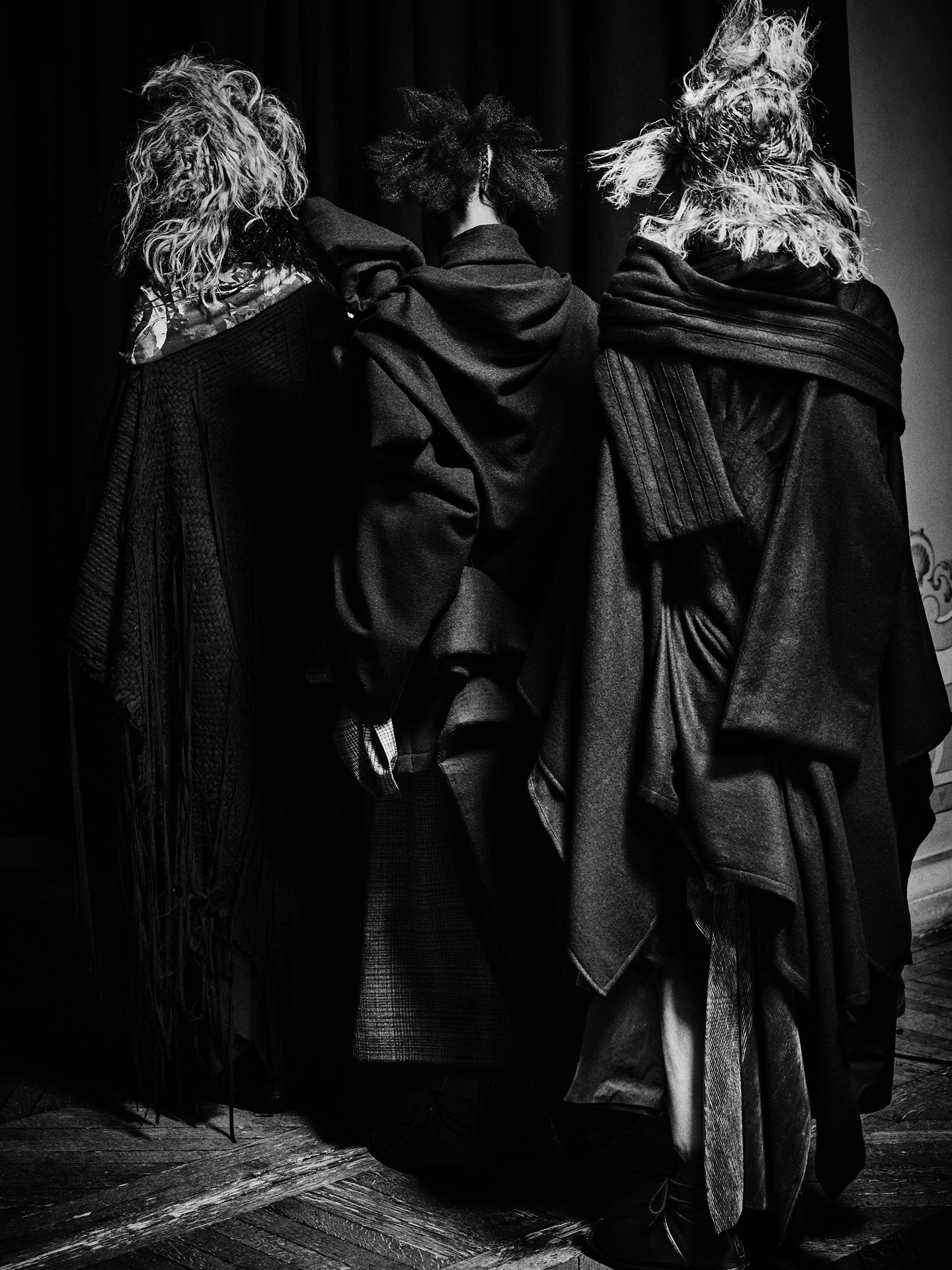
Yohji Yamamoto's Fall Winter 2026-27 women's runway show, held March 6, 2026 at the Salon de l'Hôtel de Ville in Paris, sent 45 kimono derived silhouettes down a runway anchored by two boxing speed balls that models could kiss, tap, or punch. The final five exits carried prints credited to the Edo period artist Hokusai, and every seat held a card asking guests to watch without their phones. No retail pricing or release date has been announced for the collection.
Key Points
- Two boxing speed balls hung center stage; models chose a kiss, a tap, or a punch.
- 45 kimono derived looks closed on ukiyo-e prints credited to Hokusai on the final five exits.
- Every seat held a card asking guests to watch the show with their eyes, not their phones.
Yohji Yamamoto hung two boxing speed balls from the rafters of the Salon de l'Hôtel de Ville on March 6, and he let his models decide what to do with them. Some paused for a kiss. Some gave a light tap. One walked up and threw a real punch. That was the entire stage direction for his Fall Winter 2026-27 women's runway, and it told the room more about the collection's temperature than any showcard could have.
Every seat also held a small printed card asking guests to watch the show with their eyes, not their phones. It is a blunt request from an 82 year old designer who has, by his own account, stopped explaining his ideas in captions and started staging them as physical rituals a room has to sit through in real time.
Hokusai Closes Yamamoto's Final Five Exits
Prints credited to the Edo period artist Hokusai appeared only on the last five exits of Yamamoto's AW26-27 women's show, the traditional closing slot he reserves for his most direct artistic statement. The choice matters because Yamamoto has spent four decades pairing western tailoring with specific Japanese references rather than gesturing at Japanese influence in general, and putting a nineteenth century ukiyo-e master on the final five looks instead of the opener means the audience carries that image out the door, not into the show. FO covered the aluminum can vests and cargo pants that walked the same Paris week in Yamamoto's menswear line, and the contrast is the point. Metal armor opened the season. Woodblock print romance closed it.
Forty Five Looks, Zero Repeated Silhouettes
Forty five silhouettes walked the women's runway, each rooted in the kimono but freed from its traditionally boxy, structured shape. The garments were oversized and heavily layered, moving with the body instead of squaring it off, and the surfaces leaned into patchwork texture and raw, unfinished edges rather than clean tailoring lines. That is a signature Yamamoto has returned to for years, the idea that a weathered, imperfect edge reads as more honest than a pressed seam, and this season pushed the patchwork further than his last few collections have.
A Speed Ball Only Moves If Someone Touches It
A boxing speed ball only moves if someone touches it, and Yamamoto built that fact into the choreography instead of hiding it backstage. Models who kissed the ball read as tender, the ones who tapped it read as dismissive, and the one who threw a real punch read as something closer to rage, and none of that reaction was scripted into a program. Combined with the no phones cards on every seat, the show forced a room full of editors and buyers to actually watch a person make a choice in real time, rather than photograph a look and move on. That is a harder thing to stage than a striking print, and it is the detail no competitor can license or copy.
Forget The Print. Watch What The Room Does.
Yamamoto's Y-3 line spent the same season proving this kind of physical, participatory idea works outside a seated runway audience. Y-3 put its Nisi silhouette on skateboarder Mark Gonzales in Paris the same week, handing Yamamoto's material instincts to a subculture with nothing to do with fashion week audiences, and Y-3's Spring Summer 2027 show turned the Palais Brongniart into a black astroturf football pitch, with movement artists performing instead of walking a traditional line. Read against those two, the speed balls stop looking like a runway gimmick and start looking like one designer testing the same idea, physical participation over passive viewing, in three different rooms in the same season.
No price or release date has been announced for the AW26-27 women's collection, which is normal for a mainline runway show this far from delivery. The pieces worth watching when retail numbers land are the patchwork layered coats; they are the wearable half of the argument, while the speed balls and the no phones cards were never going to be sold. What is repeatable is the structure: forty five looks, a closing artist reference, and a physical object the audience cannot ignore. That is a harder trick to pull off twice than a good print, and Yamamoto has now done a version of it at 82 years old with a boxing ball and a piece of cardstock.
Frequently Asked Questions
What Happened At Yohji Yamamoto's Fall Winter 2026-27 Runway Show?
Yohji Yamamoto staged his AW26-27 women's show on March 6, 2026 at the Salon de l'Hôtel de Ville in Paris, sending 45 kimono derived silhouettes down a runway built around two boxing speed balls that models could kiss, tap, or punch.
Where Was The Yohji Yamamoto AW26-27 Show Held?
The show took place at the Salon de l'Hôtel de Ville in Paris on March 6, 2026, during Paris Fashion Week.
How Many Looks Walked In Yohji Yamamoto's Fall Winter 2026-27 Collection?
Forty five silhouettes walked the women's runway, each rooted in the kimono but freed from its traditionally structured shape.
What Artist Inspired The Prints In Yohji Yamamoto's AW26-27 Collection?
Prints credited to the Edo period artist Hokusai appeared on the final five exits, the closing slot Yamamoto reserves for his most direct artistic statement.
Why Did Yohji Yamamoto Put Boxing Speed Balls On The Runway?
The two speed balls let models physically react to the show in real time; some kissed the ball, some tapped it, and one threw a punch, none of it scripted.
Did Yohji Yamamoto Ask Guests Not To Use Their Phones?
Yes, every seat held a printed card asking guests to watch the show with their eyes instead of their phones.
Is The Yohji Yamamoto AW26-27 Collection Available To Buy?
No, no retail pricing or release date had been announced for the collection as of publication.
What Fabrics And Textures Defined Yohji Yamamoto's Fall Winter 2026-27 Collection?
The collection leaned on oversized layering, patchwork texture and raw, unfinished edges rather than clean tailoring lines.
Topics: hokusai, y-3, kimono, fall-winter-2026, focus-52-6, aw26-27, runway-show, japanese-fashion, yohji yamamoto, paris-fashion-week, yohji-yamamoto