JW ANDERSON X MOUSEMAN PUTS A 1919 MOUSE ON EVERY PIECE
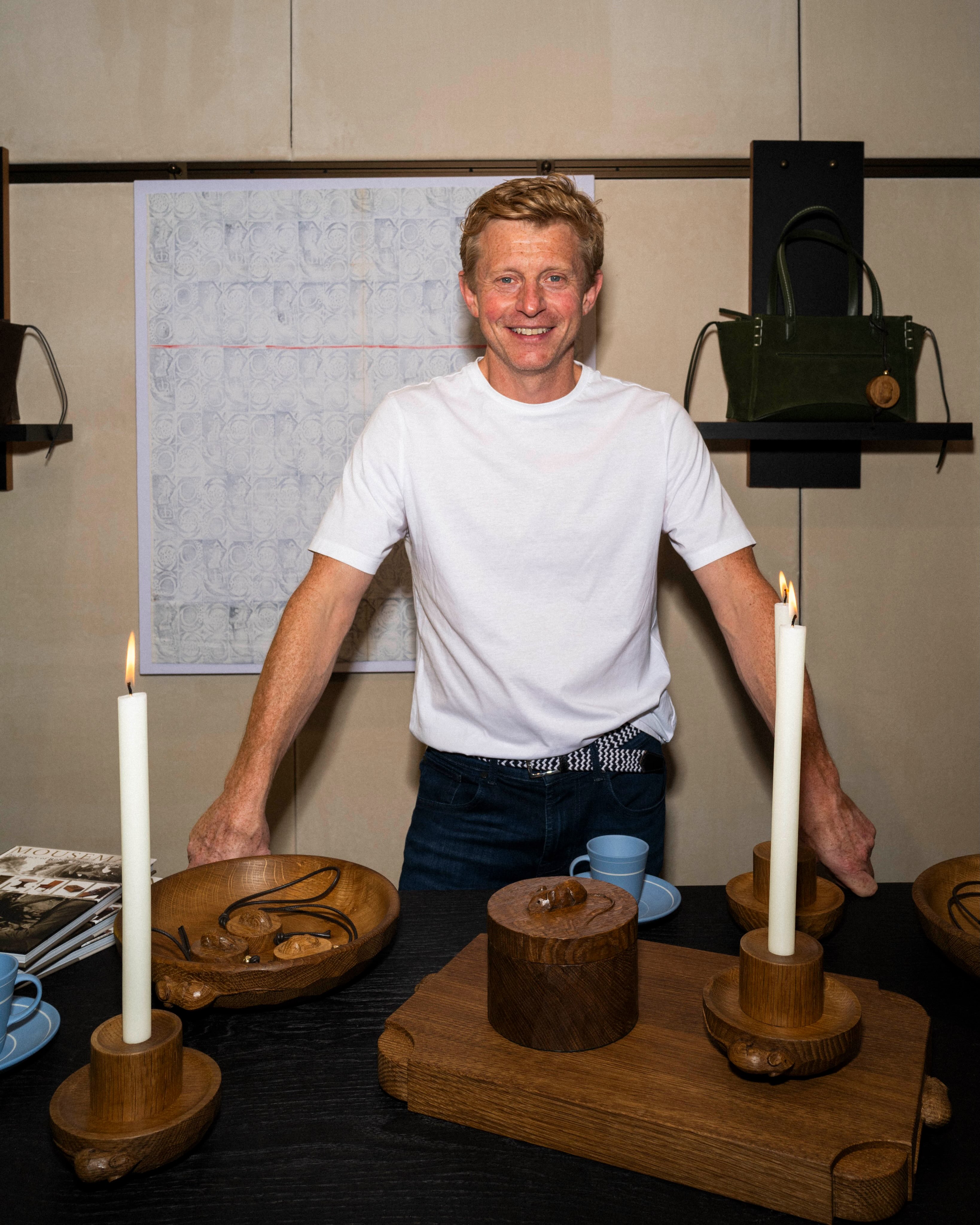
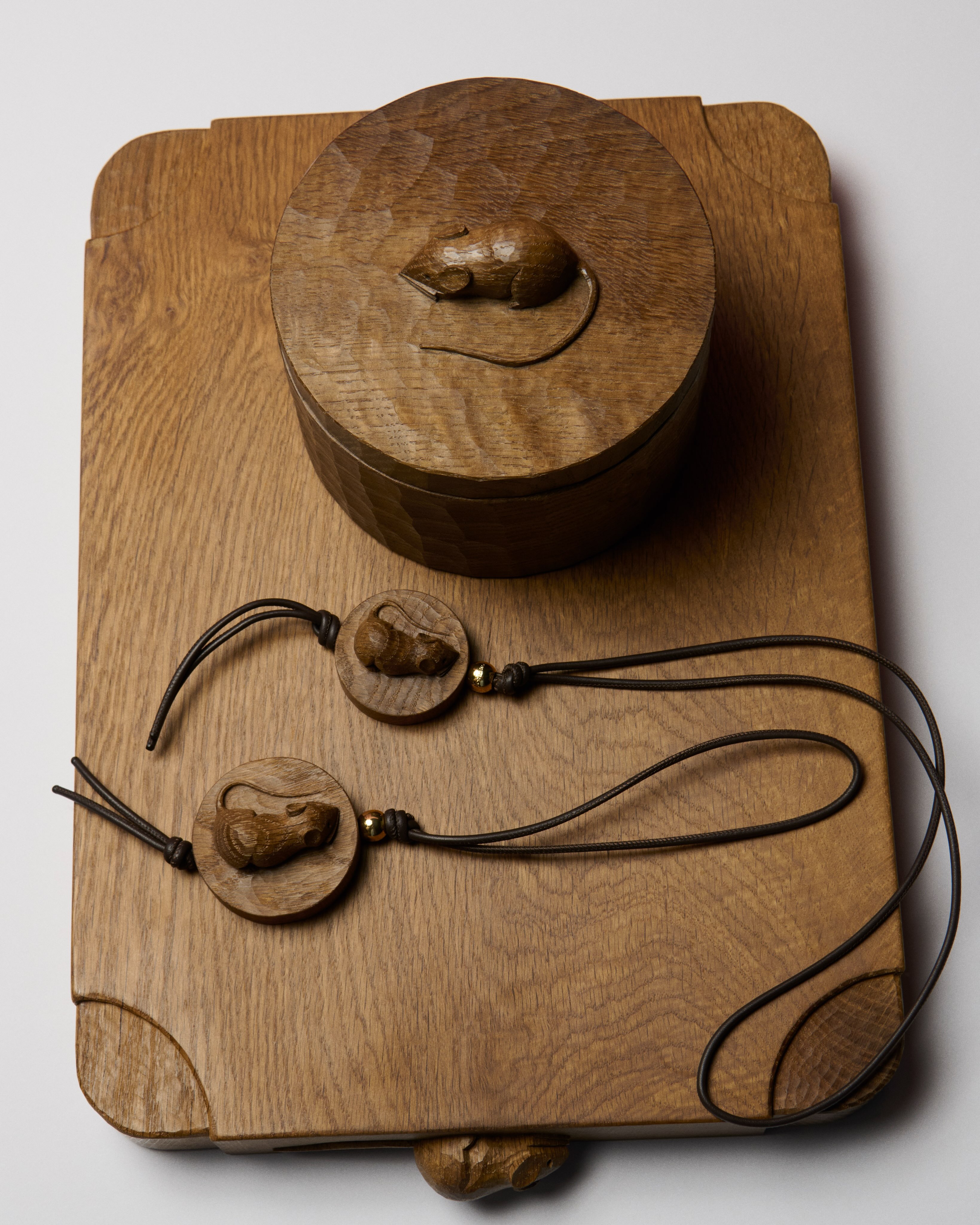
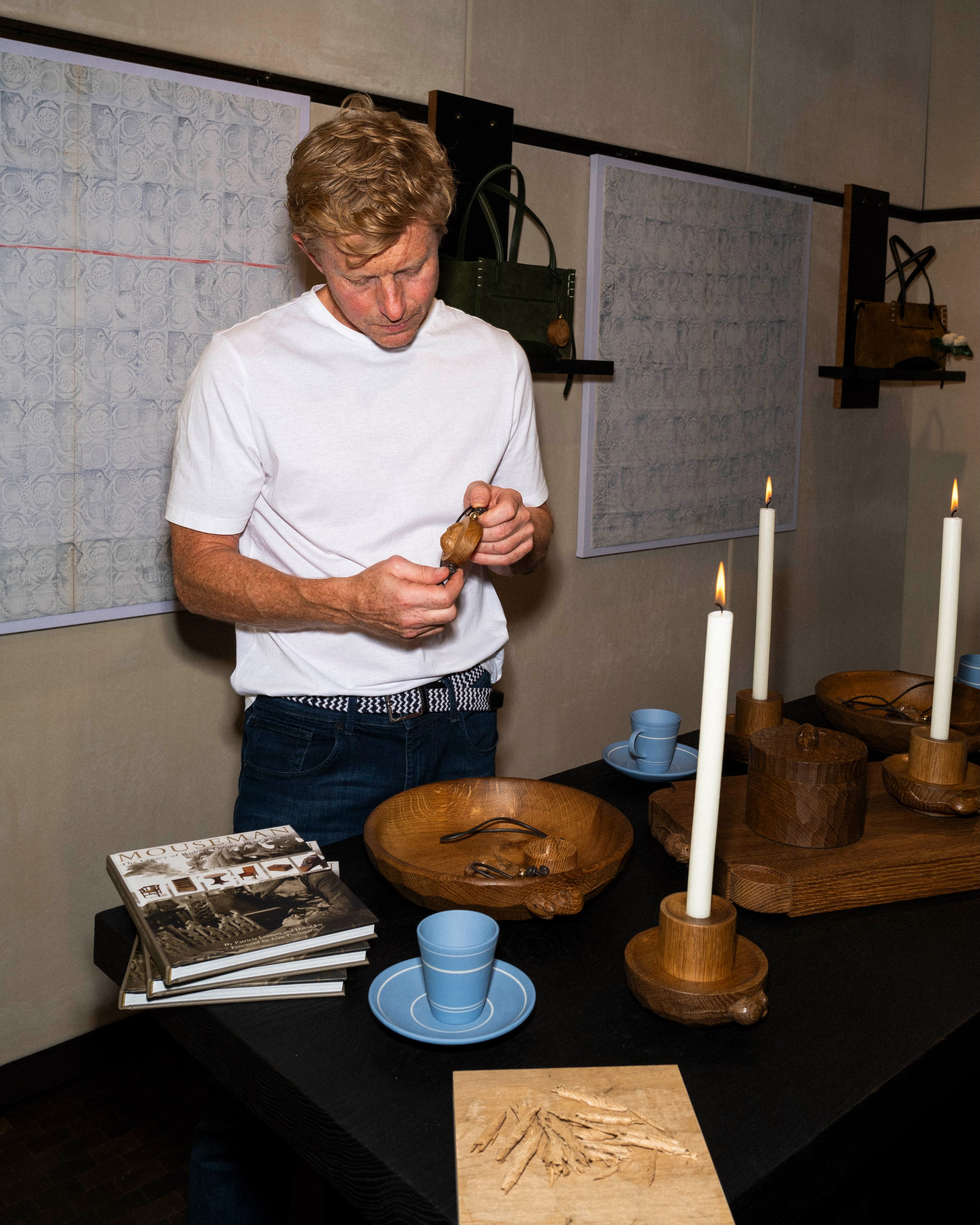
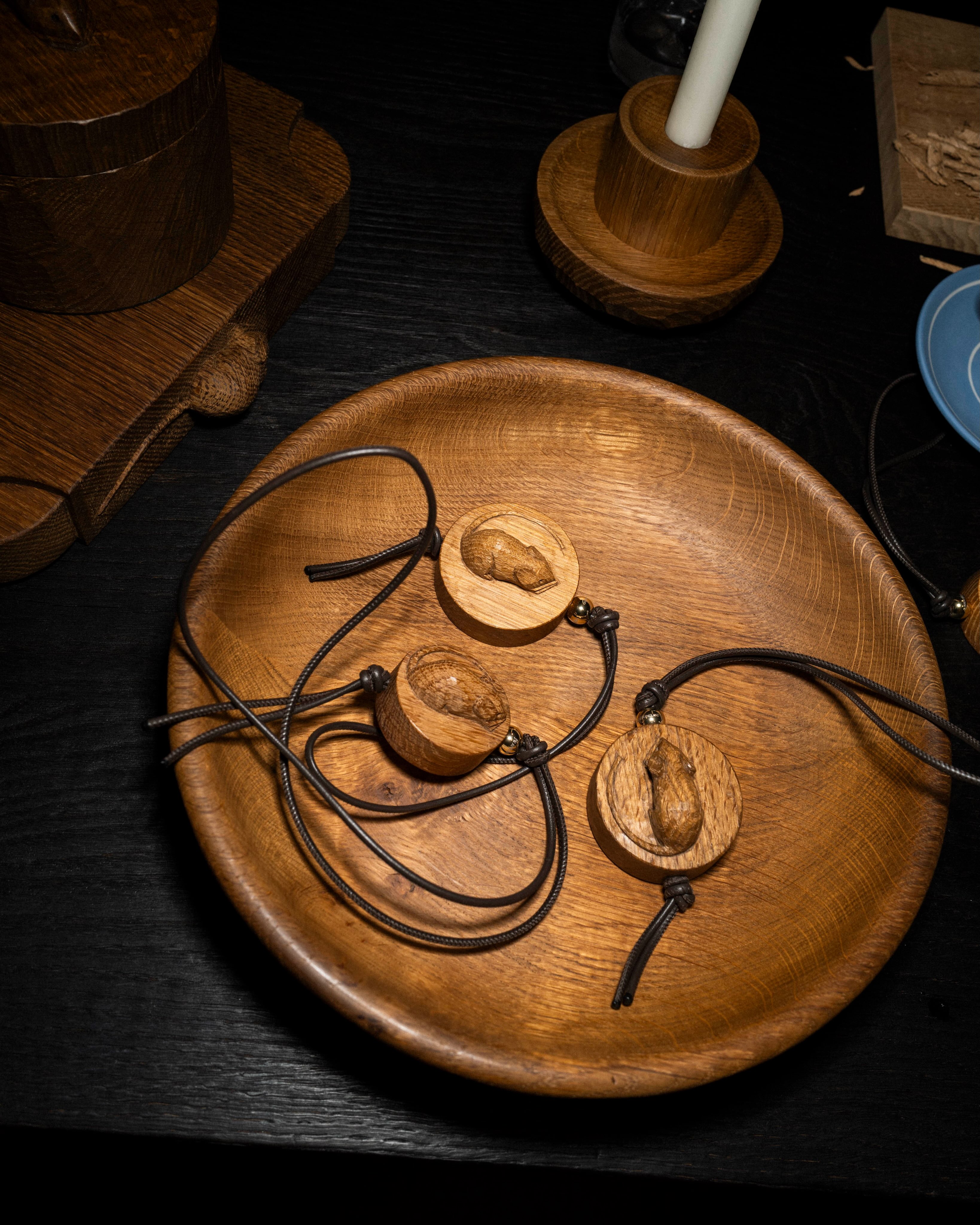
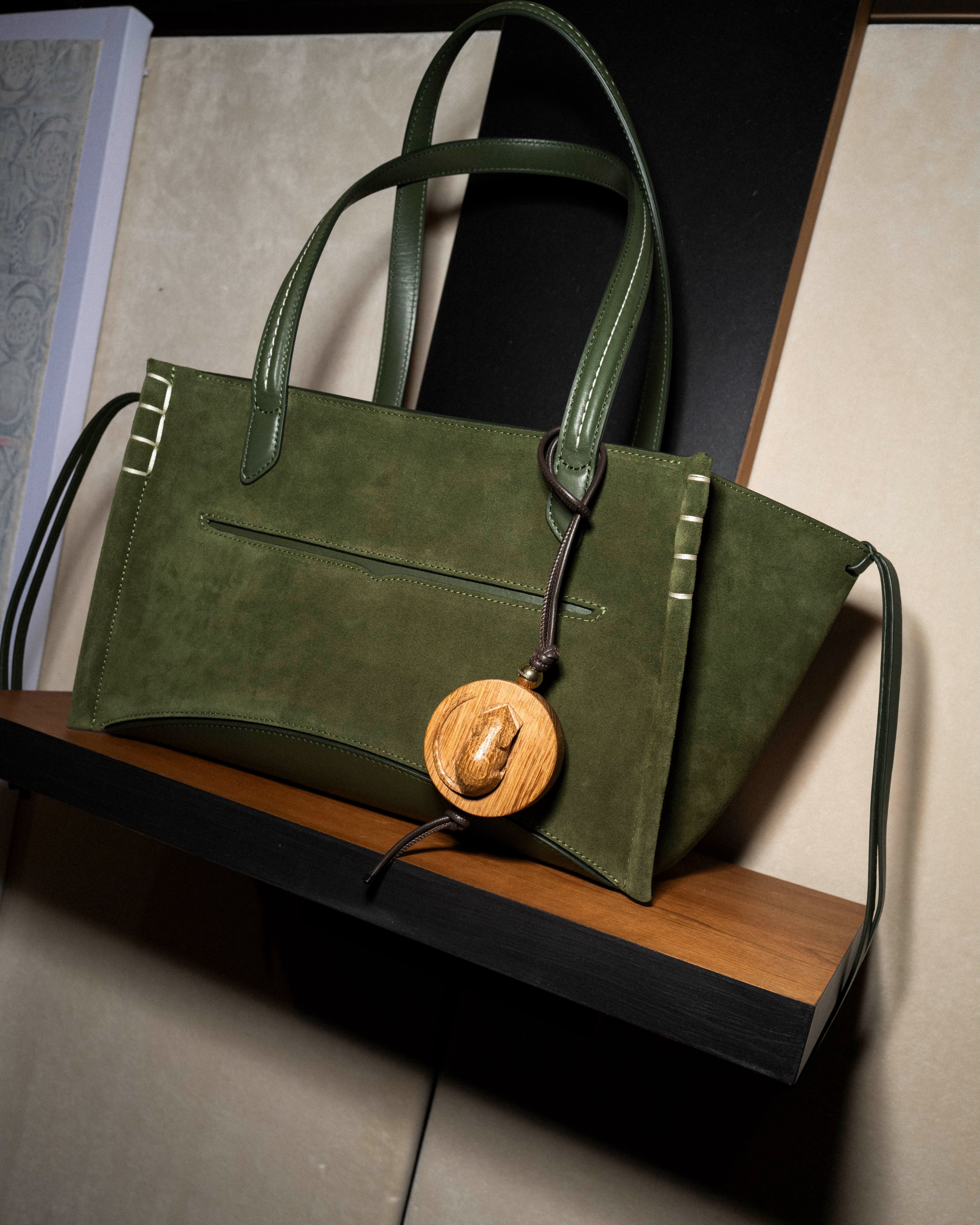
JW Anderson's Mouseman collection pairs the London fashion label with Robert Thompson's Craftsmen Ltd, the Yorkshire firm that has carved a trademark mouse into its oak furniture since 1919. The homeware line includes a salad bowl, chopping board, candle holder, trinket box, wooden necklace, and charm, sold in JW Anderson stores and on JWAnderson.com. Robert Thompson founded the workshop in Kilburn and was a member of the Arts and Crafts movement before his death in 1955.

Key Points
- Robert Thompson carved the first Mouseman signature mouse in 1919, 89 years before JW Anderson.
- The collection spans an oak salad bowl, chopping board, candle holder, trinket box, and jewelry.
- Each mouse takes about 45 minutes to hand carve at the original Kilburn, Yorkshire workshop.
JW Anderson spent its latest homeware drop borrowing 107 years of credibility it did not have to build. The label's new Mouseman collection, an oak salad bowl, a chopping board, a candle holder, a wooden trinket box, and a run of wooden jewelry, comes carved by Robert Thompson's Craftsmen Ltd, the North Yorkshire firm that has carved a mouse into every piece it has made since 1919. The workshop still sits in Kilburn, the village where Robert Thompson opened it, and Thompson himself, who lived from 1876 to 1955, never left the Arts and Crafts movement he helped define there. JW Anderson did not design this furniture. It licensed a signature that predates the label by 89 years.
1919. A Church Mouse Joke Becomes a Registered Trademark.
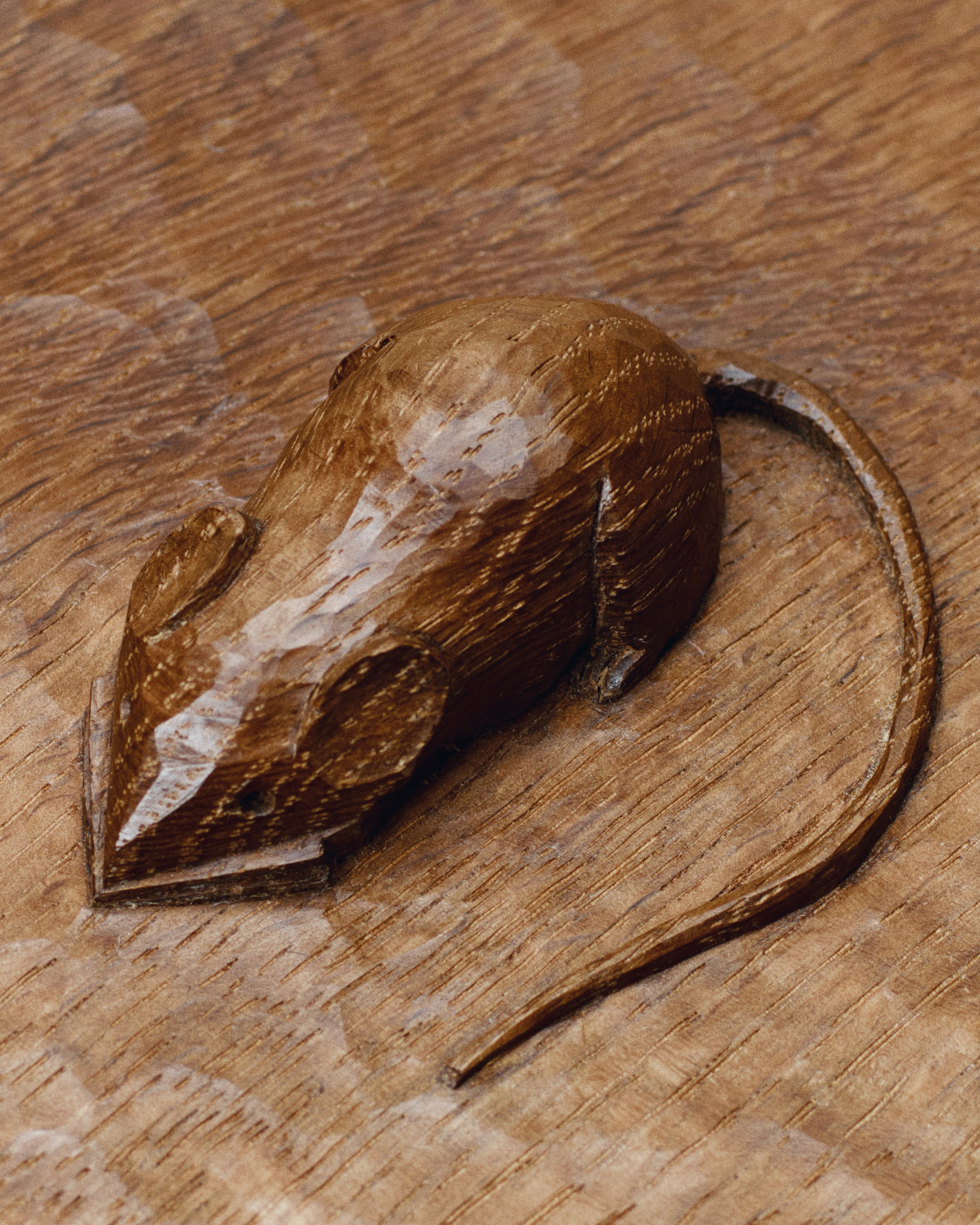
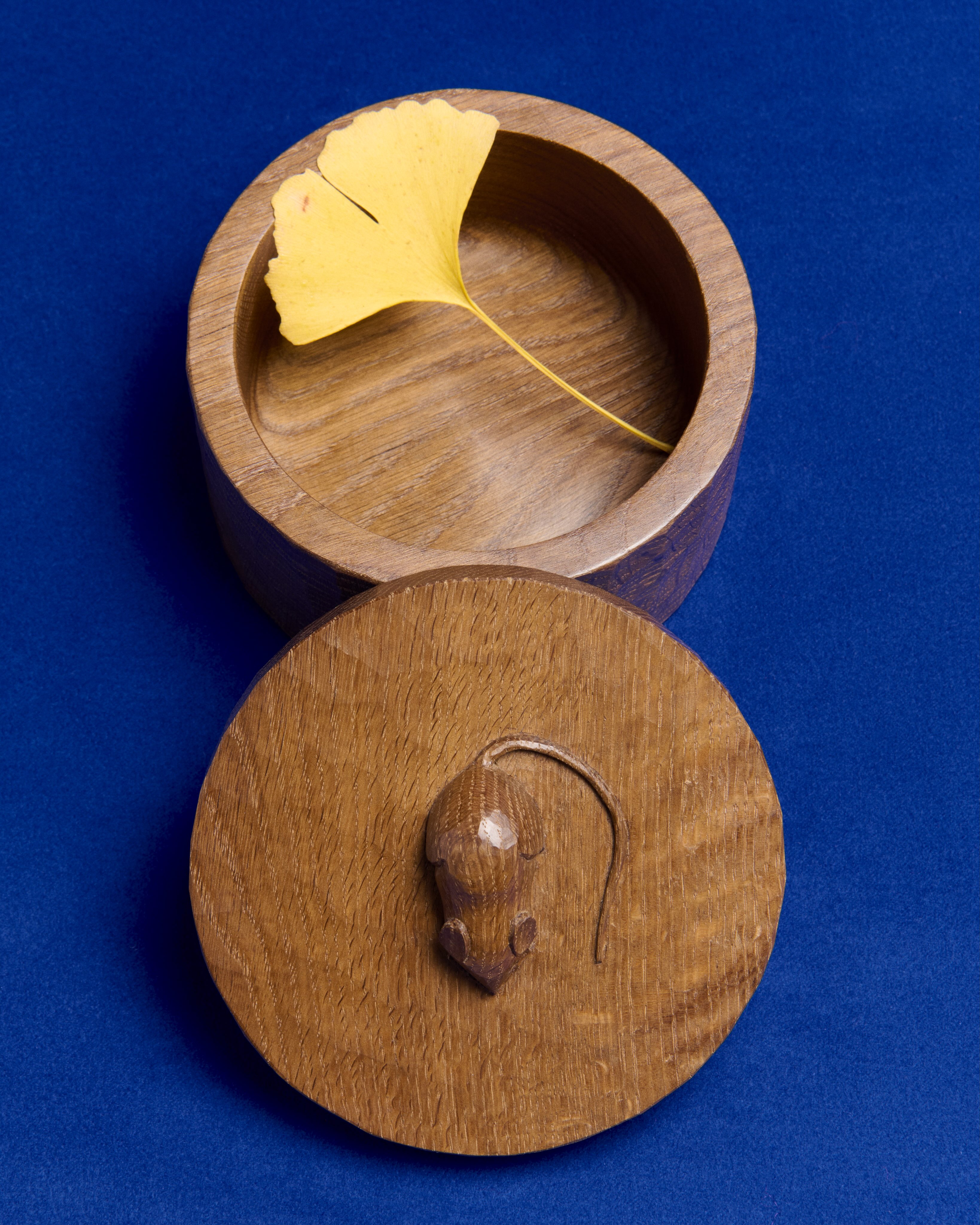
The Mouseman mark started as an offhand comment, not a design decision. A colleague told Robert Thompson the two of them were as poor as church mice while they carved a cornice for a screen in 1919, and Thompson carved a mouse into the piece as a joke that stuck for good.
The firm formally registered the mark in the 1930s, and every piece since, JW Anderson's candle holder included, carries one. Each mouse takes about 45 minutes to carve by hand, which is longer than the joinery around it usually takes. Thompson described the mark as industry in quiet places, a phrase the workshop still uses today. For a firm built on one recurring detail, the labor per unit is the whole business model. No laser engraving, no batch stamping, just a carver and a chisel repeating a joke that is now well over a century old.
Jonathan Anderson Has Done This Before
Jonathan Anderson, the Northern Irish designer who founded JW Anderson in London in 2008, has spent the label's history pairing his own collections with outside craftspeople instead of relying only on internal production. The Mouseman objects push that habit into the home category for the first time, moving the argument for craft off the runway and onto a chopping board.
JW Anderson's fall 2026 season leaned on the same logic, pulling in heritage makers to argue that the label's playfulness needs a rigorous material underneath it, or it reads as costume. The Our Legacy Soho flagship reopening made a version of the same case this month, another London label leaning on physical space and archive weight rather than a logo. JW Anderson's version is smaller and cheaper to produce than a store buildout: one workshop, six products, and a story that took 107 years to write, none of which the label had to invent itself.
Every Piece Still Comes From One Workshop in Kilburn
Robert Thompson's Craftsmen Ltd still operates out of Kilburn, the same North Yorkshire village where Thompson opened his workshop, and the firm has never franchised the mouse mark to a factory outside it. That single location, not a licensing network, is what JW Anderson bought into when it agreed to put its name next to Mouseman's.
The collection covers six items in total: an oak salad bowl, a chopping board, a candle holder, a wooden trinket box, a wooden necklace, and a wooden charm, all listed in a single brown colorway on JWAnderson.com. That is a narrow drop by design. Robert Thompson's workshop has resisted scale for a century, and the mouse only means something because it stays one carver's decision on one piece at a time, the same discipline a collector chases in a specific vinyl pressing rather than a streaming playlist. JW Anderson is selling access to that discipline, not a redesign of it.
The Antiques Market Already Prices What JW Anderson Is Selling New
Original Robert Thompson oak pieces already trade as collectibles, with vintage mouse marked furniture routinely listed through UK auction houses and specialist dealers rather than general secondhand shops. A JW Anderson chopping board carrying the same mark enters a market that already has a resale floor before the label's own retail price even becomes a factor.
That is unusual territory for a fashion label's homeware line, most of which depreciates the moment it leaves a shopping bag. Mouseman pieces have historically done the opposite, and JW Anderson tying new stock to that same carved signature links its own drop to an appreciation pattern instead of the usual release and discount cycle most streetwear collaborations follow. The Alice Hollywood second act under Shane Gonzales is chasing a similar kind of archive credibility this season, borrowing weight from a design history rather than a logo. JW Anderson's version just happens to be carved from oak instead of pulled from a rack of secondhand denim.
A Mouse That Outdates the Label by 89 Years
Buy the trinket box or the necklace if the appeal is the mouse itself. Skip the whole collection if craft heritage is not something meant to sit on a kitchen counter next to unbranded oak. Robert Thompson's workshop carved that mouse for 107 years without any help from JW Anderson, and it will keep carving it long after this particular collaboration sells through or does not. The mark predates the label by 89 years, and that gap, not the JW Anderson name on the box, is the entire pitch.
Frequently Asked Questions
What Is the JW Anderson x Mouseman Collaboration?
JW Anderson partnered with Robert Thompson's Craftsmen Ltd, the Yorkshire workshop known as Mouseman, on an oak homeware collection that includes a salad bowl, chopping board, candle holder, trinket box, wooden necklace, and wooden charm.
Who Was Robert Mouseman Thompson?
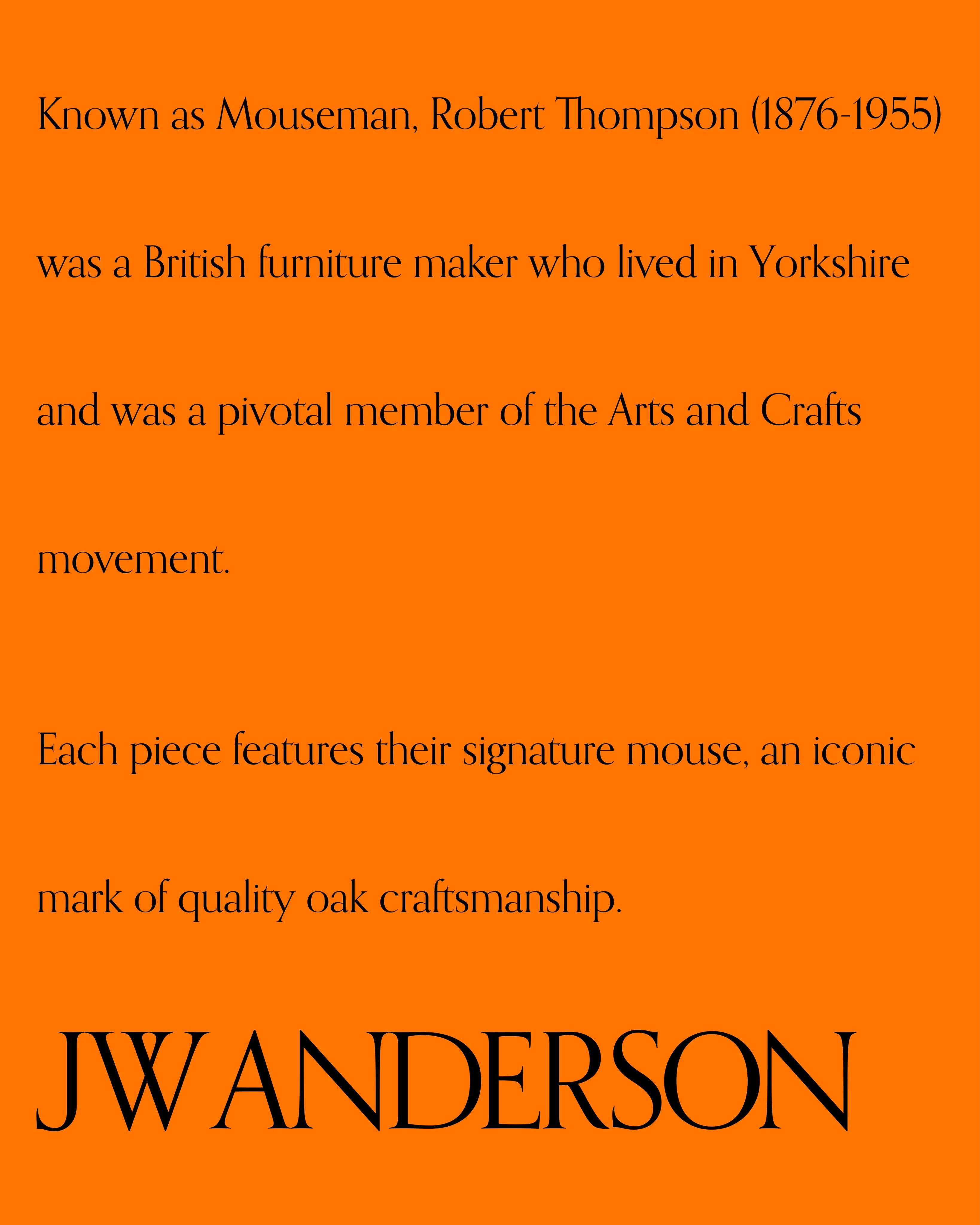
Robert Thompson lived from 1876 to 1955 and was a British furniture maker from Kilburn, Yorkshire, and a member of the Arts and Crafts movement whose workshop still operates today.
Why Does Every Mouseman Piece Have a Carved Mouse?
The mark began in 1919 after a colleague joked that Thompson and his carpenter were as poor as church mice, and Thompson carved a mouse into the piece; the firm registered it as a trademark in the 1930s.
How Long Does It Take to Carve a Mouseman Mouse?
Each mouse takes about 45 minutes to carve by hand, longer than much of the joinery on the piece itself.
Where Can You Buy the JW Anderson x Mouseman Collection?
The collection is sold in JW Anderson stores and on JWAnderson.com in a single brown colorway.
Is JW Anderson x Mouseman a Real Collaboration?
Yes. It pairs JW Anderson, the London label founded by Jonathan Anderson in 2008, with Robert Thompson's Craftsmen Ltd, the same Kilburn, Yorkshire workshop that has carved the mouse mark since 1919.
What Items Are Included in the Mouseman Homeware Collection?
The line includes an oak salad bowl, a chopping board, a candle holder, a wooden trinket box, a wooden necklace, and a wooden charm.
Does Original Robert Thompson Furniture Sell as an Antique?
Yes. Vintage mouse marked Thompson furniture already trades through UK auction houses and specialist dealers as a recognized collectible category.
Topics: robert-thompson, our legacy, jw-anderson, our-legacy, oak-furniture, mouseman, yorkshire-craft, jonathan-anderson, heritage-collab, jw anderson, kilburn, arts-and-crafts, homeware