YAYOI KUSAMA HAS DIED AT 97
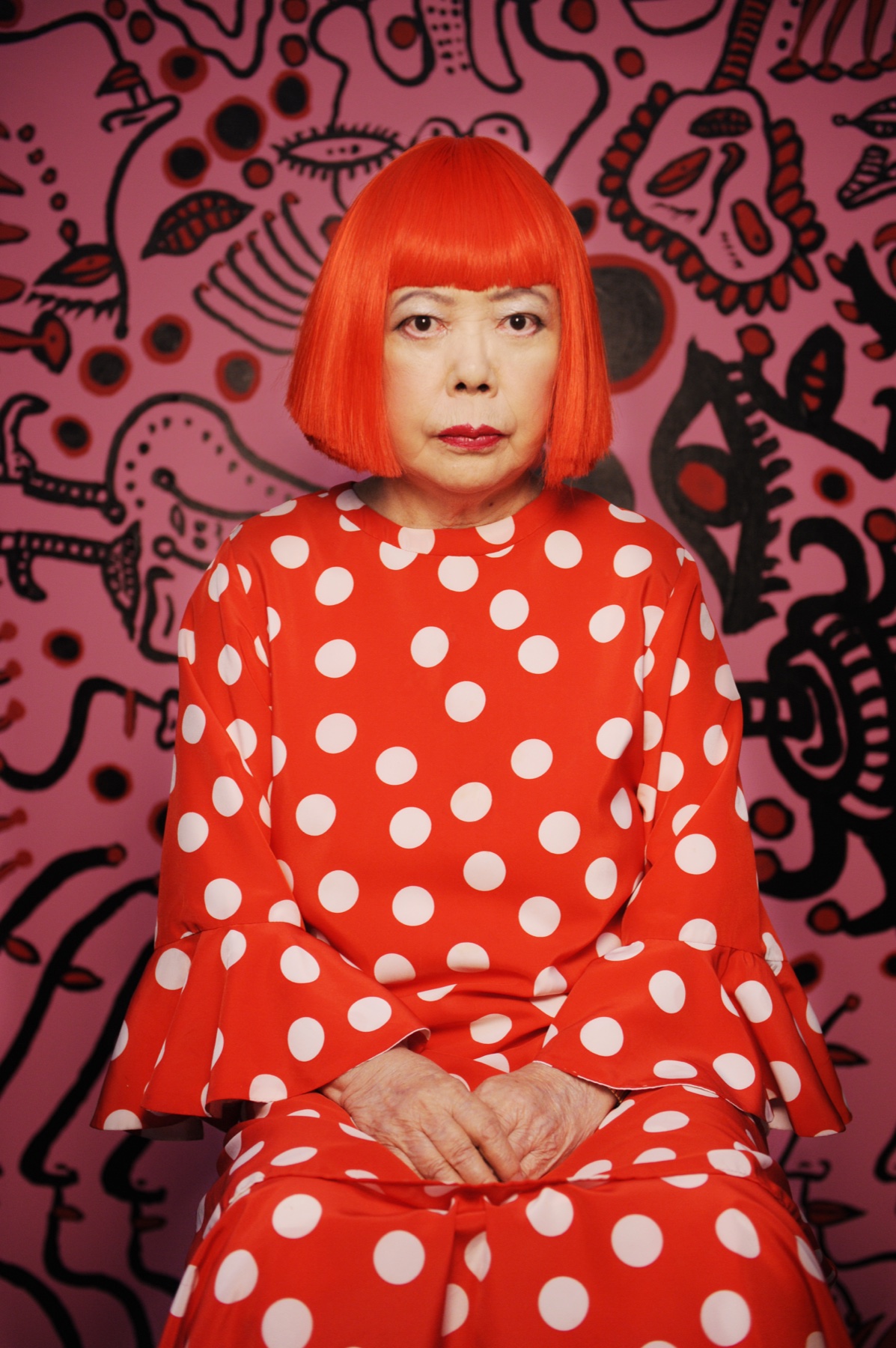
Yayoi Kusama died on August 14, 2026 at a hospital in Tokyo at the age of 97, of multiple organ failure. Her studio did not announce the death until nearly two weeks later, in late August 2026. Born March 1929 in Matsumoto, Japan, Kusama experienced hallucinations of proliferating dots from childhood and described her practice as self obliteration. She moved to the United States in 1957, one of the first Japanese women to pursue an art career in America, where she befriended Georgia O'Keeffe, Joseph Cornell and Andy Warhol, staged anti war happenings in the late 1960s, and pioneered mirrored infinity room installations in the mid 1960s. She returned to Japan in 1973. In 1977 she voluntarily admitted herself to Seiwa Hospital for the Mentally Ill in Tokyo, where she lived for the rest of her life while working in a nearby studio. Her market rediscovery came in the 1990s; Christie's sold a work for $5.8 million in 2008, and she collaborated with Louis Vuitton on major global collections in 2012 and 2023.
Key Points
- Yayoi Kusama died August 14, 2026 at a hospital in Tokyo, age 97, of multiple organ failure.
- Her studio did not announce the death until nearly two weeks after it happened.
- She described her polka dots as self obliteration, rooted in hallucinations she experienced from childhood.
- From 1977 she lived voluntarily in Seiwa Hospital for the Mentally Ill in Tokyo, working daily in a studio across the street for nearly fifty years.
- She was making mirrored infinity rooms in the mid 1960s, decades before immersive art became a museum standard.
Yayoi Kusama died on August 14 at a hospital in Tokyo. She was 97. The cause was multiple organ failure, and her studio did not announce the death until this week, nearly two weeks after it happened.
She was the most visited artist alive, and one of the most misunderstood. The polka dot became a merchandising empire, a Louis Vuitton campaign, a queue outside every museum that could book her. What got lost in the gift shop is that the dots were never decoration. They were a symptom she decided to paint her way through.
The Hallucination Came First
Kusama was born in 1929 in Matsumoto, in the Japanese Alps, into a family that did not want her to be an artist. She has said the hallucinations started when she was a child, fields of dots spreading across every surface until they swallowed the room and then her. She began painting them to get them out of her head, and never stopped. Her word for it was self obliteration, and she meant it literally: cover the room, cover the body, cover yourself until you disappear into the pattern.
That is the part the merchandise cannot hold. The infinity rooms that people queue ninety minutes to photograph are, in her own account, a reconstruction of something that terrified her.
New York, 1957
She arrived in the United States in 1957, one of the first Japanese women to try to build an art career in America, and spent years poor and largely ignored. She befriended Georgia O'Keeffe, Joseph Cornell, and Andy Warhol. She staged anti war happenings in the late 1960s, painting dots on naked bodies in Central Park and outside the New York Stock Exchange, work that got her written off in Japan as a scandal rather than an artist.
She was making mirrored infinity rooms in the mid 1960s, decades before the museum world decided that immersive art was the future. Then she went home in 1973, and the art world mostly forgot her.
The Hospital She Chose
In 1977 Kusama admitted herself to Seiwa Hospital for the Mentally Ill in Tokyo and lived there voluntarily for the rest of her life, close to fifty years, crossing the street to her studio to work most days. That is the detail that reframes the entire career. The woman selling out museums on four continents went back to a psychiatric ward every night by choice, and produced some of the most prolific work of her life from it.
"I am so afraid, all the time, of everything," she said. She also said she would keep painting until she died, and she did.
Sixty Years Late
The rediscovery took until the 1990s, and then the scale of it was absurd. Christie's sold her work for $5.8 million in 2008. Museums built their attendance records around her. Louis Vuitton wrapped its global stores in her dots twice, in 2012 and again in 2023, putting her pattern on more handbags than any museum could hang canvases. Every brand collaboration that now treats an artist as a pattern library is working from a template she wrote first.
The world took roughly sixty years to catch up with a woman who was making immersive, participatory, mirror lined installation work while the New York art scene was still arguing about painting. She outlived nearly everyone who overlooked her.
She kept the studio hours to the end. The dots were never the point. Getting free of them was.
Related: MAINDRON'S 29 TON EIFFEL TOWER LANDS AT BURNING MAN.
Related: YAYOI KUSAMA 300 WORKS AT MUSEUM LUDWIG COLOGNE.
Related: Tom Sachs 31 Rue Cambon Chanel Boutique.
Frequently Asked Questions
When did Yayoi Kusama die?
She died on August 14, 2026 at a hospital in Tokyo, at the age of 97. Her studio announced the death nearly two weeks later.
What was Yayoi Kusama's cause of death?
Multiple organ failure, according to reports following her studio's announcement.
Why did Yayoi Kusama paint polka dots?
She experienced hallucinations from childhood in which dots proliferated across every surface. She painted them as a way of working through the experience, calling the practice self obliteration.
Did Yayoi Kusama live in a psychiatric hospital?
Yes. In 1977 she voluntarily admitted herself to Seiwa Hospital for the Mentally Ill in Tokyo and lived there for the rest of her life, working most days in a studio across the street.
What are Yayoi Kusama's Infinity Mirror Rooms?
Mirror lined installation rooms that create the illusion of endless repeating space. She began making them in the mid 1960s, long before immersive installation art became a museum staple.
Did Yayoi Kusama work with Louis Vuitton?
Yes. She collaborated with Louis Vuitton on major global collections in 2012 and again in 2023, putting her polka dot pattern on handbags, storefronts and campaigns worldwide.
Topics: louis-vuitton, tokyo, art, infinity-mirror-rooms, obituary, installation-art, contemporary-art, louis vuitton, yayoi-kusama, polka-dots, chanel, japan