MAINDRON'S 29 TON EIFFEL TOWER LANDS AT BURNING MAN
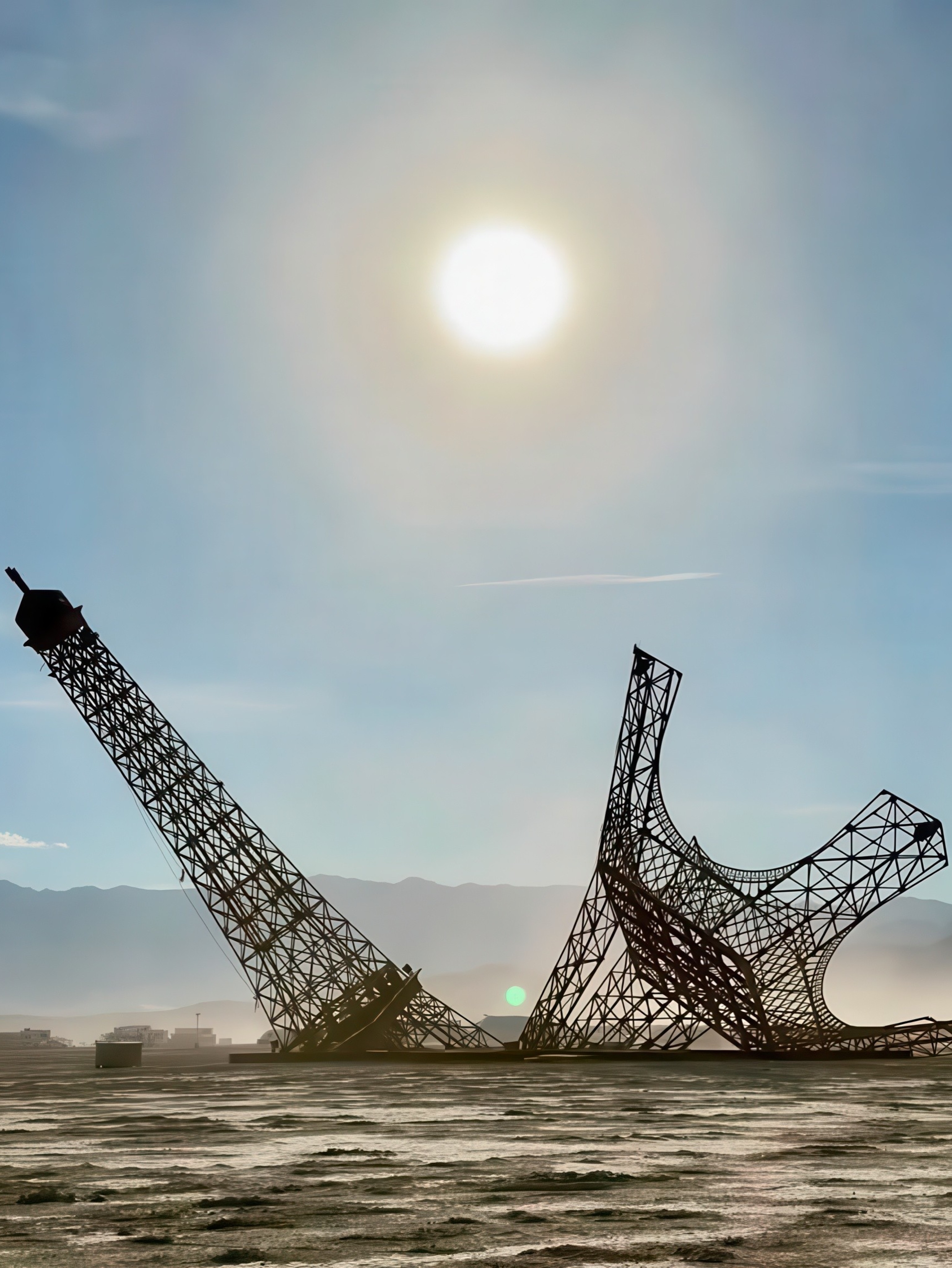
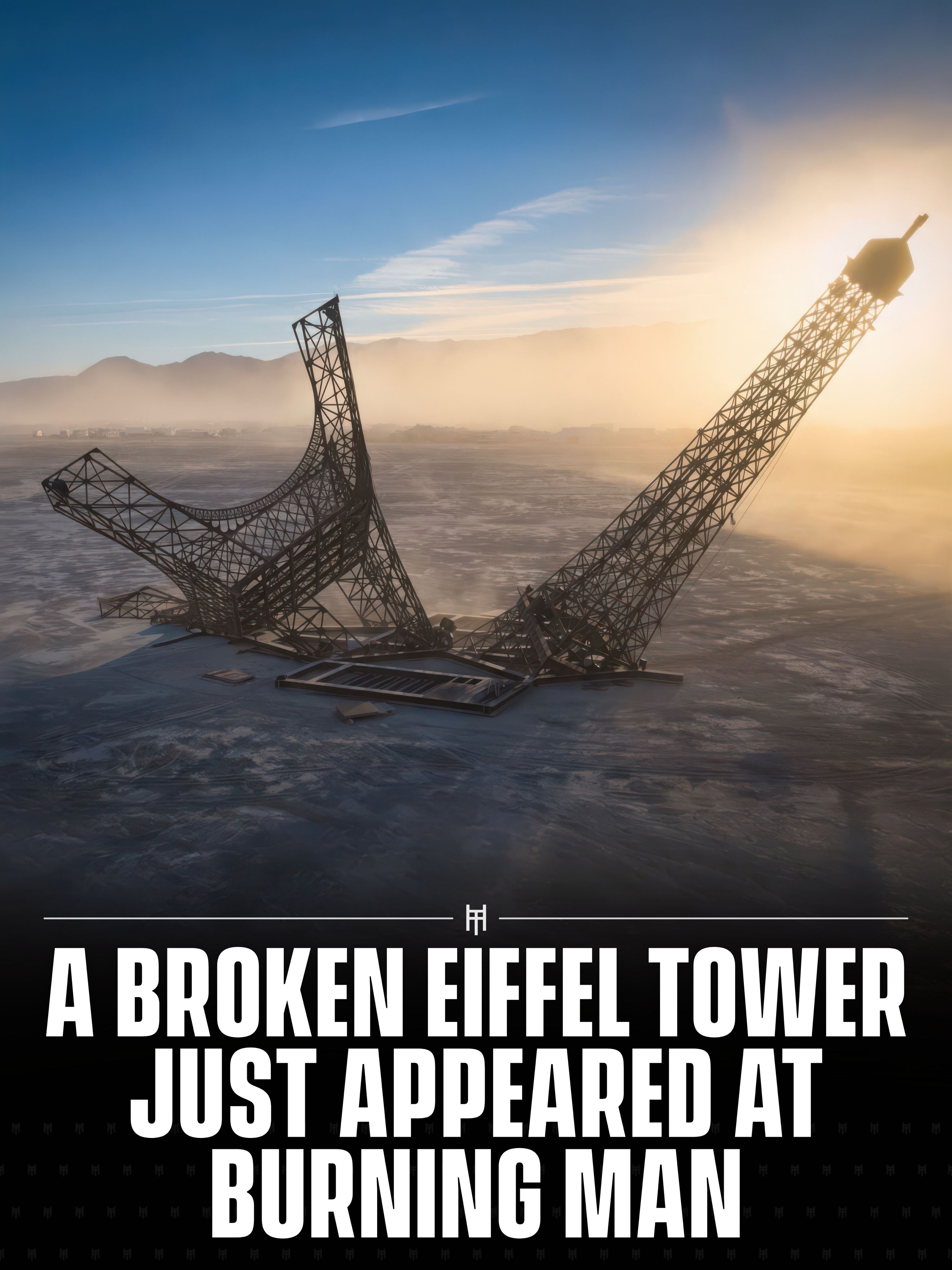
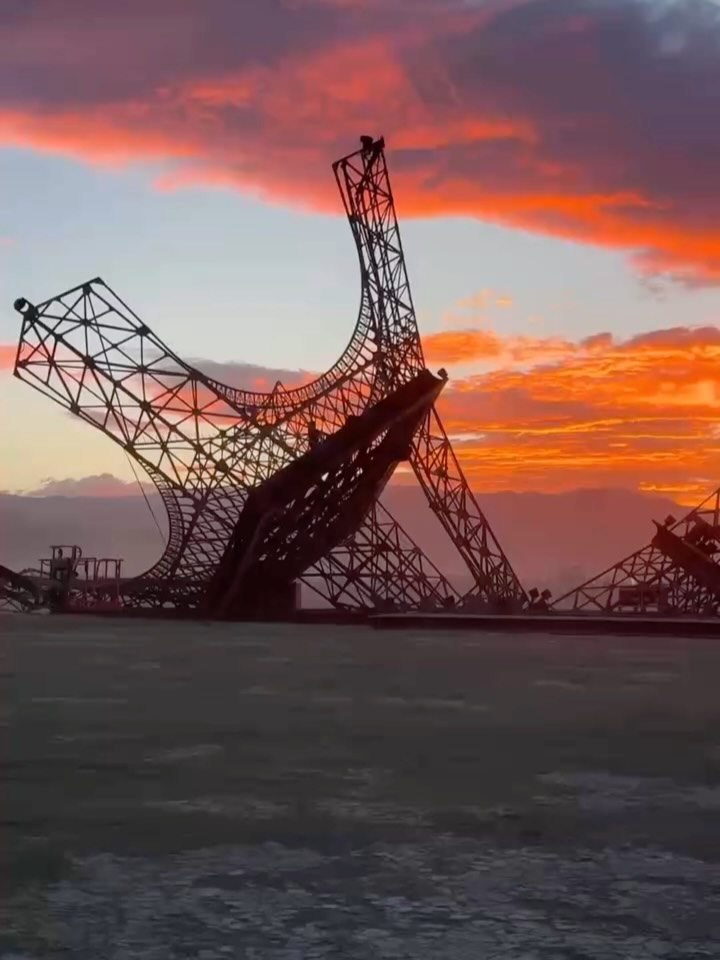
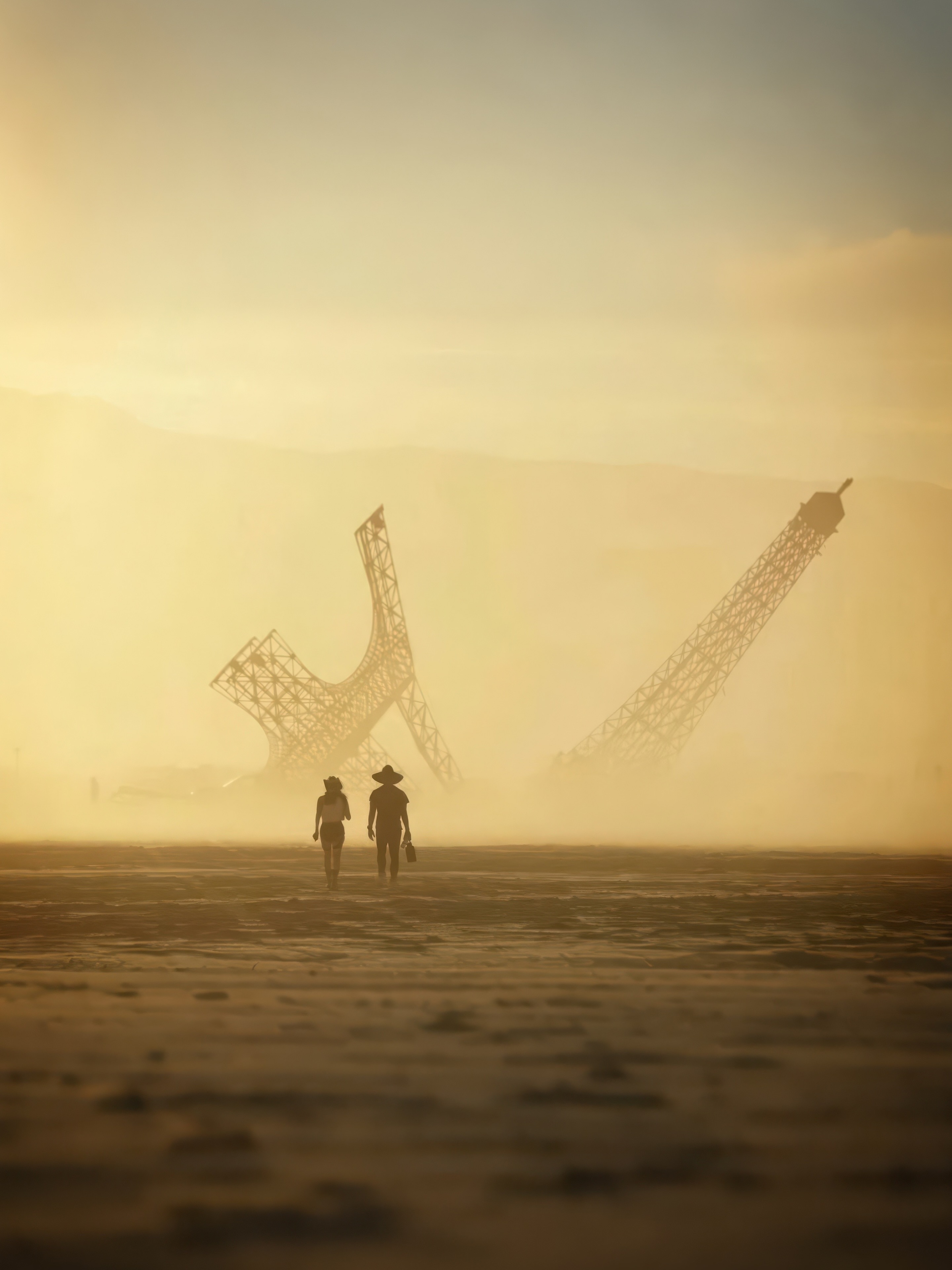
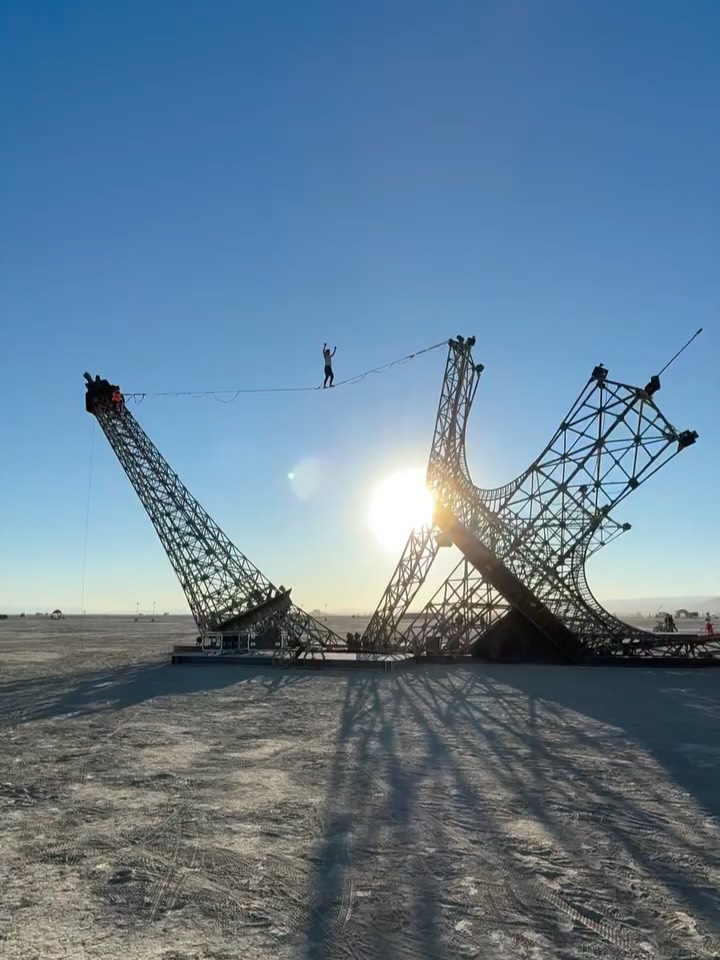
Philippe Maindron, the French founder of the Festival de Poupet, built a 29 ton steel replica of the Eiffel Tower split into two halves and shipped it from Vendee, France to Burning Man 2026 in the Nevada desert. Called Eiffela Broken Dream, the sculpture stands 30 meters long and 15 meters high, took two years to build, and features tightrope walkers on a cable connecting its two broken sections. It was unveiled at Black Rock Desert on August 30, 2026 and comes down after September 7.
Key Points
- 29 tons of steel, 5,000 pieces, and 10,000 bolts made the trip from Vendee to Nevada.
- Volunteers reassembled the broken tower in 72 hours after a 15,000 kilometer journey.
- Philippe Maindron partly funded the build through GoFundMe, not a festival sponsor.
Burning Man's playa saw wooden effigies and duct taped art cars long before it saw Eiffela Broken Dream, a snapped replica of the Eiffel Tower that arrived this week from Vendee, France, in shipping containers. The man behind it, Philippe Maindron, spent two years and 29 tons of steel proving a festival built on gift economy and radical self reliance can still absorb genuine industrial ambition.
Rochetrejoux to the Black Rock Desert
Workers dismantled the sculpture in Rochetrejoux, a village in the Vendee region of western France, on May 5, 2026, and packed it into containers bound for Le Havre. From there it crossed the Atlantic and reached the Nevada desert in time for volunteers to reassemble all 5,000 pieces and 10,000 bolts in 72 hours. The account documenting the build put the total distance at more than 15,000 kilometers, port to playa. Nothing about that timeline left room for delay; Burning Man 2026 opened August 30, and the tower had to be standing by then or not at all.
A Festival Promoter Who Used to Build Things
Philippe Maindron did not start as a sculptor. He spent sixteen years co running Maison Bleue, a construction company with 100 employees, before he became known across France as the founder of the Festival de Poupet, a music festival in the Vendee that turned him into a professional crowd puller. That construction background is the actual explanation for how a regional promoter ended up engineering a 29 ton steel structure instead of commissioning one. Maindron told French regional broadcaster France 3 that the build tested him more than any concert he had ever staged, and he partly financed the shipping and assembly through a public GoFundMe campaign rather than a single festival sponsor.
Cut In Half On Purpose
The tower is not a replica of the real one; it is Gustave Eiffel's monument split into two halves connected only by a suspended cable, a deliberate design choice rather than transport damage. The lower half is built to read as a fallen civilization, half buried and dark, while the upper half tilts skyward as if still trying to finish being built. Maindron and the French press covering the build describe the piece as a comment on a wavering world facing conflict and environmental strain, not a tribute to Paris. Paris had its own oversized sculptural moment this summer when Gagosian opened Jennifer Guidi's Waterfall in Paris, proof that large scale symbolic structures are having a run across the art world right now, gallery funded or not. Burning Man's own culture rewards exactly this kind of literal metaphor; the festival has spent four decades turning oversized symbolic structures into its most photographed moments, and a landmark cut in half photographs better than one left whole.
Two Ropes Between Two Halves
A cable strung between the two broken sections carries tightrope walkers during the week the installation stands, the only part of Eiffela Broken Dream that moves. Organizers describe the walkers as the piece's built in optimism, literal balance restored on top of a structure that is otherwise permanently broken. It borrows a device more common in circus and stunt performance than in large scale sculpture, the kind of hybrid stagecraft that festival art departments increasingly fund directly rather than leaving to individual volunteer camps. Photographs of the build exist from as far back as the Vendee workshop stage, giving Eiffela Broken Dream a visual record that started long before the tower ever reached Nevada.
Nobody Needed an Institution for This
Eiffela Broken Dream lands on a playa that has spent years professionalizing its own art department, moving past the entirely volunteer welding culture that built the festival's early temples and effigies. Major music festivals went through a similar shift already; acts like Anyma and Travis Scott now commission stage sets from dedicated engineering firms rather than a house crew, sets that rival small permanent structures. Luxury fashion houses do the same for runway shows, hiring architects and sculptors to build a set for one night before it comes down. Compare that to Marius Troy's festival that had 10 renders and zero tickets, a speculative festival that never left a hard drive. Maindron's tower did the opposite: it left a workshop in Les Herbiers and actually stood in the Nevada desert, financed in part by strangers through GoFundMe instead of a marketing department.
Call Eiffela Broken Dream the most physically ambitious thing built for Burning Man 2026 so far. Twenty nine tons of French steel, a two year build, and a promoter with no gallery backing pulled off what usually needs a museum grant or a luxury sponsor. It comes down after September 7, and whatever gets salvaged from the Nevada desert will be the real test of whether Maindron built a monument or a very expensive one time bet.
Related: Tom Sachs 31 Rue Cambon Chanel Boutique.
Frequently Asked Questions
What Is Eiffela Broken Dream?
Eiffela Broken Dream is a 29 ton steel replica of the Eiffel Tower, split into two halves, built by French promoter Philippe Maindron and installed at Burning Man 2026.
Who Built the Broken Eiffel Tower at Burning Man 2026?
Philippe Maindron, the founder of France's Festival de Poupet and a former construction company co director, designed and built the piece over two years.
How Much Does the Broken Eiffel Tower at Burning Man Weigh?
The structure weighs 29 tons and is made from 5,000 pieces held together by 10,000 bolts.
Where Was the Broken Eiffel Tower Built Before Burning Man?
It was fabricated in workshops in Les Herbiers in the Vendee region of France, then dismantled in the village of Rochetrejoux on May 5, 2026.
How Did the Broken Eiffel Tower Get to Burning Man?
Crews shipped it in containers from Le Havre, France, across the Atlantic and trucked it into the Nevada desert, a journey of more than 15,000 kilometers.
When Does the Broken Eiffel Tower Come Down at Burning Man?
It was unveiled on August 30, 2026 and comes down after Burning Man closes on September 7.
Is There a Live Performance on the Broken Eiffel Tower?
Yes, tightrope walkers cross a cable strung between the tower's two broken halves throughout the festival.
How Long Did It Take to Build Eiffela Broken Dream?
Maindron spent two years designing and fabricating the piece before volunteers reassembled it on the playa in 72 hours.
Topics: vendee-france, focus-45-76, burning-man, installation-art, festival-art, philippe-maindron, chanel, gofundme, gagosian, travis scott, travis-scott, black-rock-desert, public-art, eiffela-broken-dream, large-scale-sculpture