META'S MUSE CHARM PUTS AN AI AGENT ON A KEYCHAIN
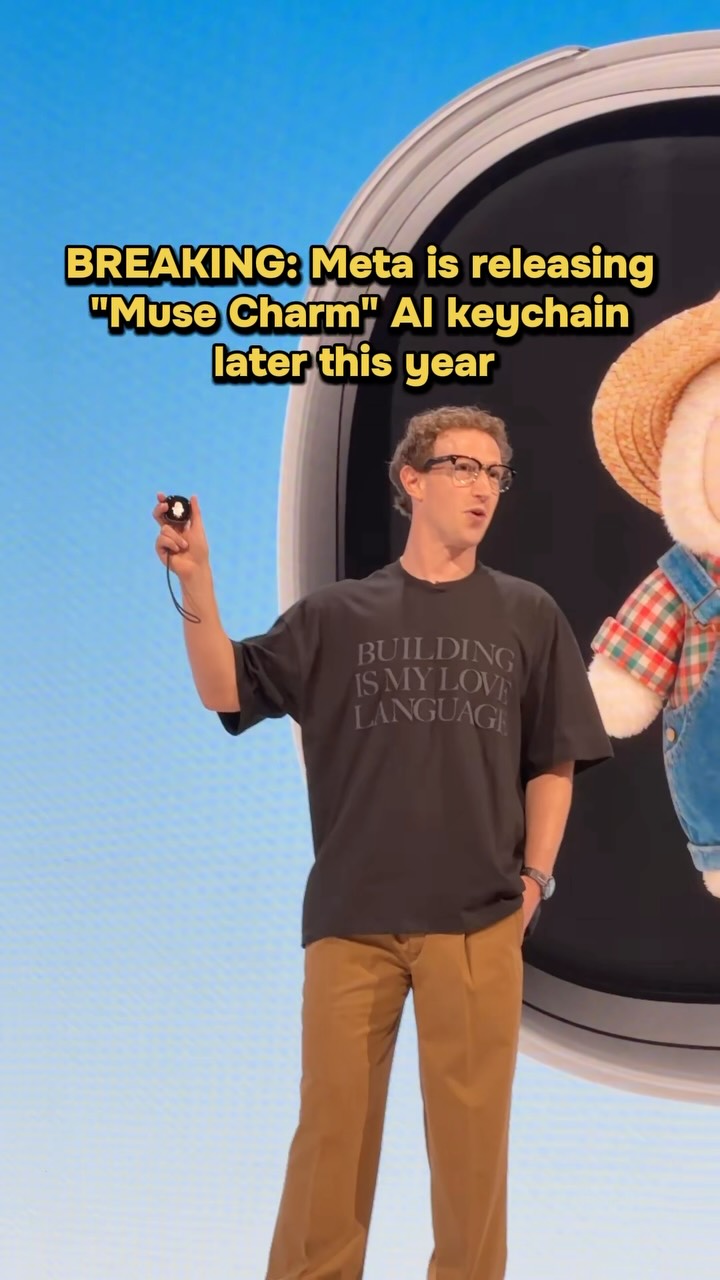
Mark Zuckerberg closed Meta Connect's September 23, 2026 keynote by unveiling Muse Charm, a keychain sized AI device built around Meta's Muse agent, with a fingerprint sensor, a two inch OLED screen and its own 5G connection. Meta says only a handful of working units exist and has not set a price, but is aiming to ship the device by the December holidays, fifteen days after Muse itself launched as software.
Key Points
- Fingerprint sensor wakes Muse instantly, no phone unlock or app needed.
- Only a few working units exist; Meta has not finalized materials or set a price.
- Meta aims to ship Muse Charm by the December holidays, fifteen days after Muse itself launched.
META'S MUSE CHARM PUTS AN AI AGENT ON A KEYCHAIN
Muse Charm is a puck about the size of an Apple Watch, and Mark Zuckerberg saved it for the very last minute of Meta Connect's opening keynote on September 23. Two hours of headsets and glasses had already gone by. Then came the one more thing: tap the fingerprint sensor in the corner and Muse, the AI agent Meta shipped in September, starts talking back through a two inch OLED screen showing its own animated avatar. No phone unlock, no app to open. Meta has sold Muse as software for two weeks. Now it wants to sell the body it lives in.
Fingerprint Sensor Skips the Unlock Screen
Muse Charm works by touch, not by tap and swipe through a phone. A fingerprint sensor sits in one corner of the puck, and pressing it wakes the Muse agent directly, skipping the lock screen, the home screen and the app icon a phone would require. Front and rear cameras let the agent see what the wearer sees and whatever is in front of them, and Bloomberg's Mark Gurman reported the device carries its own 5G connection, so it does not need to be tethered to a phone to work.
Zuckerberg described the pitch himself on stage. "We've packed a lot of technology in this little guy," he said. "So if you're not wearing glasses, this is going to be by far the fastest way to talk to your Muse and to show them what's going on around you." That is the whole pitch in one breath. Meta already sells Ray Ban and standalone glasses with Muse built in. Charm is the version for the person who left the glasses at home.
Few Working Units Exist, No Production Line Yet
Muse Charm is not close to a store shelf. Meta says only a few working units have been built so far, and the company is still finalizing the finishing materials and the internal component layout, the unglamorous work that turns a demo unit into something that survives a pocket. No price has been set. The one date Meta committed to on stage is the one the caption promoting the reveal repeated: shipping in time for the holidays, before the end of this year.
That is an aggressive window for a device Zuckerberg was still calling unfinished during its own unveiling. Apple, by comparison, typically locks hardware a year or more before a keynote reveal. Meta chose to show the thing while it was still short of ready, which says as much about the pressure to be first with agent hardware as it does about the product itself.
Muse Was Software for Fifteen Days Before It Got a Body
Muse launched on September 8 as an app, a WhatsApp integration and a browser at muse.ai, running on Meta's own Muse Spark model inside a sandboxed virtual machine watched by a separate Sentinel agent. It came with three tiers: free, a Power plan at 20 dollars a month, and a Maximum plan at 100 dollars a month for the agent that books travel, negotiates bills and fills out forms on a user's behalf. Charm does not replace that software. It is a second way in, built for the moments a phone is inconvenient, a bike ride, a kitchen, a walk to the mailbox.
Journalists covering the keynote reached for the same word to describe it: Tamagotchi. The comparison is not incidental. Bandai shrank its own thirty year old virtual pet into a 28 millimeter Tamagotchi ring earlier this month, betting that a screen small enough to wear disappears into daily habit faster than one you have to pull out. Meta is making the identical bet with an agent instead of a pet, and an OLED avatar that talks back instead of one that just blinks.
Meta Is Not the First Company Wearing Its Agent
OpenAI got here first with hardware, if not with ambition. Work Louder's Codex Micro launched in July as a 230 dollar keypad built to control OpenAI's Codex coding agent, a niche tool for a niche job. Muse Charm is the opposite bet: mainstream, general purpose, priced at nothing yet because Meta has not decided what a keychain that talks is worth.
The lock in question is simple. A phone already does everything Charm does, more slowly. The habit Meta needs to create is reaching for the puck instead of the pocket, and that habit has to form before the price tag arrives and before the finishing materials are locked. Watch this one rather than plan around it. A product still missing a price and a production line by December is a bet on a keynote applause line, not yet a device sitting in a drawer.
Frequently Asked Questions
What is Meta's Muse Charm?
Muse Charm is a keychain sized AI device Mark Zuckerberg unveiled at the close of Meta Connect's September 23, 2026 keynote, built to run Meta's Muse AI agent outside of a phone.
How does Muse Charm work?
A fingerprint sensor on the puck wakes Muse directly through a two inch OLED screen showing an animated avatar, skipping the phone's lock screen and app icon entirely.
When will Muse Charm be released?
Meta is aiming to ship Muse Charm in time for the December 2026 holidays, though the company says only a few working units exist so far.
How much does Muse Charm cost?
Meta has not announced a price for Muse Charm as of its September 23, 2026 reveal.
Does Muse Charm need to be connected to a phone?
No. Bloomberg reported the device carries its own 5G connection and front and rear cameras, so it can work without being tethered to a phone.
What is the difference between Muse and Muse Charm?
Muse is the AI agent Meta launched as software on September 8, 2026 across an app, WhatsApp and the web. Muse Charm is a standalone hardware device built to access that same agent.
Who announced Muse Charm?
Meta CEO Mark Zuckerberg announced Muse Charm on stage as the final reveal of the Meta Connect 2026 keynote.
Is Muse Charm in mass production?
No. Meta says it has built only a handful of working units and is still finalizing the device's finishing materials and internal component layout.
Topics: wearable-tech, meta, openai, ai-hardware, mark zuckerberg, muse-charm, artificial-intelligence, apple, ai-agents, mark-zuckerberg, meta-connect