META NEURAL HANDWRITING TURNS A KNEE INTO A KEYBOARD
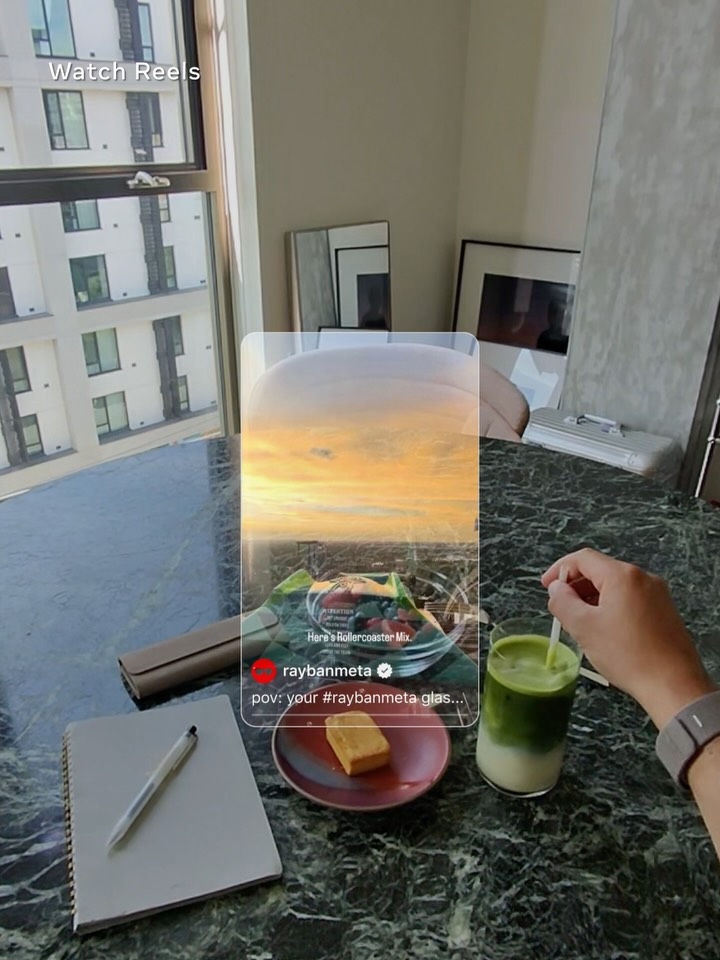
Neural handwriting on Meta Ray Ban Display lets the Meta Neural Band decode finger strokes on a surface into text. Meta's Nature paper measured 20.9 words per minute, and Meta's help pages list US English as the supported case.
Key Points
- Meta's Nature paper measured handwriting at 20.9 words per minute, against about 36 on a phone keyboard.
- Writing is done with one printed index finger on a table, leg or hand, wrist anchored.
- Meta's help pages list US English only; worldwide reports conflict and are unconfirmed.
Neural handwriting on the Meta Ray Ban Display is a text input mode in which the Meta Neural Band wristband reads the muscle signals of your index finger tracing letters on a surface, and the glasses show the result as typed text. Meta announced it at CES in January 2026 for Early Access owners in the United States writing in English, and Meta's own Nature paper measured the decoder behind it at 20.9 words per minute.
It is a keyboard replacement for a pair of glasses that has no keyboard, and the details of how it works, how fast it is and who can use it are more specific than the launch coverage made them sound.
Print Letters With One Finger and Anchor the Wrist
Meta's help center tells wearers to write with the index finger while the wrist rests on a hard surface, and to print rather than use cursive. The surface can be a table, a leg or the other hand, which is why early coverage described it as writing on any surface rather than writing in the air.
To start, the wearer swipes down on the glasses' display to the reply box and taps the Write button. Autocomplete suggestions show up in the composer in lighter gray, and a swipe of the thumb to the right accepts one. Meta's guidance is to keep writing and let the AI fix typos afterward, so a misformed letter does not need to be erased. A separate help article covers sending questions to Meta AI the same way, with an index tap to submit the query once the writing stops.
The input is the wrist, not the lens. The band records surface electromyography, the electrical activity of the forearm muscles, and the glasses only receive the decoded characters.
20.9 Words a Minute Against 36 on a Phone
Meta's Nature paper, published July 23, 2025, reported handwriting at 20.9 words per minute in closed loop testing, which means participants wrote while the system decoded them live. IEEE Spectrum set that figure against roughly 36 words per minute on a phone keyboard, and The Register added that a proficient typist passes 40. Heise reported the research wristband carries 48 dry electrodes and put the median across participants at about 21 words per minute.
Those numbers describe the research prototype and its test population, not a retail Neural Band on a commuter's knee. A hands on review in Italy, summarized in search coverage of the CES announcement, found that the feature worked in Italian despite English calibration and ran slower than dictating the same WhatsApp message by voice. Meta has not published a words per minute figure for the shipping product.
Mark Zuckerberg gave a higher number from the Connect stage on September 17, 2025, telling the audience, "I'm up to about 30 words a minute on this," as NBC News reported. The 30 was a remark about his own typing of a text message, so it is a different task from the 20.9 the paper measured, and the two should not be read as one speed.
January 2026 for Early Access, May for Instagram and Native Apps
The first release was narrow. At CES in January 2026, Meta said Early Access owners of the Ray Ban Display and Neural Band could write messages on WhatsApp and Messenger, in English, in the United States. Meta also paused its planned international expansion of the glasses that month, citing demand and limited inventory.
Meta's May 2026 software update widened the apps. Pulse2, Smartprix and UC Today reported handwriting working across Instagram, WhatsApp, Messenger and the native messaging apps on both Android and iPhone.
The geography is where the reporting disagrees. Several outlets described that update as available to all Ray Ban Display owners worldwide, while Meta's own help pages still list the messaging feature as English in the US and the Meta AI version as an Early Access feature for the US and Canada. Meta's help pages are the more careful source, and no reviewed source shows the writing mode for owners in the UK, Germany, France or Italy, so the safe reading is that US English is the supported case and everything else is unconfirmed.
The Band Reads Muscles, Not Minds
The wristband is the hardware behind the Meta Neural Band wristband, a muscle sensor rated IPX7 for water resistance, with up to 18 hours of battery according to Meta. Facebook announced on September 23, 2019 that it would buy the startup CTRL labs behind it, in a deal Bloomberg priced between $500 million and $1 billion. Handwriting came to owners months after the product shipped on September 30, 2025, and after the March 2026 display update added Reels, widgets and two games.
The band does not read thoughts. Zuckerberg described it at Connect as picking up "signals from your brain" through small muscle movements, but the Nature paper and Meta's documentation describe wrist and forearm muscle activity, and Meta says the raw data is processed on the device.
A $799 Bundle Is the Only Way In
The Neural Band is not sold alone, so the price of neural handwriting is the price of the Ray Ban Display with Neural Band, which went on sale September 30, 2025 for $799. A replacement band outside warranty costs $199, a quarter of the bundle, and is available through customer service only.
International pricing arrived this fall. Engadget reported on September 23, 2026 that the glasses sell for 749 pounds in the UK and 1,149 Canadian dollars in Canada, with euro pricing for Germany, France and Italy starting October 13.
The wristband is also the part Meta's next headset leaves out. Meta's VR Glasses, unveiled September 23, 2026 for spring 2027, rely on hand tracking, eye tracking and voice, so for now handwriting on a knee remains something only the display glasses do. Voice remains the other route on Meta's glasses, as in Ray Ban Meta translation at 2.7 seconds.
Frequently Asked Questions
What is neural handwriting on Meta Ray-Ban Display?
It is a text input mode where the Meta Neural Band reads the muscle signals of your index finger tracing letters on a surface, and the glasses display the result as text.
How fast is neural handwriting on the Meta Neural Band?
Meta's Nature paper measured handwriting at 20.9 words per minute in closed loop testing; Meta has not published a figure for the shipping product.
Do you write in the air with the Meta Neural Band?
No. Meta's help center tells wearers to print with the index finger while the wrist rests on a hard surface such as a table, a leg or the other hand.
Is neural handwriting available outside the United States?
Meta's help pages list the feature as English in the US, with the Meta AI version in Early Access for the US and Canada; reports of a worldwide rollout conflict with that and are unconfirmed.
Topics: smart-glasses, meta, engadget, ctrl-labs, meta-neural-band, wearables, mark zuckerberg, neural-handwriting, mark-zuckerberg, meta-ray-ban-display, emg