ADIDAS BUILT A 1950 ICE SHOE INTO ITS WHOLE PLAYBOOK
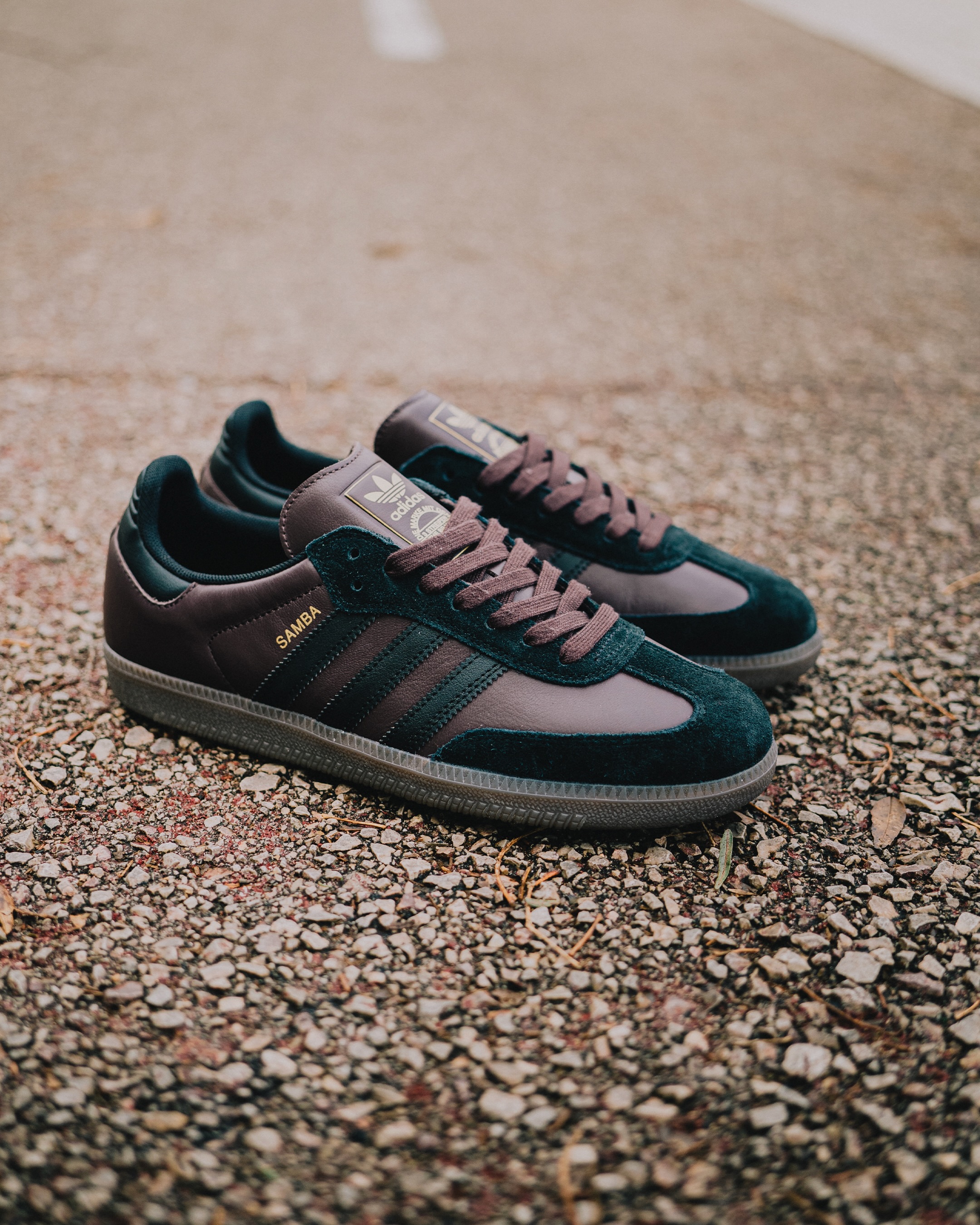
The adidas Samba originated in 1950 as an indoor football training shoe designed by Adi Dassler for coaches on frozen winter pitches, and took its modern flat form in a 1972 redesign. A 2023 revival led by Wales Bonner, Pharrell Williams and Bad Bunny collaborations made it adidas' best selling lifestyle silhouette and helped drive a 14 percent footwear increase in Q3 2024. Adidas has since applied the same archive-plus-collaborator template across the Superstar, Stan Smith and Predator.
Key Points
- Adi Dassler designed the Samba in 1950 for German coaches training on frozen winter pitches.
- The modern flat silhouette dates to a 1972 redesign that removed the original high top.
- The 2023 revival helped drive a 14 percent rise in adidas footwear in Q3 2024.
The adidas Samba was designed in 1950 by Adi Dassler as an indoor football training shoe, built for German coaches working on frozen winter pitches. Seventy-six years later it is adidas' best selling lifestyle silhouette and, more importantly, the template the company now runs on almost everything in its archive.
Built for Frozen Pitches
The original was not the flat, elegant thing sitting in shop windows now. It was closer to a boot: an arched sole, a rubber capped toe, metal eyelet grommets. The gum outsole existed to grip ice and frozen ground, not to look good with jeans.
That is worth holding onto, because every design cue people now read as fashion started as a solution to a specific problem in German winter football.
The 1972 Redesign Did the Real Work
The Samba people actually wear dates to 1972, when adidas stripped the high top and flattened the silhouette into roughly the shoe it is today. That version had a seventy year head start on becoming a fashion object, and for most of that time it was simply a football shoe that terrace culture happened to adopt.
Nothing about the design changed in 2023. What changed was who was seen in it.
Why It Came Back in 2023
The revival ran on collaborators and visibility rather than product development. Wales Bonner, Pharrell Williams and Bad Bunny put their names on it, and a wave of celebrity adoption did the rest. Adidas reported a 14 percent rise in footwear in Q3 2024, driven substantially by the Samba and its variants.
The honest part of the story is the shape of the curve. Most read 2023 as the peak and 2024 as the beginning of a dip. A silhouette that everyone owns stops being a signal, which is the failure mode built into every archive revival.
The Template Adidas Now Runs on Everything
This is the part that matters more than the shoe, and it is visible in what adidas ships week to week.
The company found that an archive silhouette plus an outside designer produces more attention than a new silhouette does. So it now runs that play across the whole vault. CLOT put espadrille soles on the Samba at 140 dollars. Adidas Skateboarding reinforced the Samba's toe with Adituff to make it survive a griptape life it was never designed for.
Then the same move, one shelf over. Sp5der got a spider web shell toe on the Superstar. Willy Chavarria molded a rose onto one. Brain Dead turned the Predator 94 into a dress shoe, which is a genuinely strange thing to do to a football boot and exactly the point.
Wales Bonner's adidas footwear sold out every pair last season before the current run even landed. And when adidas wants to remind people a silhouette exists without changing it at all, it puts the Stan Smith back on film rather than redesigning it.Six Silhouettes, One Day
The clearest illustration of how industrialised this has become: adidas dropped six different silhouettes at a single retailer in one go. Not one hero product with a campaign behind it. Six archive shapes, released together, each carrying its own small audience.
That is a fundamentally different business from selling a new running shoe. The research and development is already paid for. The design work is outsourced to collaborators who bring their own followings. Adidas supplies the shape, the three stripes and the distribution.
What the Archive Play Costs
The risk is the one the Samba is currently demonstrating. Archive silhouettes are finite, and each revival spends a little of what made the shape desirable. Once the Samba is on every pavement in London, the next Samba collaboration has to work harder for less attention, and the brand has to reach deeper into the vault for the next one.
Adidas has more vault than almost anyone, which is why this has run for three years without visibly straining. But the model has an end state, and 2024's dip is the first honest data point about where it sits.
The 1950 shoe was solving a problem about ice. The 2026 version is solving a problem about attention, and that problem does not stay solved.
The Thing Nike Cannot Copy Easily
Nike has an archive of comparable depth and has run its own revivals for years, but adidas has been more willing to hand a silhouette over and genuinely let go of it. A Brain Dead Predator that reads as a dress shoe is not a brand protecting its football heritage. It is a brand treating the heritage as raw material.
That looseness is the actual asset. Collaborators produce their best work when they are allowed to break the reference, and audiences can tell the difference between a real reinterpretation and a colourway with a guest logo on the tongue.
It also explains why the model has held up through a soft patch. Even as Samba demand cooled through 2024, the machinery kept working, because the next release was never dependent on the last one staying hot. Each archive shape carries its own small crowd, and six of them shipping together does not need any single one to carry a season.
Related: ADIDAS RESHAPES THE SUPERSTAR THEN CALLS FW26 TIMELESS.
Frequently Asked Questions
When was the adidas Samba made?
The Samba was designed in 1950 by Adi Dassler as an indoor football training shoe for German coaches working on frozen winter pitches. It was redesigned in 1972 into the flat silhouette worn today.
What was the adidas Samba originally designed for?
Indoor football training on icy and frozen ground. The original had an arched sole, a rubber capped toe and metal eyelet grommets, and the gum outsole existed to grip ice rather than for style.
Why did the adidas Samba become popular again?
A 2023 revival driven by collaborations with Wales Bonner, Pharrell Williams and Bad Bunny, plus widespread celebrity adoption. The design itself did not change; the visibility did.
Is the adidas Samba still popular in 2026?
It remains adidas'' best selling lifestyle silhouette, but most read 2023 as the peak with a dip beginning in 2024. A silhouette everyone owns stops functioning as a signal, which is the built-in limit of any archive revival.
How much did the Samba help adidas sales?
Adidas reported a 14 percent rise in footwear in Q3 2024, driven substantially by the Samba and its many variants.
What is the difference between the adidas Samba and Superstar?
Both are archive silhouettes adidas now revives through collaborators. The Samba began as a 1950 indoor football shoe; the Superstar is a basketball shoe known for its rubber shell toe. Adidas applies the same archive-plus-collaborator model to each.
Who designed the adidas Samba?
Adi Dassler, the founder of adidas, designed the original Samba in 1950.
Topics: willy chavarria, sneakers, willy-chavarria, wales bonner, brain-dead, fashion, bad-bunny, superstar, bad bunny, adidas, collaborations, archive, samba, wales-bonner, pharrell williams, pharrell-williams, brain dead, footwear, nike