Being Offline Is the New Luxury for a Generation Raised on Phones
Being offline is becoming a luxury for the generation raised on phones. The Harris Poll's Gen Z Weekend Report, fielded May 28 to June 6, 2026, found 51 percent of Gen Z report weekend loneliness, 65 percent experience their social life more through a phone than in person and 71 percent feel they are missing the in person experiences older generations had. Eventbrite data shows phone free events grew 567 percent globally between 2024 and 2025, with UK attendance up 1,441 percent and US attendance up 913 percent. Pew found 72 percent of US teens at least sometimes feel peaceful without their phone, BSI reported half of young Britons want to grow up without the internet, and a GfK survey found 60 percent of Germans want phone free public spaces.
Key Points
- Phone free events on Eventbrite grew 567 percent globally between 2024 and 2025.
- 65 percent of Gen Z say their social life runs more through a phone than in person.
- 72 percent of US teens say they at least sometimes feel peaceful without their phone.
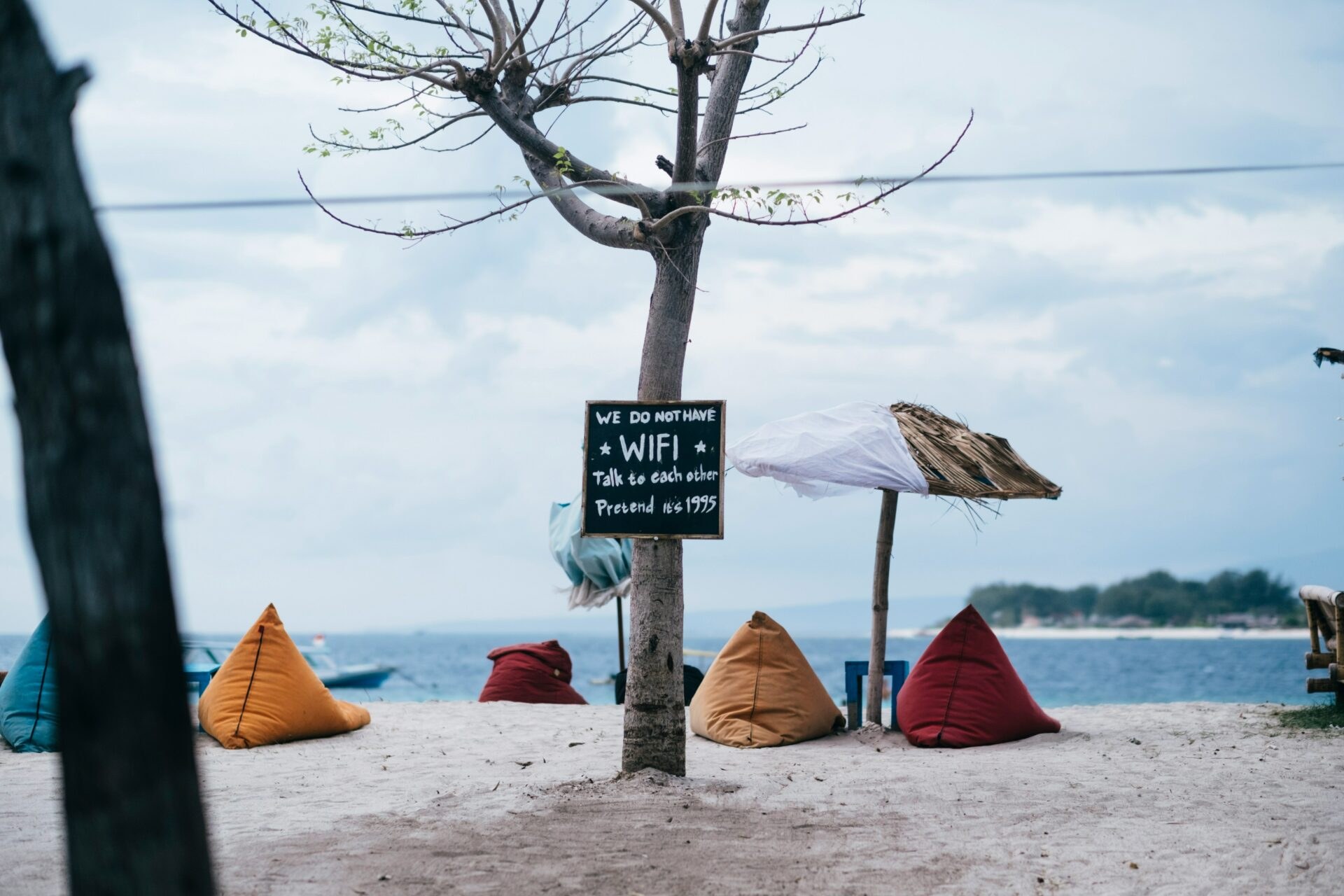
A hand painted sign on a beach says it better than any trend report. We do not have WiFi. Talk to each other. Pretend it's 1995.
"Offline is the new luxury" has been repeating across social feeds all year, which is an ironic place for the idea to spread. But the numbers say it is more than a caption. The people saying it loudest grew up with a phone in their hand, and the data from 2024 through 2026 shows them booking, seeking out and asking for rooms where the screen goes away. When everything can be posted, the rare thing is the moment that cannot be.
Gen Z Is Connected and Lonely
The clearest numbers come from The Harris Poll. Its Gen Z Weekend Report, fielded online from May 28 to June 6, 2026, surveyed 4,100 American adults, including 603 members of Gen Z between 18 and 29.
The headline finding is a paradox. Half of Gen Z, 51 percent, report weekend loneliness, the highest of any generation and 37 points above Boomers. At the same time, 65 percent say they experience their social life more through a phone than in person, and 49 percent say they do not have enough friends to spend time with offline.
They know what they are missing. Seventy one percent feel they are missing the in person experiences older generations had at their age, and 62 percent wish their online friendships turned into real world plans. Harris called it the connection paradox. The most connected generation in history is the loneliest.
That is the backdrop for a year when Apple unveiled its first foldable phone, and a growing number of young people said they want more of their lives to happen away from one.
Phone Free Events Grew 567 Percent
The demand is showing up in ticket data. In April, Eventbrite analyzed every event on its platform with phone free language in the title or description across 2024, 2025 and the first quarter of 2026.
Globally, phone free events grew 567 percent between 2024 and 2025, and attendance rose 121 percent as the format spread from five countries to 12. The United Kingdom led the movement, with events up 1,200 percent and attendance up 1,441 percent. In the United States, the number of events grew 388 percent while attendance jumped 913 percent, as organizers moved to bigger communal nights and average event sizes more than doubled. In the first three months of 2026 alone, phone free events had already reached more than a third of the previous year's global volume.
Eventbrite's own survey numbers agree. Forty nine percent of Gen Z and millennials said they want live experiences to feel less curated and more real, and 79 percent of young adults said spontaneity matters at events.
The biggest names in music have leaned in. Eventbrite pointed to Harry Styles playing a phone free One Night Only show, Fred again.. hosting phoneless concerts, and Dave Chappelle and Alicia Keys running shows where Yondr pouches lock phones away at the door. The company summed up the shift in one line, that "the most premium experiences are often the ones you won't see on a feed."
Teens Feel It Before They Can Name It
The pull starts younger than 18. In a March 2024 report, the Pew Research Center found that 72 percent of American teens often or sometimes feel peaceful when they do not have their smartphone, while 44 percent said being without it makes them anxious. Thirty eight percent said they spend too much time on their phone.
In Britain, the standards body BSI surveyed 16 to 21 year olds in 2024 and reported that half of young people want to grow up in a world without the internet. That is a striking answer from the first generation that never knew one.
Europe Wants Phone Free Rooms Too
The idea has crossed into public policy questions. Last fall, a German foundation that studies how people will live in the future asked directly whether being offline is a luxury. A representative GfK survey of 2,000 adults found that 60 percent of Germans now want public spaces without WiFi or smartphones, up from 56 percent in 2018, and the share among people under 30 matched it.
None of this means anyone is throwing their phone away. That Harris report also found seven in ten Gen Z adults still fill their weekends with TV, streaming, gaming or scrolling. What changed is what people now treat as special. A room without phones has become a premium setting, the kind of place you plan around and tell people about afterward.
Scarcity Is What Makes It Luxury
Luxury has always been about scarcity. For most of the last two decades the scarce things were objects. Now the scarce thing is attention, and the rooms that protect it are starting to carry the premium.
Harris found Gen Z steering toward softer settings. Eighty eight percent actively avoid at least one kind of social setting, 76 percent want less overwhelming environments, 73 percent wish for more places where alcohol is not the main focus, and 54 percent prefer daytime plans to nighttime ones. Seventy nine percent want more affordable ways to spend time out. Put together, that describes a phone down dinner, a run club, a listening room or a game night far better than it describes a crowded club built for content.
The appeal is not nostalgia for a time this generation never lived through. It is the feeling of being fully in one place, with people who are also fully there. That is hard to manufacture and impossible to scroll, which is exactly why it reads as luxury.
Better in Person
A publication called Finally Offline has an obvious stake in this, so take that into account. Our interview series is called Better in Person for a reason, and its first episode, with Awake NY founder Angelo Baque, carried a line that has aged well, that charm doesn't really translate online.
The data now backs up what a lot of people have felt for a while. The most connected generation is the one asking hardest for rooms without a connection. Phone free events are multiplying, teens report feeling calmer without the device, and young adults are trading the loud, filmed night out for smaller plans that leave nothing to post.
The phone is not going anywhere. But the moments people value most are increasingly the ones that never make it onto it.
Frequently Asked Questions
Why is being offline called the new luxury?
Attention has become scarce, and settings without phones are rare enough to feel premium. Eventbrite says phone free events grew 567 percent globally between 2024 and 2025.
How many Gen Z say their social life happens through a phone?
65 percent, according to The Harris Poll's Gen Z Weekend Report, which surveyed 603 Gen Z adults from May 28 to June 6, 2026.
Are phone free events growing?
Yes. Eventbrite counted 567 percent growth in phone free events globally from 2024 to 2025. In the US, events grew 388 percent and attendance grew 913 percent.
Do teens feel better without their phones?
Pew Research Center found in 2024 that 72 percent of US teens often or sometimes feel peaceful without their smartphone, while 44 percent said being without it makes them anxious.
Topics: eventbrite, fred-bip, phone-free, offline, digital-detox, better in person, awake-ny, angelo baque, awake ny, better-in-person, gen-z, fred, angelo-baque, harris-poll, apple, wellness