YOHJI YAMAMOTO PUTS KNEEPADS ON THE FALL 2026 TROUSERS
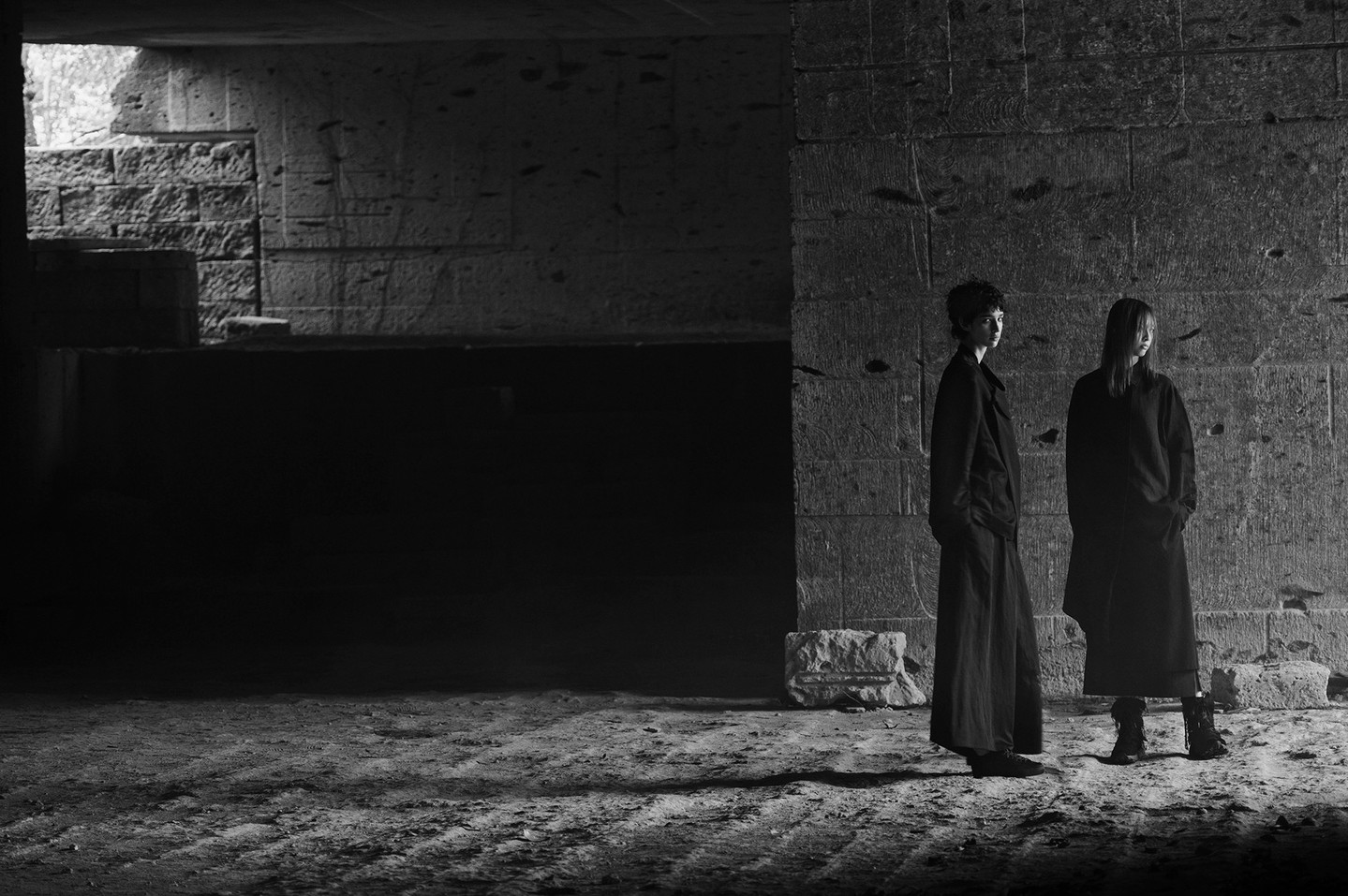
Yohji Yamamoto's Fall Winter 2026 27 menswear reinforces trouser knees and adds zippered chap panels, referencing three centuries of military tailoring from 18th century frock coats to 20th century field jackets. No retail price has been confirmed since the March 2026 Paris show, though the line began reaching stores July 29.
Key Points
- Fall Winter 2026 27 menswear trousers add reinforced kneepads and zippered chap style panels.
- Silhouettes reference 18th century frock coats, 19th century peacoats, and 20th century field jackets.
- The runway line reached stores July 29 with no retail price confirmed since the March show.
Reinforced kneepads sit on the knees of Yohji Yamamoto's Fall Winter 2026 27 trousers, the kind a mechanic or a soldier actually needs, not the kind a stylist adds for texture. Chap style panels run down the outer shin of several looks, zippered or laced shut, built to bolt on a second layer exactly where a body kneels or crawls. Mottled coveralls, patterned like accidental bleach and splatter, hang a few looks away from eighteenth century frock coats reworked for 2026, and that range, from a work uniform to formalwear three hundred years old, is the actual thesis of the collection. The 82 year old designer is not costuming soldiers. He is compressing the entire history of clothes built for danger into one rack.
The Trousers Are Built For A Body That Kneels
Yohji Yamamoto reinforced the knees of several Fall Winter 2026 27 trousers with heavier fabric panels, the kind of patch a workwear brand sews in for someone who kneels on concrete all day. Chap style extensions run along the outer shin of companion looks, zippered or laced at the ankle so a wearer can add or remove a layer without changing pants entirely. The coveralls that anchor the lineup carry a mottled, bleach and splatter pattern, distressing that reads as accidental until it repeats across enough pieces to be intentional. Yamamoto has tied the collection's starting point to army outfits and the reality of working in dirty conditions, where this kind of reinforcement is the difference between clothing and protection. The pad itself is borrowed from a different vertical entirely, the same reinforced knee a skateboarder or a baseball catcher already trusts on concrete or dirt, relocated onto a runway trouser instead of a sports uniform.
1700s Frock Coats Sit Next To 1940s Field Jackets
The Fall Winter 2026 27 menswear pulls silhouette references across three centuries in the same lineup. Eighteenth century frock coats, nineteenth century peacoats and duffle coats, and twentieth century field jackets and dress uniforms all appear across the run, so a coat cut like formalwear from the 1700s sits a few exits away from a jacket cut like 1940s military issue. FO's own coverage of this exact runway already clocked the vests built from flattened aluminum cans as the collection's loudest armor joke. The kneepads and the three century coat lineage are the quieter version of the same argument, that clothing built to survive danger looks different depending on which war a person is dressing for.
The Aluminum Cans Were The Easy Read
A vest built from flattened aluminum cans photographs well and explains itself in one sentence, which is exactly why it became the runway's headline image. The kneepads, the chap panels, and the three centuries of coat silhouettes take longer to notice and do more of the actual argument, because they are functional rather than sculptural, built to be worn hard rather than photographed once. FO's construction breakdown of this same season's womenswear documented Yamamoto hiding nearly every seam across indigo cotton, flannel, velvet and jacquard. The menswear runs a similar material list through a rougher filter, quilting and padding instead of concealing, because the two collections argue opposite sides of the same idea: cloth that disappears versus cloth built to take a hit.
Working In Dirty Conditions Is The Whole Point
Yamamoto has connected the collection's military references directly to the international conflicts running through 2026, framing the utilitarian wardrobe as protective clothing for people working in dangerous conditions rather than a costume of war. That framing turns kneepads and chap panels from workwear cosplay into a specific, dated argument about what clothing owes a body under real stress, not a runway abstraction. The same restraint showed up at the actual show, where guests found a card on every seat asking them to watch rather than film, a request that fit a designer arguing that clothes deserve attention before they get a phone pointed at them.
The Kneepads Reach Stores Before The Price Does
FO already reported the runway line's arrival in stores on July 29, with the brand's own web store following days later and no retail price confirmed at any point since the March show. That means the kneepad trousers, the chap panel pants, and the frock coat reworks are hitting racks before a single outlet has priced the actual craft against the actual ask. A workwear brand charges less for a reinforced knee because the reinforcement is the whole product. Yamamoto is charging Yamamoto prices for the same idea wrapped in three centuries of tailoring reference, and the gap between those two numbers is where the value argument actually lives.
Buy the kneepad trousers or the chap panel pants if Yamamoto's usual generous cut fits your frame, skip the frock coat reworks unless you have somewhere that formal to wear military history. The tailoring lineage spanning three centuries is the real craft in this collection. The aluminum cans were just the photograph everyone already has.
Frequently Asked Questions
What is new about Yohji Yamamoto's Fall Winter 2026 27 menswear collection?
The trousers add reinforced kneepads and zippered, laceable chap style panels at the shin, alongside coveralls with a mottled bleach and splatter pattern.
Does Yohji Yamamoto's Fall Winter 2026 27 collection reference historical military clothing?
Yes, the lineup pulls silhouettes across three centuries, including 18th century frock coats, 19th century peacoats and duffle coats, and 20th century field jackets and dress uniforms.
How much does Yohji Yamamoto's Fall Winter 2026 27 collection cost?
No retail price has been confirmed for any piece in the collection since the March 2026 runway show.
When did Yohji Yamamoto's Fall Winter 2026 27 collection arrive in stores?
The runway line began shipping to stores on July 29, 2026, with the brand's own web store following days later.
Is Yohji Yamamoto's Fall Winter 2026 27 menswear inspired by real world conflict?
Yes, Yamamoto tied the utilitarian wardrobe to army outfits and the reality of working in dangerous conditions amid the international conflicts running through 2026.
Who designed the Fall Winter 2026 27 kneepad trousers?
Yohji Yamamoto, the 82 year old Japanese designer, designed the collection for his eponymous menswear line.
Where can someone buy Yohji Yamamoto's Fall Winter 2026 27 collection?
The pieces are shipping through Yohji Yamamoto's own retail stores and web store, with no third party retail price confirmed yet.
Topics: menswear, fall-winter-2026, japanese-fashion, aw26-27, military-tailoring, yohji yamamoto, paris-fashion-week, yohji-yamamoto, workwear