THE TOYBOX PUTS MUSIC GAMING AND DESIGN IN ONE OBJECT
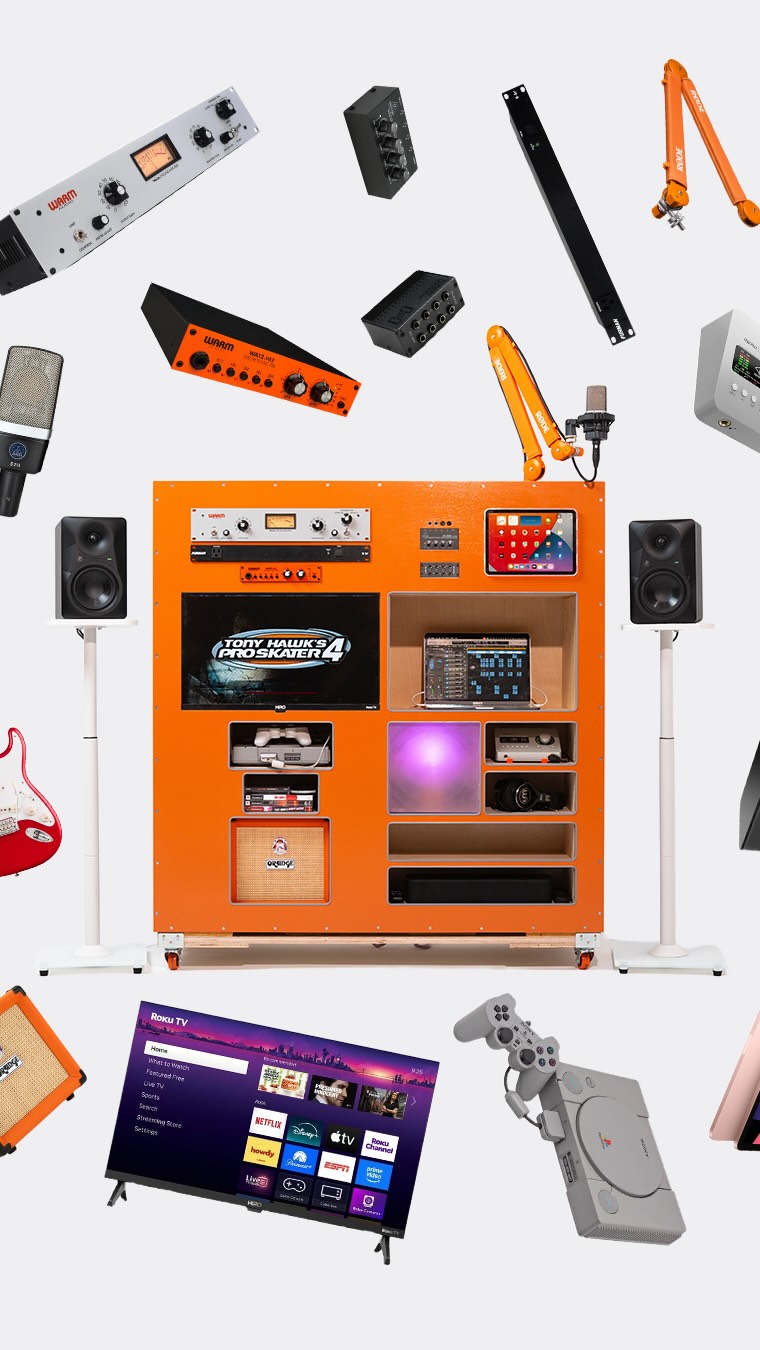
Ellis Faulk, a solo product designer based in Los Angeles, launched Weird Kid Engineering with its first product, the ToyBox, in 2026. The ToyBox is a physical object combining music production, gaming, and everyday creative tools in a single enclosure, designed for creatives who work across multiple disciplines. Faulk designed, engineered, and built it himself with no public investor backing announced.
Ellis Faulk made a thing nobody asked for and nobody knew they needed.
The ToyBox is a single object that holds a music production workstation, a gaming interface, and everyday creative tools in one enclosure. Faulk designed it, engineered it, and built it himself in Los Angeles. It has no investor announcement, no Kickstarter page, no PR firm. It has a launch post on Instagram from an account called @weirdkidengineering.
That gap between the ambition and the distribution channel is the whole story.
Ellis Faulk Built a Studio in a Box Before Anyone Funded It
There is a pattern in creative tool history. The objects that change how people make things almost never come from the companies that make things. The MPC 60, which Akai released in 1988, came from Roger Linn, the engineer who defined hip hop production for two decades. The first usable synthesizer that fit on a desk came from Bob Moog working in a workshop in Trumansburg, New York, in 1964.
The pattern is a person solving a problem they personally have, building it in physical space, and shipping it before a committee can stop them.
Faulk fits the pattern. Weird Kid Engineering launched with one product: the ToyBox. No product line, no accessories, no ecosystem yet. Just the object. Designed, engineered, and built in Los Angeles by one person who saw no reason why music production, gaming, and creative workflows should live in separate boxes on a desk.
The Jay-Z and Rick Rubin HBO documentary does something related in a different medium: it takes two figures whose creative processes were developed separately and asks what the work looks like when examined together. Faulk is asking the same question in hardware.
Music Production and Gaming Have Never Shared an Enclosure Like This
Software does this all the time now. Ableton has a clip launcher that live performers and gaming streamers use interchangeably. OBS started as a streaming tool and became the interface for anyone producing live content in 2026. The software stack for a musician, a gamer, and a visual artist has converged in the last five years.
Hardware has not kept up. The two standard options are to buy a dedicated device for each workflow, or to route everything through a laptop and accept that the laptop is both the most flexible and the least satisfying interface for any of those things. The ToyBox proposes a third path: one physical object, purpose built for people who do all of it.
That is a different value proposition than anything Teenage Engineering has built. Their objects are beautiful and specific. The ToyBox is apparently trying to be general without being generic, which is a harder design problem than it looks.
2026. The LA Maker Scene Builds Physical Objects Again
Los Angeles in 2026 has a visible cohort of independent designers working in physical media. Greg Goya turned tyre marks into an art commission for Porsche Mobil 1, translating a physical process into a gallery context. Faulk is working in a similar register: one person building something real, in a city that spent the last decade optimizing for software and is now producing makers again.
The product design hashtag on the ToyBox launch post references Los Angeles specifically. That specificity is deliberate. It places the object inside a geography and a community instead of making it seem like it emerged from a neutral product lab.
One Object, Three Workflows. That Is the Bet.
The risk in the ToyBox concept is focus. Objects that try to serve multiple user types often end up serving none of them well. The professional music producer will not switch to a ToyBox. The dedicated gamer already has a setup.
The question is whether there is a user who exists at the intersection of all three and wants their creative setup to reflect that. That user exists. The musician who also streams, the content creator who also produces, the designer who also games: these are not edge cases in 2026. They are the default creative profile for anyone under 35 making things independently.
The convergence has been building for years. Music producers have been gaming publicly. Streamers have been producing music. The ToyBox treats that convergence as a design brief instead of a side note. Ellis Faulk called his studio Weird Kid Engineering. That name does the positioning for him. The kid who could not decide which table to sit at, who wanted to do everything, who did not fit one category: that is the customer, and that is also the designer.
Faulk built the ToyBox for the person who never wanted to choose. Whether it delivers on that depends on execution details not visible in the launch post. What matters now is that the question got asked in hardware, by one person in a workshop in Los Angeles, without waiting for permission. That is the oldest creative move in the book. It is also, consistently, where the interesting stuff starts.
Frequently Asked Questions
What is the ToyBox by Weird Kid Engineering?
The ToyBox is a physical creative hub designed by Ellis Faulk in Los Angeles. It combines music production, gaming, and everyday creative tools into a single, cohesive object built for people who work across multiple disciplines.
Who made the ToyBox?
Ellis Faulk made the ToyBox. He designed, engineered, and built it himself in Los Angeles under his design studio brand Weird Kid Engineering.
How much does the ToyBox cost?
Pricing for the ToyBox had not been publicly announced as of the Weird Kid Engineering launch post in June 2026.
Where is Weird Kid Engineering based?
Weird Kid Engineering is based in Los Angeles, California. Ellis Faulk designed and built the ToyBox there.
Is the ToyBox available to buy?
The ToyBox was announced via the Weird Kid Engineering Instagram account in June 2026. Availability and purchasing details were not disclosed in the launch announcement.
What can you do with the ToyBox?
The ToyBox is designed to support music production, gaming, and everyday creative workflows in a single physical object, intended for people who work across multiple creative disciplines simultaneously.
Who is Ellis Faulk?
Ellis Faulk is a product designer based in Los Angeles who founded Weird Kid Engineering and designed the ToyBox as the studio first product.
Topics: music-production, kickstarter, teenage-engineering, weird-kid-engineering, design, los-angeles, ableton, toybox, culture, hbo, porsche, teenage engineering, product-design, maker, ellis-faulk, gaming