CASIO'S 1982 PT-1 IS THE SYNTH THAT BUILT THE OP-1
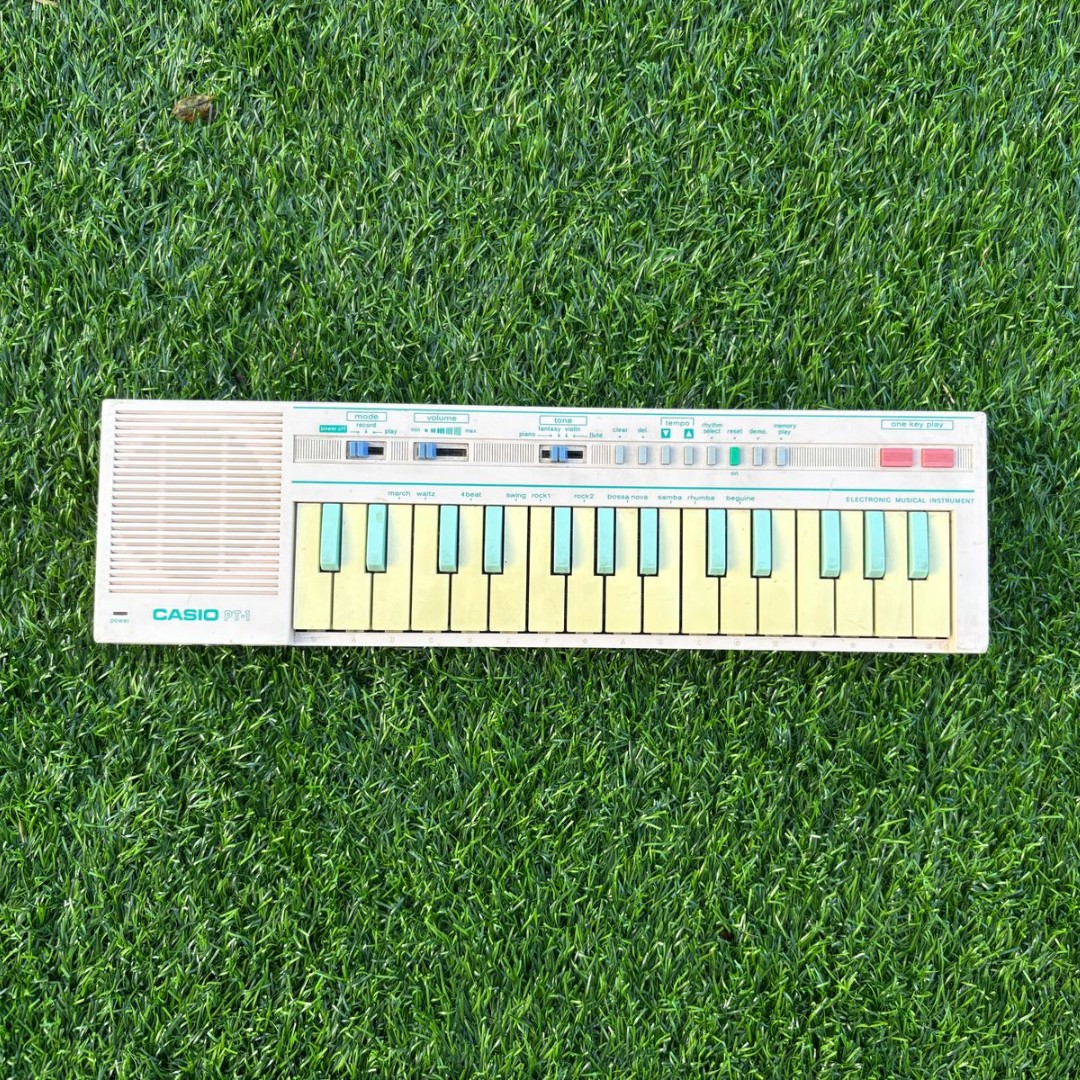
The Casio PT-1, a battery powered mini synthesizer Casio sold between 1982 and 1988, is trading for 85 to 385 dollars on Reverb depending on color and condition. It shares its sound chip with the VL-Tone, the keyboard Teenage Engineering has credited as the ancestor of its OP-1, and it was John Mayer's first instrument, later referenced in his 2026 Hodinkee G-Shock collaboration.
Key Points
- A used Casio PT-1 sells for $85 to $385 depending on color and condition, Reverb listings show.
- The PT-1 runs the same chip as Casio's VL-Tone, the keyboard behind Teenage Engineering's OP-1.
- John Mayer's 2026 Hodinkee G-Shock, the 6900-PT1, closes a trilogy built on his first keyboard.
Casio's PT-1 sold for the price of a nice dinner in 1982, ran on four double A batteries, and just resurfaced on Reverb as proof that the cheapest synth in Casio's old catalog quietly rewired four decades of gear culture. The current listing describes four tones, piano, violin, flute and the still unexplained "fantasy", plus a built in drum machine pulling the same rhythm bank found on period Roland and Korg sequencers. That combination, stuffed into a toy sized keyboard, is why collectors now pay up to 385 dollars for a plastic instrument that once retailed for a small fraction of that.
$85 to $385 Buys the Chip Inside the OP-1
A used Casio PT-1 currently trades for between 85 and 385 dollars on the vintage market, and the spread comes from color and box condition, not function. Every PT-1, whatever shell color it shipped in, runs the same sound chip Casio first put in the VL-Tone, the keyboard Teenage Engineering has credited as the direct ancestor of its own OP-1.
Casio built the PT-1 from 1982 through 1988. In the United States, it was also rebadged and sold through RadioShack as the Realistic Concertmate 300, a detail collectors use to sort early runs from later ones. White units are the common find. Red and blue shells, made in smaller numbers, are the listings pushing prices toward the top of that range, and pastel tagged posts like this Reverb listing are part of why the PT-1 has become its own collecting lane instead of a generic old Casio bin item. The keyboard has 29 mini keys, a built in speaker, a headphone jack, and enough battery life to survive a cross country flight, features that made it a starter instrument in 1982 and still make it a durable studio toy in 2026. Finally Offline has already traced Teenage Engineering's small synth lineage back to a Casio chip once this year, when the 99 dollar Pocket Operator drew in tech buyers who had never touched a synth. A used PT-1 is currently the cheaper way into that same family tree.
John Mayer Finished a Three Watch Trilogy on This Keyboard
John Mayer's first instrument was a Casio PT-1, and in 2026 he closed out a three release Hodinkee collaboration by putting that keyboard's design language on a G-Shock. The watch, the 6900-PT1, borrows the PT-1's dusty blue casing and reuses the peach, coral and turquoise palette from the keyboard's Triple Graph display, following an SK-5 inspired G-Shock in 2020 and a PT-80 inspired model the year after that.
The trilogy is a rare direct line from a 44 year old toy synth to a watch collaboration, and it argues that Casio's early 1980s design language, cheap plastic, primary colors, chunky buttons, has more resale value as a look than most of what replaced it. Mayer did not sample the PT-1 on a record. He put it on his wrist, which is its own kind of credit.
The Drum Machine Was Never the Selling Point, Until Now
The PT-1's built in drum machine draws from the same rhythm bank found on period Roland and Korg sequencers, a detail from the current Reverb listing that most reviews of the keyboard barely mentioned back in 1982. Casio marketed the PT-1 on its four tones and its portability at launch, not its rhythms. The drum patterns were treated as a bonus feature on a toy built for beginners.
Forty four years later, that overlooked drum section is a real part of the resale pitch. Teenage Engineering has kept mining this same Casio chip family all year, most recently when it started stacking loyalty discounts across its OP-1 Field lineup. The PT-1 is the chip family that started that whole lineage, and right now it is cheaper than either of the newer products it inspired.
A 1982 Toy Now Costs More Than Some New Gear
At 385 dollars for a rare color, a mint Casio PT-1 can cost more than a new entry level synth, and buyers keep choosing the plastic original anyway. Reverb's own listings show the spread plainly: common white units clear closer to 85 dollars, while the red and blue runs, made in smaller numbers, are what push prices toward the top end.
No official Casio reissue of the PT-1 currently exists. The only way to own the specific chip that fed into the VL-Tone and, later, the OP-1 lineage is to buy a unit that is now older than most of the people bidding on it.
Casio never built the PT-1 to be collectible. It was a battery powered starter keyboard sold next to calculators, and its drum machine was an afterthought behind four novelty tones. Forty four years later, it sits at the front of a design lineage that runs through the VL-Tone, Teenage Engineering's OP-1, and now a Hodinkee watch that John Mayer helped close out this year. A 385 dollar blue shell on Reverb is not nostalgia pricing. It is the market catching up to a chip that outlived every synth built to replace it.
Related: FENDER PLAYER II ADDS RALLYE ORANGE AND CACTUS GRAY.
Frequently Asked Questions
What is the Casio PT-1?
The Casio PT-1 is a battery powered mini synthesizer Casio sold from 1982 to 1988, with four preset tones, a built in drum machine and 29 mini keys.
How much does a used Casio PT-1 cost?
Reverb listings for a used Casio PT-1 range from about 85 dollars for a common white unit to around 385 dollars for a rare red or blue shell in strong condition.
What sounds does the Casio PT-1 make?
It plays four tones, piano, violin, flute and a sound labeled fantasy, plus rhythm patterns from a built in drum machine.
Is the Casio PT-1 related to the Teenage Engineering OP-1?
Yes. The PT-1 shares its sound chip with Casio's VL-Tone, the keyboard Teenage Engineering has cited as the direct design ancestor of its OP-1.
Was the Casio PT-1 sold under a different name?
In the United States it was also rebadged and sold through RadioShack as the Realistic Concertmate 300.
What is the connection between the Casio PT-1 and John Mayer?
The PT-1 was John Mayer's first instrument, and in 2026 he closed a three release Hodinkee G-Shock collaboration, the 6900-PT1, built around its design.
Does Casio still make the PT-1?
No official Casio reissue of the PT-1 currently exists, which is part of why used units have climbed in price.
Topics: music-gear, john-mayer, teenage engineering, vintage-keyboards, reverb, casio, g-shock, op-1, roland, teenage-engineering, vintage-synthesizer, casio-pt-1