TORKWASE DYSON PAINTS TEN YEARS OF DEEP SEA DIVES
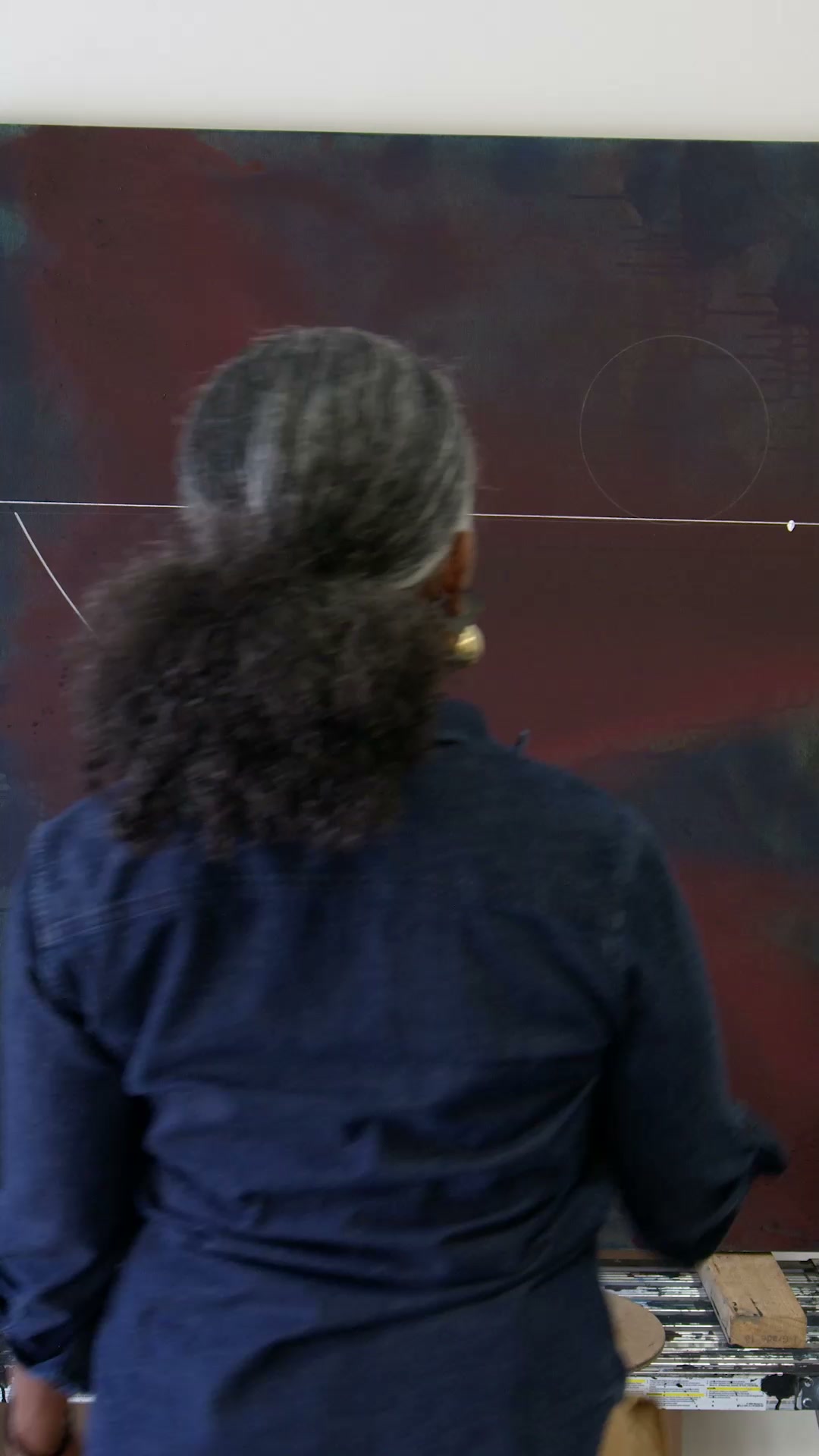
Torkwase Dyson's exhibition Seeing in Blue opened at Pace Gallery's 540 West 25th Street space in New York on September 11, 2026, presenting new paintings built from over a decade of the artist's own scuba diving research. The show runs through October 24, 2026, alongside three other Dyson exhibitions in 2026, a Venice Biennale installation titled Tougaloo, a solo show at York University in Toronto, and a Kunsthaus Bregenz exhibition in Austria.
Key Points
- Torkwase Dyson's Seeing in Blue runs through October 24 at Pace Gallery's Chelsea location.
- The paintings come from over ten years of Dyson's own scuba diving research on five continents.
- Dyson has four institutional shows running at once in 2026, from Chelsea to the Venice Biennale.
The canvases at Pace Gallery's 540 West 25th Street space are not paintings of water so much as paintings of pressure. Torkwase Dyson spent more than ten years swimming and diving across the globe before she put any of it on canvas, and Seeing in Blue, her new show through October 24, reads like research notes from underwater rather than a beach postcard rendered in oil.
Dyson calls the feeling she chased "the beauty of the below," and her thesis is not subtle once you stand in front of the work. Man made objects do not disappear under the ocean, they mutate into it. Seafloor drill factories, artificial reefs, military posts and acoustic surveillance stations share a visual field with coral and current, and Dyson paints them that way, as one continuous system rather than nature interrupted by industry. The palette stays in deep blues and blacks across the series, broken by the occasional flare of a warmer tone where a manmade shape breaks the water's logic.
Ten Years Underwater Before The First Brushstroke
Dyson earned a BFA from Virginia Commonwealth University in 1999 and an MFA in painting and printmaking from Yale in 2003, then spent the next two decades building a body of work around what she calls Black Compositional Thought, a framework for reading how paths, water, architecture and geography get composed by bodies moving through them. Diving became her field research. The paintings in Seeing in Blue are built from haptic memory, diagrammatic drawings, engineering notes and photo journal entries she kept on the dives themselves, closer to a scientist's logbook than a plein air sketch. Pace is also showing a companion film alongside the paintings, built from the same photo journal entries and process poems that fed the canvases, so the gallery visit doubles as a screening rather than a single stop through a hallway of frames.
Her placement history backs up the seriousness of the method. A 2021 Guggenheim Fellowship preceded gallery representation at both Pace and Richard Gray, and her work has moved through the Whitney, MoMA and the Smithsonian National Museum of African Art in group shows before this solo turn. Elizabeth Glaessner's solo room at Perrotin Matignon makes a similar bet this season, a painter given the space to let one idea fill a whole gallery instead of a single wall.
Tougaloo Names Both A College And A Venice Installation
Dyson studied sociology and social work at Tougaloo College before finishing her studio training at VCU and Yale, and in 2026 she titled her large scale installation at the Venice Biennale simply Tougaloo, on view in the Arsenale through November 22. Naming a Biennale commission after the small Mississippi college where her thinking started is the kind of detail that separates an artist repeating a signature style from one still tracing where the style came from. The Mississippi college gets equal billing next to the Arsenale.
Four Exhibitions, One Continuous Argument
Seeing in Blue is one of four Dyson exhibitions running at once in 2026. Her Tougaloo installation continues at the Venice Biennale, a solo show opens at the Joan and Martin Goldfarb Gallery of York University in Toronto through March 2027, and Kunsthaus Bregenz in Austria opens its own Dyson solo in October and runs into 2027. That kind of simultaneous institutional spread, a commercial gallery, a national pavilion adjacent Biennale slot, and two European and Canadian museum solos inside one calendar year, is closer to how the New Museum staged Taryn Simon's ball run across 42 stories than how most painters get shown. The market has not caught up publicly with numbers yet, but the placement math already reads like an artist mid ascent rather than one who arrived.
Frequently Asked Questions
What is Torkwase Dyson's Seeing in Blue exhibition?
It is a new series of paintings by Torkwase Dyson at Pace Gallery's 540 West 25th Street space in New York, on view through October 24, 2026, drawn from her own scuba diving experience.
Where is the Torkwase Dyson Pace Gallery show located?
The exhibition is at Pace Gallery's Chelsea location, 540 West 25th Street in New York City.
When does Seeing in Blue close?
The show runs through October 24, 2026.
What inspired Torkwase Dyson's new paintings?
More than ten years of Dyson's own diving and swimming expeditions, documented through haptic memory, diagrammatic drawings, engineering notes and photo journal entries.
What is Torkwase Dyson's Black Compositional Thought?
It is Dyson's framework for reading how paths, water, architecture and geography are composed by bodies moving through them, developed over two decades of her practice.
Is Torkwase Dyson showing anywhere else in 2026?
Yes, alongside Seeing in Blue she has an installation titled Tougaloo at the Venice Biennale, plus solo shows at York University in Toronto and Kunsthaus Bregenz in Austria.
Where did Torkwase Dyson study?
She studied sociology and social work at Tougaloo College, then earned a BFA from Virginia Commonwealth University in 1999 and an MFA from Yale in 2003.
Topics: venice-biennale, moma, painting, pace gallery, black-compositional-thought, guggenheim, torkwase-dyson, gallery-exhibition, dyson, new-museum, chelsea-galleries, contemporary-art, perrotin, new museum, pace-gallery