THE CUSTOMER JOURNEY IS DEAD AND SELLING IN 2026 LOOKS NOTHING LIKE 2020

THE CUSTOMER JOURNEY IS DEAD HOW TO SELL IN 2026. AI search engines now dominate customer research, bypassing traditional brand touchpoints. Google identifies f.


Key Points
- AI search engines now dominate customer research, bypassing traditional brand touchpoints
- Google identifies four fluid behaviors that define modern customer activity: streaming, scrolling, shopping, searching
- Leading brands like Amazon map life activities rather than purchase journeys to embed into daily routines
The customer journey is having its Wikipedia moment. You know, when everyone suddenly realizes something they've accepted as gospel is completely wrong.
CX leaders need to redesign their approach to the customer journey because "your journey can't start at your website" or "on social media." Instead, they must acknowledge that a large percentage of people are doing primary research within an AI answer engine.
The Bumblebee Problem
For decades, brands mapped the "customer journey" like a well-behaved road trip with a clear starting point and logical path to purchase. But the reality in 2025 looks nothing like that tidy funnel. Today's consumers are buzzing, hopping, swiping, streaming, buying, pausing, searching, and sharing all at once.
Google organizes consumer behavior around four fluid, overlapping behaviors: streaming, scrolling, shopping, and searching. These are not siloed steps but ambient behaviors that define modern life. Consumers move fluidly between them, often within minutes, sometimes all at once.
The funnel is dead. Welcome to the swarm.
Shopping-related searches on generative AI platforms grew 4,700 percent between 2024 and 2025. Your customers aren't following your carefully crafted journey anymore. They're getting product recommendations from ChatGPT before they even know your brand exists.
The Activity Revolution
Amazon doesn't just map buying journeys. It maps life activities: shopping, watching, reading, listening, eating, hosting, gaming. They aim to serve all of it. Same with Apple. Same with Google.
These companies don't just reduce friction. They reshape activity systems, embedding their brand into the rhythm of everyday life.
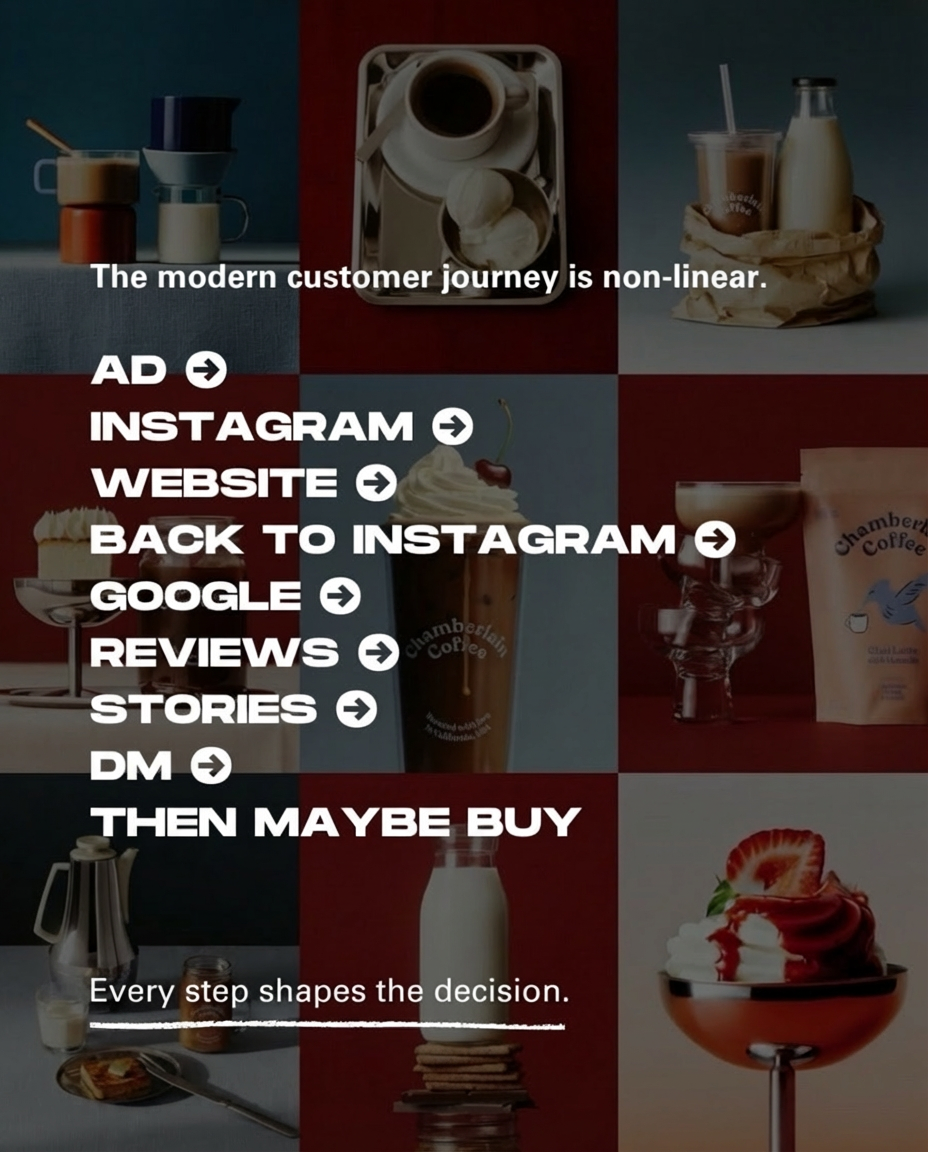
In 2026, customer journeys are non-linear networks where buyers move fluidly between channels, devices, and contexts. Illuminating the customer journey black hole is the only way to see where these paths are actually leading.
Agentic AI is the latest development, referring to autonomous AI shopping agents that can complete multi-step tasks, conduct research across multiple sites, and even complete checkout on customers' behalf. OpenAI announced a partnership with Etsy and Shopify to allow users to check out directly through ChatGPT. The value is predicted to grow by $3-5 trillion by 2030.
What Actually Works Now
In 2026 the focus will shift from adoption to strategic integration. The most successful merchants will use AI to scale their business, removing internal and external friction points to make the buying journey seamless and personal for shoppers that builds trust and drives loyalty.
Economic pressures are still weighing down consumers, causing them to prioritize value and price above their loyalty to a brand. The brands winning this moment aren't just optimizing touchpoints. They're becoming infrastructure for how people live.
Stop mapping journeys. Start understanding activities. Use AI not just to predict behavior but to participate in it. Build systems that enhance customer actions, not just track them.
The customer journey isn't broken. It never existed the way we thought it did. The sooner brands accept this reality, the sooner they can start building something that actually works.
Related Reading
- What Drake's ICEMAN Rollout Actually Cost and What It Earned
- ACTUAL SOURCE'S 'NO FINISH LINE' RETURNS FOR A 3RD EDITION
- Allen Iverson Spent the Fortune and Kept the Culture
Frequently Asked Questions
What is replacing the traditional customer journey model in 2025?
The traditional customer journey funnel is being replaced by a fluid, overlapping model based on four ambient behaviors: streaming, scrolling, shopping, and searching. Rather than following a linear path, modern consumers move fluidly between these behaviors often within minutes or simultaneously, creating what experts call a 'swarm' rather than a funnel.
How much did shopping searches on generative AI platforms grow?
Shopping-related searches on generative AI platforms grew 4,700 percent between 2024 and 2025, indicating a massive shift in where customers conduct primary research before discovering brands.
Why is AI search changing how customers discover products?
AI answer engines like ChatGPT are now the primary research tool for many customers, bypassing traditional brand touchpoints entirely. Customers are receiving product recommendations from AI platforms before they even know a brand exists, making these platforms critical to the early discovery phase.
What does Amazon's approach to customer mapping teach us?
Amazon maps life activities such as shopping, watching, reading, listening, eating, hosting, and gaming rather than just purchase journeys. This approach allows brands to embed themselves into customers' daily routines across multiple contexts rather than waiting for them at predetermined touchpoints.
Where should customer research now start instead of on websites?
Customer research now starts within AI answer engines and search platforms rather than on brand websites or social media. CX leaders must acknowledge that a large percentage of people conduct primary research through generative AI platforms, requiring brands to redesign their approach to be discoverable in these spaces.
Topics: shopify, culture, commerce, openai, trends, business, google, drake, apple, marketing, chatgpt