STONE ISLAND'S Q100045 JACKET IS 60% RECYCLED COTTON
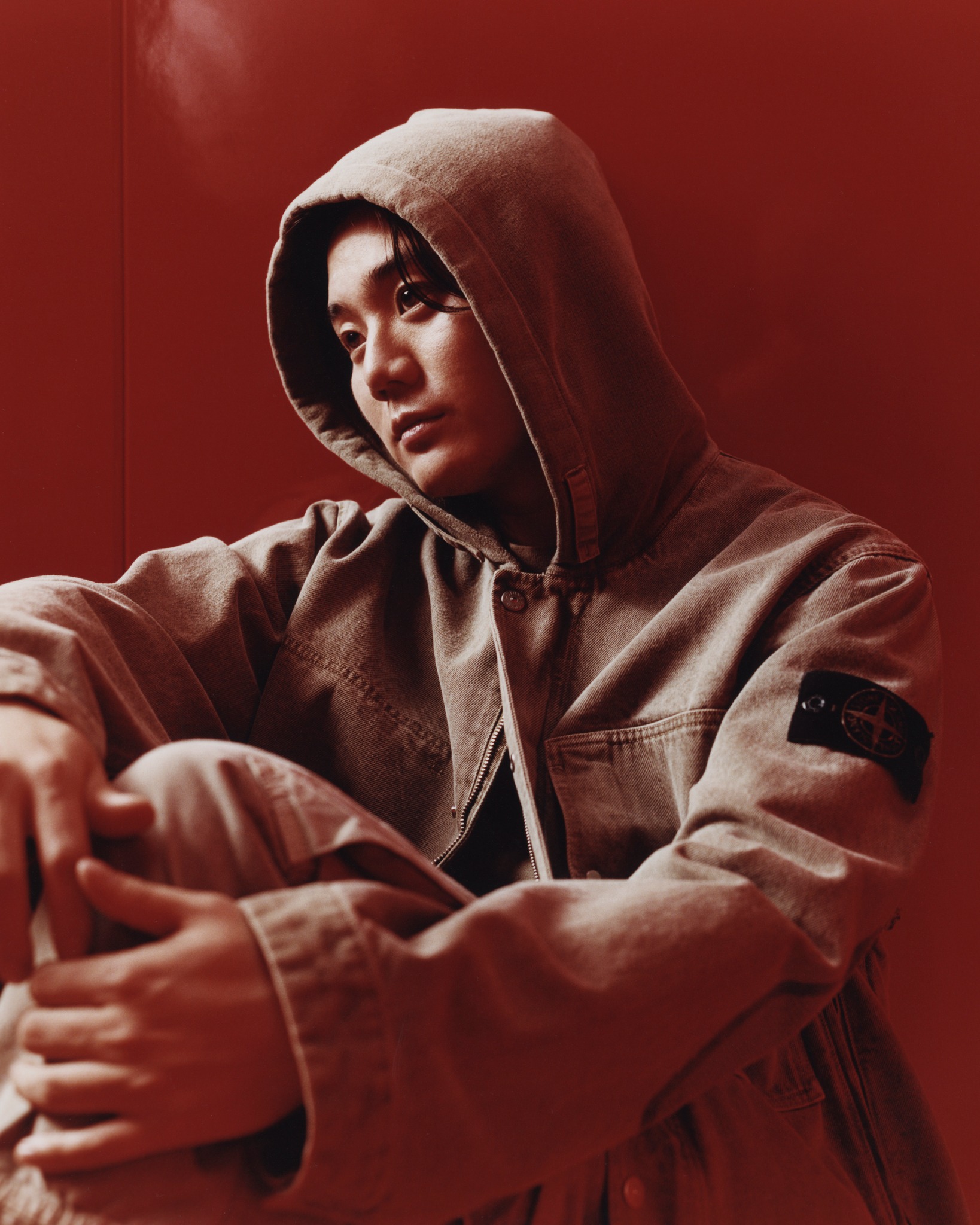
Stone Island's Q100045 Mineral Dyed Cotton Gabardine TC hooded jacket, worn by Seoul photographer Simjae in the brand's Autumn Winter 2026 campaign, blends 60% recycled cotton yarn reclaimed from its own production scraps with 40% conventional cotton. The jacket is garment dyed with inorganic pigments derived from industrial iron oxide, a mineral dyeing method tied to Stone Island's Ravarino research lab, which has logged more than 60,000 dye recipes since 1982.
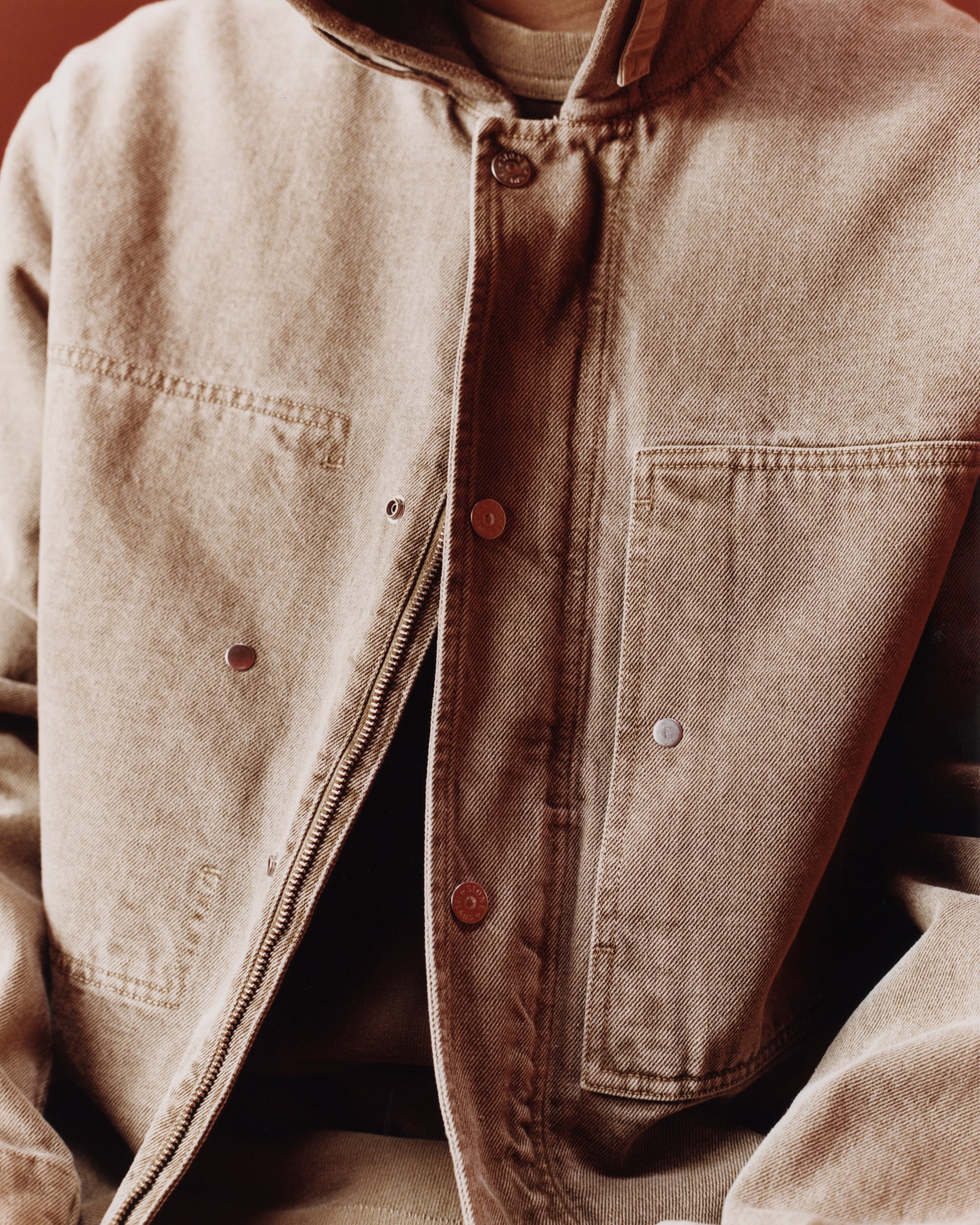
Key Points
- Q100045's gabardine blends 60% recycled cotton yarn reclaimed from Stone Island's own cutting scraps.
- The mineral dye uses inorganic iron oxide pigments, the same recipe class the Ravarino Lab has logged since 1982.
- Photographer Heikki Kaski shot Simjae backstage in the jacket for Stone Island's Autumn Winter 2026 campaign.
Cotton scraps pulled from Stone Island's own cutting room floor make up sixty percent of the yarn inside Q100045, the hooded jacket photographer Simjae wears in the brand's Autumn Winter 2026 campaign. That ratio and the jacket's dusted, iron oxide dye job are the same argument Stone Island has been making since Massimo Osti opened a dye lab in 1982: color and sustainability are research problems, not marketing lines. The fabric makes that case before anyone reads a caption.
The color itself is worth pausing on: a dusted sandstorm gray built from iron oxide pigments recovered out of an industrial dye process most brands would simply call waste.
The Yarn Was Cotton Before It Was Cotton Again
Q100045 Mineral Dyed Cotton Gabardine TC is spun from a blend of sixty percent recycled cotton yarn and forty percent conventional cotton. Stone Island selects cutting scraps from its own production chain, reprocesses them, and blends them into a new yarn that still carries at least half recovered material by the time it reaches the loom.
The gabardine is heavy and densely woven, the kind of cloth that holds a crease and a dye bath rather than draping soft. That density matters here because the jacket is garment dyed whole, after construction, so a heavier weave takes the mineral pigment more evenly and ages with a patina instead of a fade. Stone Island has treated color as a research problem since Massimo Osti opened the Ravarino lab in 1982, and the facility has since logged more than 60,000 dye recipes. The iron oxide mix on Q100045 reads like the newest page in that same notebook, not a seasonal one off.
Simjae Was Archiving Stone Island Before He Modeled It
Simjae is a Seoul based photographer, the founder of the magazine archive Hugan Books, and the fifth subject in Stone Island's Community as a Form of Research portrait series. He is also the person who directed a special Stone Island issue of Visla Magazine that paired behind the scenes footage from the Ravarino headquarters with an editorial on Seoul's youth subcultures, so the brand did not simply cast a face for Q100045. It cast someone who had already spent time inside the archive he is now photographed wearing.
Finally Offline covered Simjae's place as the fifth subject in that portrait series when the formal campaign image ran, credited to photographer David Sims. This behind the scenes set is a different picture with a different credit. It carries a byline for Heikki Kaski, a photographer who shoots mostly in Northern Europe, and it puts Simjae on set rather than against a studio backdrop. Stone Island runs the same research logic through its music arm, Sound as a Form of Research, the label that pressed a vinyl edition of rapper Navy Blue's album Sir Render this July.
The Elbow Patch Repeats the Same Recipe
Q100045 carries a printed elbow patch that references Stone Island's earliest garment dyed pieces from the 1980s, and it is finished with the identical iron oxide recipe used on the rest of the jacket. The pigment is mineral, not synthetic, built from industrial iron oxide blended into a soft, chalky range of natural tones. That single detail is the entire argument for garment dyeing as a technique: the patch and the body of the jacket age together as one piece of cloth instead of a logo printed on top of a separate color.
The finish belongs to a wider AW26 segment built around the element of soil. It is not a wash effect chased with chemicals. It is a pigment choice that looks worn on day one.
Q100045 Trades Speed for Weight
Q100045 is the heavy cotton half of Stone Island's Autumn Winter 2026 lineup, built to hold color rather than shed water. It sits opposite Q100019, the Light Nylon 3L TC shell the brand released earlier in the same season, a three layer laminate engineered to move fast and still survive a garment dye bath without losing its waterproofing.
Both jackets go through Stone Island's Research Department dye process, but they solve different problems. Q100019 dyes a technical shell without ruining the membrane. Q100045 dyes a cotton gabardine heavy enough to earn a worn in look the first time it leaves the rack. Seeing both released in the same season says more about the brand's dye lab than either jacket says alone, and it is the kind of range a fast fashion line cannot fake with a single recycled capsule.
Buy the Yarn Story, Not the Casting
Q100045 is worth taking seriously for what is literally in the cloth: sixty percent recycled cotton yarn and a mineral dye recipe descended from a lab that has logged more than 60,000 formulas since 1982. It is not worth taking seriously because Simjae, a photographer whose own archive work already overlapped with Stone Island's, happened to be cast in it.
Buy it for the fabric research. Skip it if the only draw is the campaign's casting choice, because the yarn and the iron oxide recipe will outlast this interview cycle by several seasons, and Stone Island's dye lab will still be logging new formulas long after the portrait series moves on to a sixth subject.
Related: NICK LOVE WEARS STONE ISLAND'S 4100064 GABARDINE JACKET.
Frequently Asked Questions
What is the Stone Island Q100045 jacket made of?
Q100045 Mineral Dyed Cotton Gabardine TC is spun from 60% recycled cotton yarn and 40% conventional cotton, using scraps reclaimed from Stone Island's own production chain.
How does Stone Island's mineral dye process work?
Stone Island garment dyes Q100045 after construction using inorganic pigments derived from industrial iron oxide, giving the jacket a dusted, sandstorm gray finish rather than a synthetic dye color.
Who is Simjae, the photographer wearing the jacket?
Simjae is a Seoul based photographer and the founder of the magazine archive Hugan Books, and he is the fifth subject in Stone Island's Community as a Form of Research portrait series.
Who photographed Simjae in the Stone Island campaign?
The formal Community as a Form of Research portrait was shot by David Sims, while a separate behind the scenes set of Simjae in the jacket carries a photography credit for Heikki Kaski.
Is the Stone Island Q100045 jacket part of AW26?
Yes, Q100045 is a hooded jacket from Stone Island's Autumn Winter 2026 collection, released under the brand's ongoing Compass Inside campaign umbrella.
Where can I buy the Stone Island Q100045 jacket?
Q100045 is listed on Stone Island's official website as part of the coats and jackets collection within its Autumn Winter 2026 lineup.
What is Stone Island's Ravarino dye lab?
The Ravarino lab is Stone Island's research facility in Emilia Romagna, Italy, founded alongside the brand by Massimo Osti in 1982, and it has logged more than 60,000 dye recipes since.
Does Q100045 use recycled materials?
Yes, Q100045's gabardine blends recycled cotton yarn reclaimed from Stone Island's own cutting scraps with conventional cotton at a 60 to 40 ratio.
Topics: heikki-kaski, sustainable-fashion, aw26, stone-island, stone island, recycled-cotton, q100045, community-as-a-form-of-research, mineral-dyed-cotton-gabardine, simjae, the-compass-inside