ROTHKO NO. 15 SOLD FOR $98.4M AT CHRISTIE'S
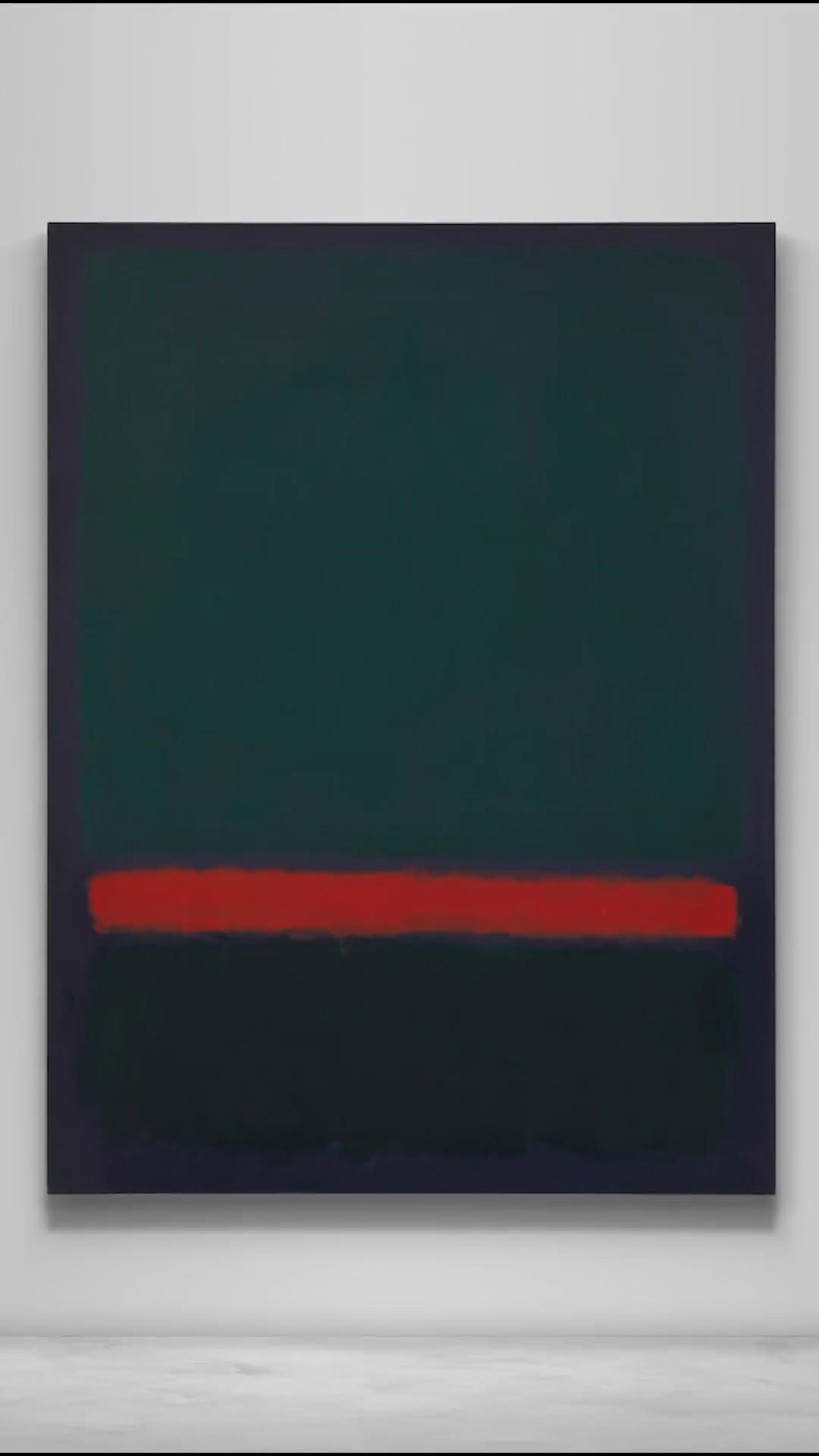
Mark Rothko's No. 15 (Two Greens and Red Stripe), a seven-foot 1964 canvas, sold for $98.4 million with fees at Christie's New York on May 18, 2026, setting a new auction record for the artist. It surpassed the $86.8 million record set by Orange, Red, Yellow in 2012. The seller was Agnes Gund, who bought it directly from Rothko in 1967.
Key Points
- Rothko's No. 15 sold for $98.4M with fees at Christie's, a new auction record for the artist.
- It broke the $86.8M record set by Orange, Red, Yellow at Christie's in 2012.
- Seller Agnes Gund bought the painting directly from Rothko in 1967 and held it 58 years.
Eighty-five million dollars was the hammer. Ninety-eight point four million was the number that mattered, fees included, and it landed on a Monday night at Christie's in Rockefeller Center. A seven-foot Rothko from 1964 had just become the most expensive work the artist has ever sold at auction, and the room knew it before the gavel finished moving.
The thesis is simple. This sale was not about a painting changing hands. It was about a specific canvas, from a specific collection, resetting the ceiling for postwar American art at the exact moment people had started asking whether that category had peaked.
$85 Million Hammer, $98.4 Million Total
Mark Rothko's No. 15 (Two Greens and Red Stripe) sold for an $85 million hammer, $98.4 million with buyer's premium, on May 18, 2026. That broke Rothko's previous auction record of $86.8 million, set by Orange, Red, Yellow at the same house in 2012.
Fourteen years is a long time for a blue-chip record to stand. When a 1961 Rothko set the bar and a 1964 Rothko finally cleared it, the message to the market was not subtle. The ceiling moved roughly thirteen percent, and it moved on a canvas the seller had owned for more than half a century.
Two Greens, One Red Stripe, Seven Feet Tall
The painting is exactly what its title promises and far more than that in person. Two deep green rectangles hover one above the other, interrupted by a single horizontal band of red, all of it suspended over a hazy ground of violet and ultramarine.
Stand close and the edges stop being edges. Rothko feathered the borders so the greens seem to breathe against the blue, the color arriving before the shape does. This is the contemplative, slow-burn register of his final decade, not the hot orange and yellow that set the old record. It asks you to stand still. Most people in a salesroom do not, which is part of why this kind of late Rothko rewards the same patience a museum trains, the slow looking that KAWS FAMILY at SFMOMA staged for a very different crowd. The people bidding had already done that looking, probably in private, probably for years.
Agnes Gund Bought It From Rothko in 1967
The provenance is short, which is the most expensive thing about it. Agnes Gund, the MoMA president emerita and one of the most influential patrons in American art, bought No. 15 directly from Rothko in 1967, three years before the artist died in 1970.
That detail is the whole game. Until this week the painting was one of only seven Rothkos acquired straight from the artist that still remained with their original buyer. A work with no messy resale history, no flipping, no speculative churn carries a purity the market pays a premium for. You were not buying a Rothko. You were buying the Rothko Agnes Gund chose to live with for nearly sixty years.
Christie's Cleared $1.1 Billion That Week
The Rothko did not sell into a vacuum. Christie's moved roughly $1.1 billion in art across its May New York sales, and the Gund material anchored the narrative. One collection, three masterpieces, an estimate near $150 million on its own.
A single estate of this pedigree does more than print totals. It tells every other potential consignor that the top of the market is liquid again, that trophy postwar work still clears nine figures when the provenance is clean. That is how a record sale becomes a market signal rather than a one-off, the gallery-scale version of which is a blue-chip roster show like Gagosian's Aura at the 61st Venice Biennale. Auction just does it with a number nobody can argue with.
What the Record Actually Signals
The takeaway is not that Rothko is expensive. The takeaway is that the 2012 record needed a 1964 canvas and a near-sixty-year provenance to fall, which means the bar for breaking it again just got higher. Trophy abstraction is not appreciating broadly. It behaves less like the wider art market and more like a grail sneaker or a vintage Patek, where value concentrates at the very top on the cleanest examples and thins out fast below them.
So here is the read. Expect sellers of single-owner postwar collections to come off the sidelines now that $98.4 million is on the board, and expect the next Rothko without Gund-level provenance to undershoot this number badly. The market did not just reprice Rothko. It repriced the gap between a great painting and a great painting nobody has touched since 1967.
Related: BASQUIAT'S ANCIENT SCIENTIST HEADS TO HONG KONG SEPT 29.
Related: FRIDA KAHLO CLAIMED 1910 AS HER BIRTH YEAR.
Related: MARK ROTHKO'S SON CURATES FLORENCE RENAISSANCE exhibition.
Frequently Asked Questions
How much did Rothko's No. 15 sell for?
It sold for an $85 million hammer price, or $98.4 million including buyer's premium, at Christie's New York on May 18, 2026.
Is this a record for Rothko?
Yes. It is the most expensive Rothko ever sold at auction, breaking the $86.8 million record set by Orange, Red, Yellow at Christie's in 2012.
Who owned the painting?
Agnes Gund, MoMA president emerita, who bought it directly from Rothko in 1967. It was one of only seven Rothkos still held by their original buyer.
Topics: christies, abstract-expressionism, rockefeller-center, mark-rothko, art-market, moma, sfmoma, agnes-gund, gagosian, stripe, postwar-art, auction-record