RAHUL GHERA'S DYALI JOINS ARCHITECTURAL DIGEST'S LIST
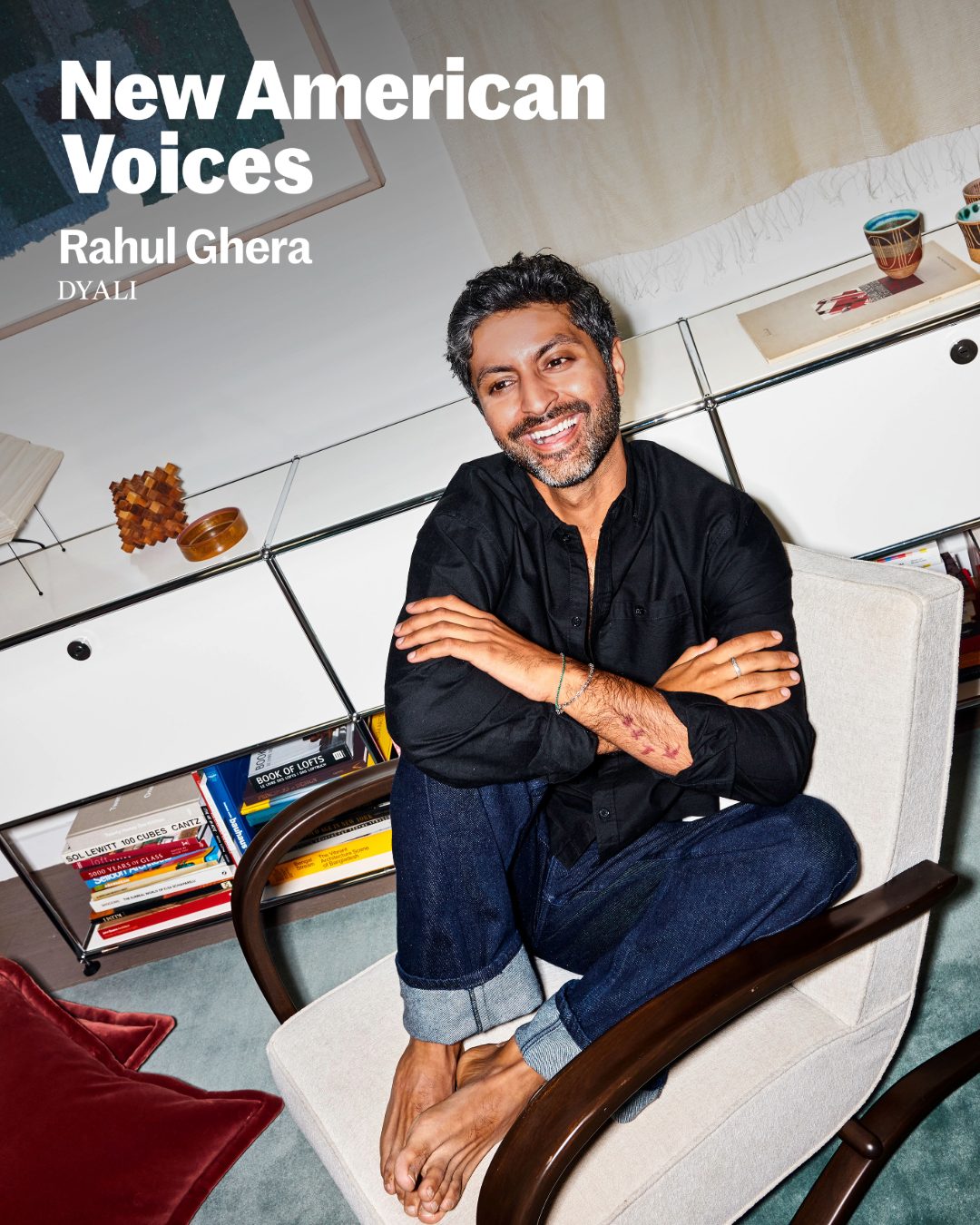
Architectural Digest named Rahul Ghera, founder of the Brooklyn based studio Dyali, one of nine New American Voices for 2026. Dyali is named after Ghera's great grandmother, who ran his family's New York and Mumbai hand embroidery business, and its project range spans a 550 square foot studio to a combination of four separate apartments into one home.

Key Points
- Rahul Ghera, founder of Dyali, is one of Architectural Digest's nine New American Voices for 2026.
- Dyali is named after Ghera's great grandmother, who ran the family's New York and Mumbai embroidery business.
- The studio's projects range from a 550 square foot space to a combination of four separate apartments.
Rahul Ghera has designed a 550 square foot studio and a project that combined four separate apartments into one home. Most designers build a reputation at one end of that range and stay there. Architectural Digest just named him one of nine New American Voices for 2026, and the argument for including him rests on the fact that he works comfortably at both extremes.
Ghera Works at 550 Square Feet and at Four Combined Apartments
A 550 square foot studio gives a designer almost no room for error. Every square foot has to justify itself, and a single bad decision, a cabinet that opens the wrong way, a sofa that blocks a sightline, reads immediately in a space that small. Combining four apartments into one is the opposite problem entirely: too much space to make cohesive, four separate structural grids, four sets of plumbing and load bearing walls, and the job of making it read as one home instead of four stitched together.
Dyali has taken on both jobs, according to the studio's own account of its work. That range is the actual credential here, more than either project alone. A firm that only does small spaces has learned constraint. A firm that only does combined apartments has learned scale. Ghera's studio claims both, in the same five years since it opened, the same instinct Tom Sachs applied at architectural scale when he built a full size, handmade recreation of Chanel's Paris flagship rather than a model of it. Craft logic does not usually survive a jump in scale intact. Both projects are arguments that it can.
Dyali Is Named After a Woman Who Never Saw the Studio
Ghera named his firm after his great grandmother, the matriarch behind his family's New York and Mumbai based hand embroidery business. He grew up around that business and has said it showed him how fine craft can carry different forms of expression depending on where it is applied, whether to a garment or, eventually, to a room. Launching a design studio under her name in 2020 makes the connection explicit rather than decorative: a house named after an embroiderer is a stated bet that hand craft logic transfers to interiors.
That kind of framing separates Dyali from a portfolio built purely on square footage or client names. The firm is arguing that a stitch and a room detail come from the same instinct, and naming the company after the person who taught him that instinct is a public claim he now has to keep proving on every project.
New American Voices Picked Nine Designers, Not One Aesthetic
Architectural Digest's New American Voices list runs nine designers for 2026, photographed by Amy Lombard with words by Samuel Cochran, and Ghera's inclusion sits alongside eight others working in different regions and registers. A list built around range rather than a single look is the harder one to make, because there is no shared aesthetic shorthand to lean on. Editors have to argue for each name individually.
The counterpoint is real: a 550 square foot studio and a four apartment combination prove a designer can handle scale, not that either project is objectively excellent. Range is not automatically quality. A furniture maker can show the same range without a single square foot changing hands, the way Vitra unveiled two new chairs at once at this year's London Design Festival rather than betting a whole showroom on one silhouette. But Architectural Digest's own selection criteria for the list rewards exactly that kind of breadth, and Dyali's project list is built to answer that specific question rather than to win a single style award.
The Studio's Bet Only Holds If the Small Room Proves It
A named lineage is easy to claim and hard to defend project by project. If Ghera's small spaces read as generic once the embroidery story is stripped away, the great grandmother framing collapses into marketing copy. If they still read as considered, hand worked and specific at 550 square feet with no room to hide a weak decision, the name earns its place on the door. The studio is betting that craft heritage, not square footage, is the throughline worth naming a company after, and the smallest room in its portfolio is the one place that bet has nowhere to hide.
Frequently Asked Questions
Who is Rahul Ghera?
Rahul Ghera is the founder of Dyali, a Brooklyn based architecture and interior design studio, named one of Architectural Digest's nine New American Voices for 2026.
What is Dyali design studio?
Dyali is a full service architecture and interior design studio founded by Rahul Ghera in 2020, with projects across New York, Los Angeles, San Francisco, Miami and India.
Why is Dyali named Dyali?
Ghera named the firm after his great grandmother, the matriarch behind his family's New York and Mumbai based hand embroidery business.
What is Architectural Digest's New American Voices list?
It is Architectural Digest's 2026 feature spotlighting nine designers, photographed by Amy Lombard with words by Samuel Cochran.
What kind of projects has Dyali designed?
Dyali's work spans a 550 square foot studio apartment and a project combining four separate apartments into one home.
Topics: rahul-ghera, architectural-digest, dyali, interior-design, brooklyn-design, new-american-voices, vitra, chanel