GLENN ADAMSON BRINGS NIKE'S ARCHIVE TO MAD
Glenn Adamson and Nike's Nick Schonberger are scheduled to discuss the Nike archive at MAD on September 19, 2026, at 4 PM Eastern. The sold out conversation accompanies Nike: Form Follows Motion, on view through March 7, 2027.
Key Points
- Glenn Adamson and Nike's Nick Schonberger are scheduled at MAD on September 19, 2026, at 4 PM Eastern.
- MAD lists the talk as sold out; Nike: Form Follows Motion continues through March 7, 2027.
- The exhibition includes a 1981 mechanical Shox prototype, while the talk imagery includes a 1972 Swoosh drawing.
Glenn Adamson brings Nike's archive to a sold out conversation at the Museum of Arts and Design on September 19, 2026, at 4 PM Eastern. He is joined by Nick Schonberger, Nike's senior director of relationships and culture in brand communications. The strongest reason to listen is the unfinished material: prototypes and drawings can explain a design decision more precisely than a finished shoe on a pedestal.
The event accompanies Nike: Form Follows Motion, which opened at MAD on September 12 and runs through March 7, 2027. Adamson curated the exhibition with Marcella Hanika. The show gives a New York audience access to objects usually held within the company's Department of Nike Archives.
1972 dates a drawing, not the Swoosh's birth
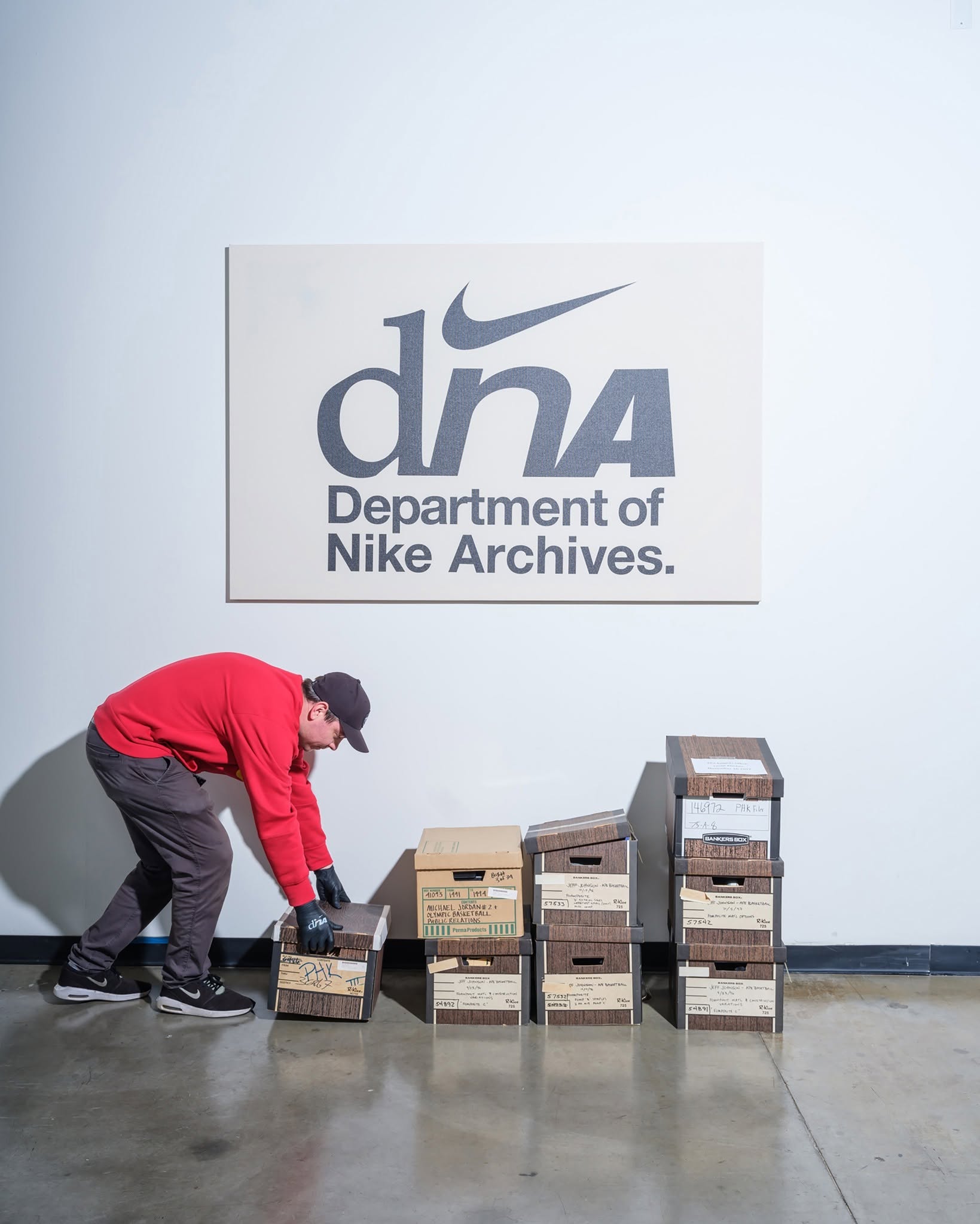
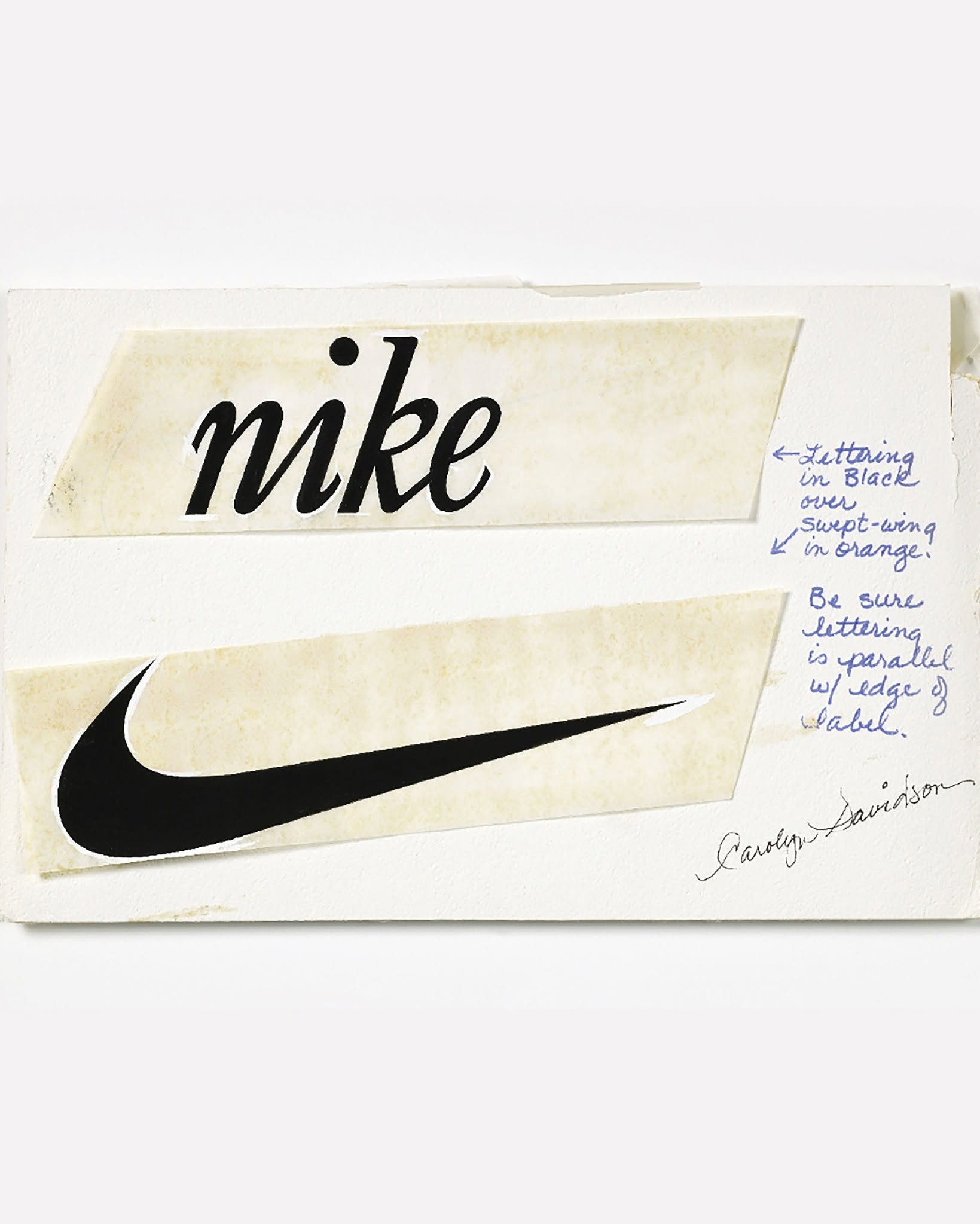
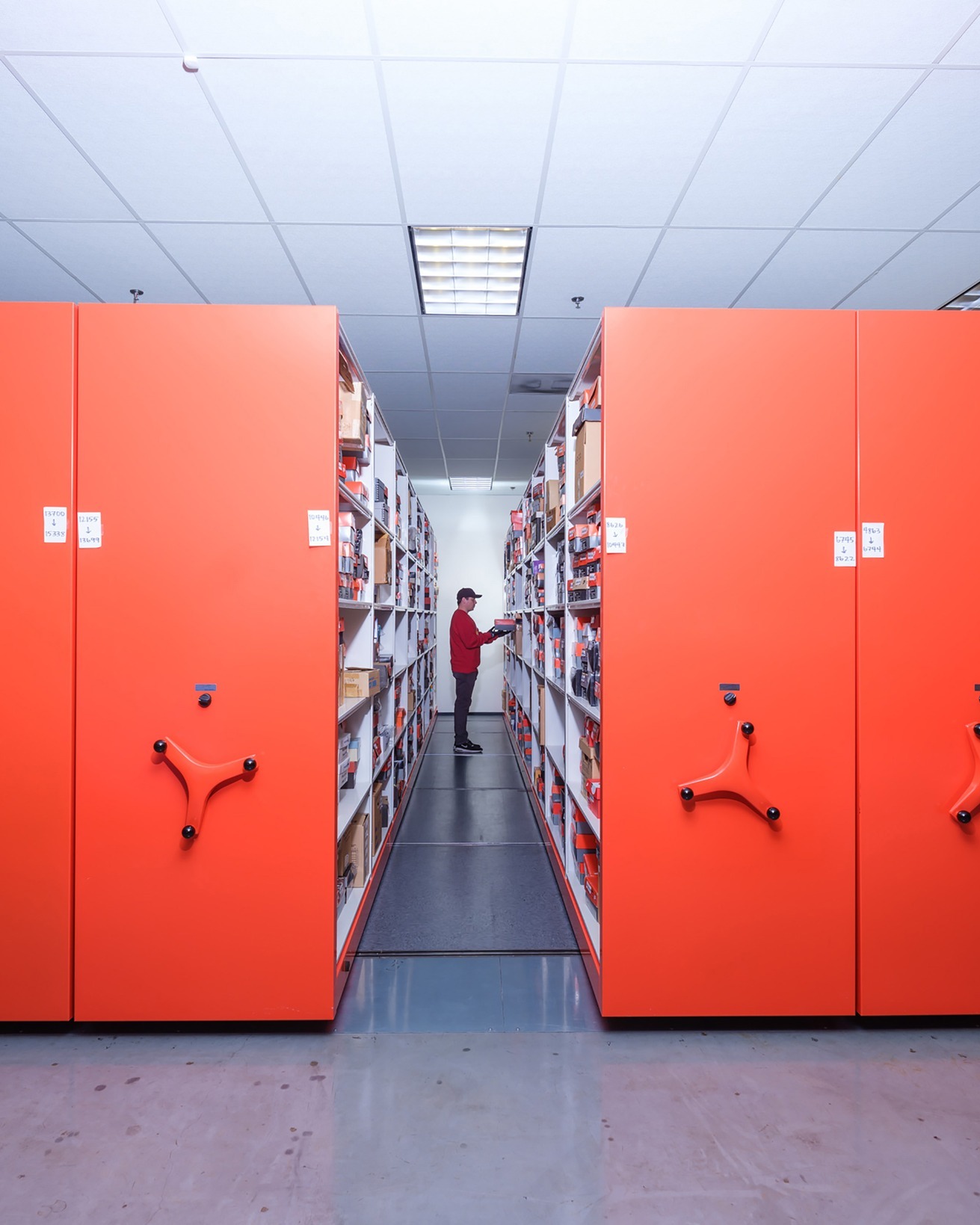
MAD's images for the conversation include a Carolyn Davidson drawing of the original Swoosh dated 1972, alongside Alastair Philip Wiper's 2024 photographs of archive storage. The year on that particular drawing should not be mistaken for the date Davidson first created the mark.
Finally Offline's Nike Swoosh archive account traces the design to 1971. That distinction is small but useful: an archive contains later drawings, records and versions of an idea as well as its first appearance. One object's date cannot automatically stand in for the entire history.
Wiper's photographs show the labor behind keeping those distinctions available. Files being returned to storage and rolling stacks are part of the material the museum chose to place beside Davidson's drawing. Boxes and shelving can look peripheral until a researcher needs to establish which version came first.
The museum's promotion describes an archive containing more than 250,000 objects. The number explains the scale of the selection problem, but it cannot tell a visitor whether the objects on display are representative. Adamson's job is to make his choices readable; access to a large collection is the starting condition.
Prototypes interrupt the finished shoe
MAD's exhibition announcement identifies a mechanical Shox prototype from 1981 among the objects on view. Vitra Design Museum's account of the exhibition also highlights experimental work connected with Waffle, Air Force and Shox footwear, including sketches and prototypes.
An experimental shoe preserves questions that a retail pair has already concealed. Its construction can show a cushioning idea before the surrounding design looks settled. The value lies in what a viewer can inspect, not in assuming every experiment was a necessary step toward a commercial success.
That makes the exhibition a useful companion to Nike's Air Works residency at the Philip H. Knight Campus. Our earlier report followed eight designers working on footwear with Zellerfeld's printing technology. The residency and the archive sit at different ends of the process: one records designs in development, while the other determines which traces of development remain available.
The museum route has a design argument of its own. JA Projects organized the original Vitra presentation around Track, Air, Sensation and Relation, with graphics by Daniel Streat. Its account describes exposed frames and modular showcases built to be disassembled, adapted and used again.
That construction gives the traveling show a material consistency with its subject. Nike prototypes reveal the work behind a shoe; JA Projects lets the support structure remain visible around the exhibits. The correspondence is more persuasive than a room designed only to reproduce the atmosphere of a flagship store.
Nick Schonberger adds an institutional viewpoint
Schonberger enters the conversation from Nike's brand communications team, while Adamson brings his role as exhibition curator. MAD's biography also notes Schonberger's graduate training in American material culture at Winterthur, giving the discussion an overlap between corporate knowledge and object study.
The combination promises access to different kinds of detail. Schonberger can describe the company's cultural work; Adamson can explain how an object earns its position in a museum exhibition. Nike's involvement also gives the conversation a clear institutional limit: a company participant is helping interpret the company's own history.
In Vitra's original exhibition statement, Adamson said, “By looking at Nike’s design strategies, we gain insights into that bigger cultural picture.” A strong museum conversation should make those connections specific. Which prototype altered the next design? Which use did athletes or wearers introduce that the designers had not anticipated?
Finally Offline's coverage of Brandon Jinx Jenkins' LINEAGE exhibition offers a narrower comparison, following the Foamposite through an exhibition devoted to one shoe family. MAD's broader survey has to preserve that level of attention while moving across decades and product categories.
The 1981 Shox prototype and the 1972 Davidson drawing provide a good standard for the September 19 talk. Both reward a precise explanation from Adamson of what an object is and when it belongs. Adamson and Schonberger have better material than a parade of finished hits; the conversation earns its museum setting by showing what those earlier versions can still teach.
Frequently Asked Questions
What is Glenn Adamson's Nike talk at MAD?
Discoveries in Nike's Design Universe is a conversation between exhibition curator Glenn Adamson and Nike's Nick Schonberger about the archive and Nike: Form Follows Motion.
When is the conversation scheduled?
MAD lists September 19, 2026, at 4 PM Eastern.
Can I still book a ticket to the talk?
MAD's event listing marks the September 19 conversation as sold out.
Who is Nick Schonberger?
Schonberger is Nike's senior director of relationships and culture in brand communications. MAD also notes his graduate training in American material culture at Winterthur.
When does Nike: Form Follows Motion close at MAD?
The New York exhibition runs through March 7, 2027.
Who designed the Nike Swoosh?
Carolyn Davidson created the Swoosh in 1971. MAD's event imagery includes a drawing of the mark dated 1972.
What prototype is highlighted in the exhibition announcement?
MAD identifies a mechanical Shox prototype from 1981 among the exhibition's objects.
Topics: new-york, exhibitions, museum-of-arts-and-design, glenn-adamson, vitra, carolyn-davidson, nike, footwear-design, vitra design museum, vitra-design-museum, nike-archives