OPENAI'S DOTS RUN ON THEIR OWN COMPUTERS TO CHASE META'S MUSE
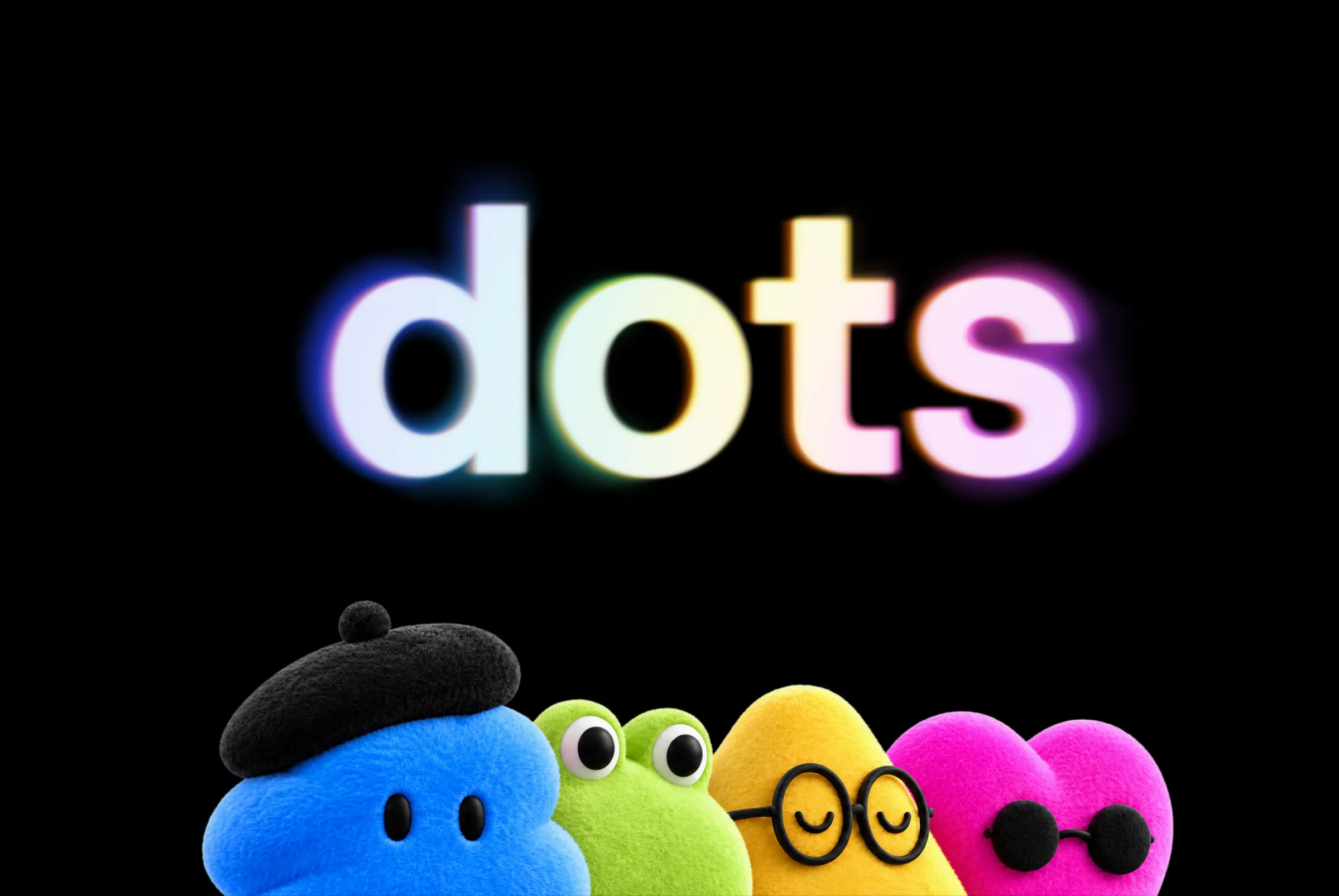
OpenAI announced Dots at its Dev Day event on September 29, 2026. Dots are personal agentic assistants powered by GPT 6 Astra that run continuously, each on an isolated cloud computer with its own virtual browser, connected to more than 4,000 apps through OpenAI plugins. Users message or call a dot inside ChatGPT on desktop, web and mobile, and the dot reports progress and asks for decisions. In background operation a dot is read only across connected apps and cannot send emails or alter external files without explicit authorization. At launch, Pro, Business, Premium and Enterprise users in select markets receive one primary dot they can name, with multiple dots planned. The launch follows Meta's Muse personal agent, released September 8, 2026, which runs on a Muse Secure VM, offers a free tier plus paid tiers at 20 and 100 dollars a month, and reported 2.5 million downloads in about thirteen days.
Key Points
- OpenAI launched dots at Dev Day, always on personal agents powered by GPT 6 Astra, each running on its own isolated cloud computer with a virtual browser and access to more than 4,000 apps.
- Users can message or call a dot inside ChatGPT on desktop, web and mobile, and the dot can message back with progress, questions and decisions that need a person.
- While working in the background a dot is read only across connected apps and cannot send emails or alter external files without explicit authorization, preparing work for human review instead.
- Meta shipped Muse three weeks earlier with the same shape, a free tier and a hardware keychain, and reported 2.5 million downloads in roughly thirteen days.
Sam Altman spent Dev Day introducing something that already exists. That is not a knock on it. Three weeks after Meta put a personal agent in the hands of anyone with a phone, OpenAI answered with dots, and the answer is close enough to Muse that the interesting part is no longer the idea. It is the plumbing underneath it.
What a Dot Is
A dot is a personal agent that does not stop when you close the tab. It runs on GPT 6 Astra, the model OpenAI shipped earlier this month, and each one gets its own isolated cloud computer with its own virtual browser. It stays on, chipping away at work in the background, and it reaches more than 4,000 apps through OpenAI's plugin ecosystem.
The task list OpenAI put on stage is deliberately boring. Scheduling meetings. Booking travel. Budgeting. Debugging systems. Writing code. These are the jobs people describe when they say they want an assistant, rather than the demos companies usually build when they want applause.
You talk to a dot inside ChatGPT, on desktop, web or mobile, and you can either message it or call it. It talks back on its own schedule, surfacing progress, questions, and the decisions it will not make without you.
Who Gets One
At launch this is a paid product. Pro, Business, Premium and Enterprise users in select markets get one primary dot, which they can name and customize. Running several at once is coming, which is the part that turns a novelty into an org chart.
The Read Only Promise
The line that matters most in the whole announcement is a restriction. While a dot works in the background, it operates in read only mode across everything it is connected to. It cannot send an email. It cannot alter an external file. When it finds something worth doing, it stages the work and waits for a person to approve it.
That is a real product decision and it costs OpenAI some of the magic. It is also the correct one, and it lands in a specific context. Meta spent its first weeks with Muse fielding reports from users who found the agent had read things they never pointed it at, including one widely shared account of it going through private messages unprompted. An agent with standing access to your accounts is only as good as the smallest thing it is allowed to do without asking.
Meta Got There First
Muse launched on September 8, built under Meta chief AI officer Alexandr Wang. It lives in a chat thread, it is proactive and long running, you name it and give it an avatar, and it runs on what Meta calls a Muse Secure VM, a dedicated machine with its own browser. The overlap with what OpenAI described today is close to total.
Where they separate is distribution. Meta has a free tier, then paid steps at 20 and 100 dollars a month, and it pushed the agent through apps that billions of people already have open. It reported 730,000 downloads in about five days and 2.5 million in about thirteen. It also shipped hardware, a keychain called Muse Charm that gives the agent a microphone, a camera and a physical button in your pocket.
OpenAI has no free tier for dots and no hardware to hang them on yet. What it has is ChatGPT, the plugin catalog, and a model release cycle that has been faster than anyone else's this year.
The Actual Fight
Both companies have now decided the personal agent looks the same way. It has a name you choose. It has its own computer. It has a browser. It works while you sleep and interrupts you when it needs a decision. Nobody is arguing about the shape anymore.
What they are arguing about is who you trust with standing access to your calendar, your inbox, your bank and your files, and how much that access should be allowed to do on its own. Meta is betting that reach wins, that an agent inside the apps people already use will get adopted before the trust question gets settled. OpenAI is betting the opposite way, charging for it, limiting it, and making the agent ask permission.
One of those bets ages well and the other becomes a case study. The first real answer comes when somebody's agent does something expensive that nobody approved.
Frequently Asked Questions
What is OpenAI Dots?
Dots are OpenAI's personal agents, announced at Dev Day. Each one runs continuously on its own isolated cloud computer with a virtual browser, is powered by GPT 6 Astra, and connects to more than 4,000 apps through plugins.
What can a dot actually do?
Scheduling meetings, making travel arrangements, budgeting, debugging systems and writing code, working on multi step projects around the clock and reporting back when it needs a decision.
Who can use Dots?
At launch, Pro, Business, Premium and Enterprise users in select markets get one primary dot that they can name and customize, with support for running several of them coming later.
Is Dots safe to give access to my accounts?
OpenAI says a dot works in read only mode across connected apps in the background and cannot send emails or alter external files without explicit authorization. It prepares work for a person to review.
How is Dots different from Meta Muse?
The shape is nearly identical, a named personal agent on its own secure machine with a browser. Muse launched three weeks earlier with a free tier, a paid tier structure and a keychain device, while Dots launches inside ChatGPT on paid plans with OpenAI's plugin ecosystem behind it.
Topics: meta-muse, sam altman, alexandr wang, alexandr-wang, gpt-6-astra, meta, dots, openai, ai-agents, sam-altman, chatgpt, focus-61-85