NOAH SHOOTS THE CONNECTICUT COAST BECAUSE THE CLOTHES LIVE THERE
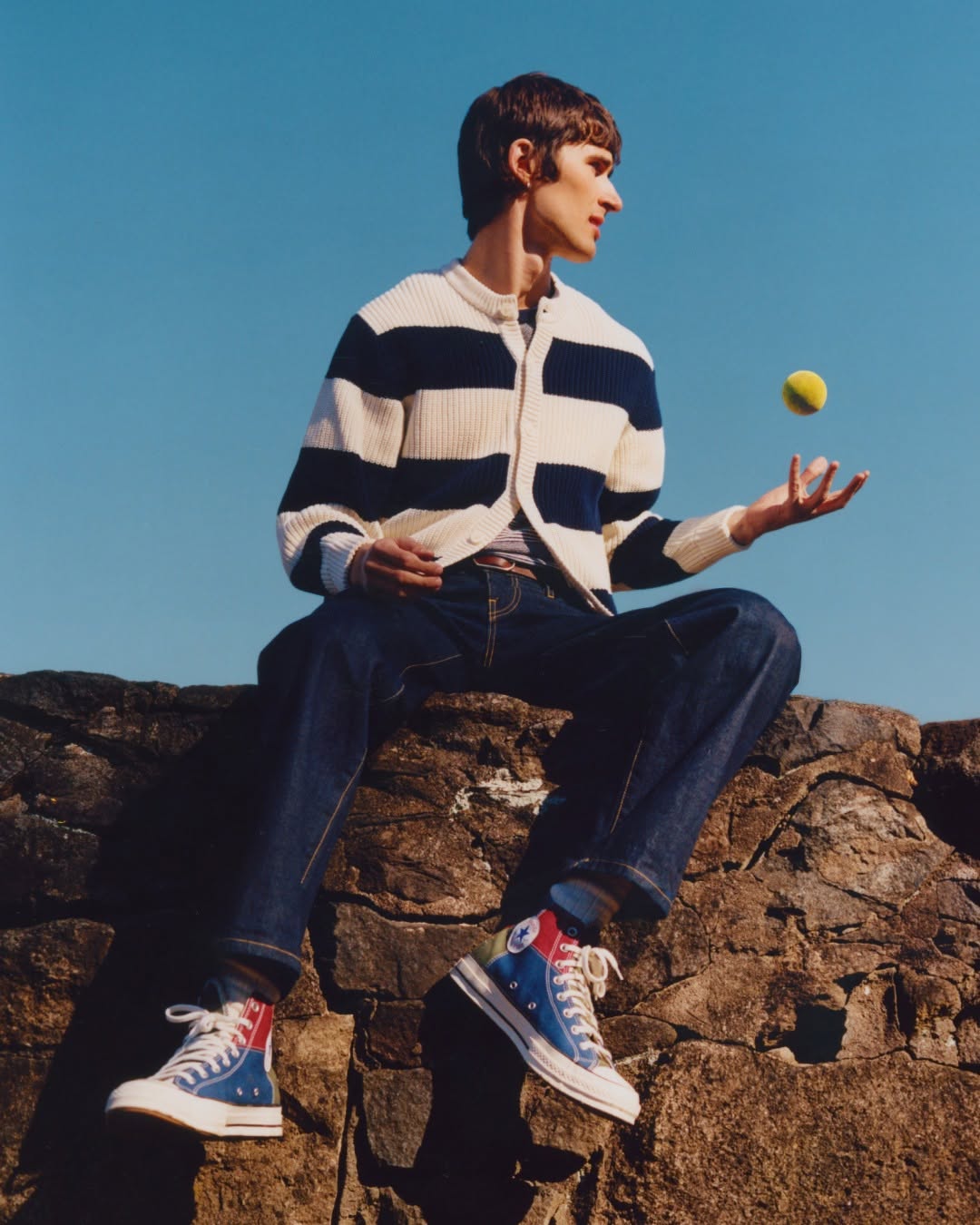
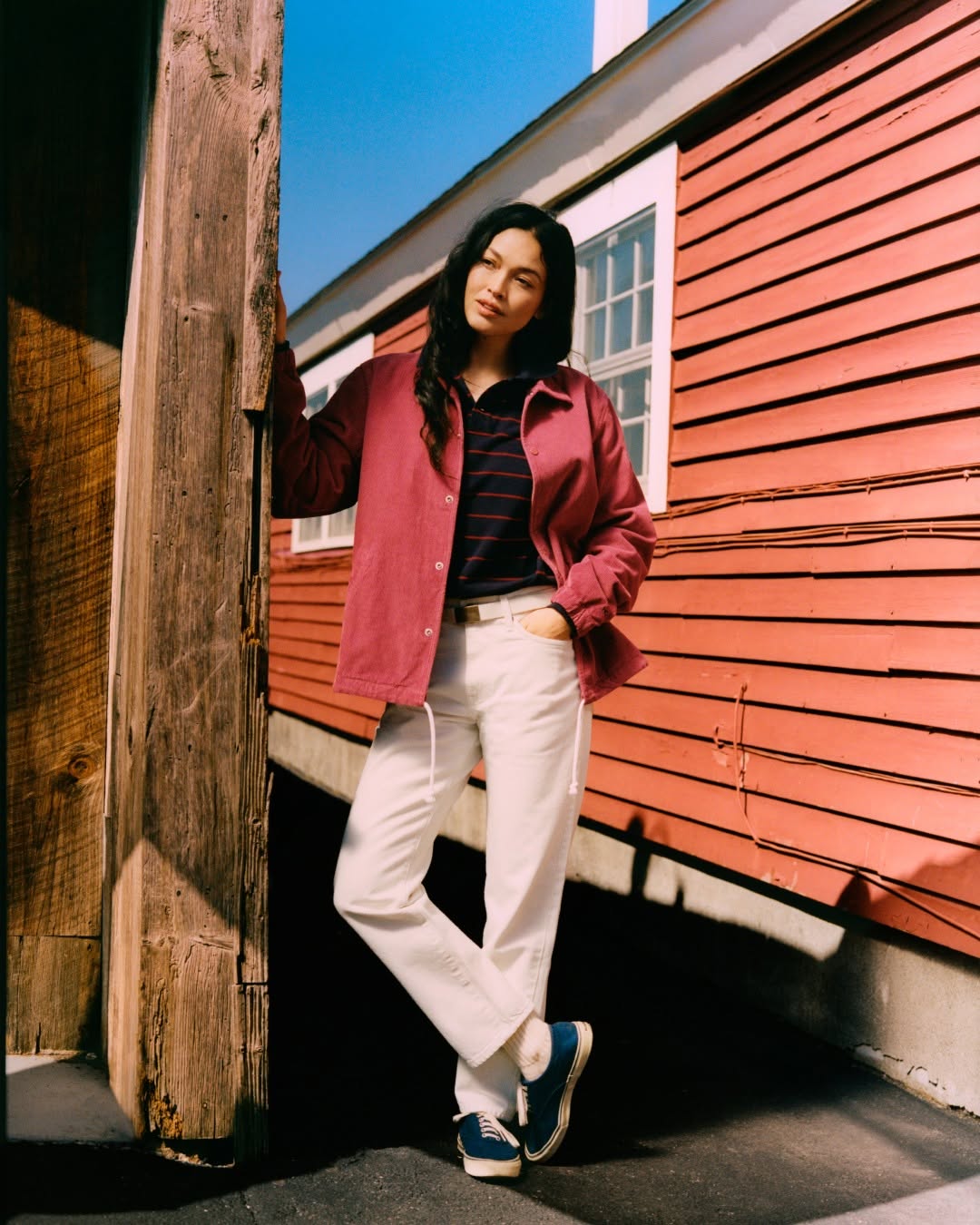
Noah's SS26 lookbook shot by Paul Hempstead on the Connecticut shoreline. No studio, no set. Just garments built for that coast.
Key Points
- Noah shoots lookbooks on location because the Connecticut coast replicates the real use conditions the garments are designed for.
- Brendon Babenzien built Noah against drop culture: no hype windows, no artificial scarcity, responsible manufacturing in the price.
- The anti-trend position has held for a decade because the clothes are designed for specific environments, not seasonal aesthetics.
Brendon Babenzien did not hire a set designer. He hired a photographer and went to the shore.
North of New York City, the Connecticut coast runs from Greenwich to Stonington. Salt marshes, rock jetties, lobster boat docks, the kind of shoreline that salt-fades canvas at a rate no wash process replicates in a week. Paul Hempstead shot Noah's latest lookbook on that coast, and the specific geography is not a backdrop. It is the argument.
Brendon Babenzien Has Never Run a Hype Drop
Babenzien left Supreme in 2015 as its creative director, handed off the brand that had invented modern streetwear hype, and built something in direct opposition to it. Noah does not drop weekly. It does not manufacture scarcity through limited windows and bot-check queues. It makes rugby shirts that retail for $198, hoodies that run $178 to $228, and outerwear up to $700 — and it prices them where they are because the cost of responsible manufacturing is inside that number, not amortized across a thousand units of artificial shortage.
The brand operates out of a Cobble Hill flagship in Brooklyn. It uses recycled nylon, French terry, and materials sourced from factories that Noah vets and names. Babenzien is the kind of designer who writes essays about why Noah is not an investment vehicle. That discipline looks old-fashioned from a certain angle. From the Connecticut shoreline, it looks like the only position worth holding.
Paul Hempstead Shot This on the Connecticut Shore
Hempstead has shot Noah's lookbooks before. The SS25 cycle brought him to the same coastline — a continuity that is itself a statement. Most brands rotate photographers by season to suggest perpetual freshness. Noah uses a consistent eye because consistent vision is the point. Hempstead's work is clean without being clinical: natural light, real environments, bodies that move like they actually wear these clothes rather than wearing them for the first time today.
The Connecticut coast provides what no studio can replicate: actual weather. Wind that moves fabric the way it will move on the person who buys it. Salt air that communicates what salt air communicates. A rugby shirt photographed on a Connecticut breakwater is being photographed in its native habitat. The garment is explaining itself. That is a different kind of editorial than a lookbook shot in a rented Bushwick warehouse with a fog machine running.
For comparison: Wales Bonner's 'First Light' arrived without announcement — a different mode of restraint, same refusal to perform the campaign.
Rugby Shirts That Expect to Get Wet
The SS26 collection is themed around what Babenzien calls "everyday pleasures" — cooking, time with friends, being outside. That framing could sound like lifestyle brand copy. Noah's version means something specific in construction terms. The rugby shirts are built with placket collars and reinforced seams. The fishing hats are meant to manage actual sun. The outerwear uses recycled nylon not because it photographs as a sustainability talking point but because it performs in the environments where Noah imagines its customers spending time.
This is the brand's central argument against trend culture: that a garment designed for a specific use and a specific environment does not need seasonal reinvention. A good rugby shirt in 2026 is a good rugby shirt for the same reasons it was in 1986. The Connecticut shoreline does not change its requirements. Neither does Noah change its answers.
The anti-drop positioning connects directly to the kind of independent brand building that Brain Dead Equipment has been doing with its guidebook-first release strategy — another operation that treats the product's function as its own editorial.
New England Prep Did Not Invent Sustainability. Noah Made It the Argument.
Ivy prep aesthetics have always borrowed from New England coastal culture. Boat shoes, cable knit, the sailing hardware repurposed as menswear detail. That tradition is primarily aesthetic — the form without the function, the reference to outdoor life from inside a climate-controlled context.
Babenzien's revision is structural. He took the Ivy prep visual vocabulary and loaded it with the actual arguments: where the material comes from, who made it, what the factory conditions were. The sailing gear influences are real because the garments are designed to perform in the environments that generated those references. The recycled nylon is not greenwashing because Noah names its manufacturing partners and holds the line on pricing transparency. The Connecticut coast lookbook is the most honest version of this position: put the clothes in the environment they were designed for, and let the camera document what happens.
For the leather goods side of the season, Rick Owens released the Temple Microbiker with natural wax and aniline finish — a different mode of material honesty, designer-priced rather than prep-adjacent, but sharing the same logic of material narrative as design argument.
What the Choice to Use a Shoreline Signals in 2026
Every brand has a campaign. Most campaigns have a photographer, a location scout, a set decorator, a stylist, a creative director, and a production budget that buys the appearance of ease. Noah's version is to remove the production apparatus and expose what remains: Hempstead, the coast, garments built for that coast.
This is not frugality. It is a position. In 2026, the coastal lookbook is a more deliberate choice than the studio shoot because it requires the clothes to hold up without assistance. No fog machine manages the mood. No controlled lighting softens the silhouette. What the camera sees on a Connecticut breakwater is what the customer gets. Babenzien's bet, across ten years of Noah, is that customers who understand this trade will find those garments worth the $198. The lookbook is the proof of concept.
Frequently Asked Questions
Where is the Noah SS26 lookbook shot?
On the Connecticut coast, photographed by Paul Hempstead. Noah uses real coastal geography rather than studio sets because the garments are designed for those environments.
Who founded Noah and what is its design philosophy?
Brendon Babenzien, former creative director of Supreme, founded Noah. The brand is built on anti-hype principles: no weekly drops, responsible manufacturing, recycled materials, and Ivy prep aesthetics grounded in actual outdoor function.
What does Noah SS26 cost?
Noah SS26 pricing runs from approximately $198 for rugby shirts to $178–$228 for hoodies and up to $700 for outerwear. Pricing reflects responsible manufacturing costs rather than artificial scarcity.
Topics: brain-dead, brain dead, supreme, rick-owens, supreme-suprsupreme, rick owens, wales-bonner, wales bonner