NIKE TOLD ITS GOATS GOODBYE AND GOT A HARD NO BACK
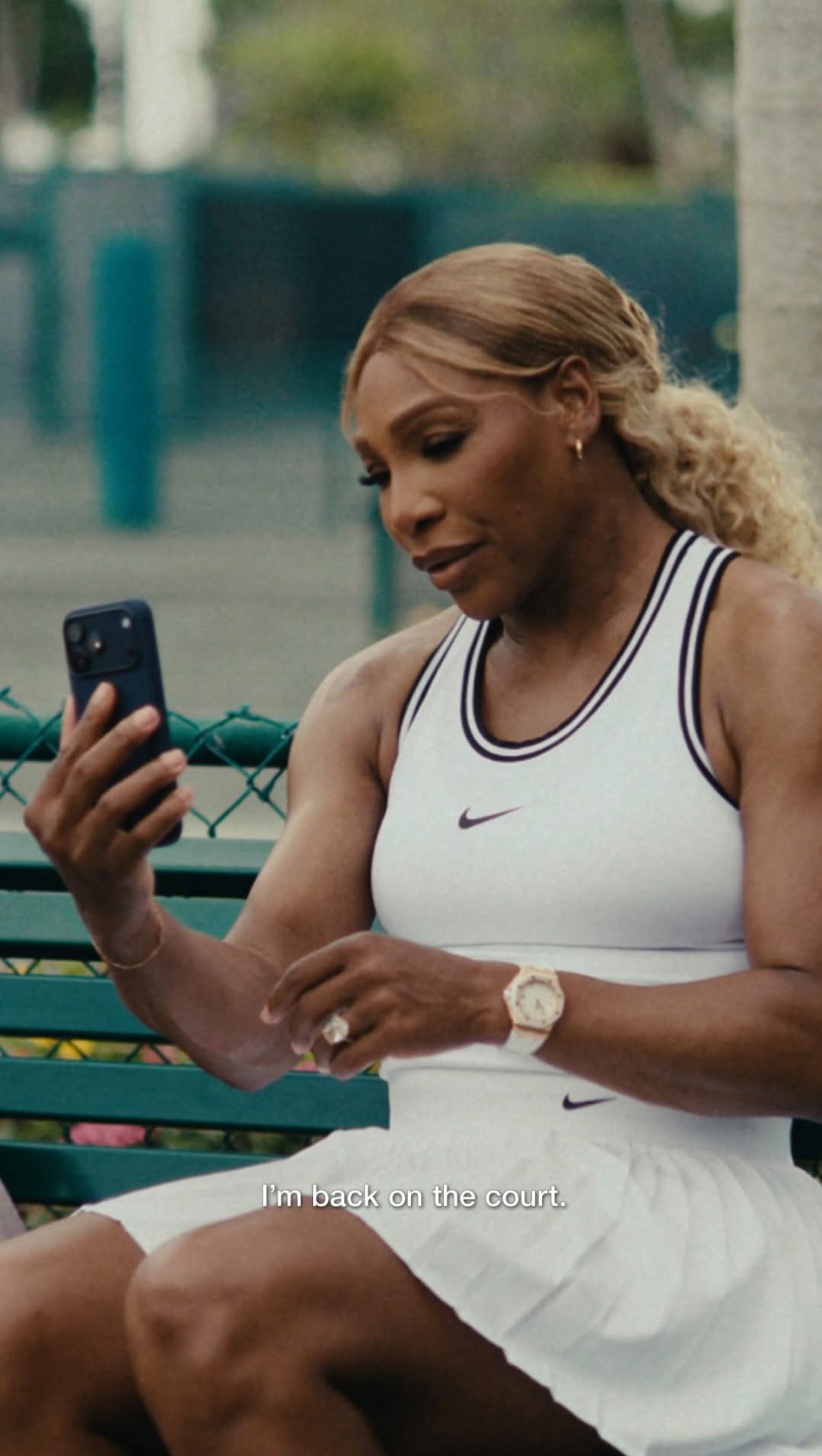
Nike's "Rip the Script" is a six minute World Cup 2026 film by Wieden+Kennedy and director Dan Streit in which LeBron James, Cristiano Ronaldo, and Serena Williams reject a fictional film titled "The GOATs' Goodbye" on a Hollywood studio backlot. All three athletes hold lifetime Nike contracts that do not expire upon retirement, making the rejection of a farewell narrative a contract-aligned brand position. The campaign runs 12 weeks through the World Cup final with 185 additional short films.
Key Points
- Nike's Rip the Script is a six minute Wieden+Kennedy film directed by Dan Streit with 30-plus athletes and cultural figures on a Hollywood backlot
- LeBron James, Cristiano Ronaldo, and Serena Williams all hold lifetime Nike deals; none of their contracts expire at retirement
- The campaign runs 12 weeks through the World Cup 2026 final with 185 additional short films beyond the hero episode
On June 8, 2026, Nike's Instagram account posted the name and handle of LeBron James followed by the ⛔ emoji. Then Cristiano Ronaldo, ⛔. Then Serena Williams, ⛔. The caption read: "Looks like The GOATs' Goodbye is going back to the drawing board."
That is not athlete-led content. That is Nike, through the social presence of three of the most valuable athlete contracts in sporting history, staging a rejection of its own narrative about endings.
The context is "Rip the Script," a six minute film produced by Wieden+Kennedy and directed by Dan Streit, shot on a Hollywood studio backlot and released as the opening episode of Nike's 12-week World Cup 2026 content programme. The film runs more than 30 athletes and cultural figures through one premise: what happens when the most scripted game in the world refuses to follow a script.
The Script Called for a Goodbye. Three Athletes Called It Wrong.
The film within the film is called "The GOATs' Goodbye." A director on the backlot pitches it. LeBron James receives the script, reads the title, and rejects it immediately. He phones Serena Williams, who is sitting in a conference room across from Nike executives receiving the same pitch. Cristiano Ronaldo gets the same material. All three decline without hesitation.
The product placement throughout is specific. Cristiano wears Portugal's 2026 World Cup kit. LeBron arrives in Nike Basketball apparel, not a football strip, because LeBron is the crossover casting: a basketball player inserted into a football campaign, wearing basketball product, in a film explicitly about football. That choice is product strategy. Nike is demonstrating that its apparel ecosystem crosses the sport boundary, not just the celebrity one.
The full cast runs past 30 figures. Kylian Mbappé, Vini Jr., Erling Haaland, and Cole Palmer represent the current generation. Ronaldinho, Zlatan Ibrahimovic, Didier Drogba, and Eric Cantona represent the legends. The cultural side includes Kim Kardashian and son Saint West, Travis Scott, Young Miko, LISA from BLACKPINK, Central Cee, Channing Tatum, and Jason Sudeikis reprising Ted Lasso, a character that required Nike to license from NBC Universal and Apple TV+. That licensing cost is part of the production story and part of the budget argument Nike is making about the scale of this campaign.
Wieden+Kennedy Wrote the Film the Athletes Were Rejecting
The rejection is fully scripted. Dan Streit directed it. The athletes are performing the refusal of a screenplay that Wieden+Kennedy produced. This is not a creative paradox. It is a brand strategy statement executed with considerable investment.
What Nike is actually declining, through these three surrogates, is the cultural expectation that its most valuable contracted athletes have entered retirement territory. LeBron James is 41 years old. Cristiano Ronaldo is 41 years old. Serena Williams retired from professional competition in 2022. The ⛔ emoji placed next to each of their names is Nike's contract language rendered as social content.
Finally Offline covered the Nike World Cup campaign pairing Ronaldo and LeBron under Define Greatness earlier this month. That campaign used a Polaroid-style album of more than 40 athletes under the line "Define Greatness. Then Redefine It." "Rip the Script" advances the same thesis with a narrative frame instead of a photographic one. The format change is the product: Nike is running episodic content, not single image campaigns, for the first time at World Cup scale.Nike Owns Three Lifetime Deals With These Athletes
LeBron James signed with Nike in 2003 for $87 million, a deal Nike landed despite Reebok offering $115 million and Adidas submitting a $100 million proposal. That contract has been extended and restructured as a lifetime partnership. Serena Williams holds a lifetime Nike deal as well. Cristiano Ronaldo's lifetime arrangement with Nike is reportedly structured across a total value exceeding one billion dollars.
None of these contracts expire when the athlete retires from competition. The "GOATs' Goodbye" narrative is commercially impossible from Nike's position. A retirement arc for LeBron, Cristiano, or Serena would reduce three lifetime contracts to a commemorative frame, which limits their commercial application to memorial merchandise rather than forward-facing product placement. The script does not get written because the contract structure does not accommodate it.
Adidas answered the same World Cup moment with Messi and El Ultimo Tango, a campaign built around one athlete's genuine sixth and final World Cup, wearing Adidas kit, with the farewell as the product. Two companies selling World Cup football apparel through opposite emotional registers: Adidas through authentic conclusion, Nike through deliberate refusal of one.185 Shorts and 12 Weeks to Make the Case
The 12-week programme runs through the FIFA World Cup 2026 final. Nike intends for "Rip the Script" to function as a pilot for a content ecosystem rather than a standalone ad film. The 185 additional shorts are the infrastructure around which the broadcast campaign is built, each feeding a different platform, audience, or product story within the larger World Cup window.
The risk is volume. A 12-week commitment with 185 pieces of content is an enormous production to keep at a consistent register. Nike's 2010 "Write the Future" World Cup film worked partly because there was one of it, arriving once and then circulating through the cultural conversation without competition from the brand itself. Episodic commitment means each individual piece carries less weight than a single film, and the audience must remain engaged across a compressed athletic calendar where the actual tournament provides daily competition for attention.
The three ⛔ emojis on June 8 were the opening sentence of episode one. The audience is large, the cast is proven, and the production budget is visible in every frame. Whether 185 episodes of a premise built around staged refusal maintains that audience through the World Cup final in late July is the question Nike has committed $87 million worth of LeBron James's original deal to answer.
Related: NIKE DRAWS A LINE FROM CANTONA TO FERNANDES.
Related: PHIL KNIGHT POURED RUBBER INTO A WAFFLE IRON TO BUILD NIKE.
Frequently Asked Questions
What is Nike Rip the Script?
Rip the Script is a six minute Nike World Cup 2026 film produced by Wieden and Kennedy and directed by Dan Streit, featuring over 30 athletes and cultural figures including LeBron James, Cristiano Ronaldo, and Serena Williams on a Hollywood studio backlot.
What is The GOATs Goodbye in the Nike film?
The GOATs' Goodbye is a fictional film-within-the-film that LeBron James, Cristiano Ronaldo, and Serena Williams reject in the Rip the Script narrative, representing Nike's refusal of retirement framing for its three most valued lifetime-contracted athletes.
How long is Nike's World Cup 2026 campaign?
Nike's World Cup 2026 campaign runs 12 weeks and includes 185 short films in addition to the six minute Rip the Script hero film.
Who is in the Nike Rip the Script cast?
More than 30 figures. Current stars include Kylian Mbappe, Vini Jr., Erling Haaland, and Cole Palmer; legends include Ronaldinho, Zlatan Ibrahimovic, Didier Drogba, and Eric Cantona; the cultural side includes Kim Kardashian, Travis Scott, LISA of BLACKPINK, Central Cee, and Jason Sudeikis as Ted Lasso.
When did Nike post Rip the Script?
June 8, 2026. Nike opened with the names of LeBron James, Cristiano Ronaldo, and Serena Williams each beside a no-entry emoji and the line that The GOATs' Goodbye was going back to the drawing board.
Why does the film reject a retirement story?
LeBron James (41), Cristiano Ronaldo (41), and Serena Williams (retired 2022) all hold lifetime Nike deals that do not expire when they stop competing, so a farewell narrative is commercially impossible for Nike.
Topics: apple tv, rip-the-script, nike-basketball, world-cup-2026, cristiano ronaldo, nike basketball, wieden-kennedy, campaign, travis scott, world cup, cristiano-ronaldo, travis-scott, fashion, central cee, future, lebron james, adidas, apple-tv, kylian mbappé, reebok, world-cup, central-cee, kylian-mbapp, lebron-james, serena williams, serena-williams, apple, nike, football