How Nike Air Jordan 1 Changed Everything
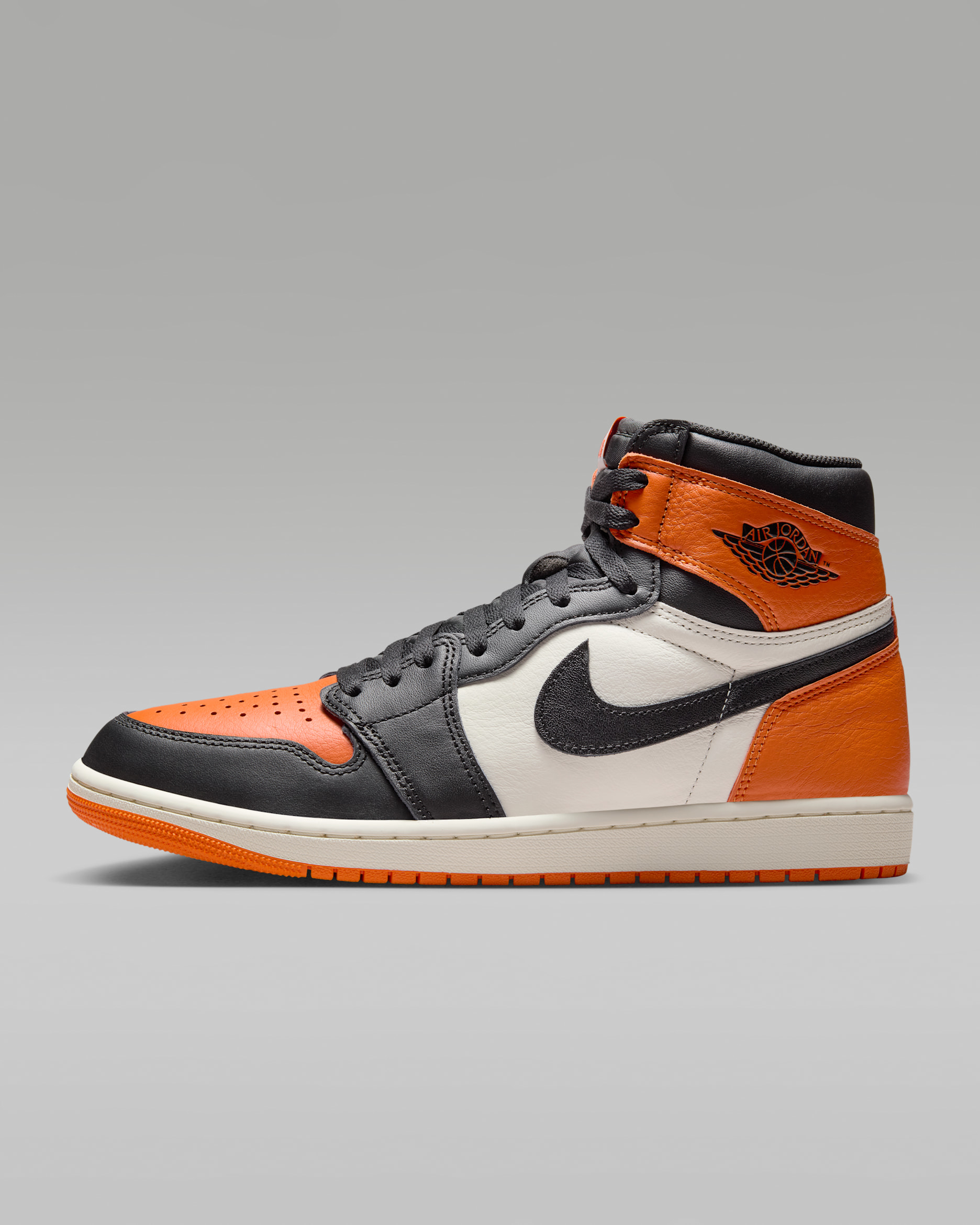
The Nike Air Jordan 1, designed by Peter Moore in 1985, was banned by the NBA for violating uniform policy. Nike turned the ban into a landmark marketing campaign, paying $5,000 per-game fines for Michael Jordan to wear them. Jordan Brand now generates over $6 billion annually for Nike.
Key Points
- Nike paid $410,000 in NBA fines for Jordan wearing the banned AJ1 during the 1984-85 season
- StockX processed over $1.8 billion in Jordan Brand transactions in 2023
- Jordan Brand generated $6.6 billion in revenue for Nike fiscal year 2024
The $5,000 Fine That Built an Empire
Nike paid Michael Jordan's fines for every game he wore the Air Jordan 1 during the 1984-85 NBA season. The total cost was roughly $410,000. The return on that investment is now measured in billions. No marketing campaign in sneaker history has produced a higher ROI than a league violation.
Peter Moore designed the original colorway. Black and red. The NBA sent a letter to Nike on February 25, 1985, declaring the shoe violated the league's uniform policy because it did not contain enough white to match the Chicago Bulls' home jersey standards. Nike turned the ban into a marketing campaign. "The NBA can't stop you from wearing them." That single line of copy, paired with an image of the shoe behind caution tape, did more for sneaker culture than any collaboration in the four decades since. David Falk, Jordan's agent, negotiated the original Nike deal at $2.5 million over five years, plus royalties and a signature shoe. Adidas and Converse both passed on signing Jordan.
Construction and the Original Silhouette
The 1985 Air Jordan 1 used full grain leather throughout, a cupsole with Nike Air cushioning in the heel, and a collar height that sat above the ankle. The shoe weighed approximately 15.8 ounces. By today's standards, that is heavy. By 1985 standards, it was lighter than most basketball shoes on the market, including the Converse Weapon that Larry Bird and Magic Johnson wore.
The silhouette borrowed heavily from the Air Force 1 and the Dunk, both designed by Bruce Kilgore and Moore respectively. The eyelet panel sits lower than the AF1, the toe box is narrower, and the swoosh wraps farther back toward the heel. Those details matter because every retro release since 1994 has been measured against the original pattern. Collectors can identify a year of manufacture by the leather thickness, the tongue tag placement, and the shape of the heel curve. The 1985 original has a higher, more symmetrical heel cup than any retro that followed. The 2015 "Chicago" retro came closest but still used thinner leather on the quarter panel.
The Resale Market That Funds Everything
StockX processed over $1.8 billion in Jordan Brand transactions in 2023 alone. The Air Jordan 1 accounts for approximately 35% of that volume. The "Chicago" colorway, originally $65 at retail, has traded above $2,000 in deadstock condition for the 2015 retro release. The original 1985 pairs in wearable condition command $4,000 to $15,000 depending on size.
Nike recognized the secondary market's marketing power early. Limited quantities create scarcity. Scarcity creates demand. Demand creates culture. The formula has not changed since 1985. What changed is the scale. Jordan Brand generated $6.6 billion in revenue for Nike's fiscal year 2024, and the Air Jordan 1 remains the foundation. The "Lost and Found" Chicago reissue in 2022 moved over 1 million pairs at $180 retail and still traded above $200 on secondary markets within weeks.
The Cultural Equation
Travis Scott's reverse Swoosh collaboration, SZA wearing Chicago 1s courtside at NBA Finals, Virgil Abloh's "The Ten" deconstructed version for Off-White, Dior's $2,000 luxury AJ1 in 2020 that received over 5 million raffle entries. Every cultural moment involving the AJ1 traces back to the same source: a ban letter from the NBA and a rookie who averaged 28.2 points per game in his first season.
The shoe does not need another collaboration to stay relevant. It is relevant because it started something no brand has been able to replicate. Adidas tried with Yeezy. New Balance tried with celebrity endorsements. Puma tried with Rihanna. The Air Jordan 1 still outsells all of them in the secondary market by a factor of ten.
Verdict
At $180 retail for a current retro release, the Air Jordan 1 offers full grain leather construction that luxury brands charge $600 or more for in a similar silhouette. The shoe is 40 years old, has generated over $50 billion in cumulative Jordan Brand revenue, and is still waiting for a real competitor. The banned shoe became the most desired shoe. The $5,000 fine became the most effective marketing campaign in sports history. Michael Jordan turned a penalty into a permanent advantage and Nike cashed the check for 40 years.
Related Reading
- BALTIMORE SAVED THE AIR FORCE 1 AND NIKE OWES THEM EVERYTHING
- TINKER HATFIELD SAVED JORDAN FROM ADIDAS WITH ELEPHANT PRINT AND A VISIBLE AIR UNIT
- CHUCK TAYLOR SOLD SNEAKERS DOOR TO DOOR AND MOVED 800 MILLION PAIRS
Frequently Asked Questions
Why was the Air Jordan 1 banned by the NBA?
The NBA declared the Air Jordan 1 violated its uniform policy on February 25, 1985, because the black and red colorway did not match the Chicago Bulls team colors. Nike was fined $5,000 per game.
How much is a pair of original Air Jordan 1s worth?
Original 1985 Air Jordan 1s in wearable condition sell for $4,000 to $15,000 depending on size and condition. The 2015 Chicago retro trades above $2,000 deadstock.
How much revenue does Jordan Brand generate for Nike?
Jordan Brand generated approximately $6.6 billion in revenue for Nike in fiscal year 2024, making it one of the most profitable sub-brands in athletic footwear history.
Topics: sneakers, virgil abloh, streetwear, dior, new balance, travis scott, travis-scott, michael-jordan, jordan brand, stockx, adidas, banned-shoe, converse, new-balance, virgil-abloh, sza, jordan-brand, air-jordan-1, focus-56-55, nba, sneaker-history, puma, off-white, yeezy, nike