Stone Island Nylon Metal Is Not Metal. The Fabric Science Behind the Shimmer.
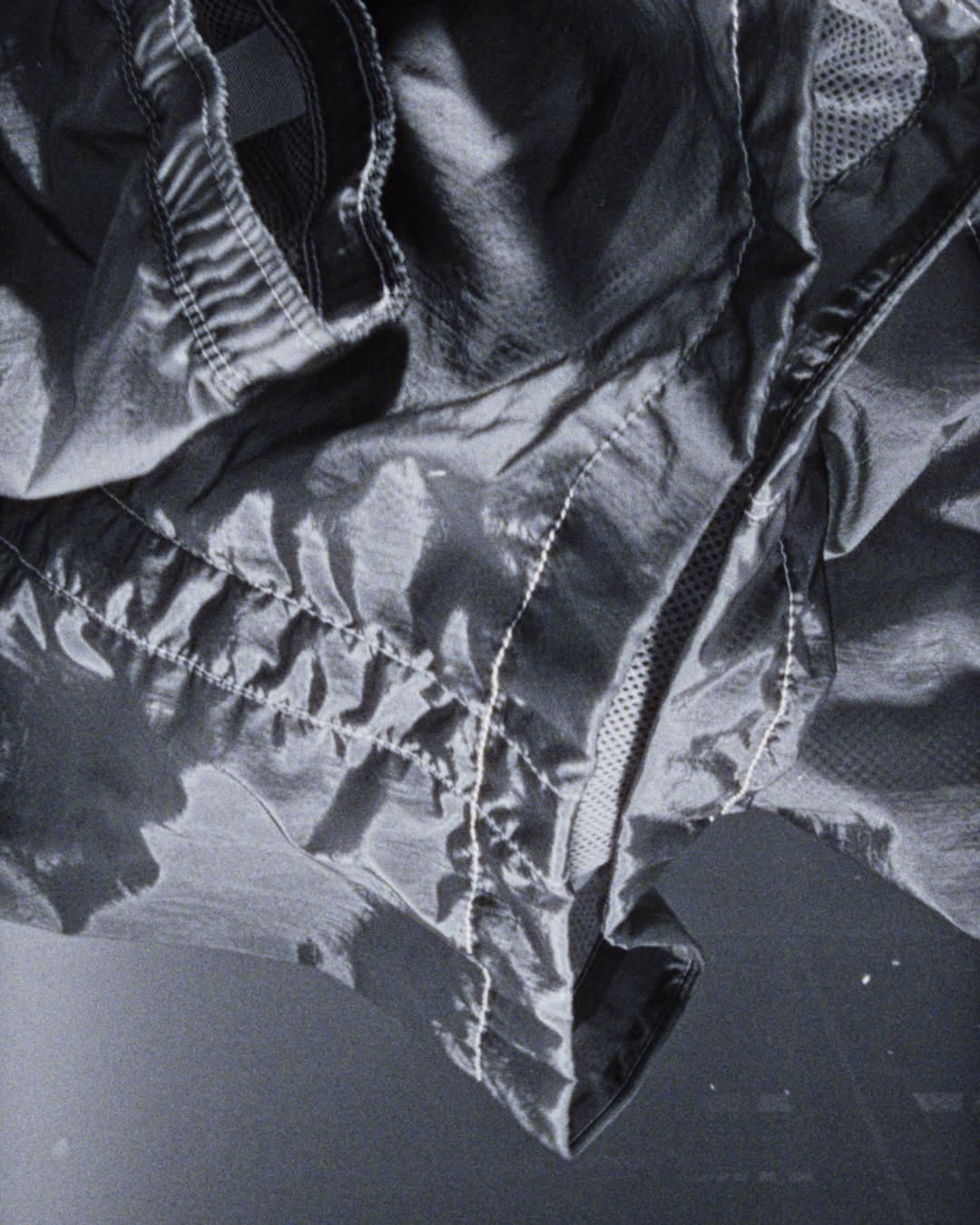
Stone Island Nylon Metal gets its shimmer from yarn geometry and in-house Tinto Capo dyeing, not metal fibers. Material Science Episode 003 explains the SS26
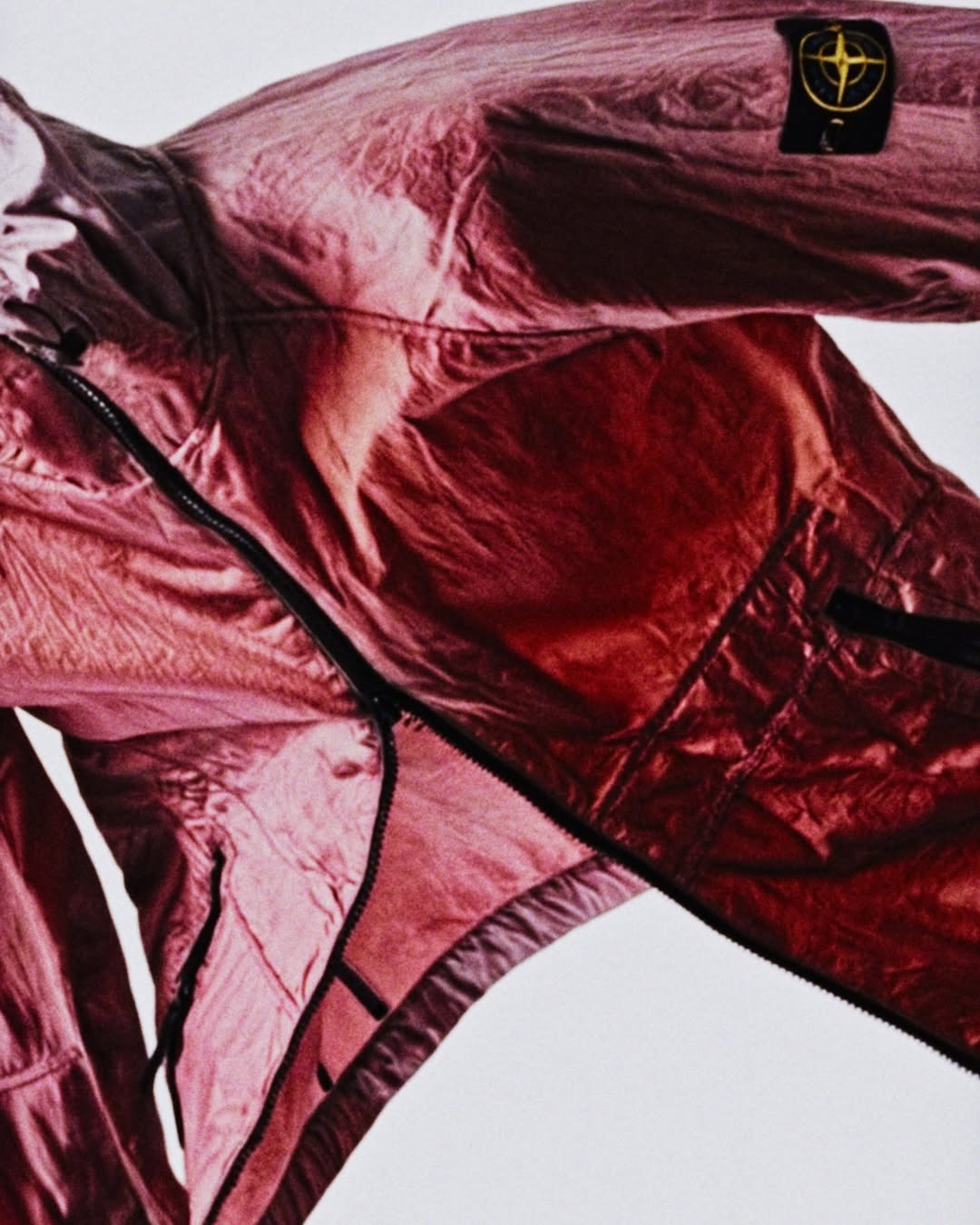

The metallic finish on Stone Island Nylon Metal is not metal. There is not a single metal fiber in the construction.
Episode 003 of the brand's Material Science series explains how a trilobate yarn cross-section and a proprietary garment dyeing technique called Tinto Capo produce an iridescent, depth-shifting surface that reads like fabric-coated chrome from a distance and woven nylon up close.
Trilobate Cross-Section. The Geometry That Refracts Light
Standard nylon uses a round yarn cross-section. Nylon Metal uses a trilobate profile: the yarn filament has three lobes when viewed in cross-section. That shape refracts incoming light at multiple angles simultaneously, creating the optical interference that reads as metallic shimmer.
This is not a coating or a finish applied after weaving. The iridescence is structural. It is built into the geometry of the yarn itself, which means it does not crack, peel, or fade the way metallized fabrics typically do over repeated wash cycles.
Tinto Capo. The Dyeing Method That Creates the Depth
The fabric is woven with a black weft and a white warp. In the Tinto Capo (TC) process, the finished garment is dyed after construction rather than yarn-by-yarn. Only the white warp yarns absorb the dye. The black weft resists. The result is a multitonal surface where dyed and undyed yarns sit at different optical depths, creating the characteristic shimmer that shifts under movement and changing light conditions.
TC stands for Tinto Capo, Stone Island's in-house dyeing method applied to the finished garment rather than raw fiber. It has been applied to Nylon Metal since the fabric was first developed and refined across multiple seasonal iterations.
ECONYL in SS26. Regenerated Nylon at Full Technical Specification
For Spring/Summer 2026, Stone Island integrates ECONYL regenerated nylon into the Nylon Metal-TC construction. ECONYL is produced through chemical depolymerization of post-consumer nylon waste, primarily fishnets and carpet offcuts, broken back to base monomer and repolymerized to virgin specification.
The fiber maintains identical technical properties to virgin nylon: same tensile strength, same dye uptake, same trilobate cross-section capability. Stone Island uses it across garment weights from down jackets to cargo trousers, short-sleeve shirts, and shorts across the SS26 lineup.
Seasonal colorways: malachite green, moss green, mud, soft grey. All shift under light. None of them are the same at 8 AM versus 6 PM.
Verdict: Nylon Metal-TC with ECONYL is the rare case where sustainability and technical innovation run in the same direction. The material does not compromise to be responsible. It was already difficult to make. ECONYL just adds sourcing integrity to a construction that already earned its cost.
Topics: econyl, stone island, tinto-capo, fashion, ss26, nylon-metal, material-science, fabric-science, stone-island, technical-garment