A REAL LOUIS VUITTON IS PROVEN BY WHERE YOU BOUGHT IT
Louis Vuitton guarantees authenticity only through its own stores and website. Date codes and hand checks can disqualify a fake but cannot prove a bag real, and the chip transition is reported by resellers but not confirmed by the brand.
Key Points
- Louis Vuitton guarantees authenticity only through its own stores and website, per its FAQ
- Date codes disqualify fakes when wrong but never prove a bag real, since valid codes are copied
- A 2025 default judgment of about $584M against Westgate Discount Mall shows counterfeits move in volume
You tell a real Louis Vuitton from a fake mainly by where it was bought, not by any single mark on the bag. Louis Vuitton says it guarantees authenticity through an exclusive distribution network: its own stores and its own website. Everything else people check, the date code, the stitching, the heat stamp, the leather, is circumstantial evidence, and counterfeiters copy each of those details. A bag from a boutique with a receipt is real. A bag from anywhere else is a question that nobody at the brand will answer for you.
The One Guarantee the Brand Gives
Louis Vuitton's own FAQ on counterfeits rests on distribution. The EU version says the house guarantees authenticity through an exclusive distribution network, with products sold only in Louis Vuitton stores and through louisvuitton.com. A brand article on its Australian site makes the same point, describing the stores as owned and staffed by Louis Vuitton.
That structure follows from who owns the house. Our report on who owns Louis Vuitton found that it has no separate listing and no outside shareholder, with the Arnault family recorded at 50.01% of LVMH's capital and 65.94% of its voting rights on February 19, 2026. One owner, one chain of holding companies, and one set of shops means there is no authorised reseller to hide behind. If the seller is not Louis Vuitton, the brand has not vouched for the bag.
Date Codes Prove Less Than Most Guides Claim
The most repeated advice online is to check the date code. Resale and authentication sites we searched agree on its limits. A date code is a manufacturing reference, not a serial number, and many bags share the same one. Counterfeiters copy valid codes. Worn or missing codes can appear on genuine bags. The useful signal is a mismatch: a code that implies one country of manufacture while the bag is stamped with another, or a code in a format the house never used.
So a matching code is weak evidence that a bag is real, and a wrong code is strong evidence that it is fake. Treat it as a way to disqualify, never to approve.
What the Chip Era Changed
Resellers report that Louis Vuitton moved from stamped date codes to embedded chips around March 2021, though sources give different start points, some as early as 2019. We found no statement from LVMH or Louis Vuitton confirming the date or the mechanism, so treat the timing as reported, not established. The same sources disagree on what a buyer can read from a chip. Some say authenticators need an NFC reader app, others say verification stays in house at the brand. One point is consistent across them: a visible date code on a style made after the switch is treated as a warning sign, and some fakes carry NFC tags that simply open the brand's website.
For a buyer, that means a tap that opens louisvuitton.com proves nothing. Anyone can write a web address to a tag.
Hand Checks That Still Count
Resale guides keep returning to the same physical tests, and they are worth running as a set, never alone:
- Heat stamp. Letters should be crisp and evenly pressed, without bleeding or mis-struck characters.
- Vachetta. The untreated leather on handles and trim should darken with age. Leather that stays pale on a bag that looks used is a red flag.
- Hardware and stitching. Examine them against a known genuine bag of the same style, not against memory.
- Paperwork. Guides say genuine bags do not ship with a certificate of authenticity, so a glossy card claiming to prove authenticity proves nothing.
These tests catch lazy fakes. The better counterfeits get most of them right, which is why guides also push professional services such as Entrupy or Real Authentication for resale purchases. Those are commercial services with a stake in the answer, so weigh that, and note that staff at Louis Vuitton boutiques are reportedly barred from authenticating items bought elsewhere. That claim comes from a reseller blog, not the brand.
Why Fakes Keep Getting Better
The scale of the problem explains why checklists age fast. In September 2025, Judge Victoria Marie Calvert of the Northern District of Georgia entered a default judgment of about $584 million against Westgate Discount Mall, an Atlanta flea market, in Louis Vuitton Malletier S.A.S. v. Westgate Discount Mall, Inc. The figure reflects the $2 million statutory maximum for each of 292 Louis Vuitton trademarks. Louis Vuitton said it had sent at least 31 notices to the mall about specific tenants, and the case grew out of a 2021 raid that seized 18 tractor trailer loads of fake goods. Coverage doubts the brand will collect most of that sum, but the case shows that counterfeits move through physical markets in volume.
The brand's legal strategy is aimed at that volume. Its Australian brand article says Louis Vuitton pioneered the use of contributory liability in 2003 against intermediaries such as landlords, couriers and payment providers. Pursuing the landlord, not the stall, is how the house tries to shut supply down.
What Real Construction Looks Like
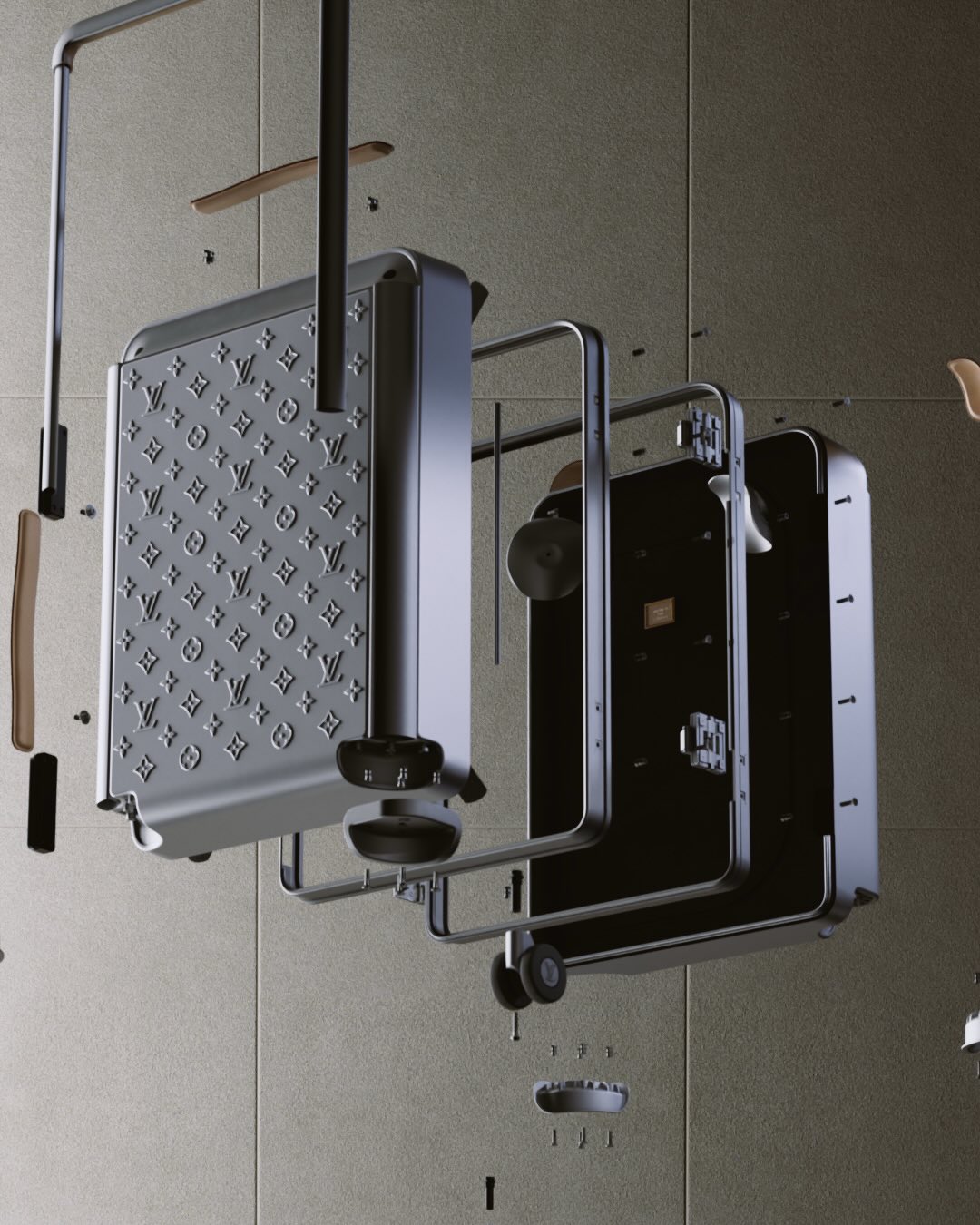
Real Louis Vuitton goods are built to be serviced by the house. Our report on the Horizon Aluminium repair film described the brand's claim that the suitcase's wheels, handle, lining and trim can be accessed for repair in store, and the flat packing floor design keeps the handle structure outside the packing compartment. A fake has no repair counter behind it.
The house also documents its own history in detail. It bought land in the Comète district of Asnières in March 1859, and the family home built there in 1869 supplied the windows copied for the Fall Winter 2026 stained glass trunk. The brand keeps this kind of paper trail for its objects, and a fake has none of it. Finish details are worth comparing against official product, such as the leather lettering on the Real Madrid sweater, where the house name is worked in leather or embossed into it.
What To Do Before You Pay
Ask for the boutique receipt or the order number from louisvuitton.com, and compare the seller's name to the buyer on it. Buy from a reseller who offers a written return policy for failed authentication. Photograph the date code or chip location, the stamp and the hardware before you hand over money. And accept a plain rule: if the price is far below what the same style sells for in a boutique, the discount is the tell.
What We Could Not Verify
We could not retrieve the full text of every regional Louis Vuitton FAQ page, found no official statement on the chip transition, and could not confirm the reported rule on boutique staff. Those items are attributed above, not asserted.
Frequently Asked Questions
Does a Louis Vuitton date code prove a bag is real?
No. Resale and authentication sources describe a date code as a manufacturing reference, not a serial number, and counterfeiters copy valid codes. A code that conflicts with the country stamp or uses a format the house never used is a strong sign of a fake.
Where can you buy an authentic Louis Vuitton?
Louis Vuitton says it guarantees authenticity through an exclusive distribution network, meaning its own stores and louisvuitton.com. A bag from any other seller carries no guarantee from the brand.
Does a real Louis Vuitton come with a certificate of authenticity?
Authentication guides say genuine Louis Vuitton bags do not ship with a certificate of authenticity, so a card claiming to prove authenticity should be treated as a warning sign.
Topics: real-madrid, lvmh, louis-vuitton, luxury, authentication, counterfeit, louis vuitton, real madrid