FRANK GEHRY USED JET SOFTWARE TO BUILD HIS CURVES
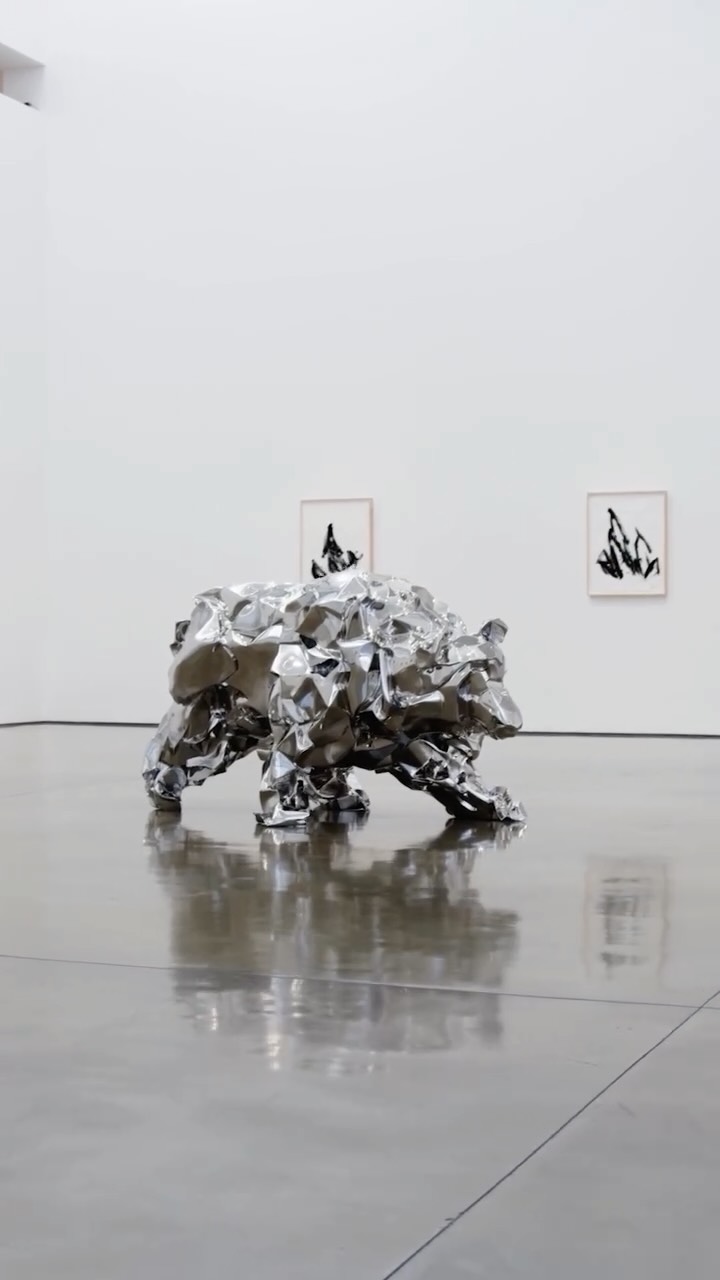
Gagosian is staging a posthumous Frank Gehry exhibition (May 14 to June 27), the first since the architect died in December 2025 at 96. This tech-lens read argues the real story is not the sculpture but the software: in the early 1990s Gehry adopted CATIA, the Dassault Systemes program used to model fighter-jet surfaces, to make his impossible curves both buildable and, crucially, priceable, enabling the Guggenheim Bilbao (1997) and the Louis Vuitton Foundation. In 2002 he founded Gehry Technologies and sold the toolkit as Digital Project. The show''s 316L stainless works, including Bear With Us, are digital fabrication made physical. Gehry''s true legacy was a habit change across architecture: the question shifted from whether a shape could be built to which software could build it.
Key Points
- Gagosian opens a posthumous Frank Gehry show May 14 to June 27, the first since he died in December 2025 at 96
- Gehry adopted CATIA, Dassault's fighter-jet modeling software, to make his curves buildable and priceable, enabling Guggenheim Bilbao and the Louis Vuitton Foundation
- In 2002 he founded Gehry Technologies and sold the toolkit as Digital Project, becoming a software vendor
- The 316L stainless works like Bear With Us are digital fabrication made physical; his real legacy was a habit change across architecture
I walked into the idea of this show expecting sculpture and walked out thinking about software. That reversal is the whole point, and it is the part the gallery will not put on the wall text.
Gagosian is staging a Frank Gehry exhibition, May 14 to June 27, the first since Gehry died in December 2025 at 96. The objects are stainless steel forms and his twisting lamps. But the actual subject, the thing that made any of it possible, is a piece of code Gehry borrowed from people who build fighter jets. Stay with me, because this is where it gets good.
Gehry Borrowed Software Built for Fighter Jets
Here is the move that changed architecture, and almost nobody outside the field talks about it. In the early 1990s Gehry''s office adopted CATIA, the Dassault Systemes program engineers used to model aircraft surfaces. Curves that could not be drawn by hand, could not be priced by a contractor, could not be built without a computer telling the steel exactly where to bend.
That is the quiet feature. Not the titanium skin everyone photographs. The software underneath it. Gehry took a tool designed to model the compound curves of a Mirage jet and pointed it at buildings, and suddenly the impossible sketch became a buildable file. I keep coming back to that because it reframes him entirely. He was not just an artist with a wild hand. He was an early adopter who understood that the bottleneck was never imagination, it was fabrication.
Bilbao Could Not Exist on Paper
Test the claim against the famous building. The Guggenheim Bilbao, finished in 1997, is the proof of concept. So is the Louis Vuitton Foundation in Paris later. Neither could exist as a paper drawing handed to a builder.
The reason is boring and profound: a curving titanium panel has to be cut, formed, and located in space with a precision that human drafting cannot deliver and human estimating cannot price. CATIA did both. It told the fabricator the geometry and it told the client the cost before a single panel was ordered. That second part is the unsung half. Gehry''s software did not just make weird shapes possible, it made them insurable. A bank will fund a curve it can price. The art-world version of this show, the posthumous Gagosian presentation in Beverly Hills, frames the work as legacy. The engineering version frames it as a pricing breakthrough wearing a sculpture''s clothes.
In 2002 Gehry spun the practice into Gehry Technologies and turned the internal toolkit into Digital Project, software he then sold to other firms. The architect became a software vendor. That is not a footnote. That is a man who understood his real product was the pipeline, not the building.
316L Stainless Is the Material Tell
Look at the objects in the show and the material itself gives the game away. The steel pieces, including the form titled Bear With Us, are fabricated in 316L stainless, the marine-grade alloy you choose when you need a surface to survive weather and hold a precise curve.
That spec is not a flex, it is a tell. You do not specify 316L for a shape you eyeballed. You specify it for geometry that was solved in a computer and cut by a machine that does not improvise. The lamps Gehry began making in the 1980s, those reptilian glowing forms, are the handmade cousins of the same obsession, the body as a flowing line. But the stainless work is digital fabrication made physical, the file turned into an object you can stand next to.
Watch the Software, Not the Sculpture
So here is the verdict, and it is not the one the catalogue wants. Go see the show for the forms if you love them. But understand what you are actually looking at: the output of a tool, not just the gesture of a hand.
Gehry''s lasting product was a habit change inside an entire profession. After him, architects stopped asking whether a shape could be built and started asking which software could build it. That is the legacy, more than any single facade. Like a lot of the most influential art now, from Arthur Jafa''s work at Fondazione Prada, the medium turned out to be a technology the audience never sees.
Watch the software. The sculpture is just where it surfaced.
Frequently Asked Questions
What software did Frank Gehry use?
Gehry adopted CATIA, the Dassault Systemes program used to model fighter-jet surfaces, in the early 1990s. It made his compound curves buildable and priceable. In 2002 he founded Gehry Technologies and sold a version called Digital Project.
When is the Gagosian Frank Gehry show?
The exhibition runs May 14 to June 27. It is the first since Gehry died in December 2025 at the age of 96.
What is the Bear With Us sculpture made of?
The steel works in the show, including Bear With Us, are fabricated in 316L stainless, a marine-grade alloy chosen for surfaces that must hold a precise, computer-solved curve.
Topics: gagosian, louis-vuitton, 316L stainless, Gehry Technologies, Frank Gehry, digital fabrication, Guggenheim Bilbao, louis vuitton, architecture, CATIA, prada, Gagosian, guggenheim