DANIEL ARSHAM TURNS TWO MAMIYA CAMERAS INTO MINERAL
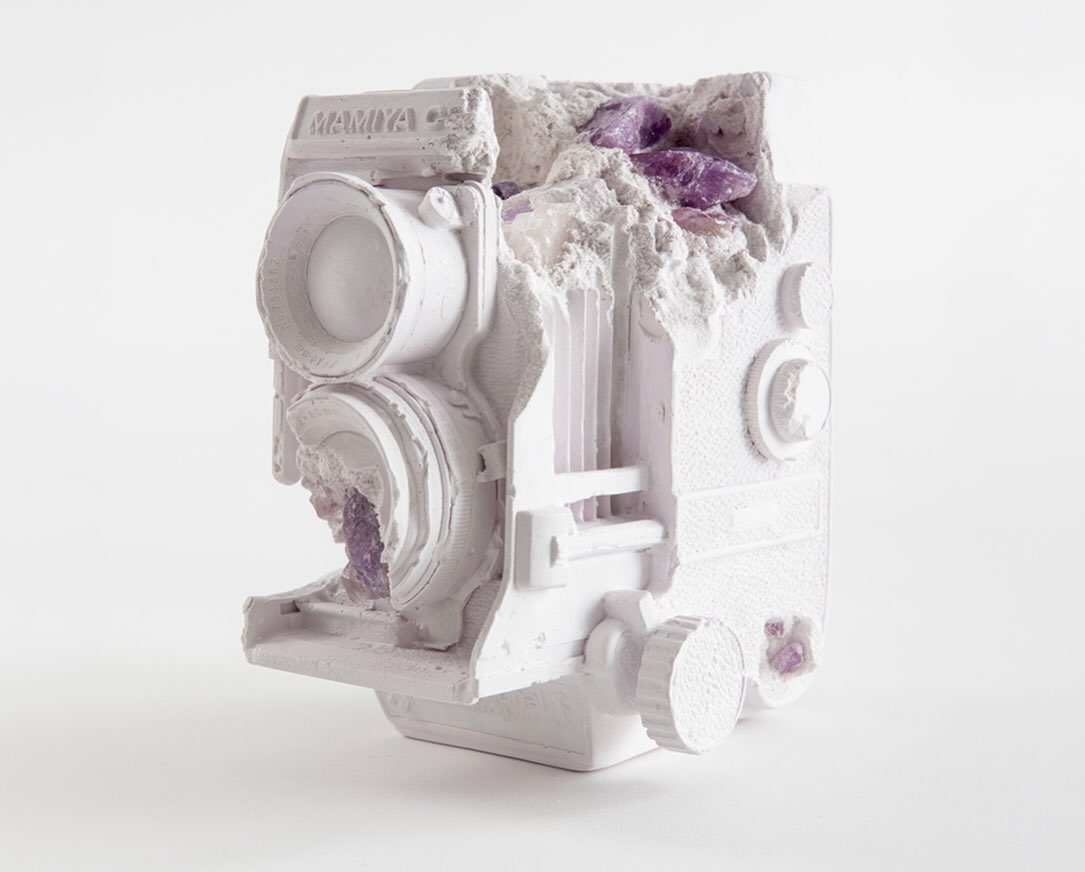
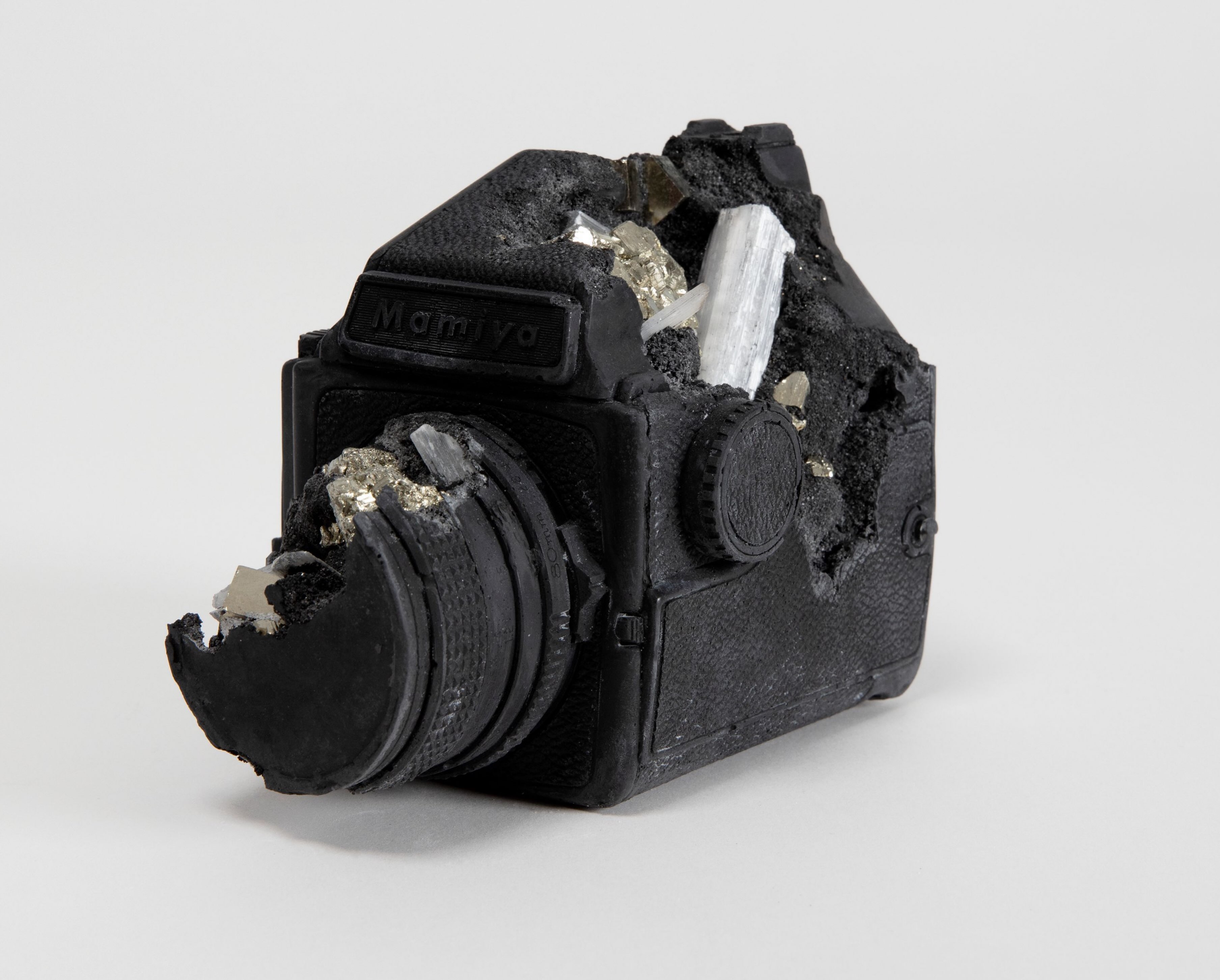
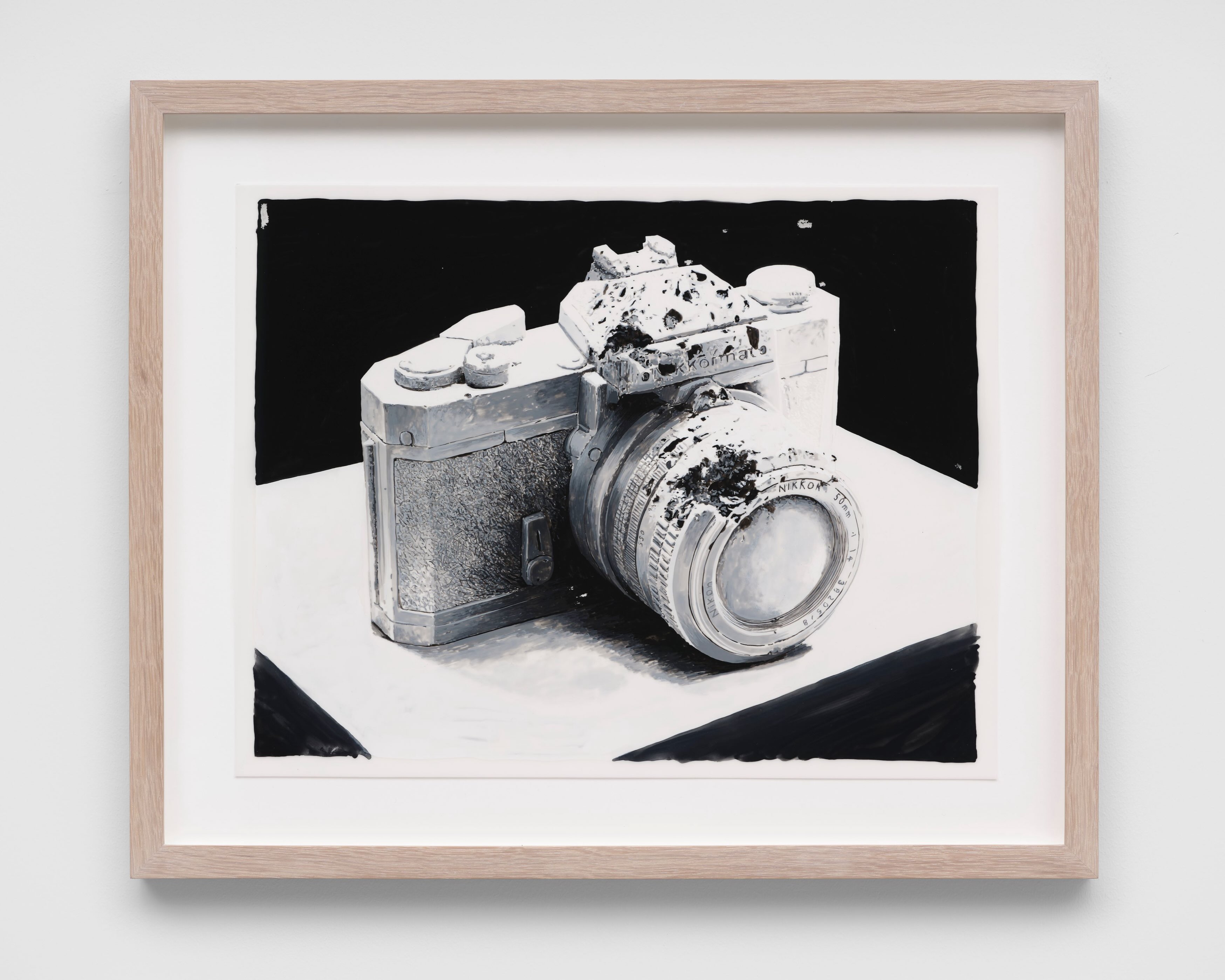
Daniel Arsham's Time Fold at Perrotin London pairs two 2022 eroded camera sculptures, Ash and Pyrite Eroded Mamiya M645 Camera and Amethyst Eroded C330 Camera, with 2008 gouache camera studies photographed by Eva Herzog and Guillaume Ziccarelli. The show runs through August 8, 2026, and argues Arsham's fictional archaeology practice existed on paper more than a decade before it became sculpture.
Key Points
- Ash and Pyrite Eroded Mamiya M645 Camera and Amethyst Eroded C330 Camera are both dated 2022
- Gouache camera studies date to 2008, over a decade before the eroded sculptures
- Time Fold runs at Perrotin London through August 8, 2026
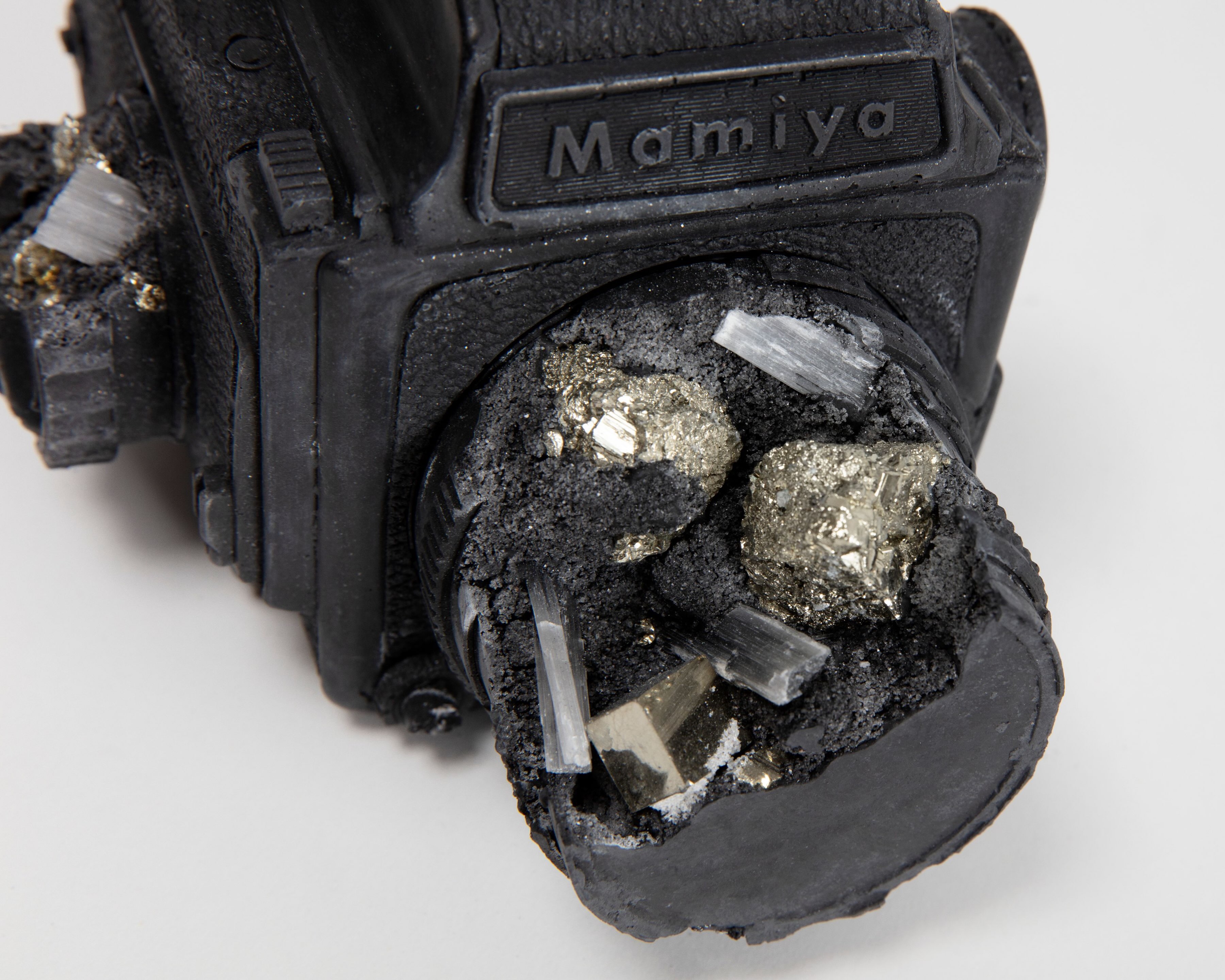
A Mamiya M645 does not take pictures anymore. It is fused with pyrite now, crusted in ash colored mineral growth, sitting on a plinth at Perrotin London like something pulled out of the ground instead of a camera bag. Daniel Arsham calls it Ash and Pyrite Eroded Mamiya M645 Camera, dated 2022, and it is one of the objects anchoring Time Fold, his show running at the gallery through August 8. I stood in front of it longer than I meant to, waiting for it to look like a camera again. It never did.
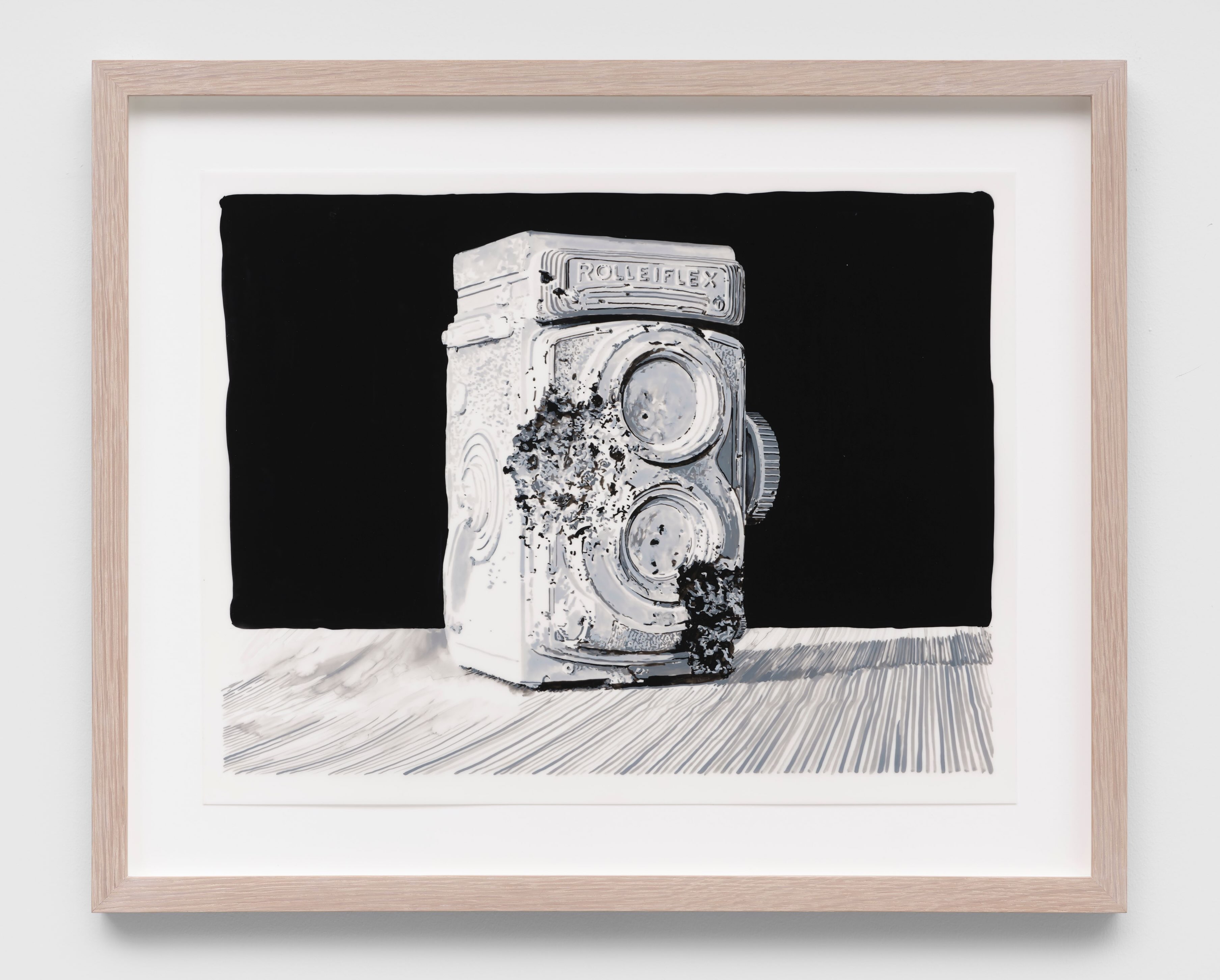
That is the thesis of the whole room. Arsham is not photographing the camera. He is fossilizing it, and the gouache studies hanging nearby prove he was thinking this way about the object years before the sculptures existed.
Two Cameras, Two Minerals, One Argument
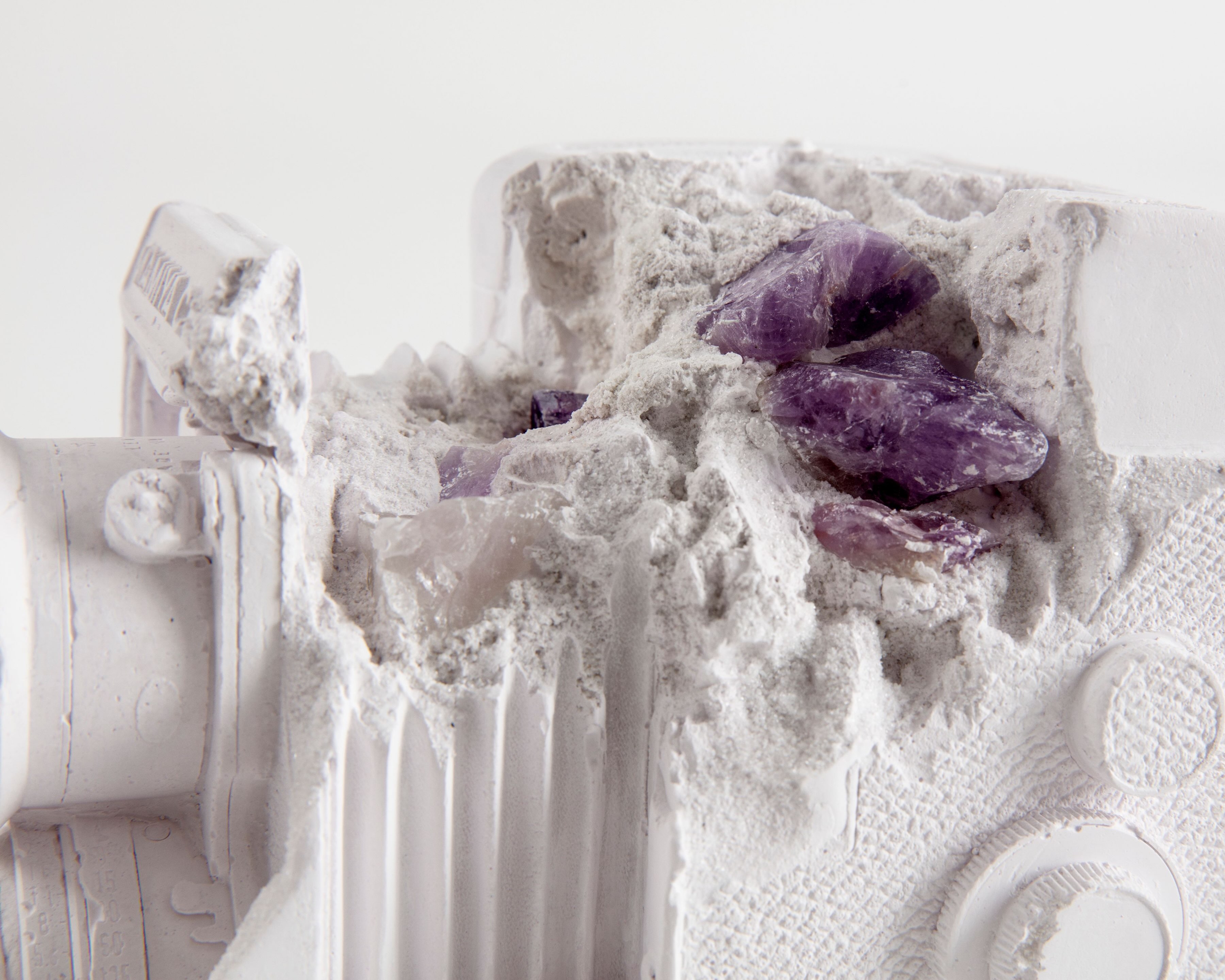
The Ash and Pyrite Mamiya sits across the room from Amethyst Eroded C330 Camera, also 2022, a twin lens Mamiya rendered in purple crystal instead of grey stone. Both works swap the camera's mechanism for geology: volcanic matter, crystal growth, erosion, standing in for the shutter, the lens, the film advance. Neither camera functions. That is not a flaw in the piece, it is the entire argument. Arsham is not asking whether the object still works. He is asking what happens to a tool once documentation stops mattering and the object itself becomes the thing worth preserving.
Gouache Came First, in 2008
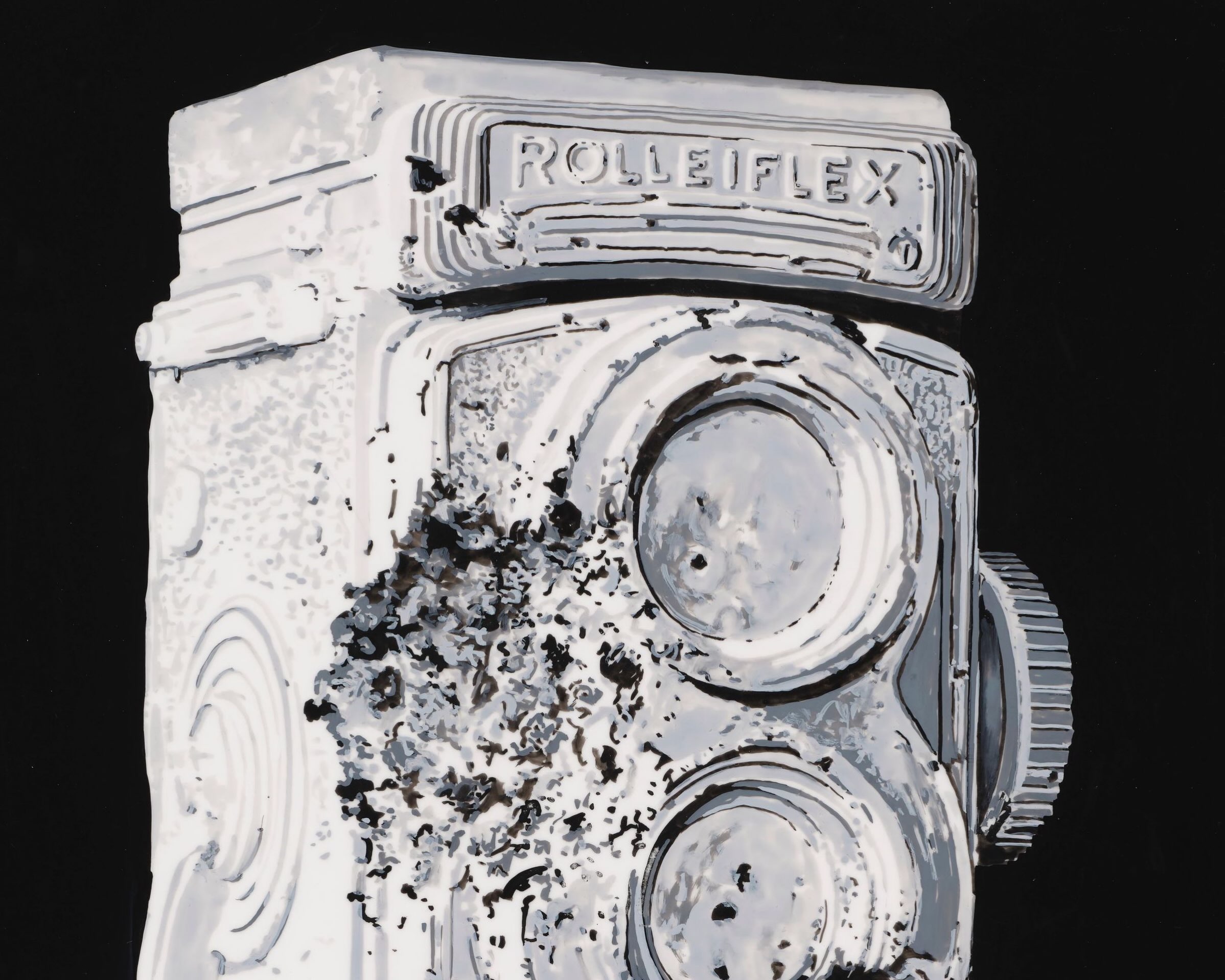
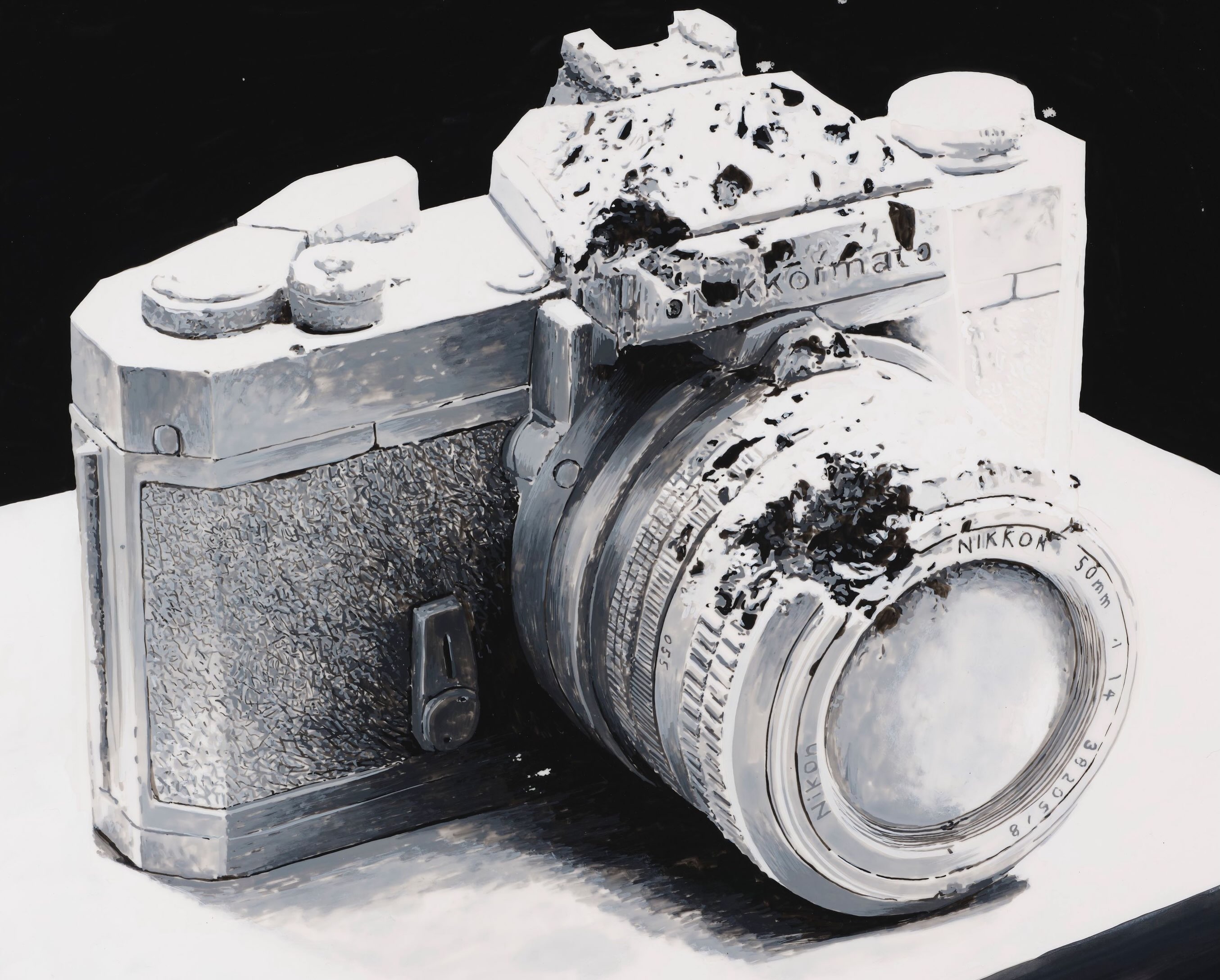
Before the minerals, there was paper. Rolliflex Camera Study in Gouache and a second untitled Camera Study, both dated 2008 and both photographed for the show by Eva Herzog, show an analogue camera rendered in a delicate, almost clinical hand, suspended mid observation rather than mid use. These drawings predate the eroded sculptures by well over a decade, and Time Fold hangs them in the same rooms as the crystallized cameras on purpose. Finally Offline already covered the show's other centerpiece, a set of 2007 drawings on view publicly for the first time, and the camera studies belong to that same early period. The gouache studies are not preliminary sketches. They are proof Arsham's fictional archaeology, the idea that objects are already future relics the moment they are made, existed on paper before it existed in resin or pyrite.
Guillaume Ziccarelli Shot the Objects Like Evidence
The sculpture photography in this show, credited to Guillaume Ziccarelli, lights the eroded cameras the way an auction house photographs a lot, flat, frontal, no shadow doing narrative work. That choice matters. It treats the Mamiya and the C330 as specimens rather than art directed props, which is exactly how a museum would document an artifact pulled from a dig site. Arsham has spent his career building the aesthetic of excavation. Here the photography itself is doing archaeology's job.
A Camera Is Not the Only Obsolete Object in This Story
Cameras are a useful choice for this argument because they are already halfway to relic status. A phone replaced most of what a Mamiya or a Rolleiflex used to do, the same way digital tools have hollowed out plenty of analogue objects across other industries, from film cameras to the turntables musicians still insist on collecting. Arsham has built entire collaborations, with Dior and with Porsche, around the same premise: take an object people assume is permanent and show them the version that has already started dissolving.
Perrotin London Runs This Through August 8
Time Fold closes August 8 at Perrotin London, and it sits inside a busier stretch of Arsham programming than the show alone suggests. The same practice of turning observation into archaeology shows up again in Arsham's television drawings made during live World Cup broadcasts, sketches made this June from live sports broadcasts rather than cameras. The camera works are the clearest version of the same idea in this show. An object built to capture time gets treated, instead, as something time has already caught.
The Verdict Is in the Materials, Not the Wall Text
Pyrite, amethyst, gouache, 2008 and 2022 dated works hung in the same rooms. That gap is the point: Arsham was already excavating the future in 2008, on paper, more than a decade before the market caught up to eroded sculpture as his signature. The cameras do not need to work. They need to look like they stopped working a long time from now, and at Perrotin London through August 8, they do.
Related: Lazaro Rodriguez Turned Kareem Abdul-Jabbar Into a $33,000 Lamp.
Related: Daniel Arsham Turns 46, 28 Years From Cooper Union.
Frequently Asked Questions
What is Daniel Arsham's Time Fold exhibition about?
Time Fold at Perrotin London traces how Arsham's camera imagery moved from 2008 gouache studies into eroded mineral sculptures made in 2022, on view through August 8.
What materials are the eroded camera sculptures made from?
Ash and Pyrite Eroded Mamiya M645 Camera uses pyrite and ash toned mineral growth, while Amethyst Eroded C330 Camera is rendered in purple crystal.
When were the camera sculptures made?
Both Ash and Pyrite Eroded Mamiya M645 Camera and Amethyst Eroded C330 Camera are dated 2022.
When do the gouache camera studies date from?
Rolliflex Camera Study in Gouache and the related Camera Study are dated 2008.
Where and when is Time Fold on view?
The exhibition runs at Perrotin London through August 8, 2026.
Who photographed the sculptures for the exhibition?
Guillaume Ziccarelli photographed the eroded camera sculptures, while Eva Herzog photographed the 2008 gouache studies.
What is Daniel Arsham's fictional archaeology?
It is Arsham's practice of treating contemporary objects as if they are already future relics, rendering them eroded or mineralized as though excavated decades from now.
Topics: fictional-archaeology, time-fold, sculpture, dior, perrotin-london, world-cup, daniel arsham, porsche, world cup, art, contemporary-art, camera-art, perrotin, daniel-arsham, gouache