TAKASHI MURAKAMI SOLD $100M IN ART THEN JOINED LOUIS VUITTON

Takashi Murakami is a Japanese contemporary artist who coined the "Superflat" movement. His career spans $15 million auction records and a Louis Vuitton collaboration that generated an estimated $300 million. He operates Kaikai Kiki Co. with approximately 100 studio assistants.
:max_bytes(150000):strip_icc()/LouisVuittonxMurakami-StillLife-CourtesyofLouisVuitton-1-bd00efff6dd347b59212b6facf85484a.jpg)
Key Points
- Murakami's Louis Vuitton Multicolore collection generated an estimated $300 million in revenue
- His auction record is $15.2 million for My Lonesome Cowboy sold at Sotheby's in 2008
- Kaikai Kiki Co. employs approximately 100 assistants across studios in Japan and Brooklyn
The Superflat Thesis
Takashi Murakami coined "Superflat" in 2000 to describe the flattening of distinctions between high art and commercial art in Japanese culture. The theory argues that the line between fine art, anime, and consumer products was always artificial, an invention of Western aesthetic hierarchies that never mapped onto Japanese visual culture. Murakami did not just write about this idea. He built a career worth over $100 million proving it, one smiling flower at a time.
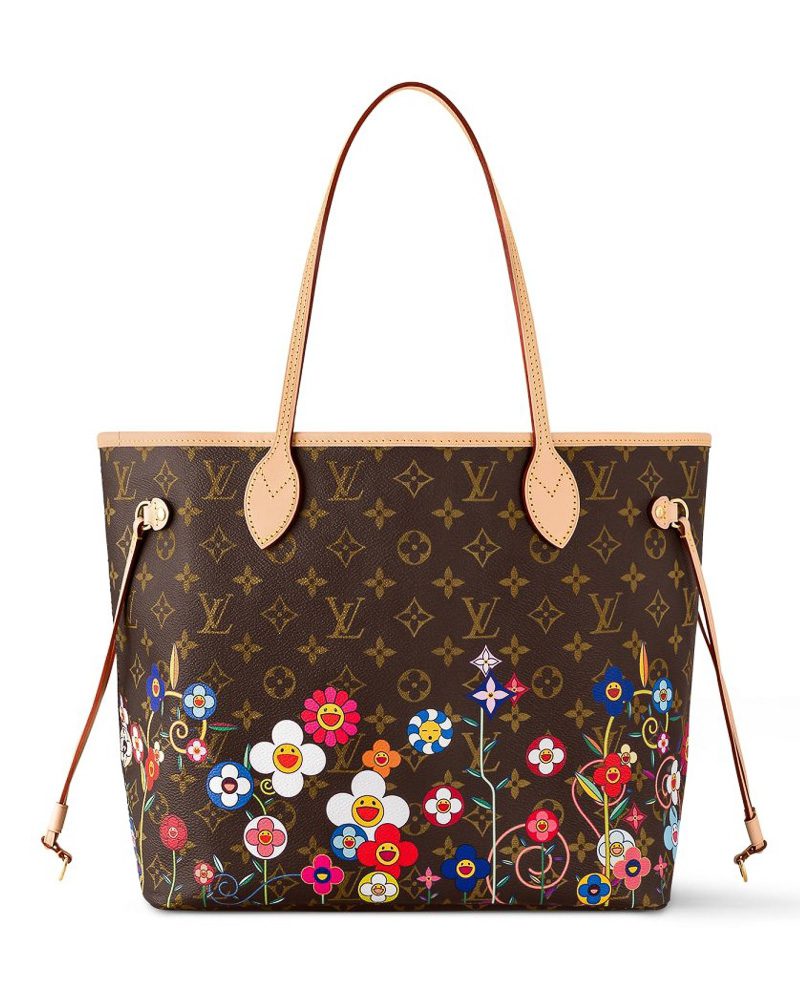
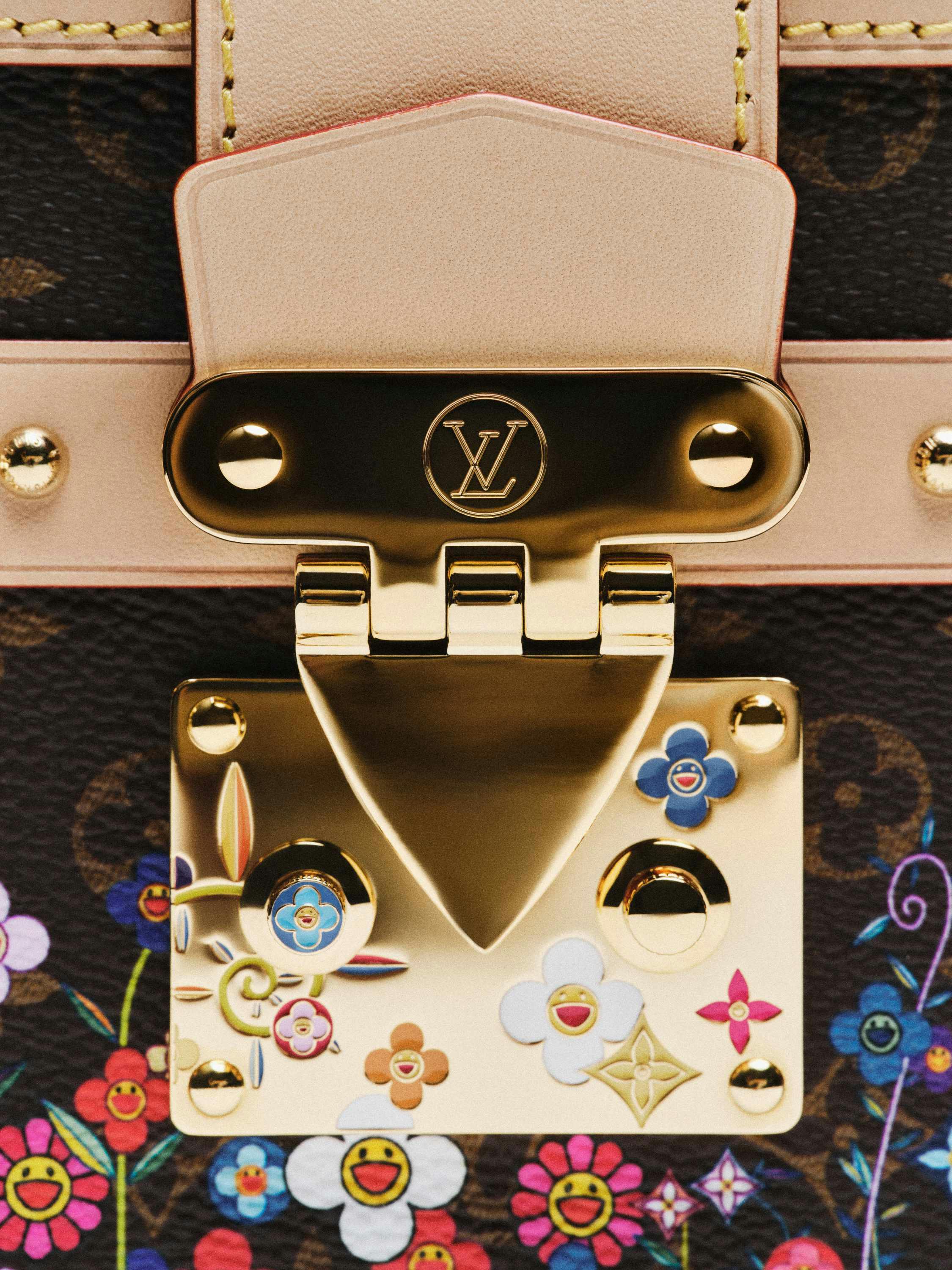
His signature flower motif, smiling daisies in saturated colors against flat backgrounds, has appeared on canvases selling for $15 million at Christie's and on Louis Vuitton handbags retailing for $1,500. The same image occupies both markets simultaneously. No other living artist has achieved that level of commercial and critical dual presence. Jeff Koons sells luxury goods but rarely collaborates with fashion houses at this scale. Damien Hirst merchandises but does not design products for global luxury brands. Murakami does both, and the art world has never fully decided whether to celebrate or condemn him for it.
The Louis Vuitton Numbers
Marc Jacobs, then creative director of Louis Vuitton, approached Murakami in 2002. The collaboration launched in 2003 with the Multicolore Monogram collection, which placed the LV monogram in 33 colors against a white or black background. The collection generated an estimated $300 million in revenue during its initial run. Louis Vuitton has never officially confirmed the figure, but industry analysts cite it as one of the most commercially successful artist collaborations in fashion history. Jessica Simpson carried the bag on MTV. Paris Hilton carried it at LAX. The image became synonymous with mid-2000s pop culture.
The cherry blossom bag, the cherry print, and the Cosmic Blossom collections followed. Each generated hundreds of millions in sales. Murakami received royalty payments plus a reported flat fee per collection. The financial structure was closer to a licensing deal than a traditional art commission. When asked whether the Louis Vuitton work was art, Murakami responded that asking the question revealed a Western bias he had no interest in addressing.
Kaikai Kiki Co. and the Factory Model
Murakami operates Kaikai Kiki Co., a studio and production company employing approximately 100 assistants across studios in Saitama, Japan and Brooklyn, New York. The operation mirrors Andy Warhol's Factory in concept but exceeds it in scale and commercial output. Where Warhol's Factory produced silk screens, films, and magazine covers, Kaikai Kiki produces paintings, sculptures, merchandise, animation (co-produced the anime feature Jellyfish Eyes in 2013), and curatorial projects.
Murakami's "GEISAI" art fairs in Tokyo launched careers of emerging Japanese artists by giving them exhibition space outside the traditional gallery system. The studio system allows Murakami to work across scales that would be impossible for a solo practitioner: a single painting can take 50 assistants working for six months to complete, layering acrylic paint in translucent coats that create the luminous flat quality his work is known for.
The Market Position
Murakami's auction record stands at $15.2 million for "My Lonesome Cowboy" (1998), sold at Sotheby's in 2008. The fiberglass sculpture depicts an anime-style figure in a pose that is deliberately provocative, challenging Western assumptions about Japanese pop culture and sexuality. His flower prints, produced in editions of 100 to 300, start at approximately $5,000 and trade up to $50,000 depending on size and edition number. The accessible price points create entry level collectors who graduate to higher priced works over time, building a collector pipeline that galleries typically struggle to create.
Gagosian Gallery, Perrotin, and Kaikai Kiki Gallery in Tokyo represent different tiers of his market. This multi-gallery strategy is unusual. Most artists of Murakami's commercial stature work exclusively with one primary dealer. Murakami uses three because each serves a different geographic and economic audience.
Verdict
Murakami proved that the choice between being a serious artist and a commercial one was always false. The flowers on the bag and the flowers on the canvas are the same flowers. The audience is different. The bank account is the same. That is the Superflat thesis, not as theory, but as business model. Murakami erased the line between high art and commercial product, then charged admission to watch people argue about whether the line ever existed in the first place.
Related Reading
- Three Late Francis Bacon Paintings Just Opened at Gagosian Paris
- AMOAKO BOAFO OPENS FIRST ITALIAN SOLO AT PALAZZO GRIMANI VENICE
- Daniel Arsham Made Six Car Keys From Geological Materials in 2023
Frequently Asked Questions
What is Takashi Murakami's net worth?
Murakami has built a career worth well over $100 million. His paintings have sold for as much as $15 million at auction, and his Louis Vuitton collaboration generated an estimated $300 million in revenue.
How much is a Takashi Murakami painting worth?
His works have reached around $15 million at Christie's. The same flower motifs span fine-art canvases and $1,500 Louis Vuitton handbags, occupying both markets at once.
What is the Murakami x Louis Vuitton collaboration?
Launched in 2003 with then creative director Marc Jacobs, the Multicolore Monogram placed the LV logo in 33 colors and is cited as one of the most commercially successful artist collaborations in fashion, with an estimated $300 million in early revenue.
What is Superflat?
Superflat is the theory Murakami coined in 2000, describing how Japanese culture flattens the line between fine art, anime, and commercial products, a hierarchy he argues was a Western invention.
Topics: gagosian, louis-vuitton, kaikai-kiki, takashi-murakami, contemporary-art, louis vuitton, japanese-art, art-market, takashi murakami, perrotin, superflat, daniel-arsham, daniel arsham