STONE ISLAND NB TEKELA BOOT BETS ON CONTROL
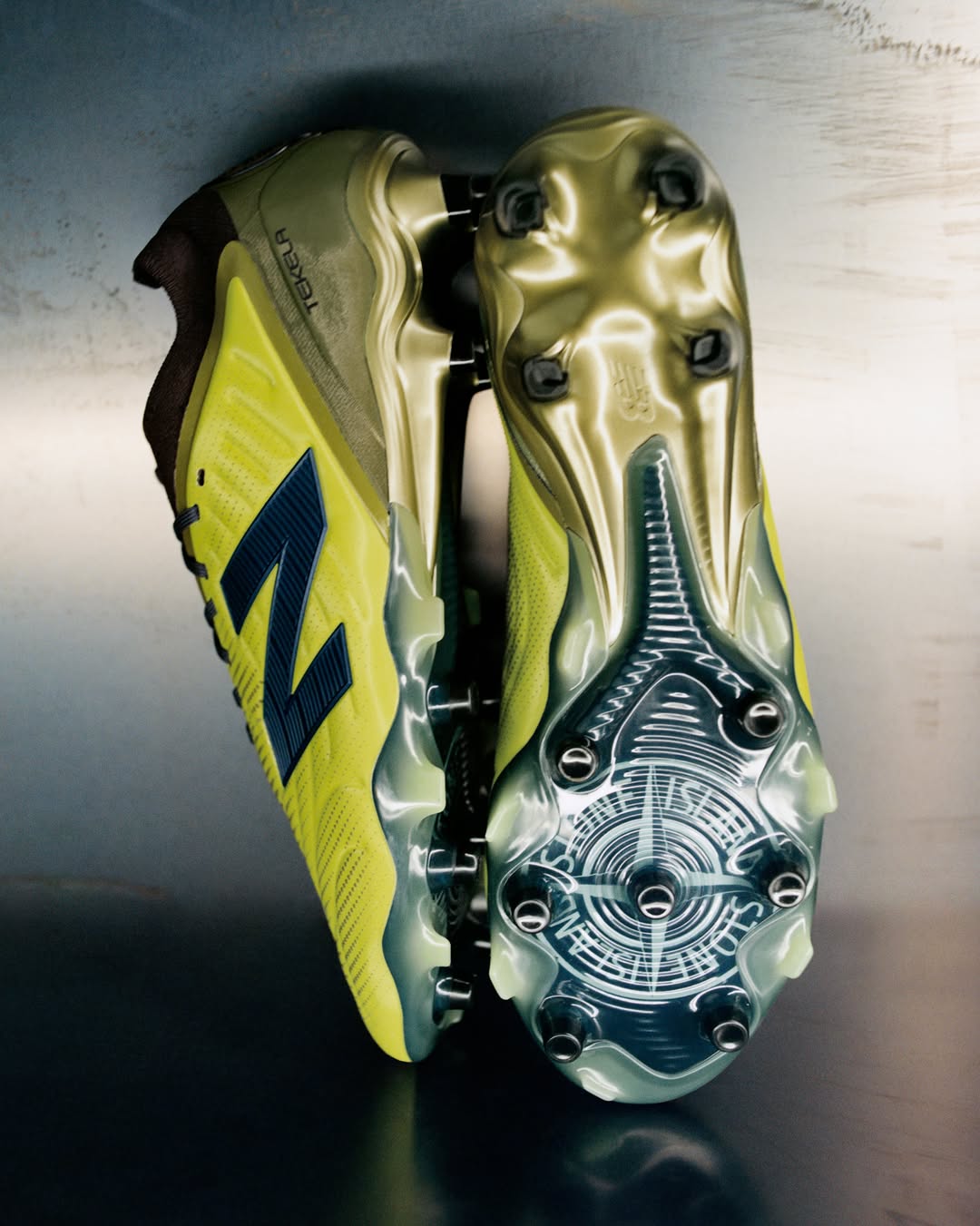
Stone Island and New Balance released the Tekela Elite Low FG v5, a firm-ground football boot from New Balance''s control-focused (rather than speed-focused) Tekela line, carrying Stone Island compass branding. This Habit Analyst read separates the engineering from the styling: the grip elements on the upper and anatomical construction are genuine, testable control-boot features built by New Balance, while Stone Island adds a badge, a colorway, and a design premium that does not improve performance. The verdict frames the real decision as social rather than technical lock-in: a control-boot player who wanted a Tekela anyway pays a small defensible tax, but a buyer purchasing the compass is paying performance-boot money for a fashion object and should know which half they are buying.

Key Points
- The Tekela Elite Low FG v5 sits on New Balance's control side, built for touch and grip rather than sprint speed
- Grip elements on the upper are a real, testable feature; the compass badge does not improve performance
- The collaboration adds a design premium, so the smart buyer separates New Balance's engineering from Stone Island's styling
- The lock-in is social, not technical: you are often really buying recognition, which is fine if you call it that
Here is the question that actually matters when a fashion house touches a football boot. Does the collaboration change anything your foot can feel, or does it only change what the boot costs and who nods at it in the car park. With the Stone Island and New Balance Tekela Elite Low FG v5, the honest answer is some of both, and the split is worth pulling apart.
The boot itself is a real performance object. The caption is specific in a way fashion captions usually are not: control, a structured upper with grip elements, an anatomical construction for stability. Those are function words. Stone Island brings the compass badge and the design world''s attention. The interesting part is where the engineering ends and the styling begins.
Tekela Is the Control Line, Not the Speed Line
Start with what the Tekela is built to do, because New Balance built it for a specific player. In boot terms there are roughly two philosophies, speed and control, and Tekela sits firmly on the control side. It is the boot for the player who wants touch, grip on the ball, and a connected feel, not the one chasing the lightest possible sprint shoe.
That matters because it tells you who this collaboration is actually for. The grip elements on the upper are the heart of a control boot, the textured zones that bite the ball on a first touch or a driven pass. The anatomical construction is about the foot feeling locked and stable, not sliding inside the boot when you plant and turn. These are not marketing words borrowed for a fashion drop. They describe a genuine design intent, and New Balance has been building real pitch credibility into this partnership, the foundation we mapped when Stone Island and New Balance started building a football capsule.
Grip Elements Earn Their Place on the Upper
Let me be fair to the engineering, because it is the strongest part of the story. Grip texture on a boot upper is one of the few performance features that survives contact with reality. Unlike a vague cushioning claim, you can feel the difference a tackier surface makes when the ball meets your foot at speed. It is a real, testable function.
The anatomical construction claim is softer but still meaningful. A boot that holds the foot in place reduces the tiny internal slips that cost you a clean strike. Whether the Stone Island version delivers more of this than a standard Tekela Elite is the part I cannot confirm from a photo, and that is exactly the line a buyer should hold. The performance came from New Balance''s boot program. The collaboration adds a badge and a colorway. The engineering does not get better because a compass is sewn onto it, and the smart buyer separates the two before reaching for a card. That skepticism is the same one you apply to any performance claim, the kind that holds up when a brand actually recruits aerodynamics experts and publishes the weight.
A Premium for a Compass Is the Real Question
Now the price, because this is where the behavior change lives. A Stone Island collaboration almost never costs the same as the base product. You will pay a design premium, and the only question that matters is what that premium buys you.
If you are a player who genuinely wants a control boot and you would have considered a Tekela Elite anyway, the compass is a small tax on a boot you already wanted, and that is a defensible purchase. If you are buying it because Stone Island is on it and you will wear it to five a side twice a year, you are paying performance boot money for a fashion object, and you should know that going in. The lock in here is not technical, it is social. The boot does not trap you. The badge does. The feature you are really buying is recognition, and recognition is a fine thing to buy as long as you are honest that it is the purchase.
Lace Them to Play, or to Pose. Decide First.
Here is the verdict, and it splits cleanly. If you play, want control, and the colorway moves you, this is a real boot with a real grip feature and a premium you can rationalize. Try it. If you are buying the compass and the boot is incidental, that is allowed too, just call it what it is.
The Tekela Elite Low FG v5 is a genuine control boot wearing a fashion badge. Decide which half you are paying for before you lace it, because the engineering and the styling are two different products sharing one upper.
Know which one you want. The grip is real. The compass is a choice.
Frequently Asked Questions
What is the Stone Island x New Balance Tekela Elite Low FG v5?
It is a firm-ground (FG) football boot from New Balance''s control-focused Tekela line, version 5, carrying Stone Island compass branding. The caption highlights control, a structured upper with grip elements, and an anatomical construction for stability.
Is the Tekela a speed boot or a control boot?
Control. New Balance''s Tekela line prioritizes touch, ball grip, and a connected feel rather than the lightest possible sprint shoe, which tells you the boot is built for players who value a clean first touch.
Does the Stone Island branding improve performance?
No. The grip elements and anatomical construction come from New Balance''s boot program. Stone Island adds a badge, a colorway, and a design premium. The engineering does not improve because a compass is sewn on, so separate the two before buying.
Topics: New Balance, Stone Island, soccer, Tekela, stone-island, stone island, football boots, collaboration, new-balance, performance footwear, tech, new balance