RIMOWA DESIGN PRIZE PICKS A SIGN LANGUAGE BRACELET
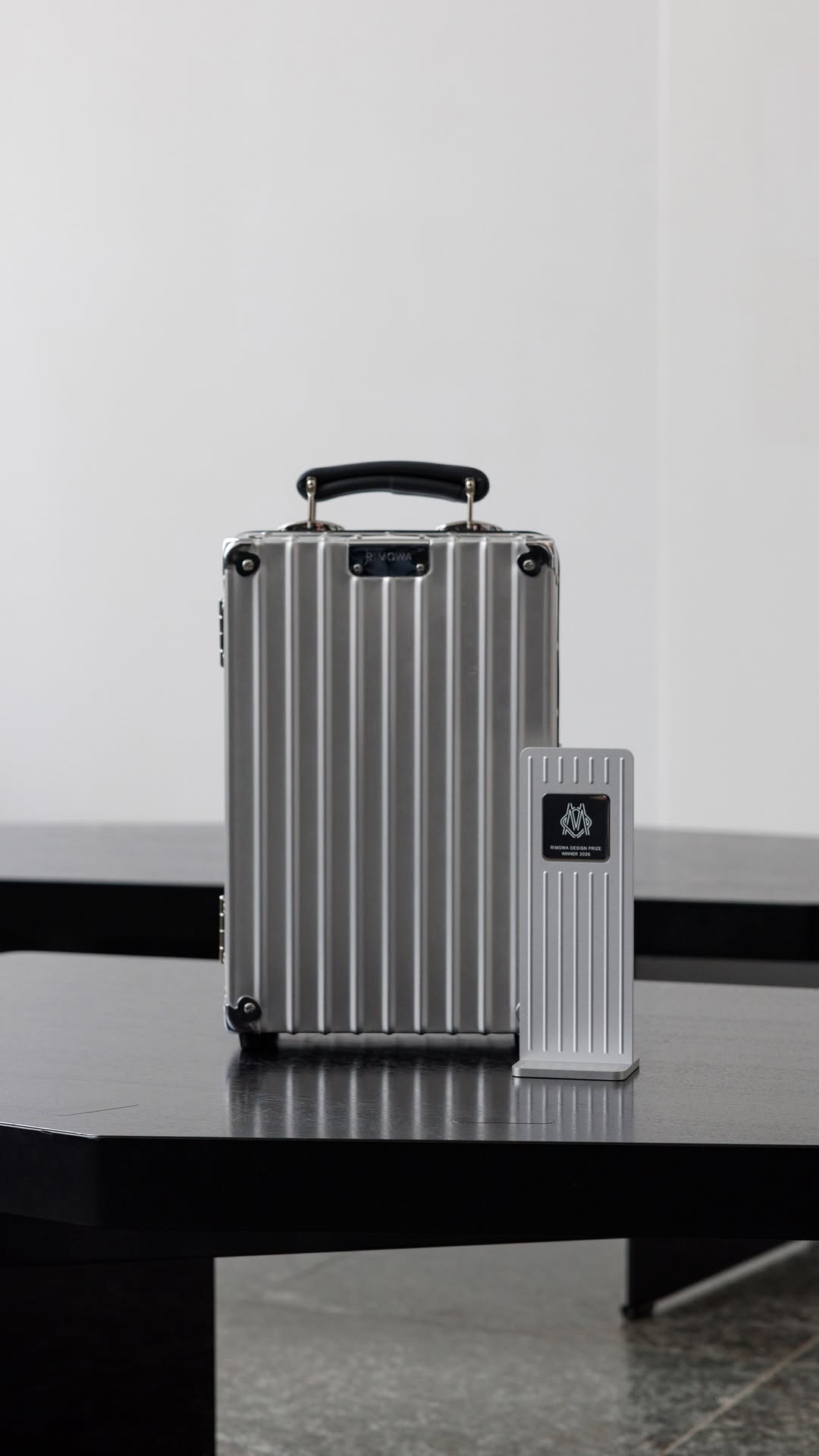
A bracelet that translates sign language into speech, designed by Samuel Nagel and Paul Feiler, won the 2026 Rimowa Design Prize and its 20,000 euro award, as reported by Dezeen. This Credits Reader treats the award like a record''s credit roll: the prize money functions as seed capital for two emerging designers, but the more valuable transfer is credibility, the award-winning credit they can carry into every future collaboration. It celebrates the object''s ambition, an assistive translation layer engineered into wearable jewelry that makes a motion-based language audible, and reads the patron line carefully, arguing Rimowa, a luggage brand with no connection to assistive tech, funds the prize to buy design goodwill cheaply, a fair trade where the designers get funded and famous and the brand gets to stand next to meaning.
Key Points
- Samuel Nagel and Paul Feiler won the 2026 Rimowa Design Prize and 20,000 euros for a bracelet that translates sign language into speech
- The prize's most valuable transfer is not the money but the credibility, the award-winning credit the designers carry forward
- The object's breakthrough is wrapping hard real-time translation engineering into something a person would actually wear
- Rimowa, a luggage brand, funds the prize to buy design goodwill cheaply, a fair trade visible only if you read the whole credit roll
Read the credits first, because the credits tell the whole story. Samuel Nagel and Paul Feiler. The 2026 Rimowa Design Prize. Twenty thousand euros. A bracelet that translates sign language into speech. Four facts, and every one of them matters more than the trophy photo.
A design award is a credit roll, the same way a record is. Someone made the thing, someone paid for the platform, and someone decided whose name gets read out loud. When you slow down and look at who is credited here, a small but genuinely interesting story falls out of it.
20,000 Euros and Two Names on the Trophy
Start with the prize itself, because the numbers set the stakes. Twenty thousand euros is real money to two emerging designers, the kind of sum that funds a next prototype, a patent filing, a few more months of work on a thing that does not yet pay for itself. It is seed capital wearing the clothes of an award.
And the names matter. Nagel and Feiler are not yet household designers, which is exactly the point of a prize like this. The award is a spotlight that transfers credibility, and the most valuable thing it hands the winners is not the check, it is the credit, the right to say award winning in front of every future investor, employer, and collaborator. A prize is a distribution deal for a reputation, and that is precisely how a young artist treats a co sign, the way real momentum tends to start with a credit nobody can take back, the dynamic we mapped in the campus design lab Nike built and invited a camera into.
Samuel Nagel and Paul Feiler Made the Invisible Audible
Now the object, because the object is the reason any of this is worth your attention. A bracelet that translates sign language into speech is doing something profound in a small package. It takes a language that exists in motion and space, a language the hearing world mostly cannot read, and renders it audible. It is a translation layer worn on the wrist.
What I find genuinely moving is the ambition hidden in the form factor. This is not a screen or an app. It is jewelry that listens to the hands. The hard engineering, reading the precise geometry of signing and converting it to speech in real time, is wrapped in something a person would actually wear. That is the whole game in assistive design, making the technology disappear into something human, the same discipline that turns wild geometry into a buildable object the way Frank Gehry used jet software to make his curves real. The breakthrough is not just that it works. It is that it works as an object you would put on.
Rimowa Sells Suitcases and Buys Goodwill
Here is the credit most people skip, the patron. Rimowa makes luggage. It does not make assistive devices, sign language tools, or anything close. So why does a suitcase company fund a design prize that crowns a communication bracelet.
Because patronage is the cheapest credibility a luxury brand can buy. By attaching its name to genuine, useful, human design, Rimowa borrows the goodwill of the work without having to invent it. The prize costs the brand a fraction of one ad campaign and returns something an ad cannot, the impression of a company that cares about design as a force for good rather than just a marketing surface. That is not cynical, it is smart, and it is also a fair trade. The designers get funded and famous. Rimowa gets to stand next to meaning. Everyone in the credit roll wins, as long as you can see the whole roll.
Watch the Patron, Not Just the Prize
Here is the read. Celebrate Nagel and Feiler, because they earned it and the object deserves the attention. But do not stop reading the credits at the winners, because the full story includes who funded the stage and what they got for it.
The 2026 Rimowa Design Prize is a clean example of how patronage works in design now, a brand buying proximity to good work and a pair of young designers cashing that proximity into a career. Watch where Nagel and Feiler go next, because the prize is the opening credit, not the finale. And watch how Rimowa spends its goodwill, because that is the credit nobody reads aloud.
Read the whole roll. The winners are only the first line.
Frequently Asked Questions
Who won the 2026 Rimowa Design Prize?
Samuel Nagel and Paul Feiler won the 2026 Rimowa Design Prize for a bracelet that translates sign language into speech. They received a 20,000 euro award, as reported by Dezeen.
What does the winning design do?
It is a wearable bracelet that translates sign language into speech in real time, rendering a motion-based language audible to the hearing world. The engineering is wrapped into jewelry rather than a screen or an app.
Why does Rimowa fund a design prize?
Rimowa makes luggage, not assistive devices. Funding a prize that crowns genuinely useful design lets the brand borrow that goodwill cheaply, a fraction of one ad campaign, in exchange for standing next to meaningful work.
Topics: Rimowa Design Prize, Rimowa, sign language, Samuel Nagel, design, industrial design, Paul Feiler, assistive design, nike