Fallen Leaves Fill Norm Architects' Karimoku Show
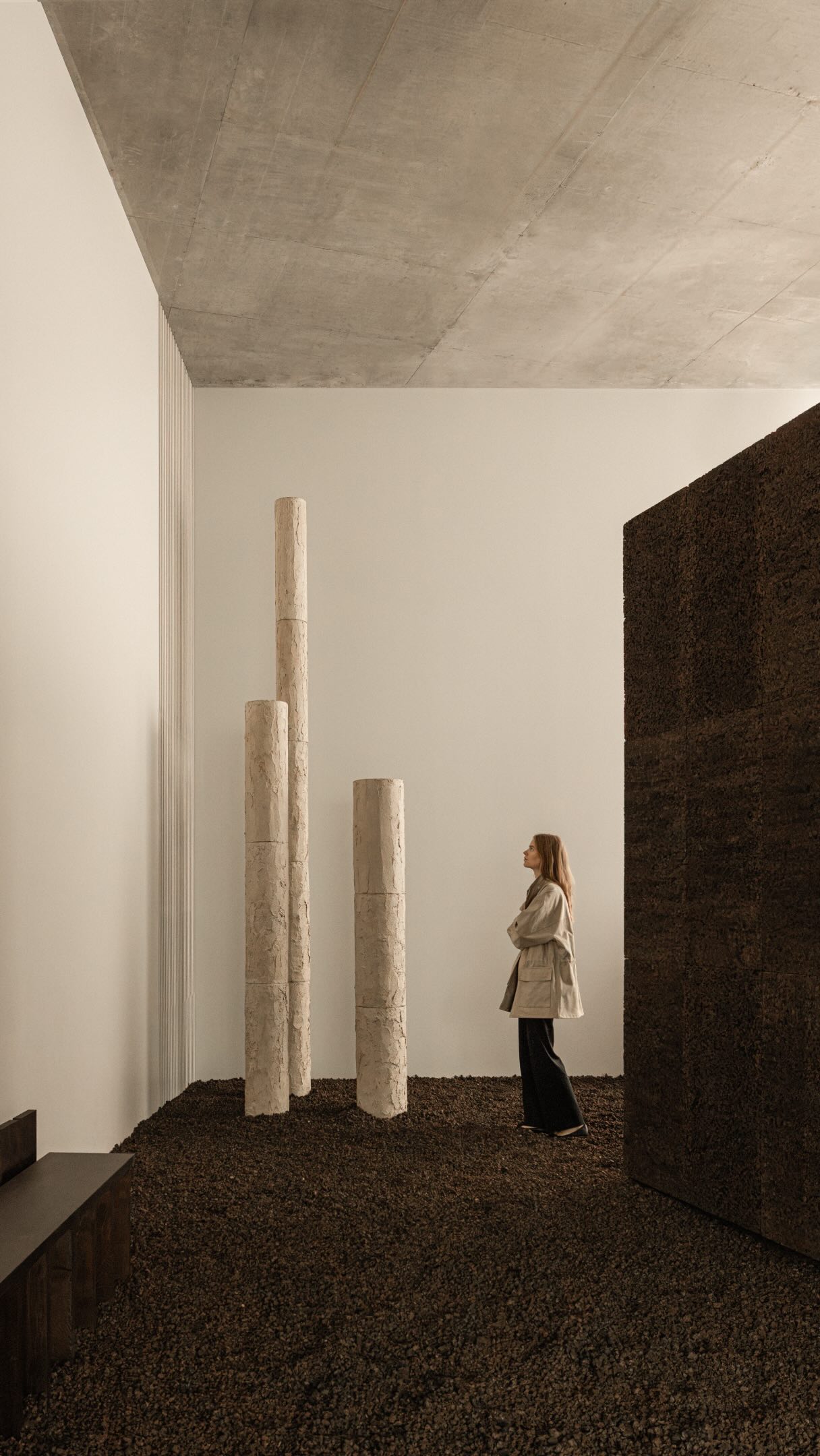
Forest Conversations is an exhibition by Norm Architects and Keiji Ashizawa with Karimoku Case at the Karimoku Research Center and Karimoku Commons Tokyo in Nishiazabu, opened November 3, 2026. Its Still Room pavilion uses cork, solid wood and water, and a second space shows ten Karimoku Case chairs with their prototypes.
Key Points
- Forest Conversations is co directed by Norm Architects and Keiji Ashizawa with Karimoku Case
- The Still Room pavilion is built from cork, solid wood and water
- Karimoku Commons Tokyo shows ten Karimoku Case chairs with their development process
Fallen leaves are part of the furniture show. Forest Conversations, Norm Architects' new exhibition with Karimoku Case at the Karimoku Research Center in Tokyo, puts cork, solid wood, paper pulp, washi, water and leaves off the forest floor in rooms beside the chairs they eventually become.
Furniture shows usually start at the finished object. Forest Conversations walks it backwards.
Norm framed it as a question, asking "what changes when we look beyond the finished object and return our attention to the living origins of the materials around us?" The Copenhagen studio co directs the show with the Tokyo architect Keiji Ashizawa, the pairing that started Karimoku Case in the first place.
Cork, Water and Solid Wood Fill The Still Room
The Still Room is the centerpiece, a pavilion built from cork, solid wood and water, according to Karimoku's press release. The cork thinking comes through Corkinho, whose founder Cédric Étienne is credited alongside it. That framing changes how the room reads. Cork is bark. Washi is fibre from a shrub. Paper pulp is wood broken all the way down and put back together. The show lays those stages out next to each other so you can see the distance between a trunk and a seat.
The artists in the room are Mikio Ishiguro, Corkinho, THOUSAND and Gen Taniguchi, with styling by Yumi Nakata. Norm's film of the space is by Karl Tranberg.
Norm said in its own words what it was after. "Forest Conversations became an opportunity to explore the distance between forest and furniture, raw matter and crafted form, and to consider how architecture can make those connections more perceptible."
Perceptible is the right word. Nothing here is hidden behind a plinth.
The show runs across two addresses in Nishiazabu. The Research Center's ground floor archive holds the installations, and Karimoku Commons Tokyo, nearby, holds The Case Archive. It opened November 3, and entry is free.
Ten Chairs Show Where Karimoku Case Came From
The second room is the history lesson. Karimoku Commons Tokyo shows ten chairs picked from past Karimoku Case projects with their development process laid out, plus a cork and solid wood table with its prototypes, per Tokyo Art Beat's listing.
That's a rare thing for a furniture company to show. Prototypes are usually the part that gets thrown away.
Karimoku itself started in 1940 as Shohei Kato's woodworking shop in Kariya, in Aichi prefecture. The name is Kariya plus moku, the Japanese word for wood.
Karimoku Case came much later. It launched as Karimoku Case Study at 3 Days of Design in Copenhagen in 2019, out of a Tokyo apartment project called Kinuta Terrace that Norm and Keiji Ashizawa Design worked on together, as Dezeen reported at the time. The furniture was drawn for specific rooms first and sold to everyone else second. That's still how the collection grows. An Azabu residence, a restaurant, a wine bar; each case adds pieces.
The Research Center Keeps Inviting Outsiders In
The building matters here. The Karimoku Research Center opened in Nishiazabu on October 26, 2024, in a renovated three storey building, and it has spent two years acting less like a showroom and more like a lab with a front door.
Earlier this year Devon Turnbull filled it with sound. His OJAS listening room at Karimoku Tokyo showed three new speakers, the Sanjo, Rokujo and Nurikabe, among wooden horns machined by Karimoku. That show was about the space between notes. This one is about the space between a tree and a table. Same building, same patience.
Norm keeps bringing Japanese ideas home, too. Its Shoreline Studio in Odsherred uses shakkei, the Japanese practice of borrowing the view through framed openings, on a thatched Danish summerhouse. And in New York, Jonas Bjerre Poulsen built Audo House in Tribeca around an 1880s industrial shell he refused to cover up.
Forest Conversations is the clearest statement yet of what Norm believes. The studio has always been sold as Scandinavian calm, the pale oak and soft light you see on a thousand mood boards. This show argues the calm comes from somewhere specific, from bark and pulp and leaves and water, and that a good chair should let you feel a little of the forest it came from.
Ten chairs and their prototypes sit in the Case Archive to prove it.
Frequently Asked Questions
What is Forest Conversations?
An exhibition by Norm Architects and Keiji Ashizawa with Karimoku Case in Tokyo, using cork, solid wood, paper pulp, fallen leaves, washi and water to trace furniture back to the forest.
Where is the Karimoku Research Center?
In Nishiazabu, Minato, Tokyo. It opened in October 2024 in a renovated three storey building.
What is Karimoku Case?
A furniture collection that began as Karimoku Case Study in 2019, drawn by Norm Architects and Keiji Ashizawa for specific projects first.
Topics: tokyo, karimoku, keiji-ashizawa, cork, karimoku-case, furniture-design, exhibition, norm-architects, dezeen