Ferrari 296 Challenge Stradale Drops the Hybrid
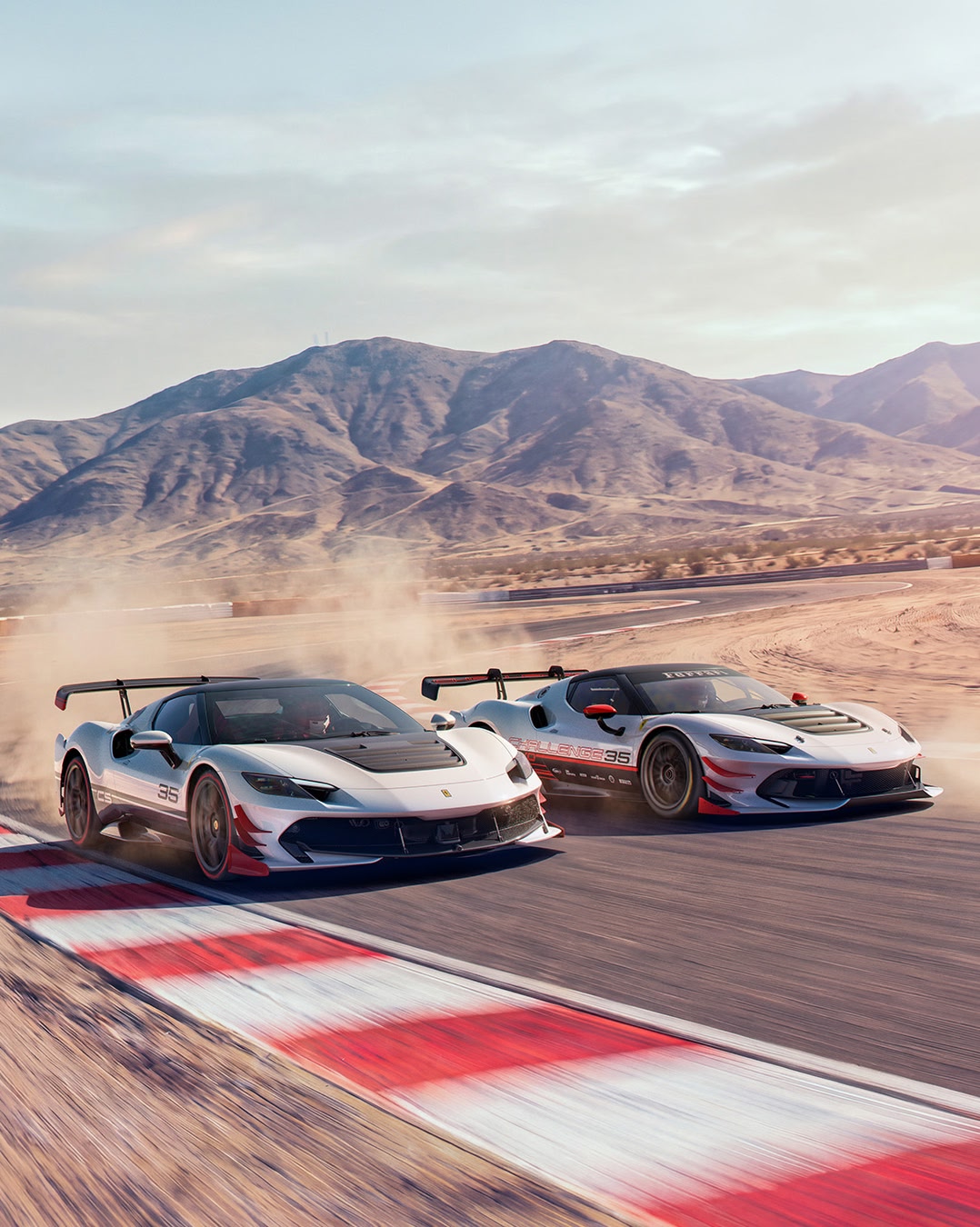
Ferrari unveiled the 296 Challenge Stradale and 296 Challenge Evo at the Finali Mondiali in Barcelona on November 21, 2026, both running the twin turbo V6 with no hybrid system. The road legal Stradale makes 670 cv and 617 kg of downforce at 250 km/h, 72 percent more than the 296 GTB, while the 700 cv track only Evo lapped Mugello 0.8 seconds quicker than the 296 Challenge and races from 2027.
Key Points
- Stradale makes 670 cv and 740 Nm from a twin turbo V6 with no hybrid system
- 617 kg of downforce at 250 km/h, 72 percent more than the 296 GTB
- Track only Evo makes 700 cv and lapped Mugello 0.8 seconds quicker
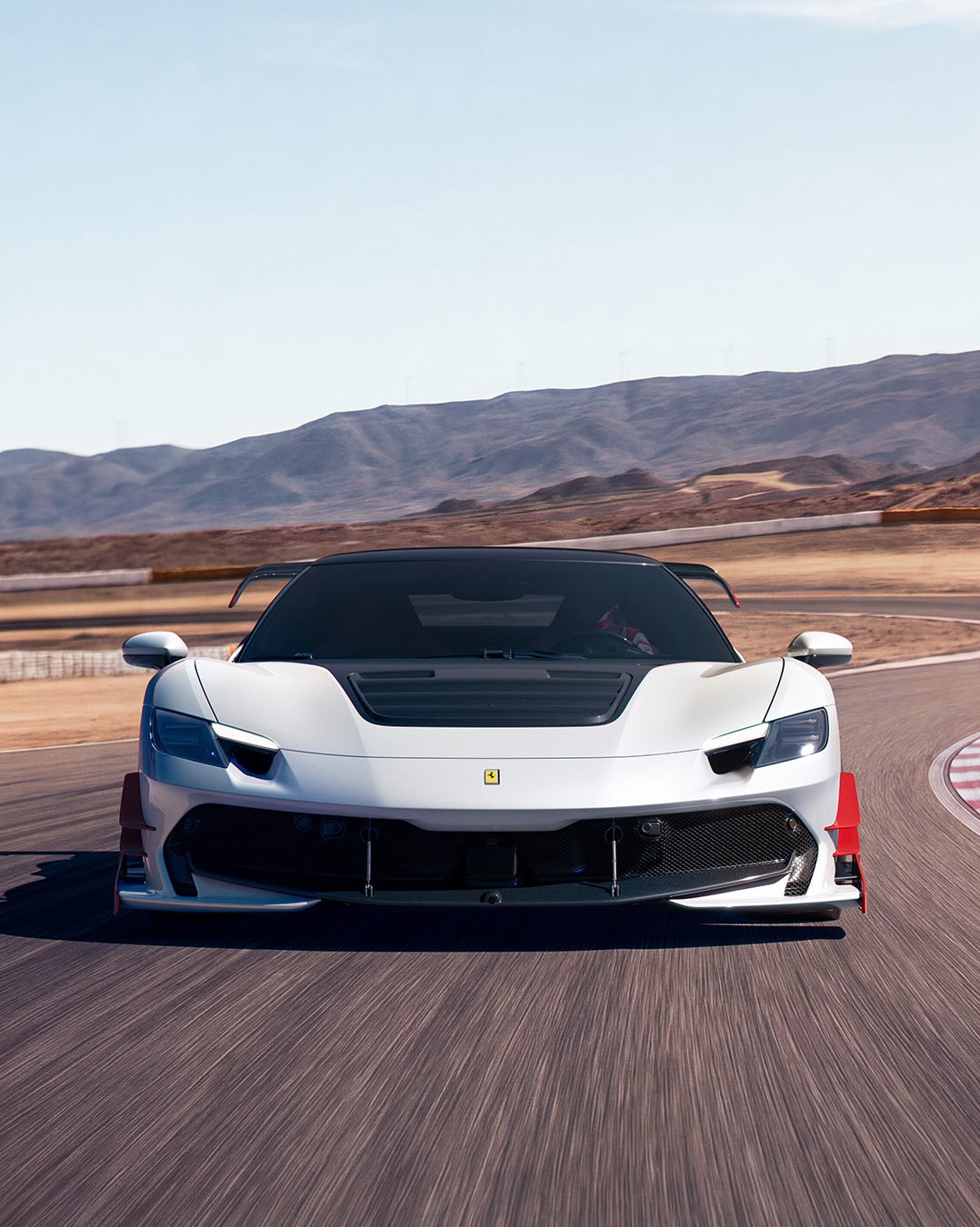
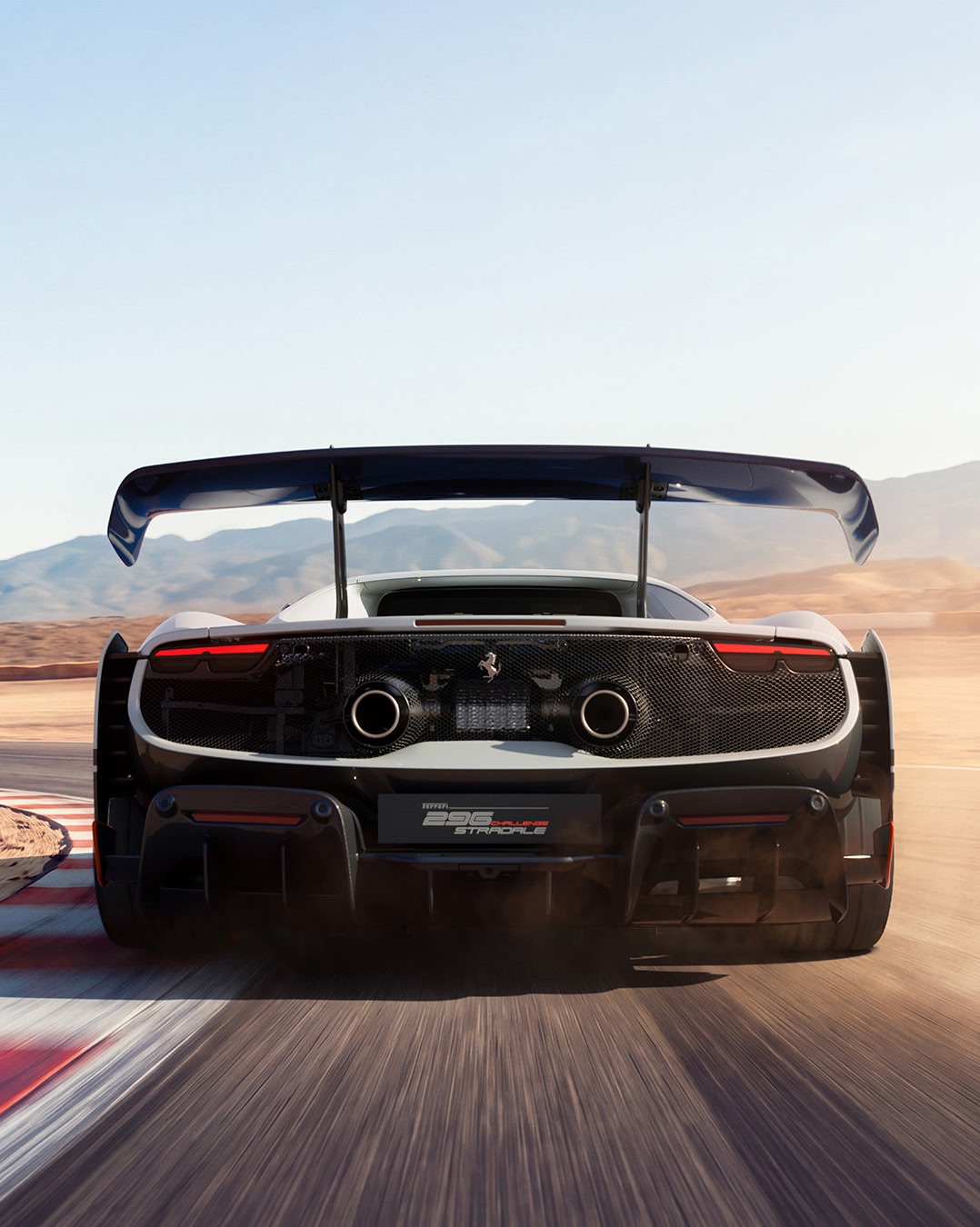
Ferrari took the hybrid out of the 296 and got a sharper car. The 296 Challenge Stradale runs its twin turbo V6 alone, with no electric motor and no battery, and it still makes 617 kg of downforce at 250 km/h, 72 percent more than the 296 GTB it's built from. Ferrari unveiled the 296 Challenge Stradale and the 296 Challenge Evo together at the Finali Mondiali in Barcelona on November 21.
The road car makes 670 cv. The race car makes 700.
Both run on combustion alone. Ferrari calls it an ICE only architecture, and the point is lower mass and a more direct response than the plug in hybrid road car can give.
Ferrari Takes the Motor Out
The 296 Challenge Stradale makes 670 cv at 8,000 rpm and 740 Nm of torque at 6,250 rpm from its twin turbo V6. It drives through an eight speed dual clutch gearbox, and Ferrari's reported figure for 0 to 100 km/h is 2.8 seconds.
That's less power than the 296 GTB on paper. The GTB pairs its V6 with an electric motor for 830 cv combined.
Ferrari's reasoning is that a car built to feel like a racer is better off without the motor, the battery and their weight. The Stradale trades peak output for less mass and a throttle that answers straight from the engine.
It's the Challenge race car's thinking applied to a road car. The 296 Challenge racer, unveiled at Mugello in October 2023, also dropped the hybrid system and ran the V6 on its own. It was the ninth model in Ferrari Challenge history, and Ferrari said it lapped Mugello 2 seconds quicker than the 488 Challenge Evo it replaced.
Fixed Rear Wing Does the Heavy Lifting
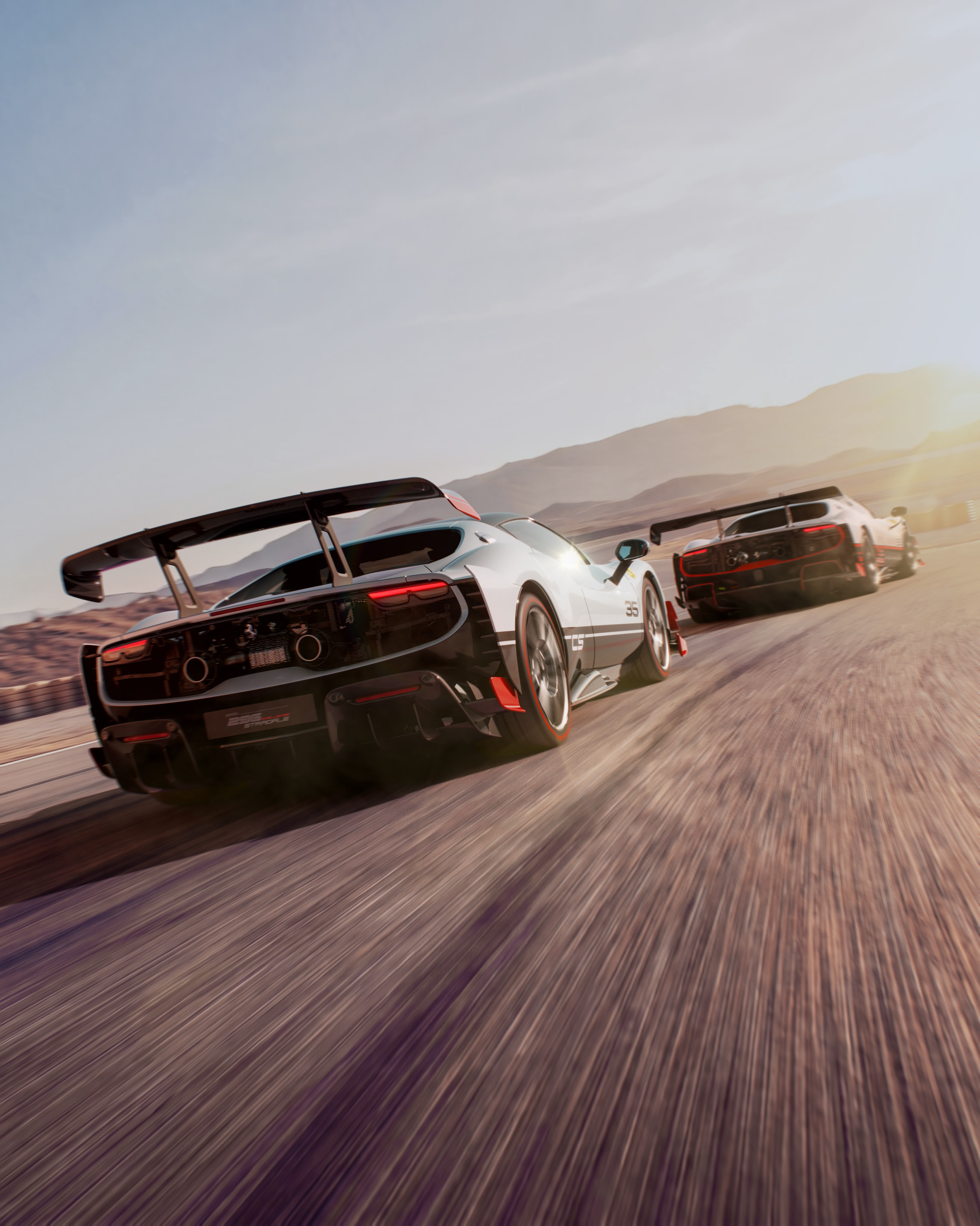
The Stradale's 617 kg at 250 km/h comes from a fixed rear wing and racing aerodynamics, paired with dedicated vehicle dynamics settings. It's the biggest number in the car's spec, and the one that tells you what it's for.
Set it against the rest of the family. The 296 Speciale makes 880 cv and 435 kg of downforce at 250 km/h. The Stradale has 210 cv less and roughly 180 kg more downforce.
That's a car built for corners, not straight lines.
The 296 Challenge race car posted 870 kg at 250 km/h with its spoiler at maximum angle when it launched in 2023. The Stradale sits between the Speciale and the racer, which is right where a road legal Challenge car should be.
Carbon Door Panels and Tubular Seats
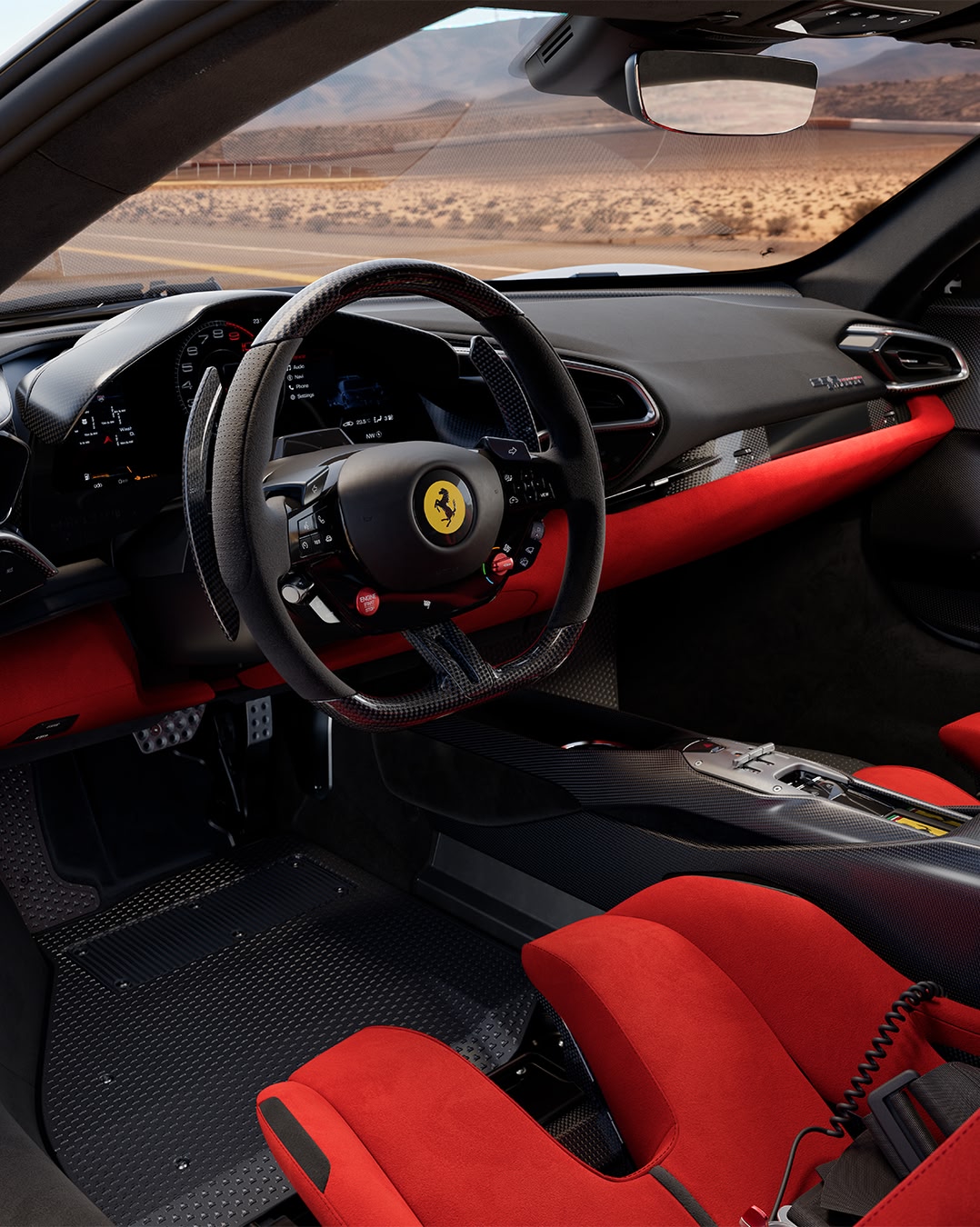
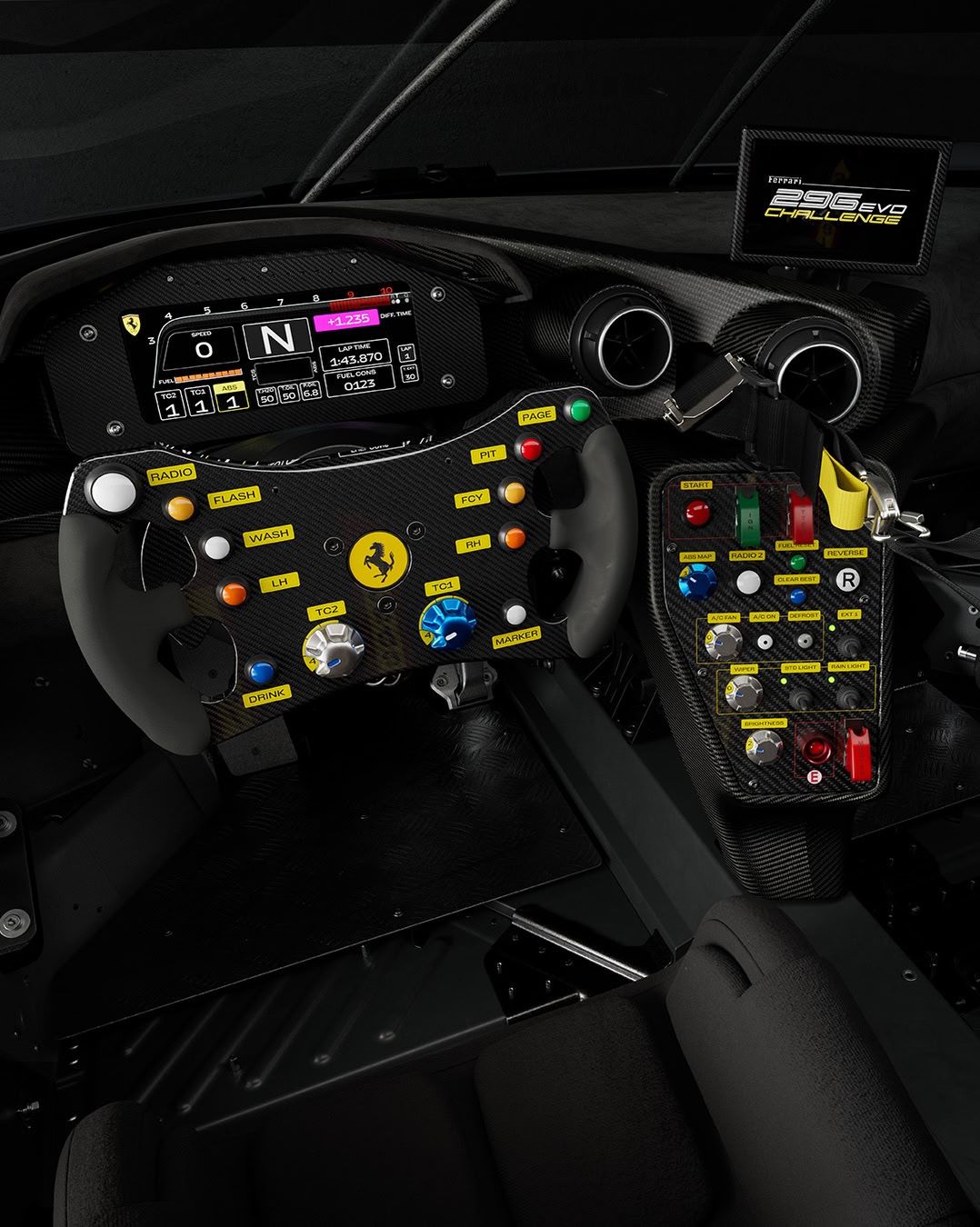
Ferrari stripped the Stradale's cockpit of anything it calls superfluous. The door panels are carbon fibre, the seats are tubular, and the carbon fibre transmission tunnel is left exposed down the middle of the cabin.
Exposed carbon isn't decoration here. It's what's left when the trim comes off, and it tells the driver how the car was built every time they look down.
The tubular seats matter for the same reason. They're the kind of shell you find in a race car, and putting them in a road Ferrari says the cabin is a workplace first.
Ferrari Revives the Challenge Stradale Name From 2003
The 296 Challenge Stradale brings back a name Ferrari last used on the 360 Challenge Stradale in 2003. That car was the road version of the 360 Challenge racer.
Bringing the name back now is a statement about lineage. The Challenge series is Ferrari's one make racing championship for customers, and the Stradale is the most direct link to one of those cars in the current road range.
The company has run its whole history this way, and Scuderia Ferrari existed as a racing team years before Ferrari built a road car. A Challenge Stradale is that order of things in a single model, race car first, road car second.
Mugello Lap Times Favor the 296 Challenge Evo
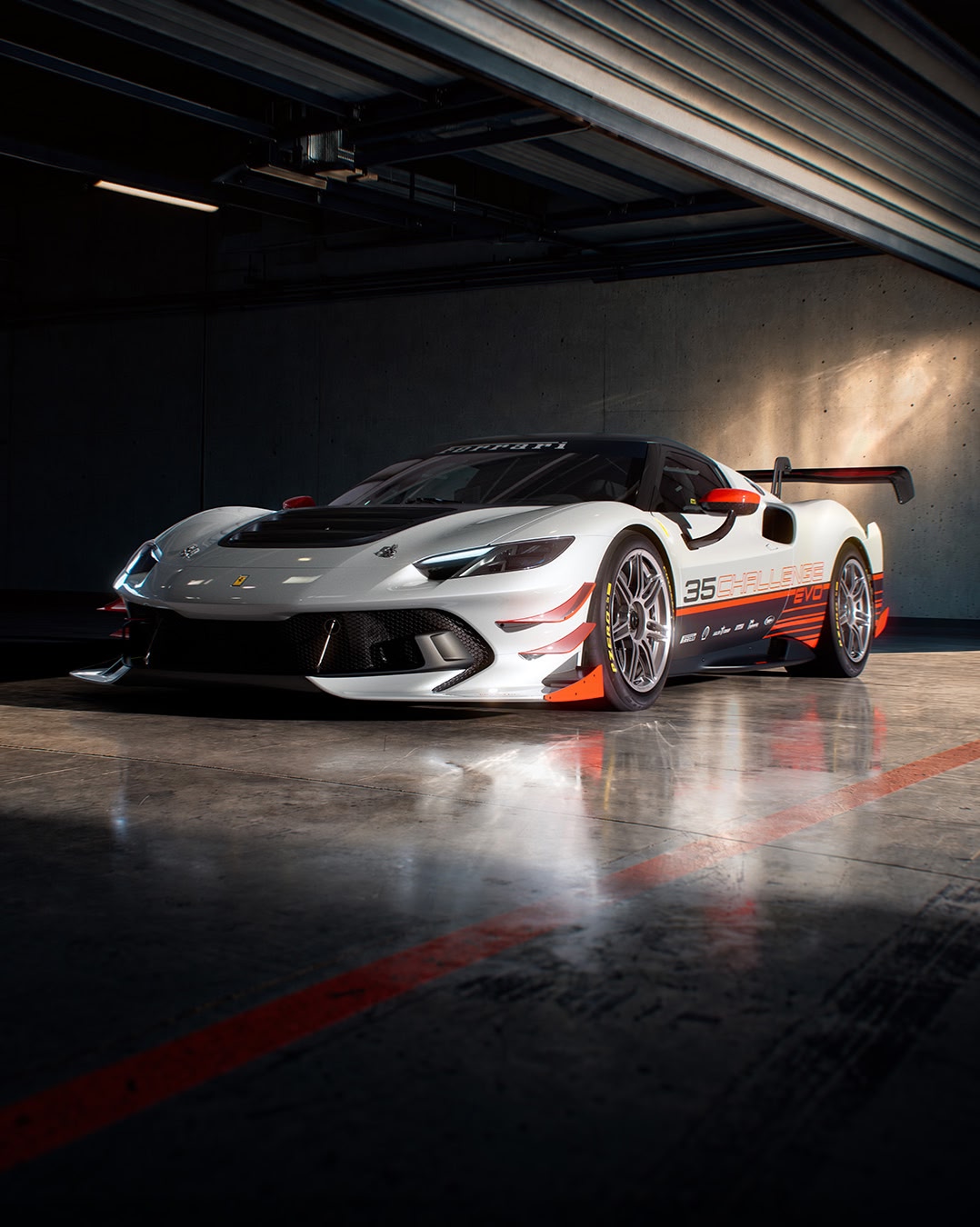
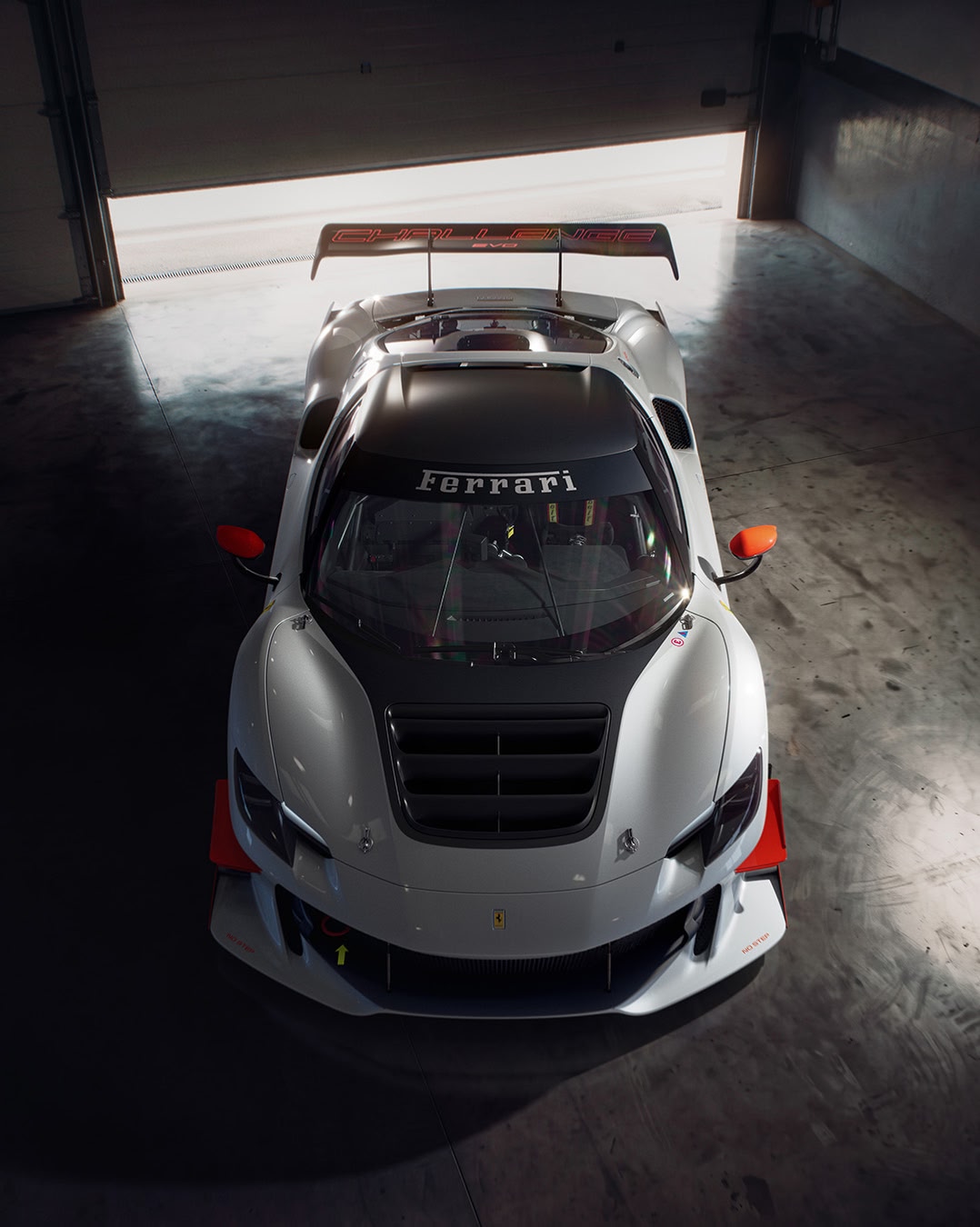
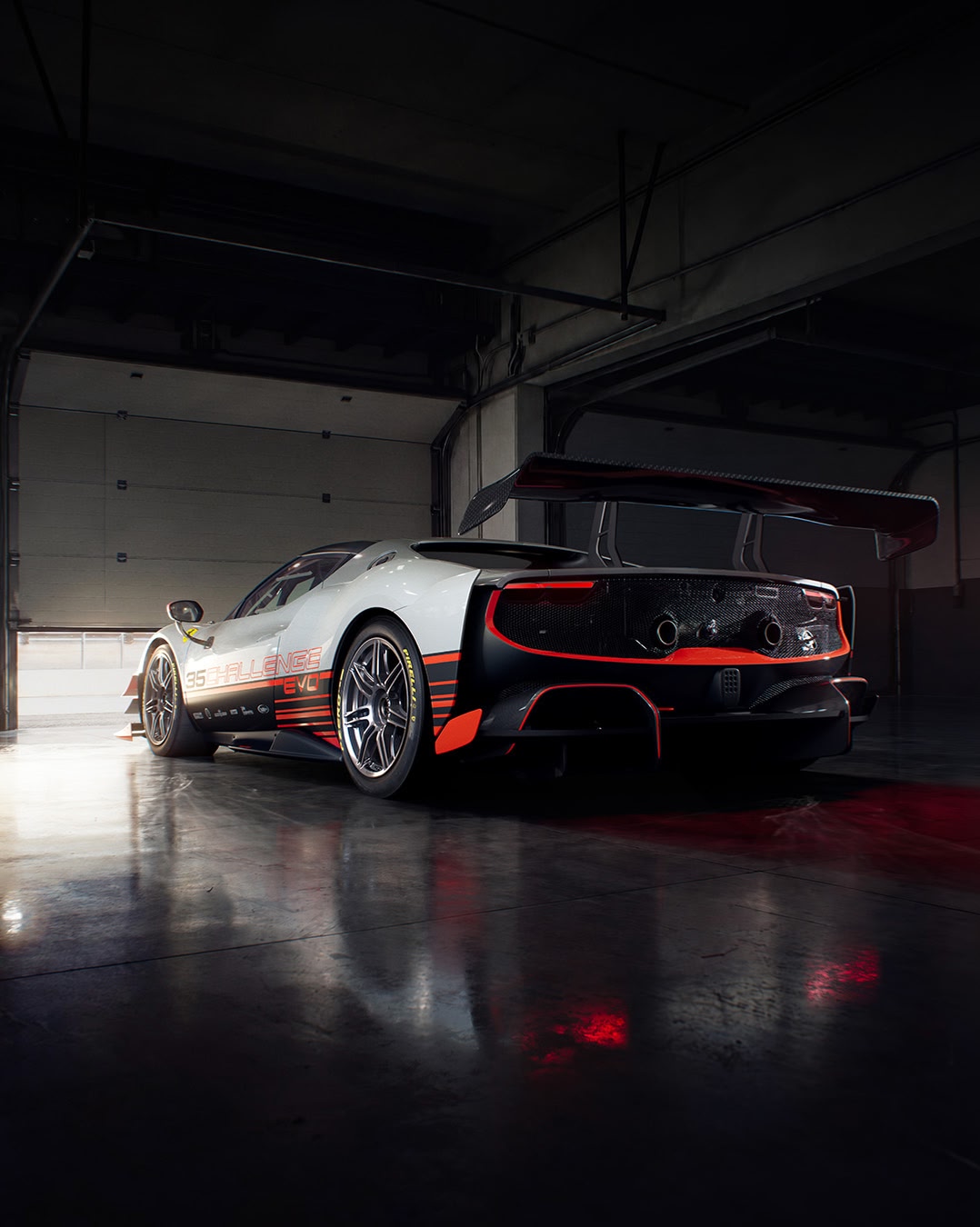
The 296 Challenge Evo is the track only car, and in comparative testing at Mugello it lapped 0.8 seconds quicker than the outgoing 296 Challenge. It makes 700 cv from its V6, again with no hybrid assistance.
The Evo gets two standard aerodynamic setups. High Downforce adds 12 percent more peak downforce, about 100 kg extra at 250 km/h. Low Drag cuts aerodynamic drag by 4 percent for faster circuits.
The Evo is aimed at the Ferrari Challenge from 2027, where it replaces the current car.
Two cars, one platform, no batteries. The Stradale is the more important of the pair. The Evo will win races in a series built for it, but the Stradale puts 617 kg of downforce, carbon door panels and the 360's old name in a car you can drive home from the track.
Frequently Asked Questions
What is the Ferrari 296 Challenge Stradale?
A road legal, track focused version of the 296 that drops the hybrid system, revives the Challenge Stradale name last used on the 360 in 2003 and makes 617 kg of downforce at 250 km/h.
How much power does the 296 Challenge Stradale make?
670 cv at 8,000 rpm and 740 Nm at 6,250 rpm from its twin turbo V6, through an eight speed dual clutch gearbox.
When does the 296 Challenge Evo race?
The track only 296 Challenge Evo is aimed at the Ferrari Challenge from 2027, replacing the current 296 Challenge.
Topics: ferrari-296, ferrari-challenge, 296-challenge-evo, supercars, scuderia ferrari, 296-challenge-stradale, ferrari, finali-mondiali, scuderia-ferrari