Rothko's 1968 Untitled Puts Electric Blue Against Rust
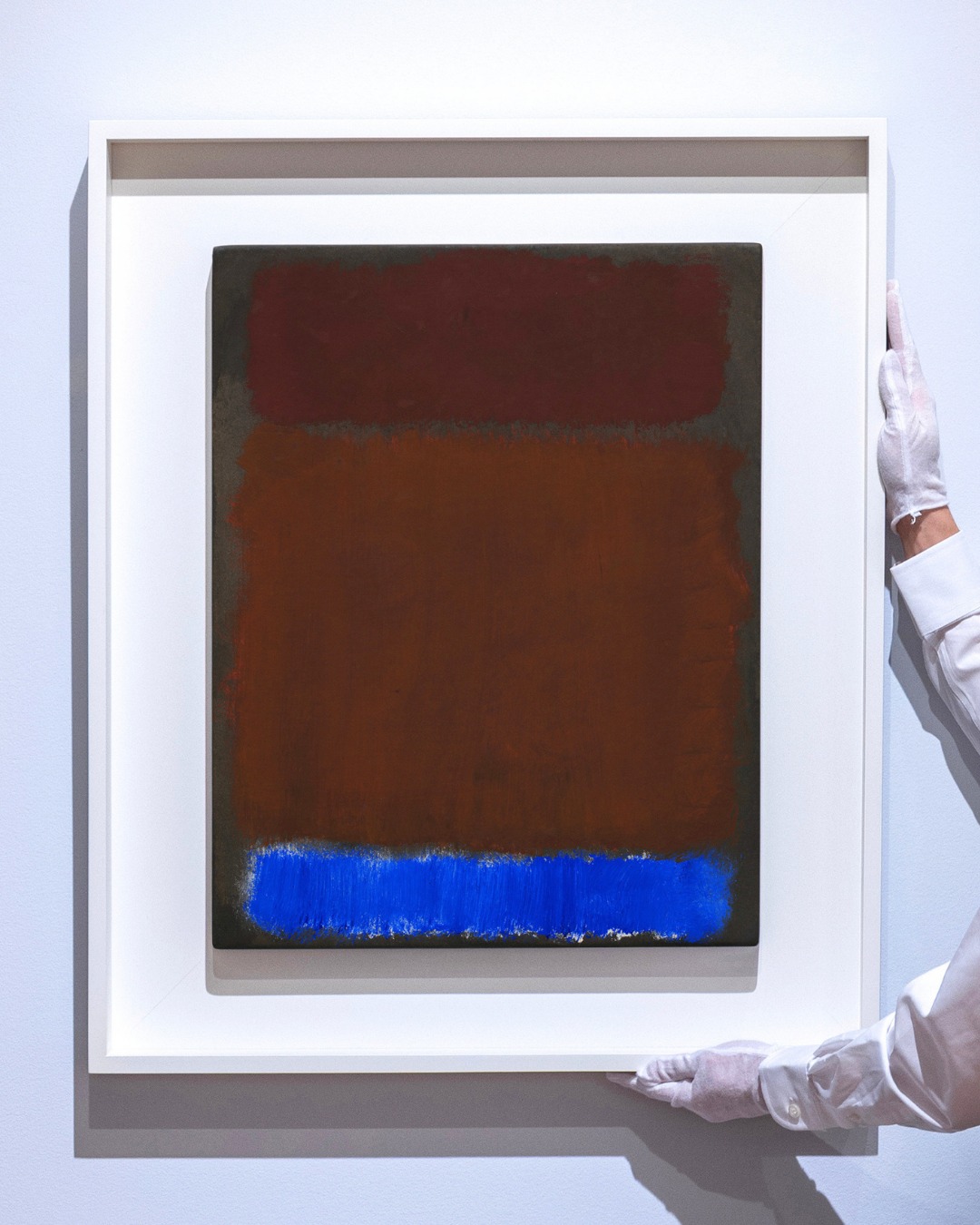
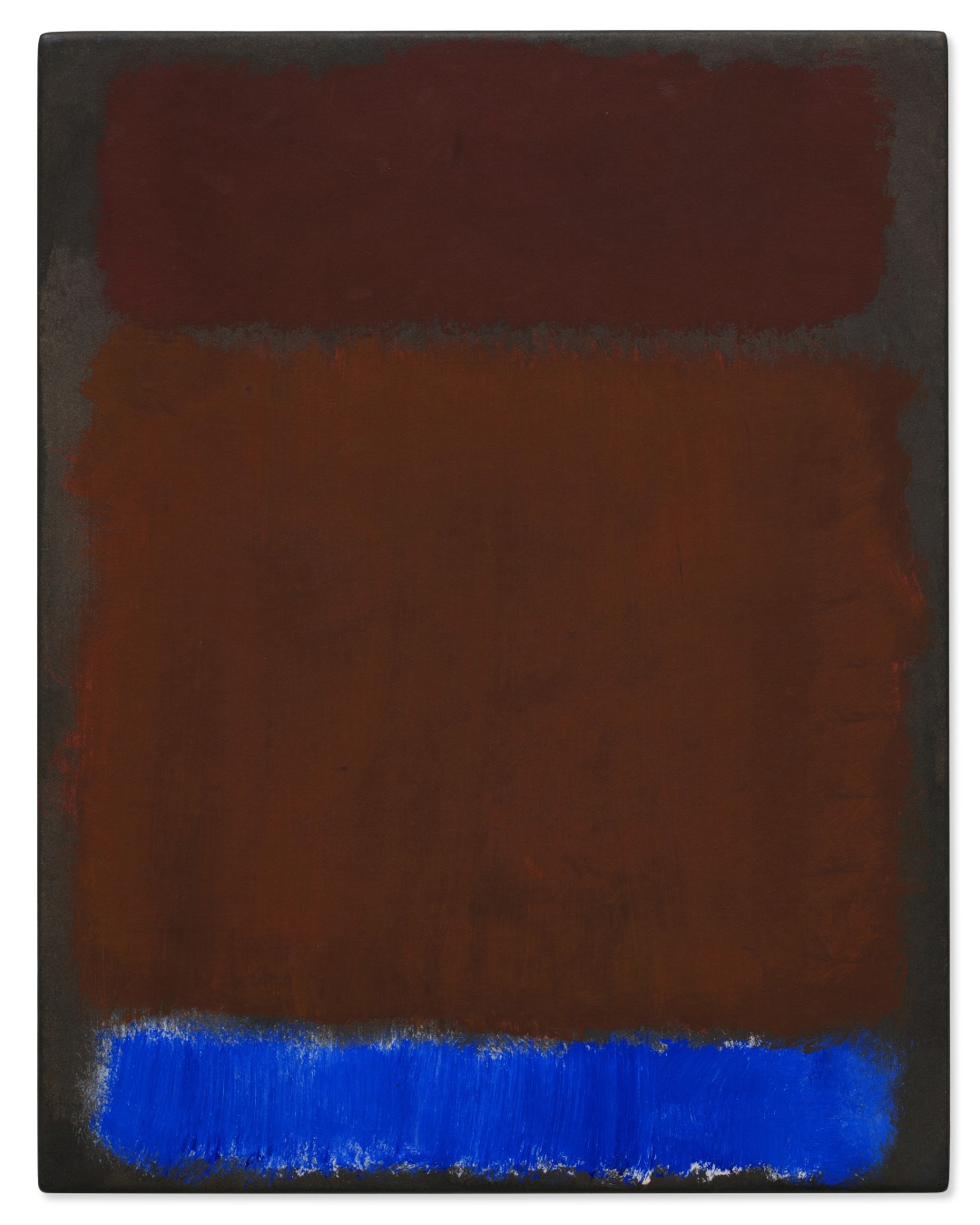
Mark Rothko's Untitled from 1968, a work on paper in wine, rust, electric blue and black, is a highlight of Sotheby's Contemporary Day Auction in New York. Rothko made his late works on paper after an aortic aneurysm on April 20, 1968, when his doctors told him not to work larger than forty inches high and he adopted acrylic for the first time.
Key Points
- Sotheby's names wine, rust, electric blue and black in Untitled 1968, a Contemporary Day Auction highlight.
- After an April 20, 1968 aneurysm, doctors told Rothko to work no larger than forty inches high.
- In May his seven foot No. 15 set his auction record at $98.4 million with fees at Christie's.
Wine, rust, electric blue and black. Those are the four colors Sotheby's names in Mark Rothko's Untitled from 1968, a work on paper now on view at Sotheby's New York as a highlight of The Contemporary Day Auction. It's small by Rothko's standards, and it's small for a reason his doctors gave him.
Sotheby's calls it "at once intimate in scale and monumental in psychological presence." It's a fair description of what happened to Rothko's work in 1968, and why a sheet like this one exists at all.
Rothko's Doctors Capped Him at Forty Inches
On April 20, 1968, Rothko suffered an aortic aneurysm that nearly killed him, and he spent three weeks in hospital. His doctor advised him to stop painting altogether. He refused.
His doctors told him to stop drinking, to stop smoking, and to stop working on anything larger than forty inches high. He ignored the first two. He accepted the third, and from the middle of 1968 he worked mostly on paper.
He also picked up acrylic for the first time that year, and learned quickly how to handle a paint that dries fast and thins with water. Many of the 1968 sheets were later mounted on panel or board, which is how they reach the salerooms now.
So the scale of this Untitled isn't a choice about intimacy. It was a medical instruction that Rothko turned into a format.
Wine, Rust, Electric Blue and Black on One Sheet
The colors Sotheby's lists are worth reading slowly, because they pull in two directions. Wine and rust are the warm, dark reds people know from Rothko's Seagram murals. Then black. Electric blue is the outlier.
Sotheby's describes the composition as "structured by expansive passages" of those four colors. Expansive is a big word for a work Sotheby's also calls intimate in scale. That tension is the whole appeal of these works, and it's what the house is leaning on when it calls the piece monumental.
Pace's 2021 London show of this period, titled Clearing Away, suggested visitors stand about 18 inches from the works, close to where Rothko stood when he made them. Its catalogue opened with an introduction by his son, Christopher Rothko. These aren't paintings you take in from across a room. They're paintings you lean into.
Gund's Seven Foot Canvas Set the Record in May
Rothko's market this year has been about size. In May, No. 15 (Two Greens and Red Stripe), a seven foot canvas from 1964, sold at Christie's for $98.4 million with fees and set his auction record. The seller was Agnes Gund, who bought it straight from Rothko's studio in 1967, the year before the aneurysm, after her friend Emily Hall Tremaine took her to visit. It hammered at $85 million after about a dozen bids. That same month Sotheby's led Robert Mnuchin's collection with Brown and Blacks in Reds, a 1957 canvas standing nearly eight feet tall.
The 1968 papers are the other Rothko, and the institutions have spent the last few years taking them seriously. The National Gallery of Art in Washington, which holds the largest public collection of his work, put about 100 of his paintings on paper on view from November 2023 to March 2024 in a show curated by Adam Greenhalgh, then sent it to Oslo.
The argument of that show was that Rothko didn't treat paper as a sketchbook. He treated it as painting. This Untitled is a test of whether the market agrees.
Sotheby's New York Sales Put It Beside Picasso and Monet
The New York Sales this November, presented in partnership with Celine, set Picasso beside Rothko, Monet beside Nara and Cézanne beside Joan Mitchell in one exhibition, and the Contemporary Day Auction is where this sheet hangs.
A day sale isn't an evening sale. It's the quieter room. Putting a late Rothko on paper at the front of it as a highlight says Sotheby's thinks the category can carry a sale on its own.
It can. The 1968 papers are the most honest record of Rothko in his last years, a man told to work smaller who didn't make smaller pictures, only smaller sheets. Wine, rust, electric blue and black on paper, from a painter who'd made his name on canvases taller than a person.
Frequently Asked Questions
Why did Mark Rothko switch to works on paper in 1968?
After an aortic aneurysm on April 20, 1968, his doctors told him not to work larger than forty inches high. From mid 1968 he worked mostly on paper, and began using acrylic.
Where is Mark Rothko's Untitled 1968 being sold?
It is on view at Sotheby's New York as a highlight of The Contemporary Day Auction, part of The New York Sales presented in partnership with Celine.
What colors are in Rothko's Untitled 1968?
Sotheby's describes the composition as structured by expansive passages of wine, rust, electric blue and black.
What is Mark Rothko's auction record?
No. 15 (Two Greens and Red Stripe), a seven foot 1964 canvas, sold at Christie's New York in May 2026 for $98.4 million with fees.
Topics: sothebys, abstract-expressionism, stripe, works-on-paper, mark-rothko, celine, art-market, new-york-sales, contemporary-day-auction, postwar-art