KAWAKUBO INSTALLS SS27 AT DSM PARIS COURTYARD
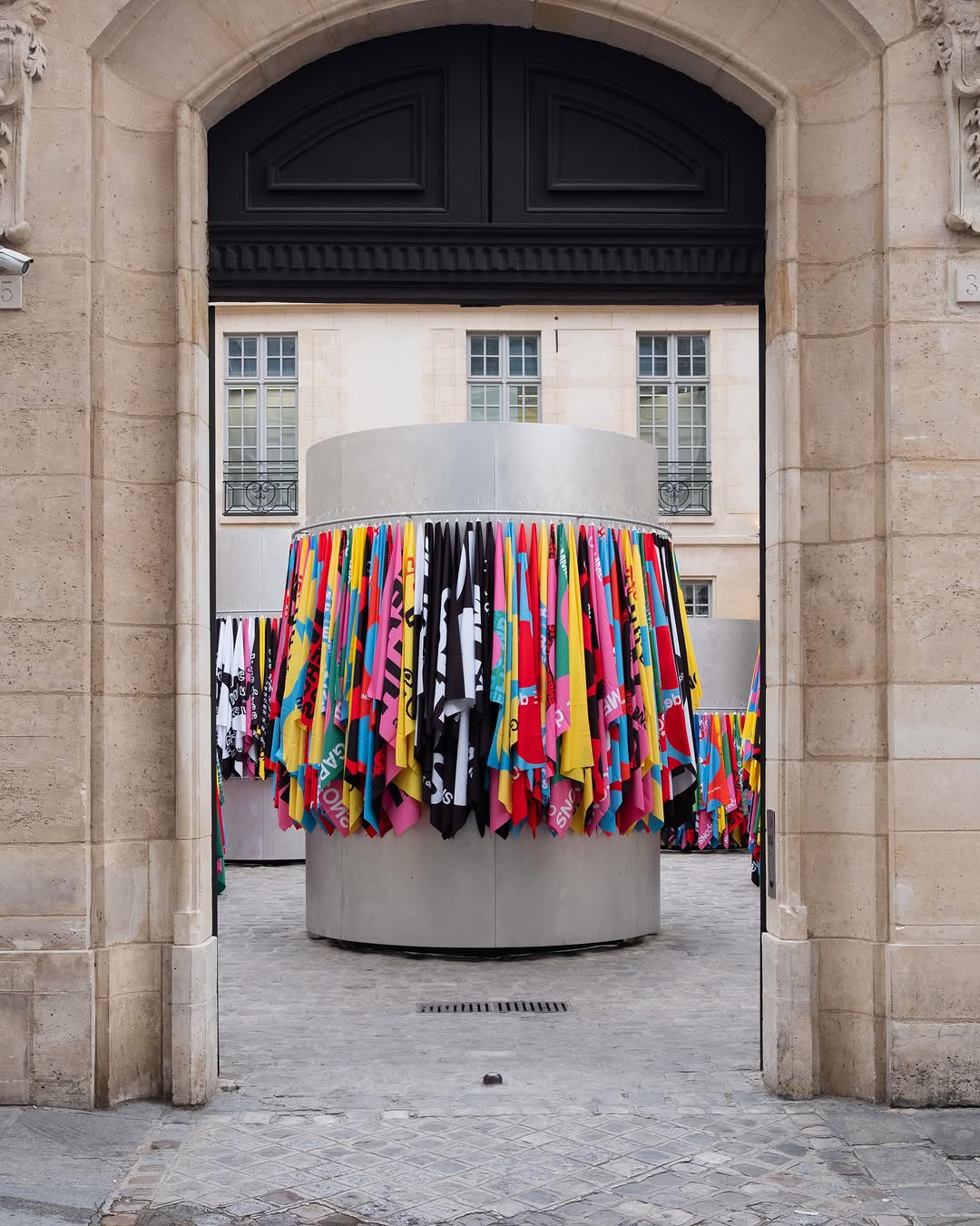
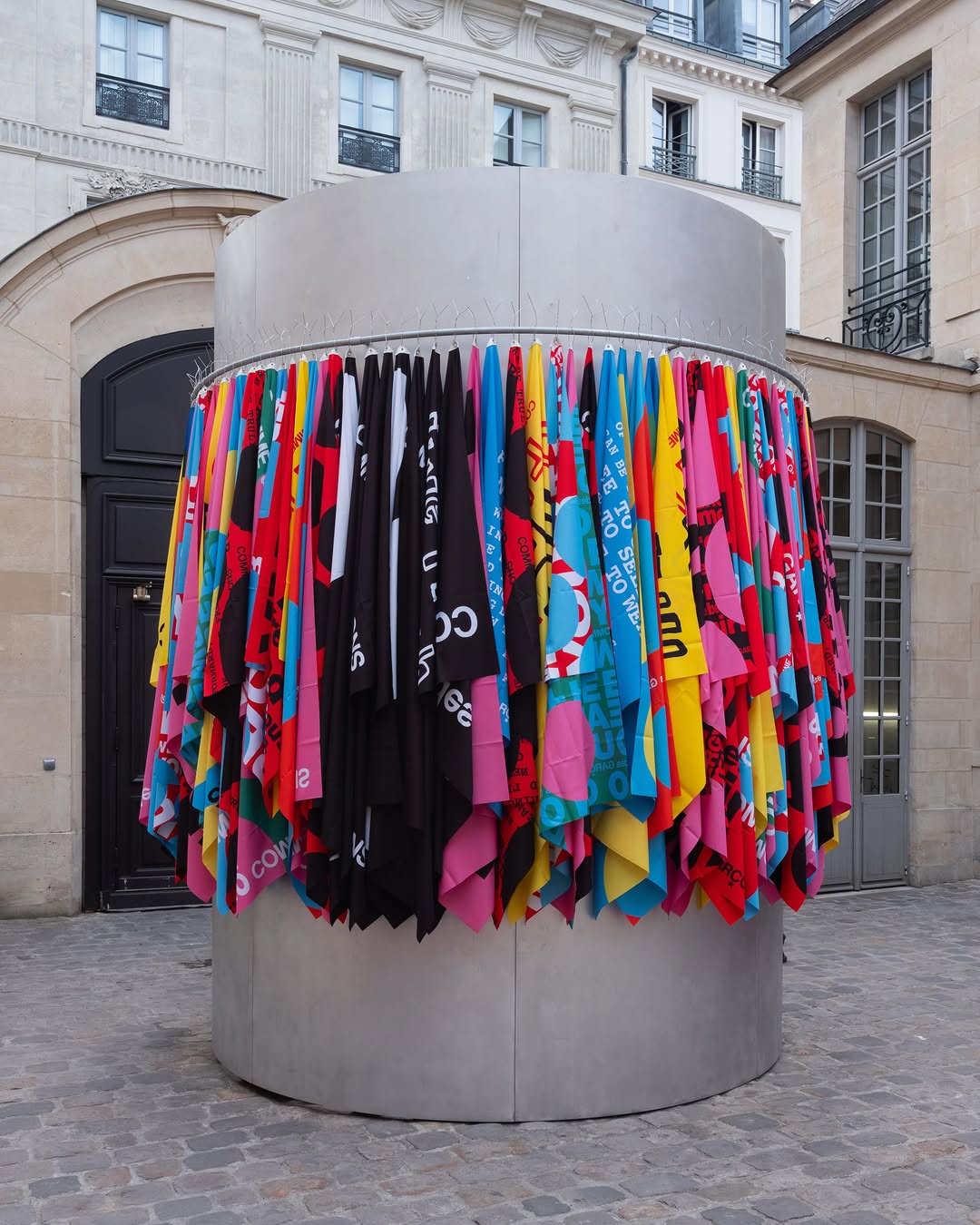
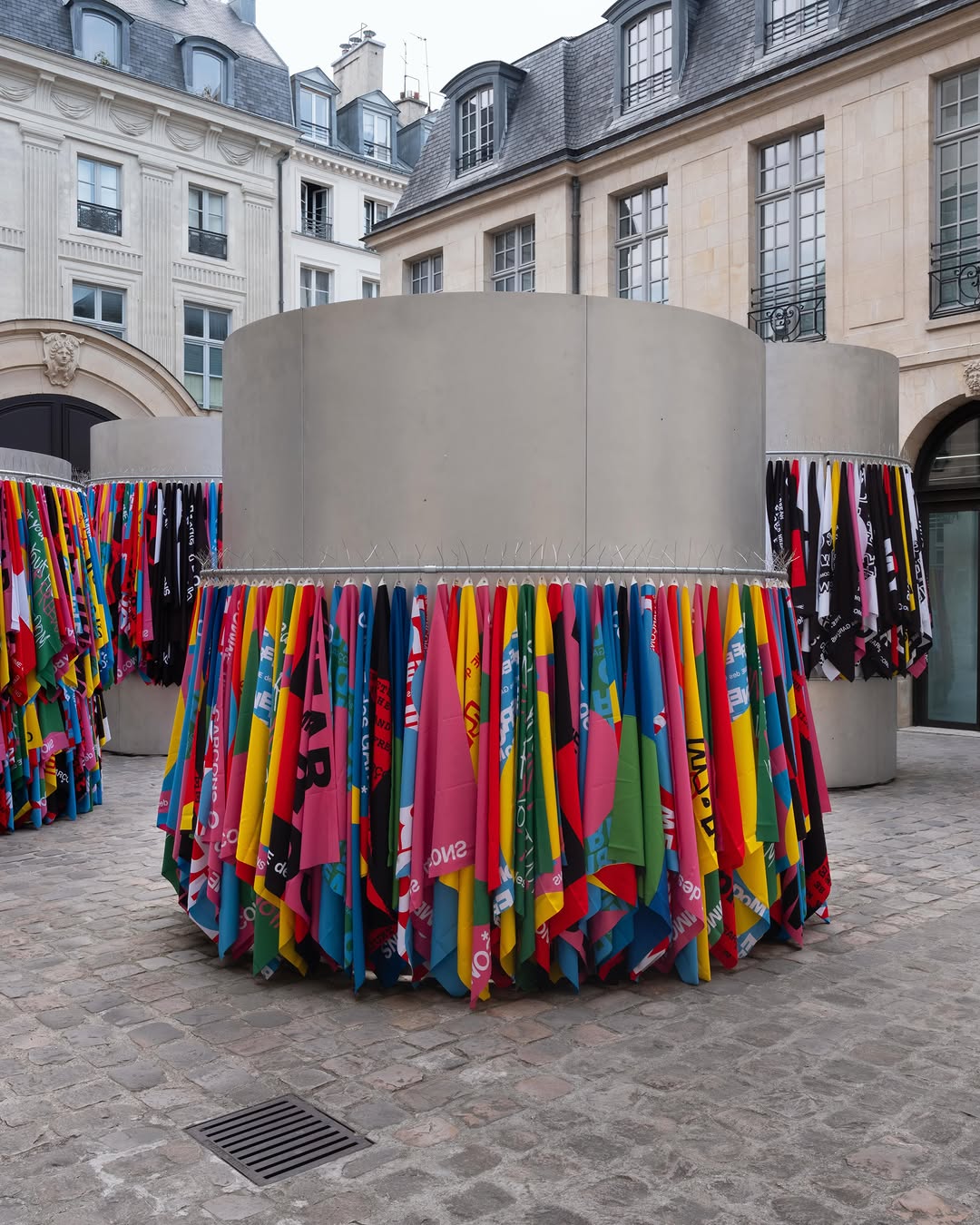
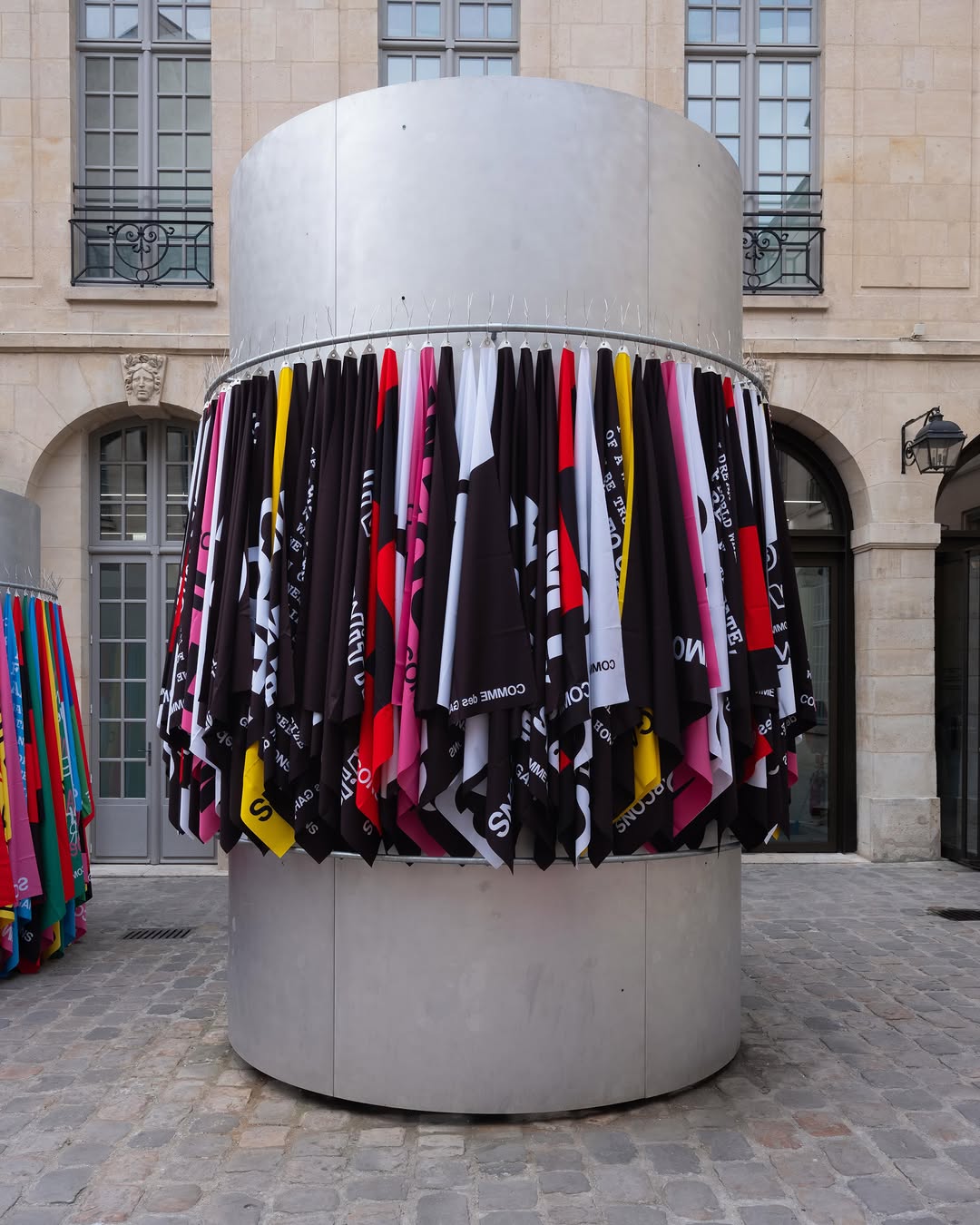
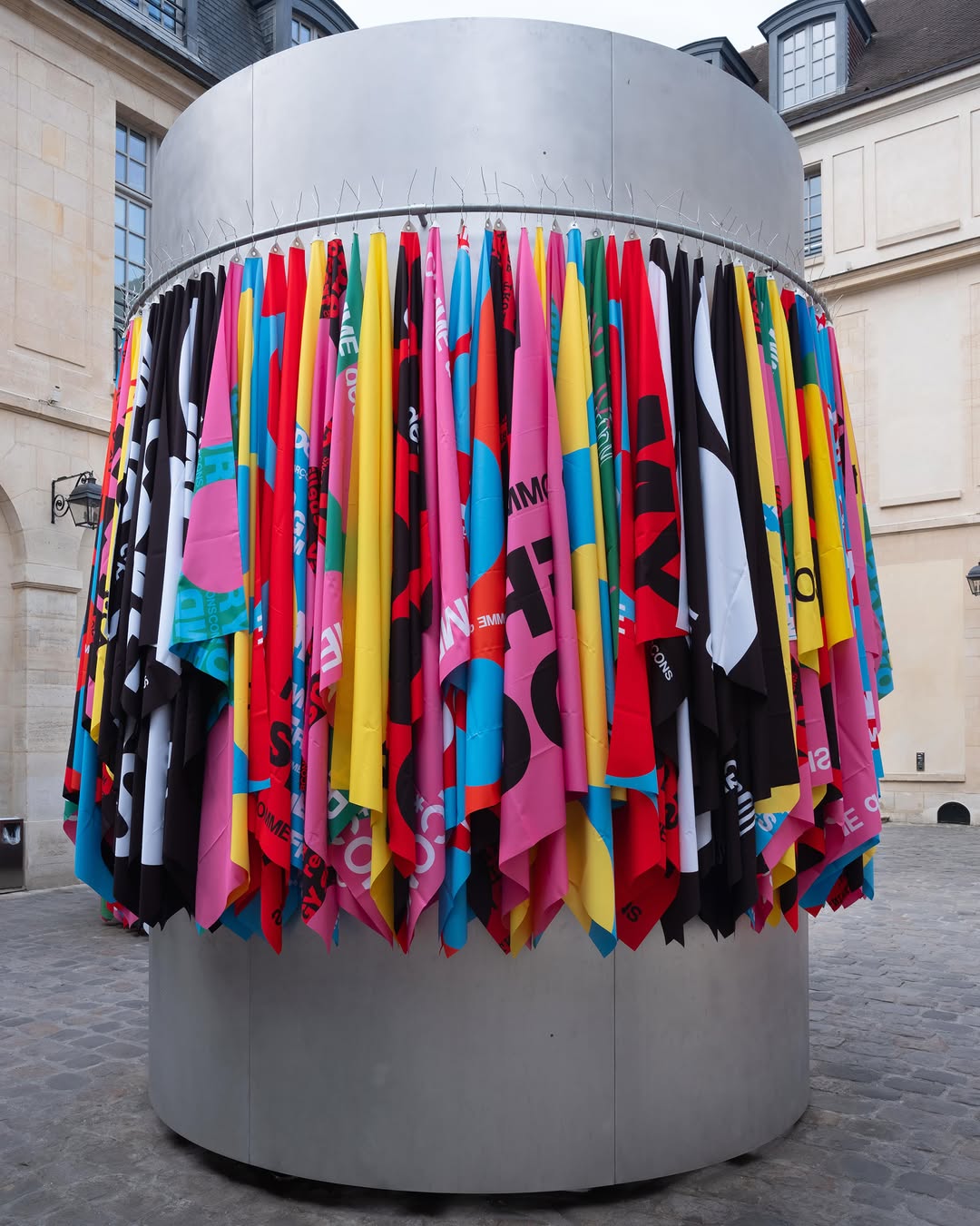
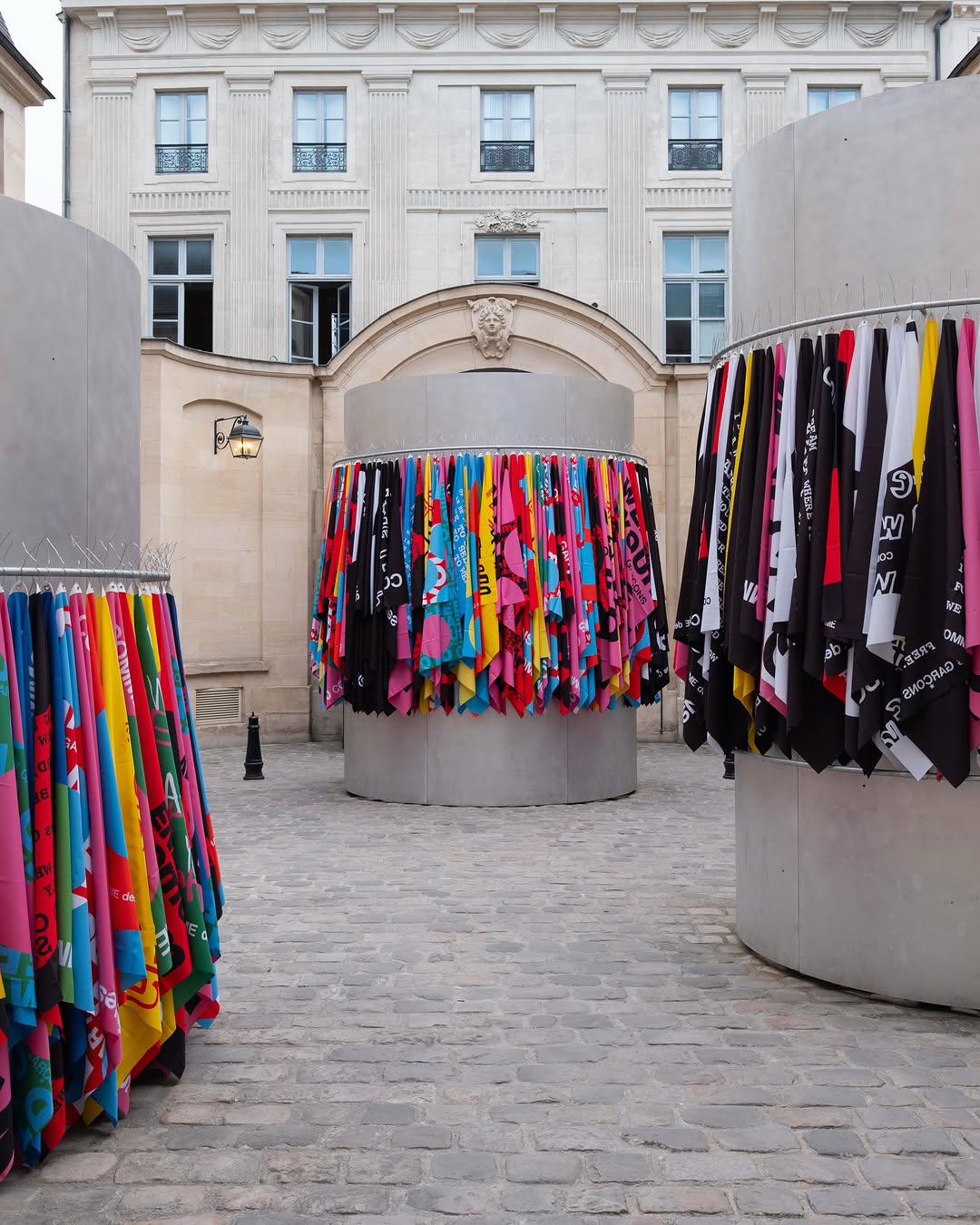
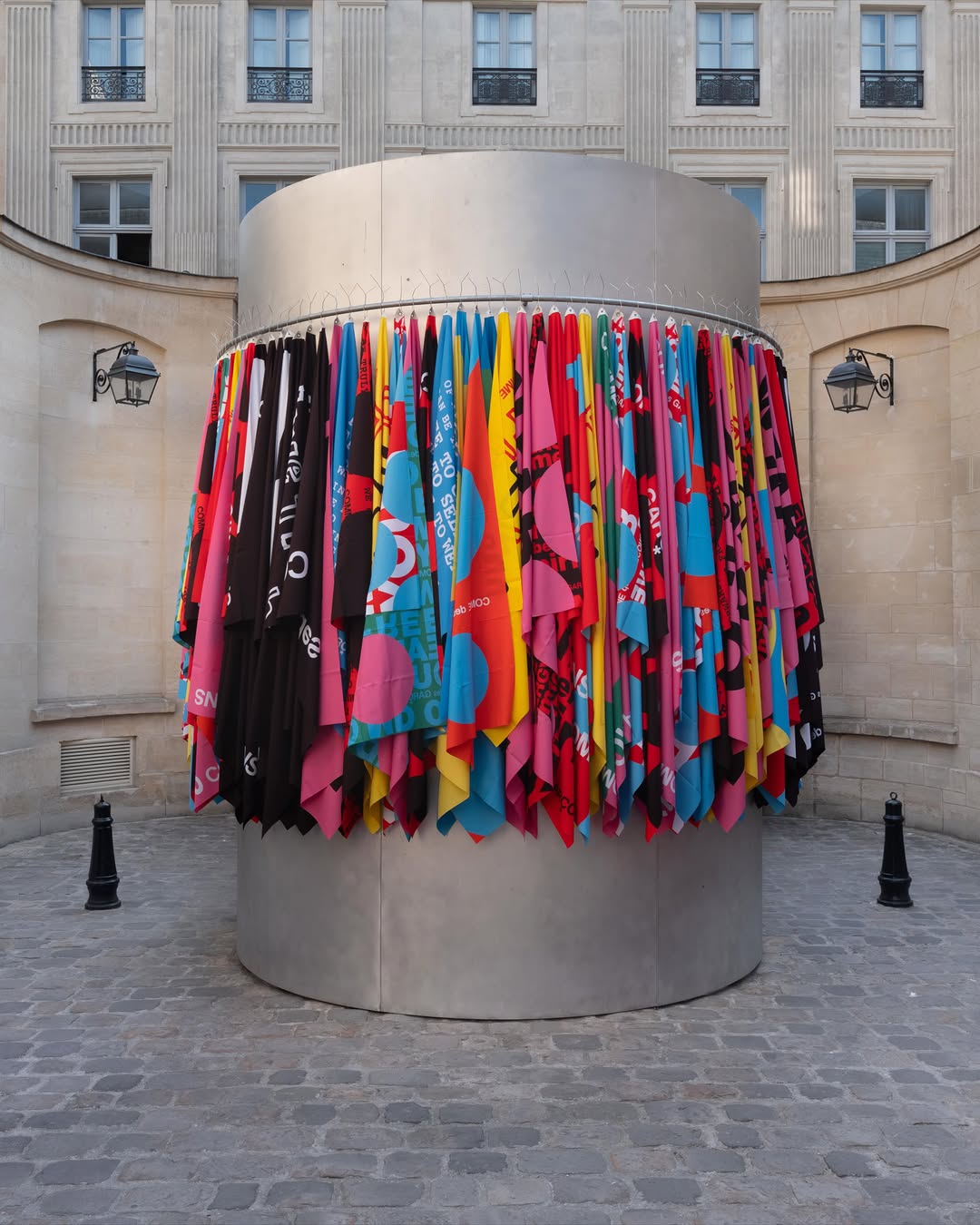
Rei Kawakubo installed Comme des Garçons Homme Plus SS27, titled If The War Were To End, in the courtyard of Dover Street Market Paris, which opened in the eighth arrondissement in 2017. Photographer Maurits Peeters documented the installation in seven images outside the official brand production credits, giving the record a candor distinct from controlled editorial photography. The DSM Paris courtyard installation runs parallel to the Élysée Montmartre SS27 presentation, extending the collection to a public audience that the runway show does not reach.
Key Points
- Rei Kawakubo installed Homme Plus SS27 at Dover Street Market Paris courtyard under the title If The War Were To End.
- Photographer Maurits Peeters documented the DSM Paris installation independently, outside official brand credits.
- Dover Street Market Paris opened in 2017. CdG has used DSM stores as exhibition space since London 2004.
The courtyard at Dover Street Market Paris is not meant for fashion presentations. It is a passageway, a light well, a gap in the architecture between the retail floors. Rei Kawakubo installed Comme des Garçons Homme Plus SS27 there anyway. Photographer Maurits Peeters documented it from outside the official credit list, which is a different kind of record.
Dover Street Market Paris. An Open Courtyard.
Dover Street Market Paris opened in 2017 in a listed building in the eighth arrondissement, repurposed into one of the most tightly controlled retail environments in European fashion. The courtyard, open to the sky between the building's wings, gives the store a private outdoor space that most Paris fashion retailers do not have.
Kawakubo staged the installation under the same title as the Élysée Montmartre presentation: "If The War Were To End.." The doubling of venue is not overflow. A presentation at Élysée Montmartre addresses the fashion calendar. An installation at DSM Paris addresses anyone who walks in off the street. The two audiences rarely overlap. The Montmartre room holds buyers, editors, and press. The courtyard holds the public. Kawakubo has consistently treated installation as a second language for collections that would otherwise live only in the show context and vanish.
FO covered a parallel logic applied to the Kawakubo window installation at Comme des Garçons Sao Paulo, where a retail space became a statement rather than a selling environment. The DSM Paris courtyard works at a larger scale and in a city with a higher fashion density.
Seven Images. No Official Credit.
Seven images from Maurits Peeters. None commissioned by Comme des Garçons.
The official CdG SS27 post credited a full production team: Thierry Dreyfus on lighting, Titre Provisoire on video, and Takeo ARAI for hair and makeup. Peeters carries no official credit. His documentation of the DSM installation exists outside the formal release, which gives the images a different quality.
Peeters is a Paris based photographer whose work moves between the architectural and the atmospheric. Shooting the courtyard installation in natural light produces a result that differs fundamentally from a controlled studio editorial. The shadows fall differently. The stone and glass of the DSM Paris building frame the garments rather than disappear behind them. The SS27 pieces read as objects in an existing space, not as content against a neutral surface.
The silhouettes read differently when grounded in real architecture rather than floated on a runway. You see the proportion of the garments against real daylight and real scale. The footwear collaborations from George Cox and Mexicana Boots read differently in natural light too: the George Cox creeper sole casts a different shadow on stone than on a runway surface.
This kind of documentation, completed by a photographer independently rather than commissioned by the brand, is less common for CdG than for brands with open media policies. The fact that Peeters posted the series signals Kawakubo or DSM Paris permitted access. The images have a candor that official production photography rarely allows.
If The War Were To End. In a Courtyard in Paris.
The title does not explain the installation any more than it explains the collection. "If The War Were To End.." is twelve English words arranged as a conditional clause with no consequent. Kawakubo did not complete the sentence in the Élysée Montmartre show. She did not complete it in the DSM Paris installation. She placed the incomplete clause in two rooms and left.
That withholding is the argument. A fashion collection titled with a geopolitical conditional is not a political manifesto. It is a designer acknowledging the world outside the show room without pretending the garments respond to it directly. The title asks a question and the clothes do not answer it. That gap is where the work lives.
The parallel between the Montmartre presentation and the DSM courtyard makes the withholding structural. The show happened once, before an invited audience. The installation happened continuously, for anyone. The title was the same at both venues. The access was not.
The Store as the Second Chapter
FO documented the Comme des Garçons Homme Plus SS27 full presentation at Élysée Montmartre, which covered the footwear collaborations with George Cox, Mexicana Boots, and Kids Love Gaite, the Nejc Prah artist contribution, and HIZUME headpieces. The DSM courtyard installation does not replace that presentation. It extends it.
Kawakubo has approached retail as designed space since the first Dover Street Market opened in London in 2004, conceived explicitly as a response to department stores: no department, no floor plan, no category logic. The courtyards in CdG stores are not incidental. They are planned gaps, breathing room, space not dedicated to anything and therefore available for use as anything.
The SS27 installation at DSM Paris occupied that gap. Peeters photographed it in seven frames. The question in the title did not resolve in any of them. A designer who titles a show with an incomplete clause and then installs it in a building's courtyard is not looking for an answer. She is looking for places where the question stays alive.
Related: NICK THOMM AZURE ARCH HEADS TO MIAMI.
Frequently Asked Questions
Where is the Comme des Garçons Homme Plus SS27 installation?
Rei Kawakubo installed the SS27 work in the courtyard of Dover Street Market Paris, which opened in 2017 in the eighth arrondissement.
Who photographed the DSM Paris SS27 installation?
Maurits Peeters, a Paris based photographer, documented the installation independently outside the official Comme des Garçons production credits.
What is the title of Homme Plus SS27?
The collection is titled If The War Were To End, an unfinished conditional clause Kawakubo placed at both the Élysée Montmartre presentation and the DSM Paris courtyard installation.
Topics: paris, maurits-peeters, rei-kawakubo, fashion, homme-plus, ss27, dover-street-market, comme-des-garons, spring-summer-2027, comme des garçons, comme-des-garcons, installation