KAWAKUBO DESIGNS A WINDOW FOR CDG SAO PAULO
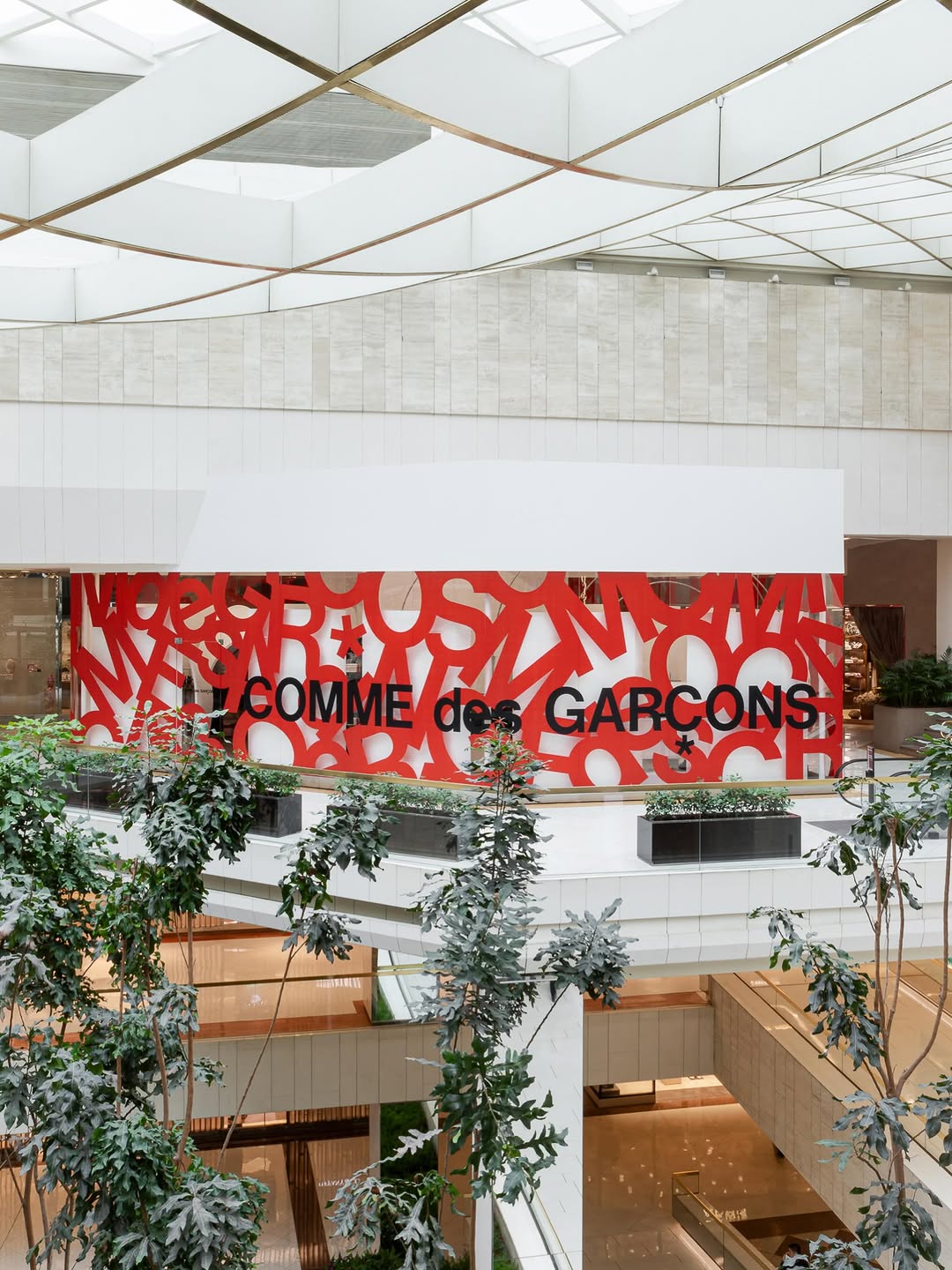
Rei Kawakubo designed a special window installation for the one year anniversary of Comme des Garcons Sao Paulo at the Iguatemi shopping center, photographed by Flavio Teperman. The founder personally treating a retail window as an installation signals how CDG positions store design as part of its artistic practice. It marks the brand's first year in the Brazilian market with a Kawakubo authored statement.
Key Points
- Rei Kawakubo designed a one year anniversary window installation for Comme des Garcons Sao Paulo.
- The installation is at Iguatemi Sao Paulo on Avenida Brigadeiro Faria Lima.
- The window was photographed by Flavio Teperman.
- Rei Kawakubo founded Comme des Garcons in Tokyo in 1969.
- The installation marks CDG's first year in the Brazilian market.
A shopping center window in Sao Paulo is not where you expect to find work by one of the most important living designers. Rei Kawakubo designed one anyway. To mark the one year anniversary of Comme des Garcons Sao Paulo at the Iguatemi center, the founder authored a special window installation, photographed by Flavio Teperman, and the gesture says more about how CDG treats retail than any sales figure could.
Describe the object. A retail window, on a luxury shopping floor, treated as an installation rather than a display. That distinction is the whole story.
Why a Window Is an Installation When Kawakubo Makes It
Most retail windows are merchandising. Product arranged to sell, lit to flatter, swapped on a seasonal schedule. A Kawakubo window is something else, because Kawakubo does not separate the commercial from the conceptual. The founder of Comme des Garcons has spent five decades treating every surface of the brand, the garments, the stores, the Dover Street Market retail concept, as part of a single artistic practice. A CDG window is an extension of the runway, not a step down from it.
That is why the founder personally designing the anniversary window matters. Kawakubo is 80 plus years old and one of the most institutionally respected figures in fashion, with a 2017 Metropolitan Museum of Art Costume Institute exhibition built around her work, a rare honor for a living designer. When she authors a retail window in Sao Paulo, she is asserting that the window deserves the same conceptual seriousness as anything else the brand produces.
The Institutional Placement Read
Where a work appears matters as much as what it is. A Kawakubo installation at the Iguatemi center on Avenida Brigadeiro Faria Lima places CDG inside Sao Paulo''s most prestigious luxury retail context, the Brazilian equivalent of a flagship luxury address. The anniversary window is not just decoration. It is the brand staking its institutional position in the Brazilian market after one year, with the founder''s personal authorship as the strongest possible signal of commitment.
Cross reference. Comme des Garcons showpieces appeared in the Fondazione Dries Van Noten exhibition in Venice, the brand operating at the museum and institutional tier. The Sao Paulo window is the same practice at the retail tier. CDG moves fluidly between the gallery and the store because Kawakubo refuses to treat them as different categories. The window in Brazil and the showpiece in Venice are the same artistic output in different venues.
The Cross Industry Read on Retail as Practice
The brands that treat retail as art rather than commerce build a different kind of cultural standing. Cross reference. Comme des Garcons reopened its Kyoto flagship with a Kawakubo redesign, the same philosophy of store as statement. The Sao Paulo window extends that approach to a new market, using the anniversary as the occasion for a Kawakubo authored moment.
The model works because it makes every CDG location a destination rather than a point of sale. A buyer does not just shop the Sao Paulo store. They visit a Kawakubo installation. That reframing, retail as cultural experience, is what separates CDG from brands that treat their stores as distribution and nothing more.
Flavio Teperman and the Documentation
The window was photographed by Flavio Teperman, and the photographer credit matters for an installation that exists primarily as a physical object in one location. Most people who experience the window will experience it through the photography, not in person. The documentation is how a Sao Paulo retail window becomes a global cultural moment. Teperman''s images are the bridge between the physical installation and the worldwide CDG audience.
What the One Year Marker Signals
CDG marking its first year in Brazil with a founder designed window is a statement about the market''s importance. Brazil, and Sao Paulo specifically, has become a significant cultural and retail market, and CDG investing Kawakubo''s personal attention in the anniversary signals the brand sees long term value there. A first anniversary is early. Treating it with this level of authorship says the brand is committed to the market for the long run.
What to Watch Next
Three things. Whether CDG expands its Brazilian retail footprint beyond the Sao Paulo location. Whether the window installation draws cultural tourism the way the brand''s flagship redesigns do. And whether Kawakubo continues personally authoring retail moments as a way of asserting the brand''s artistic seriousness in new markets.
A shopping center window, designed by one of the most important living designers, marking one year in Brazil. Kawakubo treats retail as practice, not commerce. The window in Sao Paulo is the proof, and the photography is how the rest of the world gets to see it.
Frequently Asked Questions
What is the CDG Sao Paulo window?
A special window installation designed by Rei Kawakubo for the one year anniversary of Comme des Garcons Sao Paulo at Iguatemi, photographed by Flavio Teperman.
Why does Kawakubo designing a window matter?
The CDG founder personally treating a retail window as an art installation signals how the brand positions store design as part of its artistic practice rather than commercial display.
Where is the installation?
At Iguatemi Sao Paulo on Avenida Brigadeiro Faria Lima in the Jardim Paulistano district.
Topics: rei-kawakubo, art, fashion, retail-design, flavio-teperman, window-installation, sao-paulo, comme-des-garons, comme des garçons, iguatemi, comme-des-garcons, brazil