John Woell Gave His Fire Island Duplex a Single Production Rule
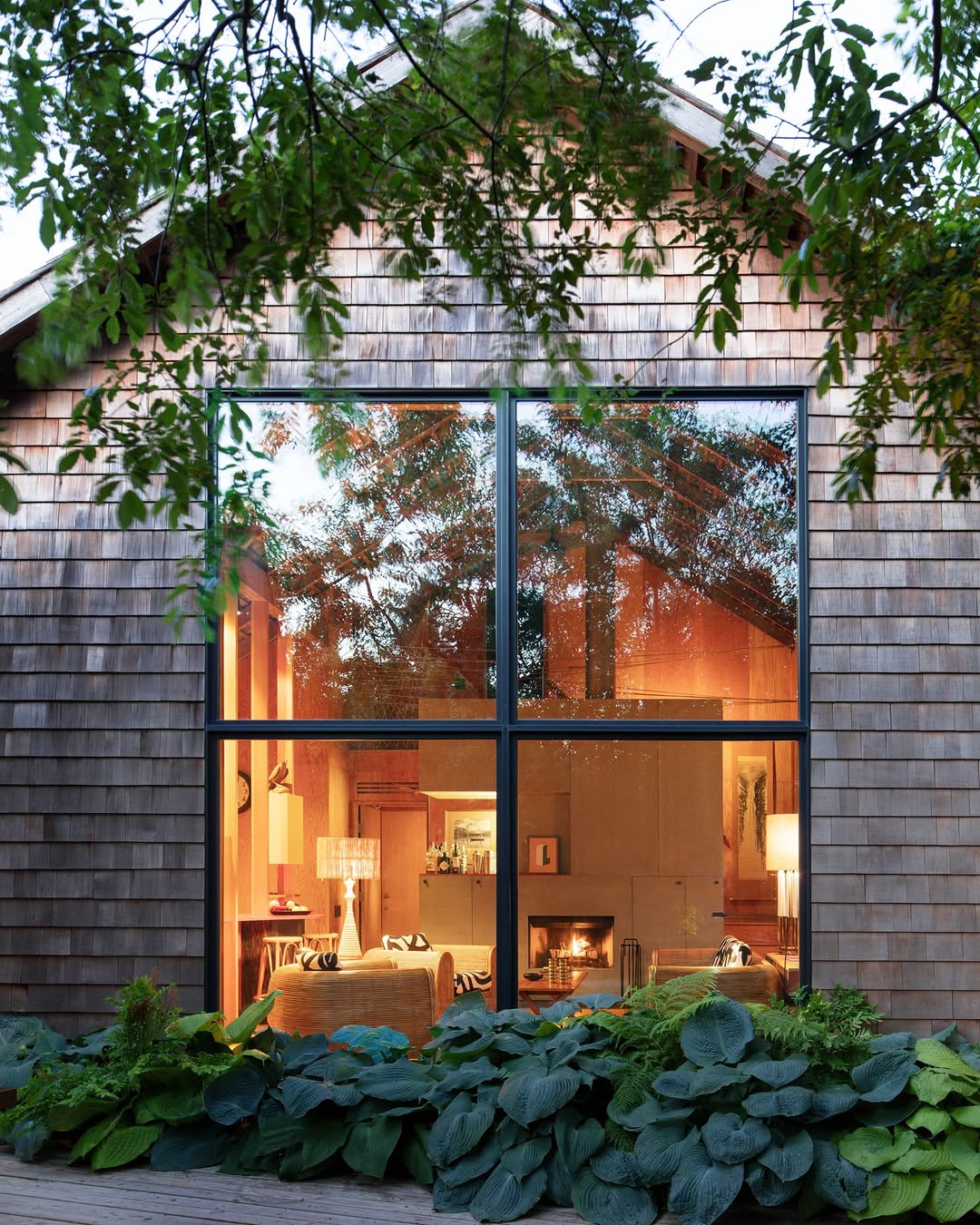
John Woell of Steven Harris Architects redesigned a Cherry Grove duplex with one rule: only materials available in 1950. Here is the result.
Key Points
- John Woell imposed a strict 1950 material cutoff on a Cherry Grove Fire Island duplex: no composite panels, no foam insulation, no engineered lumber
- Every material in the project has a documented failure mode and repair path, serviceable by any carpenter without proprietary parts or procedures
- Cherry Grove has been an LGBTQ summer community since the 1930s, meaning the building carries 90 years of cultural accumulation the renovation had to respect
- Steven Harris Architects has held AD100 status across multiple consecutive cycles with four decades of residential practice
- The 1950 material constraint reaches the same durability conclusion as modern sustainability innovation, arriving from the opposite direction
The brief fit on one line. Use nothing that did not exist in 1950.
John Woell is a partner at Steven Harris Architects, an AD100 firm with four decades of residential practice. The Cherry Grove duplex on Fire Island was his project and his constraint: every material had to have been commercially available before the Korean War began. No aluminum composite panels. No expanded polyurethane foam insulation. No engineered strand board. No fiber reinforced cladding. That is not a renovation brief. That is a sampling session where the crate closes at 1949.
Architectural Digest documented the result.
{{instagram:https://www.instagram.com/p/DZUiAQAlRAi/}}
Woell's Material List Is the Concept
The 1950 rule is not sentimentality. It is a durability argument in material form.
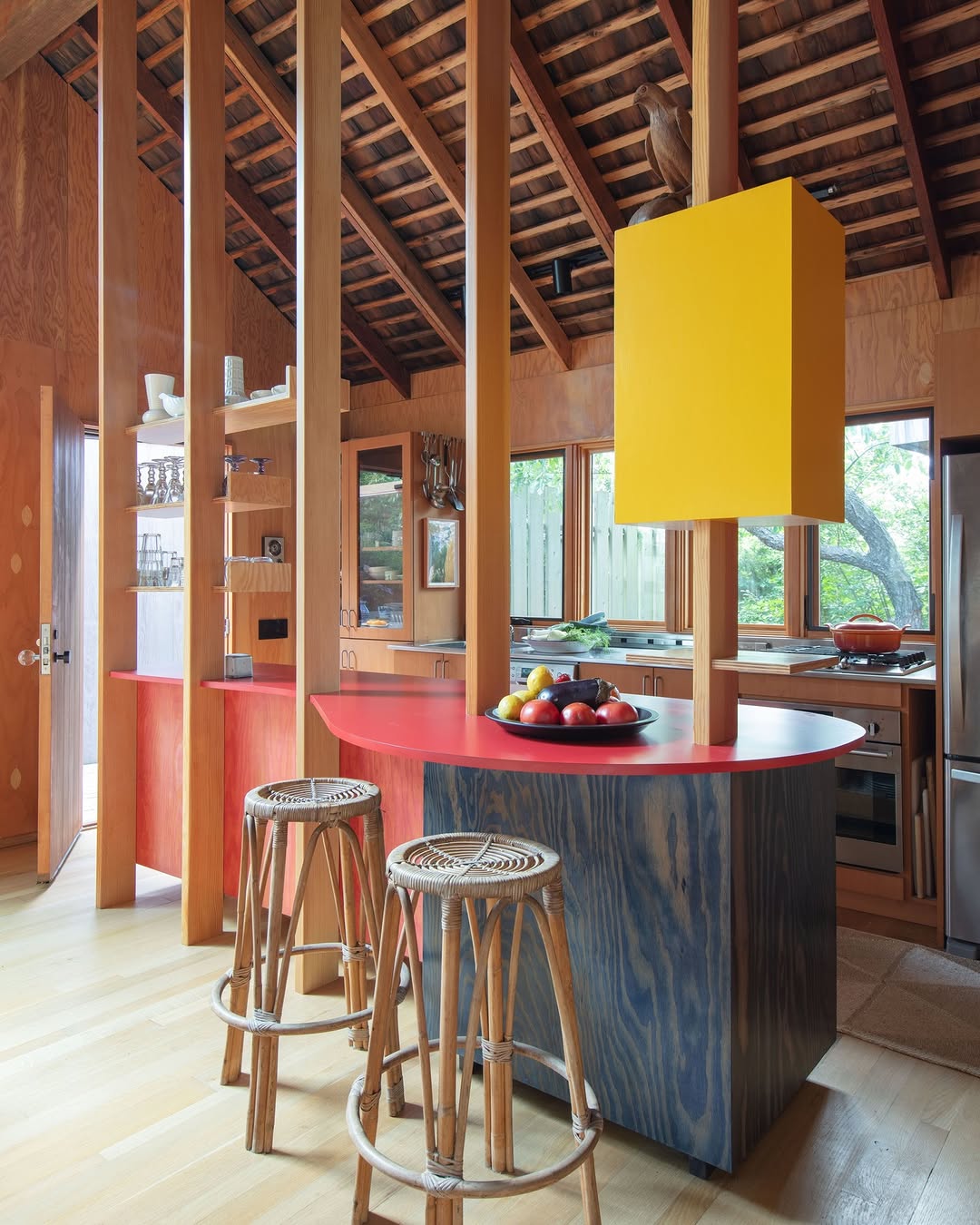
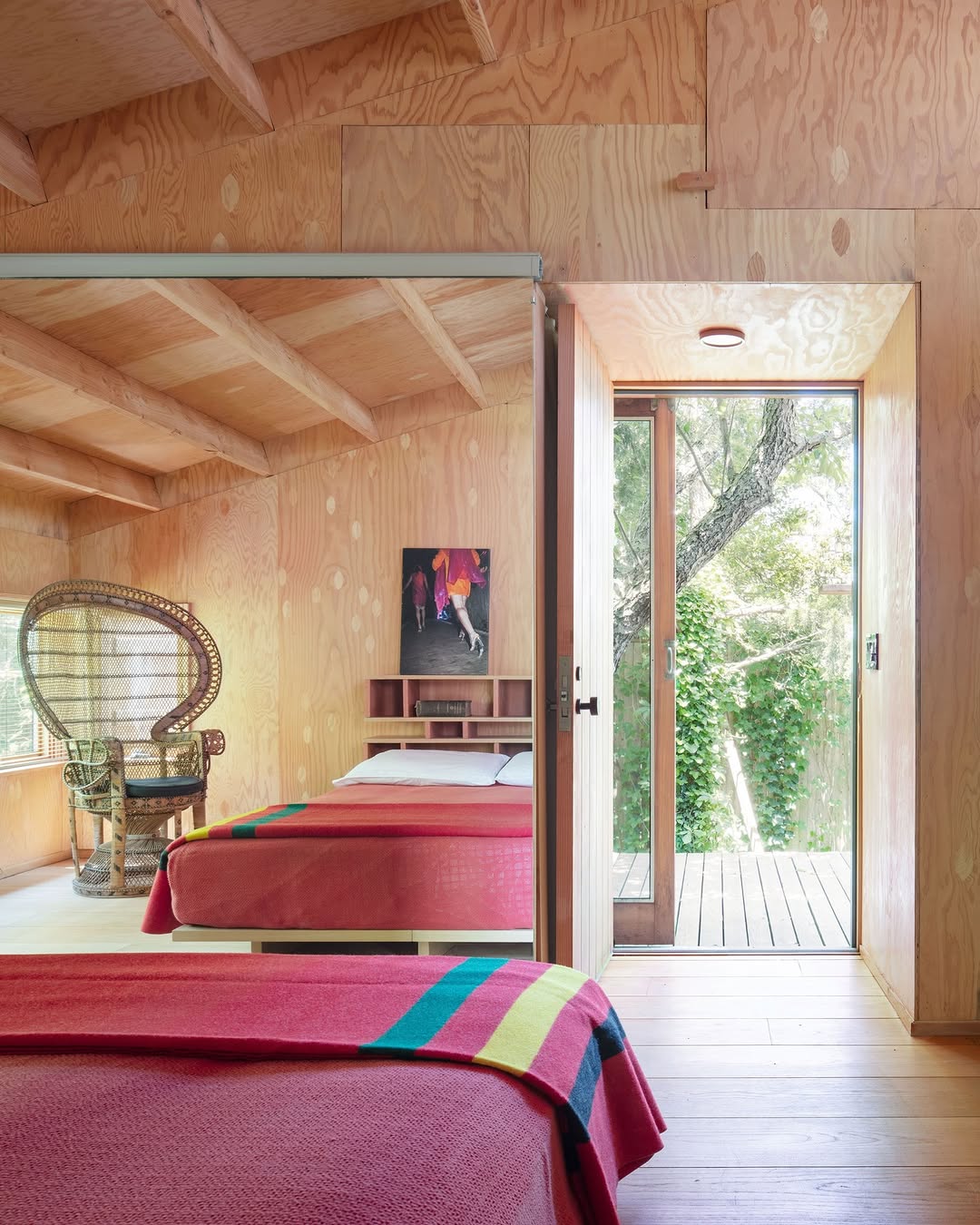
Wood board and batten siding. Solid wood interior millwork. Dimensional lumber framing built to 1940s tolerances. Cotton canvas upholstery. Every element in the Cherry Grove duplex has a documented failure mode and a documented repair path. A carpenter on Fire Island in 2045 will be able to address every component of this building with tools and materials available at any lumber yard. That is not a small distinction when your site sits on an island with no vehicle access and a ferry schedule that does not bend.
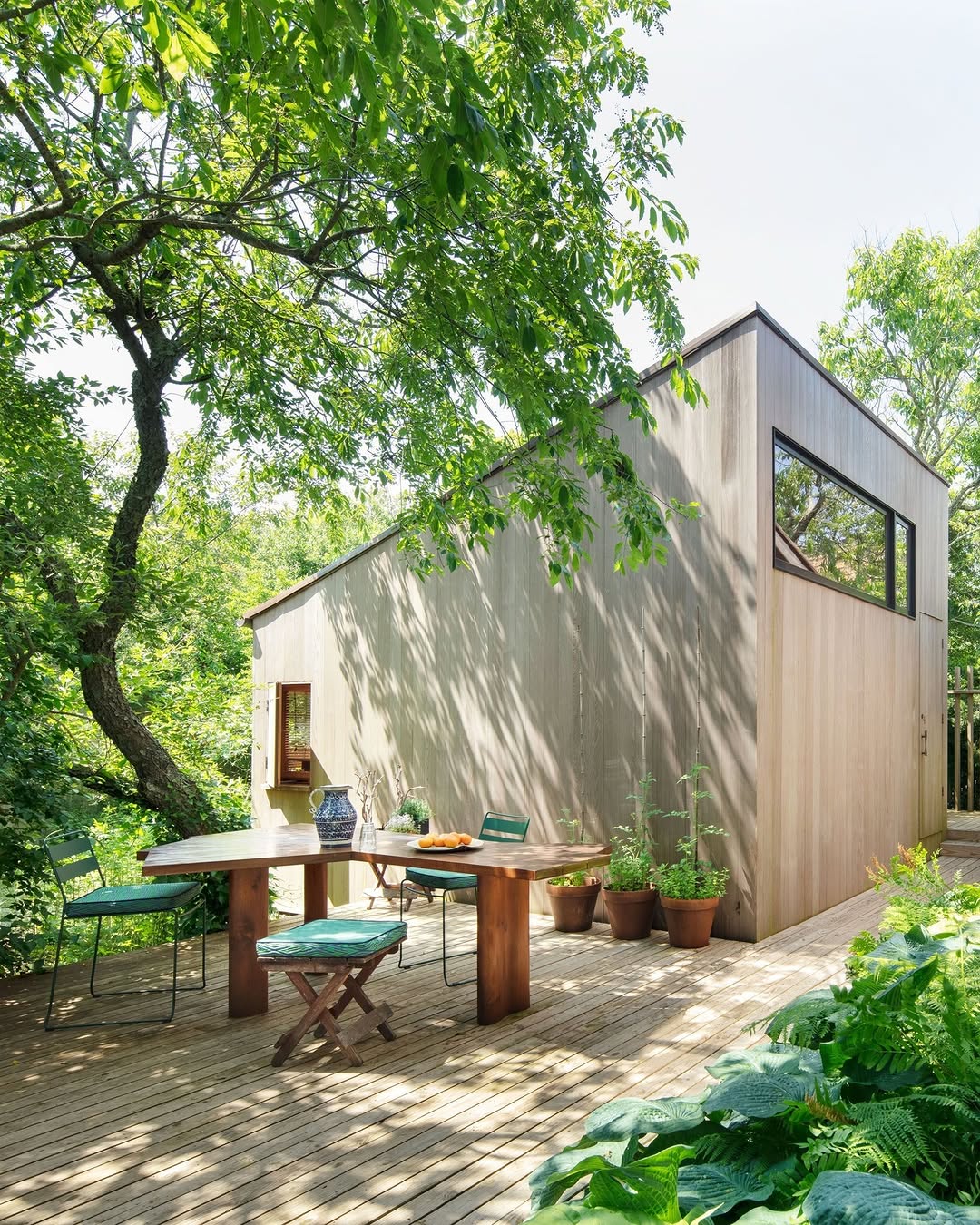
The exterior reads as a sequence of correct decisions. Clean shed roof. Wood fascia with no decorative break. Color palette held within what a 1952 paint catalog could have offered: warm cream on the field, soft sage at the trim, a single terracotta detail at the entrance threshold. The building does not perform. On an island reached only by water, that restraint reads clearly from the dock.
Compare the material logic of the Cherry Grove project with Casa Tobi's cliff site in Oaxaca, where site access similarly dictated what could be built and how it had to be maintained.
Cherry Grove Has 90 Years of Cultural Memory Behind It
Cherry Grove has been documented as an LGBTQ summer community since at least the 1930s. Artists, writers, and people who needed a place where mainland social codes did not apply built this neighborhood incrementally, in modest structures, over decades. Many of those structures remain. The architectural character of the community is not the result of planning or a developer's vision. It is accumulation by people who cared about the place more than the property.
A renovation that introduces anachronistic materials into a building with this history makes the same mistake a producer makes when sampling a record they do not understand. You can hear the disconnect in the final product. It does not belong. The material choices reveal whether the renovation is for the building or for the portfolio.
Woell read the 1950 bones and decided the restoration logic had to match the construction logic. No material introduced to the building could be foreign to the decade in which it was built. Every addition had to be in conversation with what was already there.
Steven Harris Architects Is the Label, and the Label Greenlit the Constraint
The firm has operated since 1985. Its AD100 designation across multiple consecutive cycles reflects consistency of approach: residential work that prioritizes material honesty over spectacle. Woell's practice within the firm follows the same logic. The budget at Cherry Grove did not go to a statement fixture in the kitchen surrounded by standard grade everything else. It went to getting the material selection right throughout.
That approach is increasingly unusual. The current residential architecture conversation centers on sustainability through innovation: mass timber, recycled content structural panels, new thermal composites. The 1950 rule arrives at the same durability conclusion from the opposite direction. Materials with known lifespans, repairable by any competent carpenter, generate less replacement waste over 50 years than materials that require proprietary repair procedures or cannot be separated for recycling.
See Norm Architects' Copenhagen studio work for the Scandinavian version of this thesis, where material restraint is a cultural position embedded in the practice's identity across every project scale.
The Material Record Is the Answer
Every architect working on a building inside a community with this much history faces the same question. Does the renovation serve the structure or the firm?
The material record at Cherry Grove answers it. Woell did not import anything the building could not have known in 1950. The additions are in conversation with the original. The constraint is not a limitation on the project. The constraint is the concept.
For the other end of this spectrum, see Parsa Ghavimi's Dubai Central Park Towers project, where the brief carried no historical obligation and the budget set no ceiling. The distance between those two projects clarifies what a rule like Woell's actually produces.
The concept held. So will the building.
Topics: interior design, john woell, cherry grove, steven harris architects, renovation, ad100, fire island, architecture, lgbtq history, material design