HERMES COLLIER DE CHIEN: THE 1927 DOG COLLAR NOW WORTH $1,600
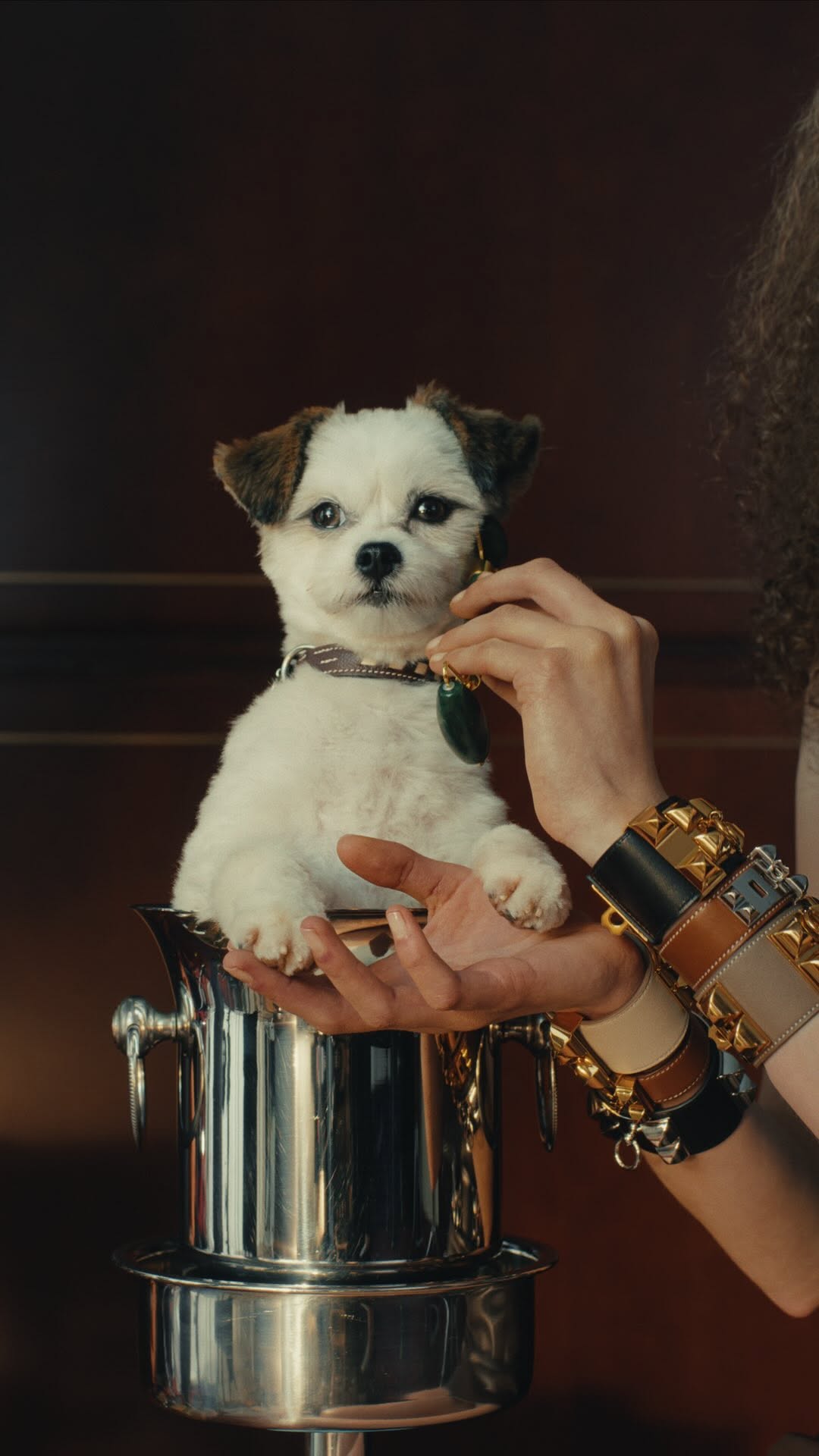
The Hermes Collier de Chien traces back to 1927, when the house built a studded leather dog collar for a client and then adapted it into a belt the same year. Hermes turned the design into a bracelet in the 1940s and later a fine jewelry ring, and the motif still anchors the house's leather accessories collection today. Leather versions of the CDC bracelet have retailed between roughly $1,025 and $1,600 depending on material, with exotic skins like crocodile at the top of that range.
Key Points
- Hermes first built the Collier de Chien as a dog collar for a client in the 1920s, then reworked it into a belt in 1927 featuring four faceted Medor pyramid studs and a center ring.
- The bracelet version of the Collier de Chien did not exist until the 1940s, roughly two decades after the original collar and belt.
- Leather CDC bracelets have priced between about $1,025 for standard leather and $1,600 for crocodile, per pricing documented in 2011, with exotic skins and gold versions running higher today.
A dog got fitted for a collar in Paris sometime in the 1920s. The client wanted something sturdier than the standard leather strap, something built with the same rigor Hermes put into horse tack. What came back had a center O ring for the leash and four faceted studs around the neck. Nobody involved in that transaction could have guessed the design would outlive the dog, the client, and several generations of Hermes creative directors.
That collar is the reason the Collier de Chien bracelet exists. Nearly a hundred years later, Hermes is still telling that story, because the story is the product.
1927: A Belt Nobody Asked For Becomes a House Signature
Hermes turned the dog collar into a belt in 1927 after a client asked for something similar to accessorize her outfits, according to Hermes's own product history. The belt kept the pyramid studs and the swiveling center ring, and it became popular enough that the house never let the design go dormant.
This is worth sitting with for a second. Hermes did not sit in a design studio and dream up a jewelry motif meant to signal exclusivity. They copied a dog's collar because a rich woman liked how it looked on the animal's neck. Every luxury house wants you to believe their icons were born from artistic vision. This one was born from a customer who thought her dog had better accessories than she did.
The 1940s Jump From Waist to Wrist
Hermes adapted the Collier de Chien belt into a bracelet in the 1940s, roughly two decades after the original collar and belt existed. The bracelet kept the same architecture: an adjustable turn lock closure, four pyramid studs, and the center ring that still spins freely even though it looks fused to the metal.
That spinning ring is the detail collectors obsess over. It reads as solid, structural, immovable. It is not. The whole point of the design was always tension between the look of restraint and the reality of mobility, which, if you squint, is a decent metaphor for what luxury accessories are supposed to do for the people wearing them.
The bracelet now comes in two sizes, small and large, and materials that include box calfskin, suede, stamped leather, crocodile, alligator, and lizard, with metal hardware finished in gold, palladium, or silver tones. A gold plated leather CDC bracelet from Hermes today runs in the calfskin and Epsom leather range, with wrist sizes typically between 5.7 and 7.5 inches depending on the model.
Price Has Moved, The Silhouette Has Not
In 2011, standard leather CDC bracelets started around $1,025 and climbed to roughly $1,600 for crocodile versions. That is a shoe collector's grail price for a bracelet, and it has only widened since, as exotic skins and gold hardware push newer editions higher across the secondary market.
Compare that to how sneaker culture treats a silhouette like the Air Jordan 1. Nike changes colorways every season and lets scarcity do the marketing. Hermes does the opposite. The CDC has kept its four studs and its ring since the 1940s, and the house sells the fact that it has not changed as the actual product. Stability, not novelty, is the flex.
From Belt to Bracelet to Ring, Same Four Studs Every Time
Hermes expanded the Collier de Chien motif into fine jewelry, launching a ring version decades after the bracelet that carries the same pyramid studs and mobile center ring in solid gold, sometimes paved with diamonds. The ring is described by jewelry specialists as having an almost avant-garde presence on the hand, closer to sculpture than to a discreet accessory.
That matters because it shows the motif graduating categories inside the same house. Leather good, to belt, to bracelet, to gold ring: four decades, four formats, zero redesign of the core studs and ring. Cartier's Love bracelet gets a new campaign every few years. Hermes just keeps reissuing the same dog collar in nicer materials and calling it heritage.
Grooming Care Is Now Part of the Sales Pitch
Hermes now instructs owners on maintaining CDC leather and metal pieces over time, treating the bracelet less like a purchase and more like an object requiring ongoing ritual. That framing turns a leather cuff into something closer to a pet or a car: an object that needs upkeep, not just admiration.
It is a smart move for a house whose entire pitch is durability. A bracelet that needs conditioning and care implies a bracelet built to outlast trends, which is precisely the argument Hermes has been making about this design since a Parisian dog first wore a version of it a century ago.
The secondary market has already priced in that durability. Vintage CDC pieces from the 2010s still trade actively on resale platforms, holding value the way a well kept mechanical watch does, which is not a coincidence. Hermes leather goods and Rolex steel sports watches occupy the same psychological shelf for a certain buyer: things you do not flip, you inherit.
The real prediction here is boring but accurate. Hermes will keep making Collier de Chien bracelets in new leathers and finishes for another hundred years, because the house learned in 1927 that changing the studs was never the assignment. Keeping them exactly the same was.
Related: CELINE RUNS INFINITE POSSIBILITIES WITH BRUN AND OTA.
Related: YVES SAINT LAURENT FOUND COLOR IN MOROCCO 1966 CHANGED FASHION FOREVER.
Frequently Asked Questions
What is the Hermes Collier de Chien, in one sentence?
It is an Hermes accessory line built around four pyramid studs and a center ring, originally designed as a dog collar in the 1920s before becoming a belt in 1927 and a bracelet in the 1940s.
How much does the Hermes Collier de Chien bracelet cost?
Standard leather versions have historically started around $1,025, with exotic skins like crocodile pushing the price toward $1,600 or higher depending on hardware and material.
Where can I buy a Hermes Collier de Chien bracelet online?
Hermes sells current CDC bracelets directly through hermes.com, though popular leathers and sizes frequently sell out and require checking boutique stock.
Who originally commissioned the Hermes Collier de Chien design?
An Hermes client requested a sturdy studded collar for her dog in the 1920s, and the design was later adapted into the belt Hermes released in 1927.
Is the Hermes Collier de Chien bracelet real leather?
Yes, authentic CDC bracelets are made from materials including box calfskin, Epsom calfskin, suede, and exotic skins like crocodile, alligator, and lizard.
What is the difference between the Collier de Chien bracelet and the Gaine version?
The Gaine version wraps the pyramid studs entirely in leather and closes with a button instead of the CDC's adjustable slot closure, and it comes in more size options.
When did Hermes create the Collier de Chien bracelet?
Hermes introduced the bracelet in the 1940s, roughly two decades after the original dog collar and the 1927 belt that established the design.
Topics: luxury accessories, medor studs, herms, cdc bracelet, fashion history, hermes, nike, hermes jewelry, hermès, leather goods, collier de chien